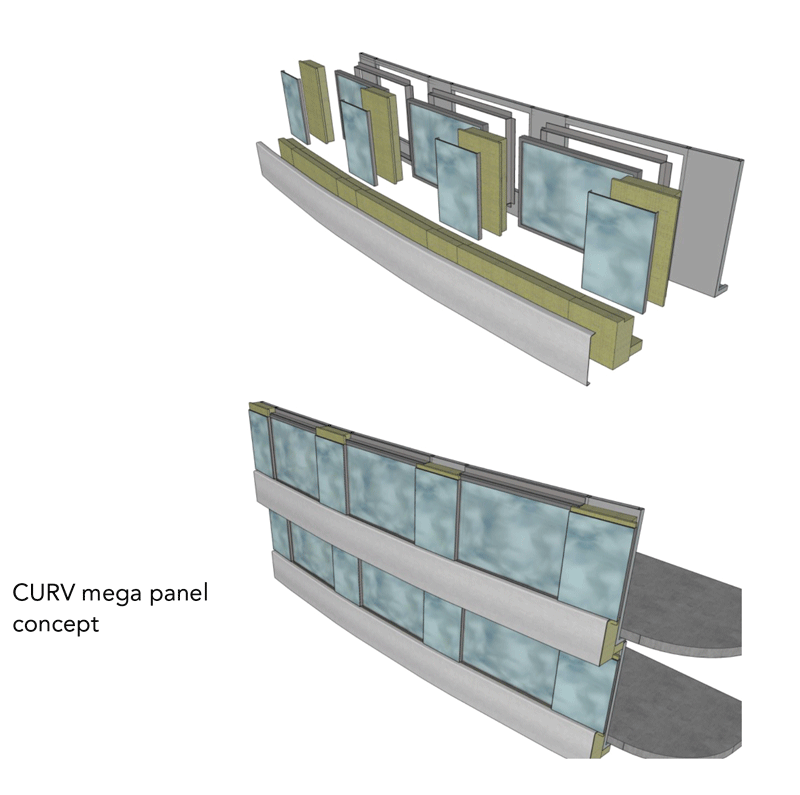
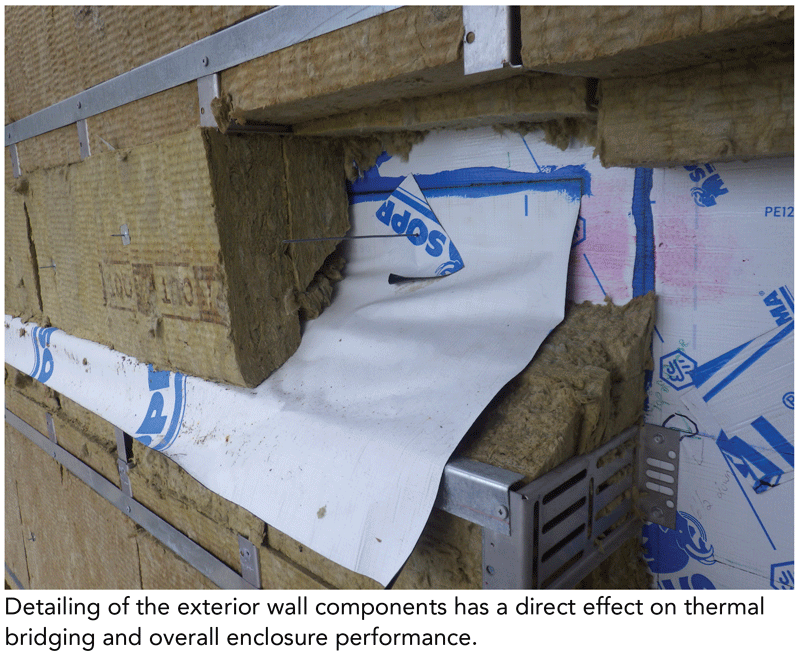
Dedicated to sustainable,
high performance building

The Narrows

Experience hones understanding of details

By Scott Kennedy and Simon Richards

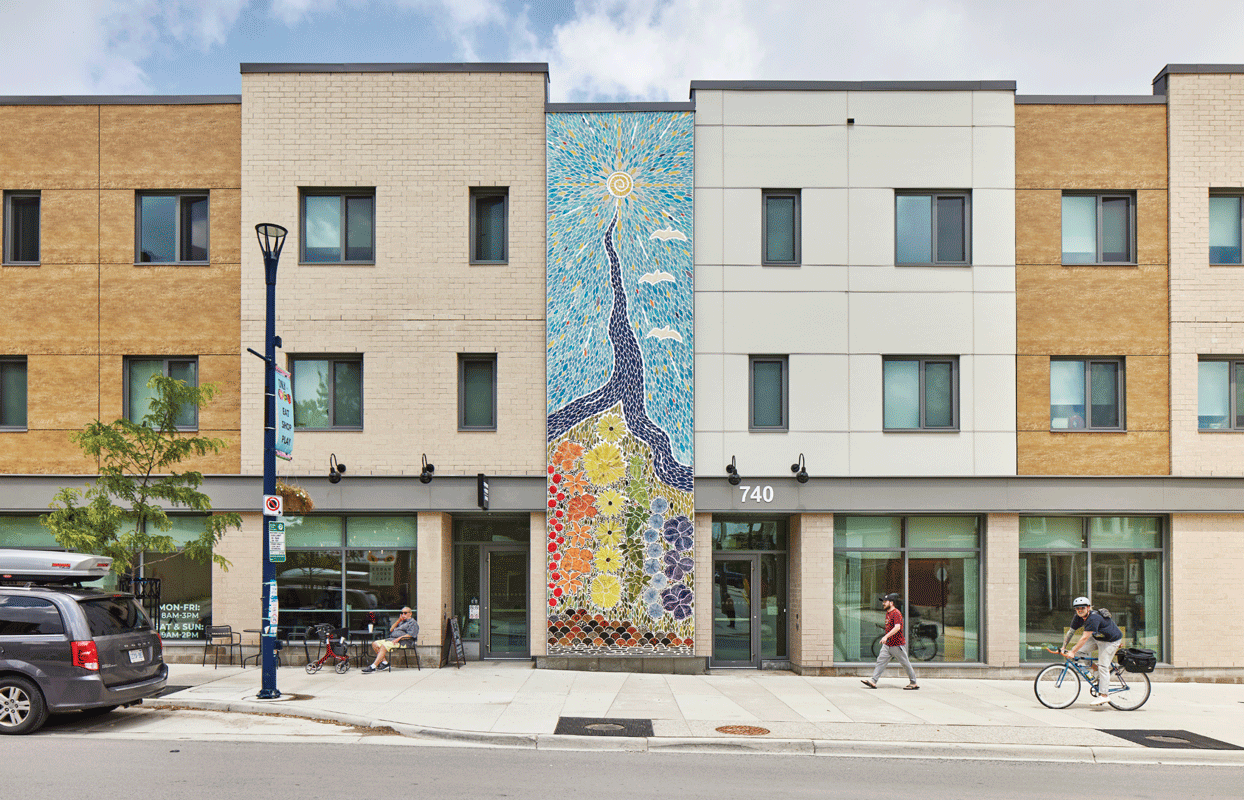
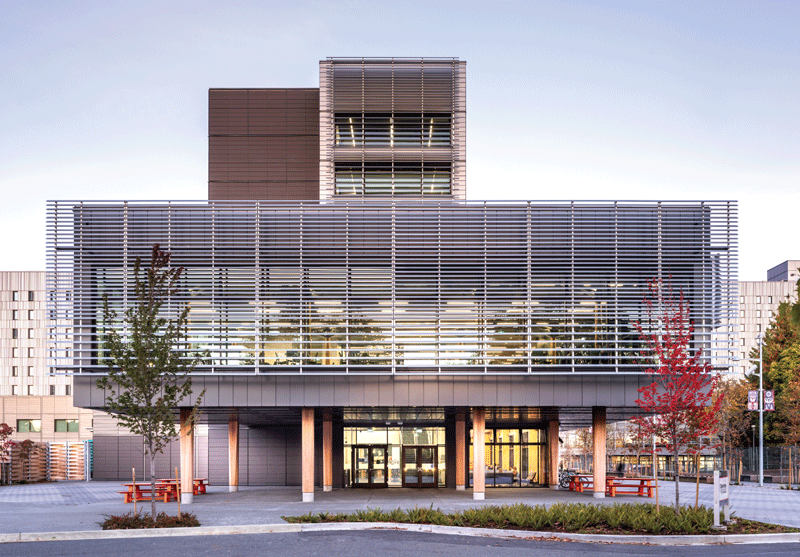
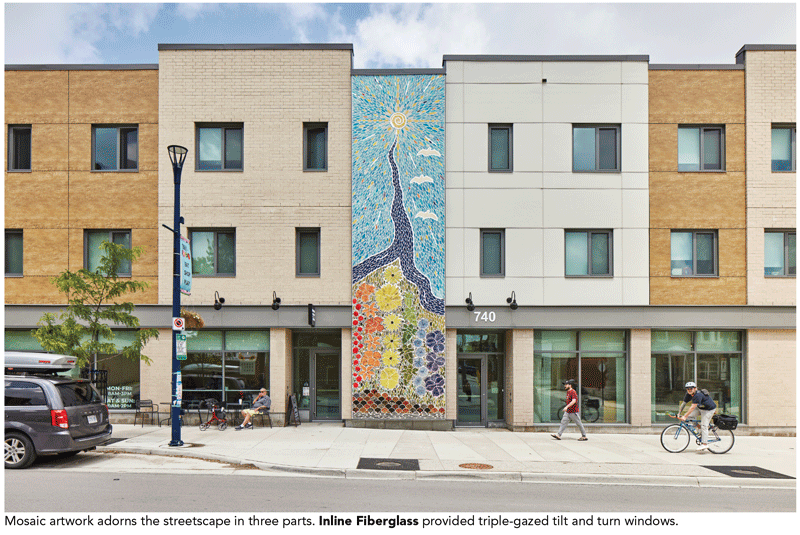
Located in the Hastings Sunrise neighbourhood of Vancouver, The Narrows is a six-storey mixed-use building with 48 residential rental suites in conventional wood frame construction over 225 sq. m of commercial uses in a concrete podium. It is located just one block east of The Heights, another mixed-use building which in 2018 became the first Passive House certified project to be completed by Cornerstone Architecture.  The Narrows has been recognized by the Province as a Clean BC Net-Zero Energy-Ready Challenge Winner.

Unlike The Heights, which is located on a corner, The Narrows has zero lot line setbacks on both the east and west sides, with its south façade on busy Hastings Street, and its north façade facing a commercial lane. From a Passive House perspective, the site is a challenging one, as the lane is almost two storeys higher than the street. As well as planning complexity, this creates issues around thermal bridging, the extent and detailing of the airtight envelope, and the transition between the parkade and the occupied portion of the building.

Additional massing complexity was generated by setback steps in the building section, in part responding to City zoning guidelines (of note, the City is recognizing this issue and is moving to allow simpler massing forms). The Narrows achieves a form factor of 0.47; higher than that for The Heights (which was 0.42) but still within the range that can meet Passive House energy standards. The zero lot line condition on the two sides necessitated an innovative solution to achieve the required levels of air tightness, insulation, minimized thermal bridging, as well as providing required fire ratings.

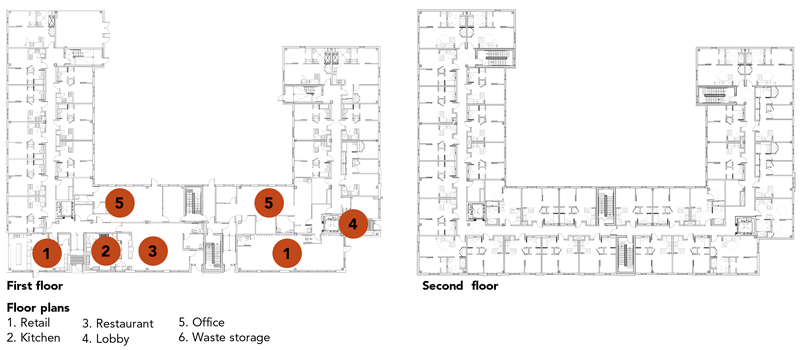
On the ground floor, which is at basement level relative to the lane, there are two retail units. The transition from the parking area includes a vestibule with doors at either end. The vestibule prevents the infiltration of carbon monoxide from the parking garage to the occupied spaces of the building. With the low air change rates required in Passive House buildings, ensuring the quality of incoming air is critical. 

Elevators connect a cold parkade to a warm building. At The Heights, the inside of the elevator shaft was lined with insulation; at The Narrows the outside of the shaft was insulated. Where the concrete podium extends beyond the upper floors, thermal bridging is again an issue.  At The Heights, the solution was to create a double slab with insulation between the layers; at The Narrows, the insulation was simply extended out beyond the building enclosure. Even with well-considered and conscientious detailing, it is impossible to eliminate thermal bridging entirely.  In large buildings, these deficiencies are manageable, as their impact can be minimal when considering the performance of the whole building.

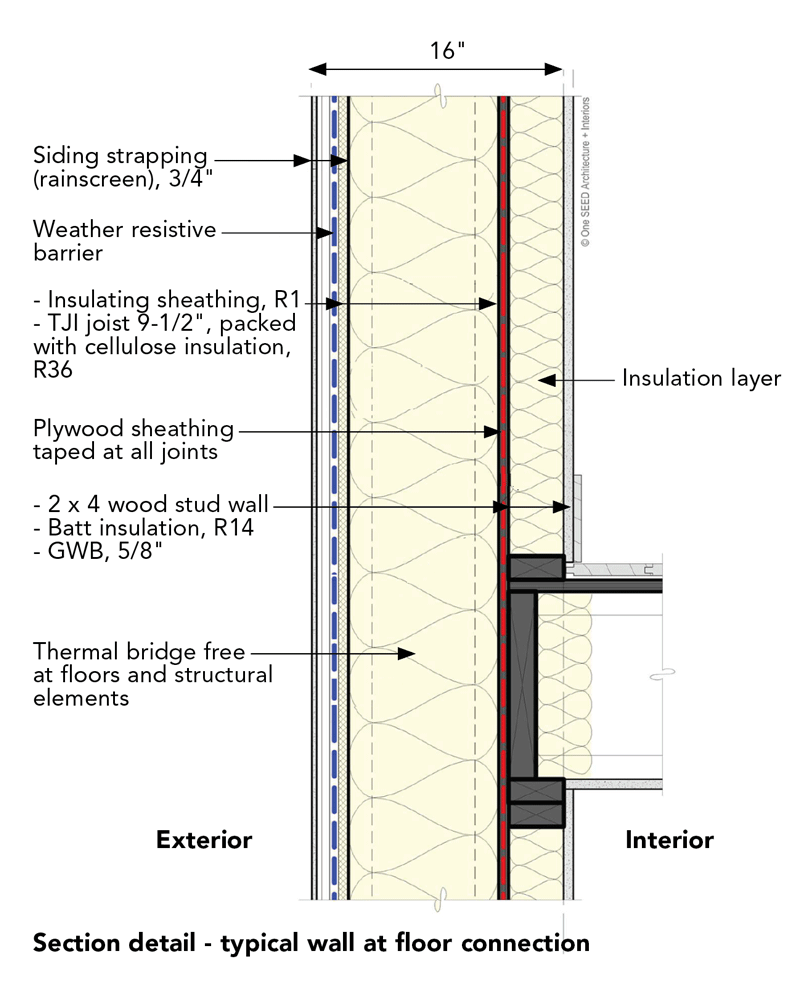
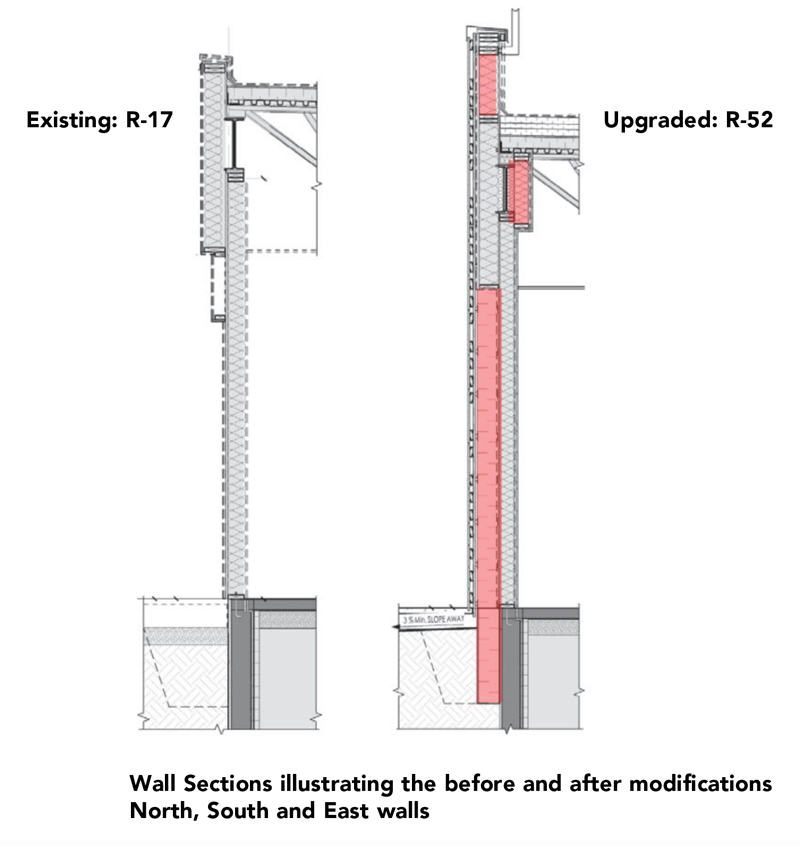
The wall framing is generally conventional; the front and rear assembly comprises a 2×8 load-bearing external section with an internal 2×3 framed service layer – both with insulated cavities. The intelligent combined air/vapour barrier is installed in a protected position between the two. This membrane needs to be construction-sequenced around the outside of the floor perimeter for continuity.

Project Credits

  • Owner/Developer  Steiner Properties
  • Architect  Cornerstone Architecture
  • Project Manager  ADM Management
  • Construction Manager  Scott Construction Group
  • CP/Code Consultant  Camphora Engineering
  • Structural Engineer Weiler Smith Bowers
  • Mechanical/ Electrical Engineer  Smith + Andersen
  • Geotechnical Engineer  Terrane Group
  • Civil Engineer  Webster Engineering
  • Building Envelope Engineer 
  • Aqua-Coast Engineering
  • Interior Design  Port + Quarter
  • Landscape Architect  Forma Design td.
  • Photos Luke Han Architect AIBC

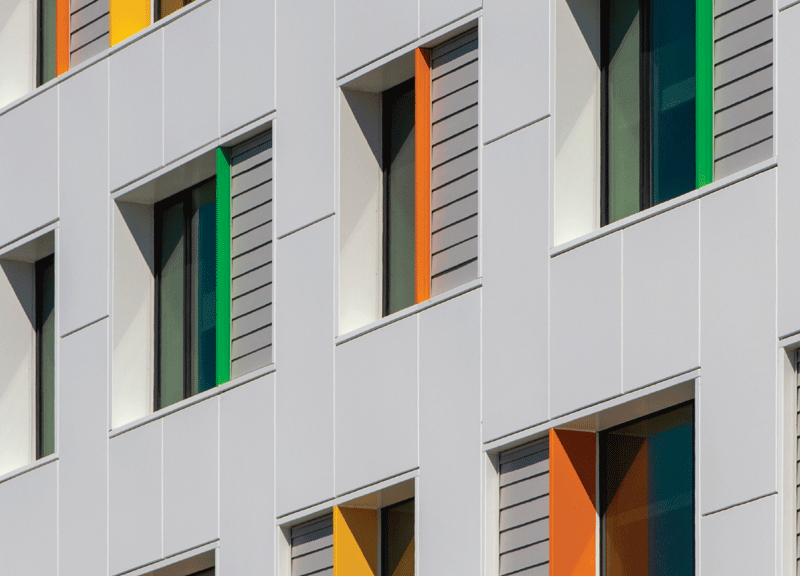
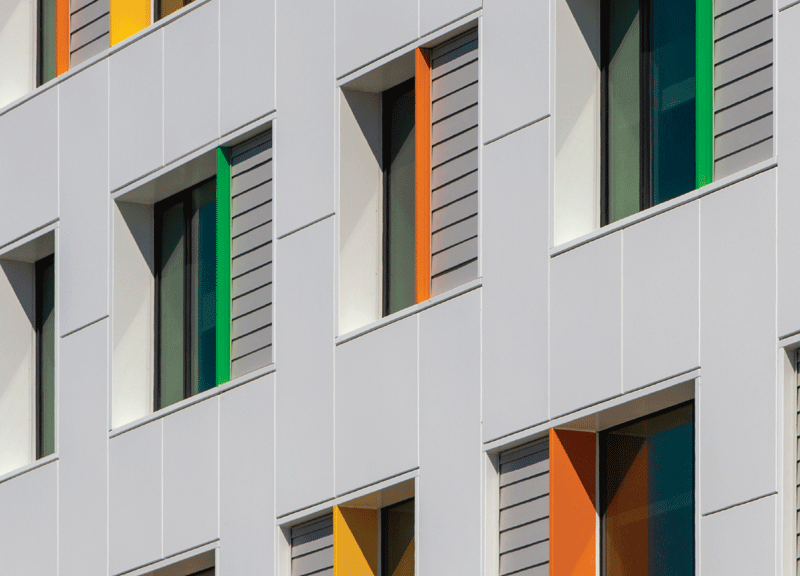
The zero lot line conditions on two sides required innovative solutions to achieve the required levels of air tightness, minimized thermal bridging, and fire ratings. Varsa Windows & Doors provided Passive-certified UPVC windows and doors for the project, contributing to the high energy-efficiency performance of the envelope.

SUBSCRIBE TO THE DIGITAL OR PRINT ISSUE OF SABMAGAZINE FOR THE FULL VERSION OF THIS ARTICLE.

Introducing KALWALL® 175CW

Introducing KALWALL® 175CW – the first of our new Translucent Insulated Glazing Units

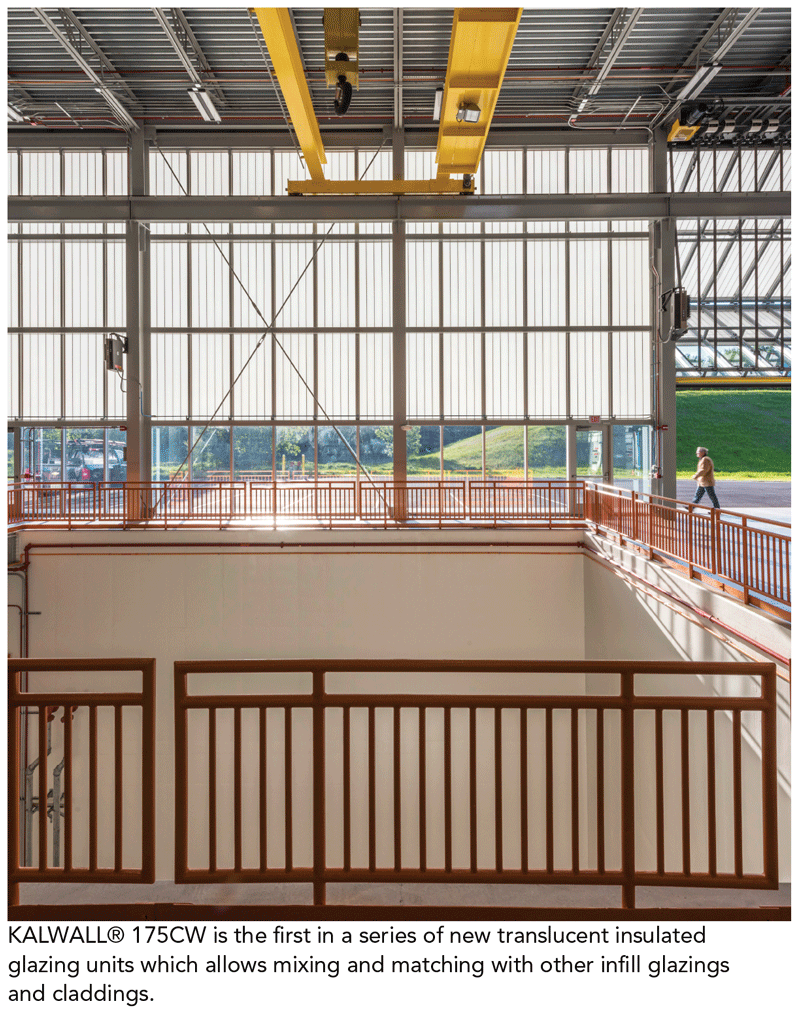
KALWALL® 175CW is the first in a series of new translucent insulated glazing units (TIGUs) which allows you to mix and match Kalwall with other infill glazings and claddings for limitless façade design possibilities – without sacrificing performance.

KALWALL 175CW TIGUs are nominally 1-3/4″ (44mm) and fully thermally broken. Daylight your building with Kalwall installed in the curtain wall system of your choosing and enjoy unparalleled versatility, durability and performance that outperforms conventional vision glazing in almost every way.

High-Performance Glazing Like No Other: KALWALL® 175CW was specifically developed for seamless compatibility with third-party curtain wall systems. While all Kalwall panels offer best-in-industry thermal performance and solar heat gain control, KALWALL 175CW offers high-performance glazing unlike anything in the industry. It allows you to:

  • Create perfectly bright, comfortable spaces without sacrificing daylight autonomy.
  • Mix and match Kalwall 175CW with double- or triple-glazed units, spandrels and other claddings for the best of both worlds. Plug and play wherever you need to daylight with confidence.
  • TIGUs offer privacy/modesty and are bird-friendly.
  • Eliminate the need for secondary control systems.
  • Low maintenance panels are graffiti and vandal resistant.

Kalwall 175CW panels are available in both 1-way and 2-way grid patterns, orthogonal (90 degree) only (no diagonal mullions or muntins internal to the panel). Trapped panels are still possible. All 175CW grid-cores use a thermally-broken I-beam (TBI). The thermal break is approximately 3/4″ (19mm) wide and utilizes our low conductive FRP as the web material.

Our 3D simulation software uses daylight modelling to customize a solution for your unique needs. You’ll receive the museum-quality daylighting™ you expect—whether your project is a retrofit or you’re thinking ahead to a future-fit solution.

Tech Specs: KALWALL 175CW TIGUs are lightweight at less than 1½ lbs/ft2 (7.3 kg/m2), strong and highly impact resistant ensuring you receive the exceptional quality for which Kalwall is renowned.

  • TIGUs for façade applications are available up to 5×15 ft  (1500mmx 4500mm).
  • Three U-factors are available: 1.59, 0.91 and 0.79 W/m2K options.
  • Standard grid patterns include Shoji-reverse and Ladder. Shoji, VertiKal™, Tuckerman and other orthogonal grid patterns are also available.
  • NFRC 100, 201 and 202 values available for all Crystal-White exterior/interior faces heet combinations and all four exterior cloud series Kal-tints™ (Cumulus, Cirrus, Nimbus, Stratus) with Crystal-White interior faces.
  • Up to ten-year warranty on abnormal colour change, fiberbloom and KWS coating.

Read the case study

SUBSCRIBE TO THE DIGITAL OR PRINT ISSUE OF SABMAGAZINE FOR THE FULL VERSION OF THIS ARTICLE.
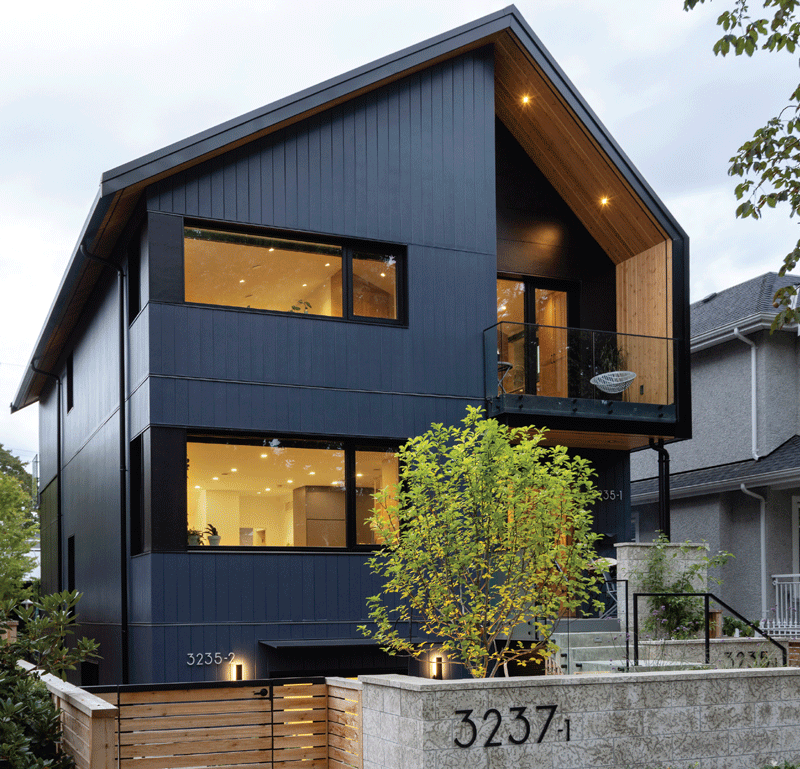
Interview with Michael Sugar

Starting on the path to zero

The Canada Green Building Council recently hired a new Director of Zero Carbon Buildings. Michael Sugar comes to the Council from the energy sector, with a background in clean energy and energy efficiency. Michael is heading up the Zero Carbon program at CAGBC, which includes the standards, as well as initiatives to help accelerate Canada’s shift toward zero carbon buildings and retrofits.

You recently joined CAGBC as Director of Zero Carbon buildings. What’s your mandate in this role?

As an industry-driven organization, we’re focused on helping provide solutions that enable market transformation through carbon reductions. It’s a big task, which requires Canada’s building sector aligning to global targets that include 40 percent embodied carbon reduction and complete elimination of operational carbon in new construction by 2030 – not to mention aggressively decarbonizing existing buildings.

My job is to help provide support for the sector. That’s why our Zero Carbon Building Standards were designed to provide a pathway that’s flexible, simple and works for most building types and all geographies yet can still result in achieving zero.

You’ve seen a sharp increase in registrations for ZCB certification – what’s driving that?

This year we saw a significant increase in adoption of the Zero Carbon Building Standards. In fact, we doubled the annual number of ZCB-Design certifications and tripled the annual number of ZCB-Performance certifications.

A few things are driving this shift. First, the adoption of ESG targets as a means of tracking and measuring the success of sustainability investments. Second, the rising risk posed by climate change and rising carbon costs which requires the real estate sector to future-proof investments by ensuring they are clean-energy and low-carbon ready. Access to sustainable financing products is also helping.

What role will architects play in the transition to zero carbon buildings?

Architects are integral to the shift to zero carbon buildings. Decisions made at the design stage significantly impact a project’s ability to cut operational and especially embodied carbon. Finding innovative, creative and marketable solutions will help shift zero carbon buildings and retrofits from niche to norm.

How do CAGBC’s ZCB-Design and ZCB-Performance define Transition Planning guidance? Why is it important?

To reach our climate targets, we need to start decarbonizing buildings today. But decarbonization is a process, and transition planning is something that can be done today, for every building. A Transition Plan is a costed, strategic plan that outlines how a building will adapt over time to remove combustion from building operations.

CAGBC is working with our technical committees to build out the tools and supports the building sector needs to advance transition plans and start on the journey towards zero carbon. Our goal is to remove barriers and encourage building owners to take this first step with us.

VIEWPOINT – REPRESENTING REALITY: WHY MATERIALS MATTER

By Lindsey Wikstrom

In 2019, the United Nations published its Global Status Report for Buildings and Construction. The document included an estimate that the global construction industry will build the equivalent of New York City (including all five boroughs) every month for the next 40 years. This represents an enormous quantity of material, much of it slated to be concrete and steel, composed of minerals extracted from the earth and produced using enormous amounts of non-renewable energy. There is no expectation that the rate of construction, which is fastest in Asia and Africa, will slow in the foreseeable future.

These projections have significant negative implications for the planet, and reinforce the urgency for us to focus on reducing the environmental impact of the materials and energy we use in construction. While both the concrete and steel industries have invested heavily in research, development and demonstration projects to reduce their carbon footprints, they can only do so much.

The huge volume of construction means there is ample opportunity for mass timber and other biogenic materials to improve the situation. Their contribution may be as structural members, insulation, cladding or interior finishes.  Mass timber can also contribute to the preservation of existing structures, as its light weight can make vertical additions more feasible, densifying rather than demolishing buildings.

One of the challenges we face in transforming the industry is the degree to which the process of design is rooted in tradition and abstraction.

Drawing versus Building

It is common that architects create drawings, not buildings. Even those of us who do create buildings, do so after the creation of drawings.  With this primary focus on drawings, we are acutely aware of graphic representation as a form of communication and decision making. 

When we draw two parallel horizontal lines, with the space between flecked with triangles, everyone understands this as a concrete slab. Similarly, four parallel horizontal lines can be understood as a 3-ply CLT panel.

Whatever it is we choose to represent, we generally interpret it as a discrete material or object, rather than considering the broader social, environmental and economic implications embedded in it.

When our two parallel lines represent concrete, we consider its strength and availability, but we can't ignore its implications related to the extraction of sand, gravel and water, and the heat intensive processing of cement containing some combination of calcium, silicon, aluminum, iron and other mined ingredients.

When our four parallel lines represent 3-ply CLT, we must consider its strength and availability as well as the implications of harvesting, milling, sanding, gluing and pressing, and whether the manufacturing partners are focused on zero waste and forest regeneration or not.

In both cases, we must also consider and accept the implications of time for manufacturing, transportation, installation and (in the case of concrete) curing. We should also factor in the social and economic benefits of local sourcing as opposed to importing materials from a distance. All of these considerations are latent in the lines we draw.

Representing Reality

These considerations bring a much greater depth and breadth of meaning to the decisions we make about materials and design. While the multitude of quantitative and qualitative metrics can be tabulated, a new form of graphic representation can assist us to compare and communicate our options.

In my equirectangular 360 drawings, all stages of a material lifecycle are drawn as spatial environments, where people work, and material is transformed. This shifts the focus from how buildings are conceived as performative beautiful geometry internal to a property boundary to an external choreography of how they are materialized.

SUBSCRIBE TO THE DIGITAL OR PRINT ISSUE OF SABMAGAZINE FOR THE FULL VERSION OF THIS ARTICLE.
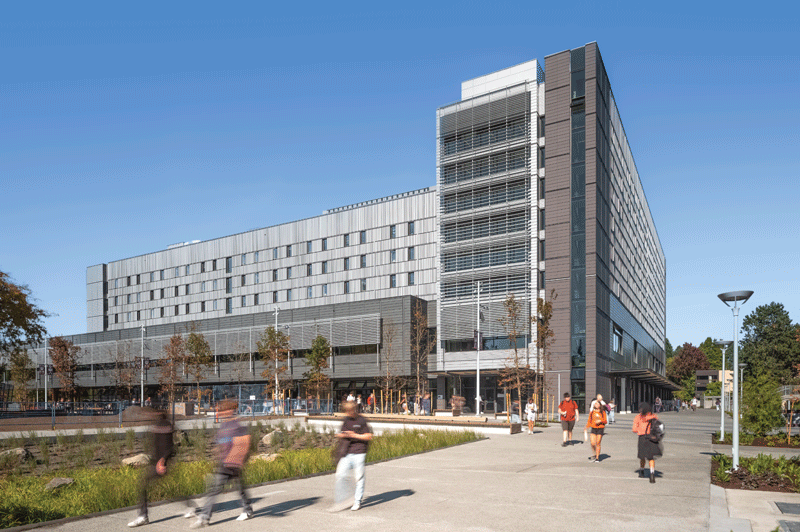
WINDERMERE FIRE STATION No.31

Canada’s first net-zero fire station features sweeping PV array

Windermere Fire Station No. 31 is located in southwest Edmonton in a rapidly expanding neighbourhood. The project is the City of Edmonton’s first net-zero building, achieved through a comprehensive passive design approach and a combination of solar arrays, geothermal heating and cooling.

he 1,520 sq.m facility has bays for three fire engines as well as offices, sleeping quarters and dining areas for a crew of up to 12 firefighters.  The post-disaster, non-combustible, sprinklered building will also act as a community centre in the event of an emergency. To underpin this role, it also has a dedicated room to support  the many community drives in which the department is involved.

Design Approach

As civic buildings, fire stations are highly functional and technical facilities, usually embedded in residential communities for citizen safety. At once practical and symbolic, contemporary fire stations serve a critical public service while conveying important civic values within a neighbourhood.

The design challenge was to create an expressive and engaging structure that would encourage community pride and incorporate technical advances in environmental performance.

The City of Edmonton requested a highly sustainable project that would generate on-site renewable energy equal to 100% of the total building energy demand. The facility must also have an energy performance that is 40% more efficient than NECB 2011, yield 40% less green house gas emissions than the baseline using NECB 2011, and operate at no more than 80 kilowatt-hours per square metre per year for heating needs.

The project site was unbuilt and unremarkable – essentially a blank slate. The station’s form was derived from a desire to underscore both the iconic image of a fire station as a community anchor, and a contemporary imperative for sustainable citizenship. A typical fire station might have been characterized by familiar signatures such as a pitched roof, large fire truck doors, a hose and bell tower, and solid and heavy load-bearing walls.

Windermere adheres to those principles, however, it re-imagines the hose and bell tower form – now redundant elements – with a gently curving, south-facing roof, outfitted with an extensive array of photovoltaic panels.

Other strategies to increase environmental performance include the building’s southern orientation which reduces energy demand by improving the quality of light received in the workplace. A geothermal heating and cooling system is also incorporated. The building is extremely well-insulated and includes high-performance windows and exterior doors.

Edited by SABMag editor Jim Taggart from material created by the project team.

SUBSCRIBE TO THE DIGITAL OR PRINT ISSUE OF SABMAGAZINE FOR THE FULL VERSION OF THIS ARTICLE.
The Contribution of Structural thermal Breaks to Overall Energy Performance

By Tracy Dacko

As our energy codes become more and more stringent, thermal breaks are increasingly important to prevent condensation and mould, reduce heat loss through envelope penetrations, lower energy costs and reduce carbon emissions.

Among the most critical locations to address this concern is at projecting balconies, where cantilevered slabs were traditionally a major contributor to the overall thermal bridging through the envelope. The introduction of structural thermal break systems  has prompted a resurgence of interest in balconies, which are once again a prominent feature of many buildings.

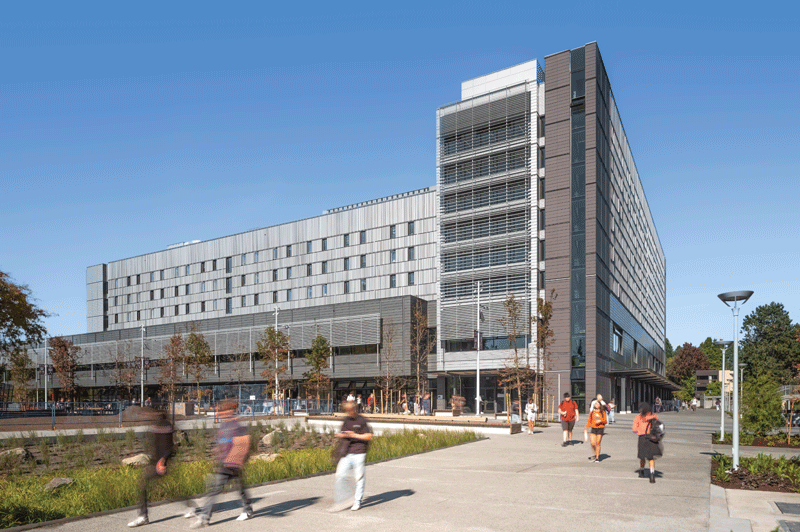
A striking recent example of this trend is Sonder Maisonneuve, an upscale extended stay hotel at 1500 Maisonneuve in downtown Montréal. Completed in the fall of 2021, the project team included Le Groupe Architex, Pomerleau Construction, L2C Structural Engineers, and Desjardins Experts Conseils, a mechanical, electrical and civil engineering firm. The building is owned by Prime Properties and operated by Sonder, an international hospitality company.

Performance Goals and Strategies

The Team instituted a suite of sustainability measures in advance of new requirements set by the National Energy Code of Canada for Buildings (NECB) 2015 and ahead of Montréal’s 46-point action plan established in 2016 targeting carbon-neutrality by 2050. 

Changes to the NECB include such measures as monitoring electricity use, lighting power density reduction, air ventilation heat recovery, and continuous insulation of the building envelope. In the case of Sonder Maisonneuve, this included insulating exterior walls to R25, and insulating wraparound balconies on 17 floors using 1600m (5,248 ft) of structural thermal breaks.

Mechanical and electrical efficiencies were achieved in part using condensing hydronic boilers with 96% efficiency for central domestic hot water distribution throughout the building. Each apartment is fitted with energy recovery air exchangers for fresh air requirements. For common areas such as corridors, fresh air comes from a gas-fired high-efficiency modulating air handling unit on the roof.

An underground garage ventilation system controls CO/NOx from car exhaust with in-line fans dedicated to each CO/NOx sensor, saving energy by reducing how often the main exhaust fans and fresh air louvres turn on. HVAC serving the 156 dwelling units is provided by high efficiency variable refrigerant volume heat pumps located on the roof. The heat pumps produce heat with a coefficient of performance for heating of 2.8 at an exterior temperature of -8o C. For cooling they provide a seasonal efficiency rating of 17.

Thwarting thermal bridging at wraparound balconies

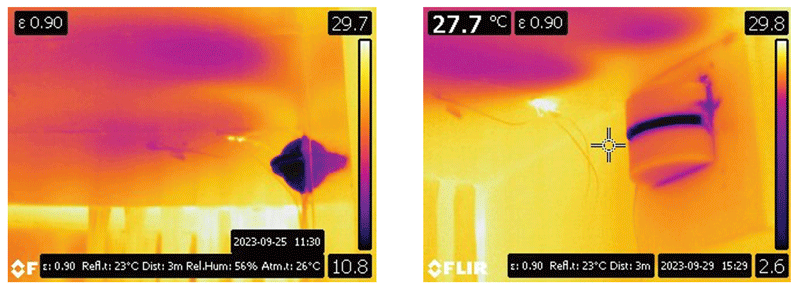
The 156 furnished studios and one- and two-bedroom apartments feature floor-to-ceiling double-glazed window walls leading onto continuous balconies that encircle the building.  While visually striking, the 2,788 m2 (30,000 sq. ft.) of balconies and 1,600 linear metres (5,248 ft) of window walls posed a risk of thermal bridging, particularly where the concrete floor slabs penetrate the insulated building envelope. With relative humidity of 40-50% typical for occupant comfort, the design team was concerned not only that thermal bridging would cause heat loss but, given Montreal’s extremely cold winters, that condensation could potentially form within the window wall, or other chilled interior cavities adjacent to the balcony connections, leading to mould growth. 

Tracy Dacko, Marketing Manager, Schöck North America.

Photos: Sonder Masionneuve Hotel. Photo courtesy Pomerleau.

SUBSCRIBE TO THE DIGITAL OR PRINT ISSUE OF SABMAGAZINE FOR THE FULL VERSION OF THIS ARTICLE.
CARBON CAPTURE, UTILIZATION & STORAGE

An Industry Strategy for Limiting Carbon Emissions

By Alfredo Carrato

When it comes to limiting the amount of carbon emissions globally responsible for advancing climate change, the construction sector has a substantial role to play. Overall, construction is responsible for more than one-tenth of total carbon emissions around the world, and a large portion of this carbon footprint comes from the manufacturing of building materials such as cement, the second-most consumed material in the world after water.

However, the past decade or so has seen significant advancements in methodologies for reducing carbon emissions in the cement production process. One of the most promising and rapidly growing methodologies is called Carbon Capture, Utilization, and Storage (CCUS), representing a suite of technologies designed to prevent the carbon dioxide that manufacturing processes produce from going into the atmosphere.

Several leading organizations, such as the International Energy Agency, the International Renewable Energy Agency, and the Intergovernmental Panel on Climate Change, have released long-term initiatives that rely on the expansion of CCUS to limit the global temperature rise to just 1.5 degrees Celsius. The IEA has also cited CCUS among the most cost-effective options for the decarbonization of carbon-heavy industries, many of which operate across the construction value chain.

Before outlining the specific CCUS methodologies that are gaining real momentum today, it’s important to clarify exactly how it works and the various ways it promises to lower the carbon impact of cement production.

What is CCUS?

Carbon emissions are an unavoidable byproduct of traditional cement production. This is because a core component of Portland cement – the most widely used cement today – is limestone. When this mineral is heated, the carbon trapped inside the limestone is usually released.

CCUS allows cement manufacturers to capture this carbon byproduct from points of emission within the manufacturing facilities or directly from the air. Such captured emissions can then be safely stored underground in geological formations, injected into concrete to strengthen it, or used to make other valuable products.

Companies leveraging CCUS

Though CCUS has only gained widespread attention fairly recently, the technology has been achieving real results for several decades. In 1996, the first large-scale CCS project was commissioned at the Sleipner offshore gas facility in Norway. At Sleipner and Snøhvit, another leading project in Norway, over 20 million tons of CO2 have been safely stored to date.

Today, more than 30 cement CCUS projects are in different development stages worldwide, the majority of which are based in Europe. In the United States, the U.S. Department of Energy is currently conducting feasibility studies for multiple projects in California, Colorado, Texas, Missouri and Indiana, among others. However, much of the CCUS progress worldwide is taking place at the startup level, often thanks to collaborations with sustainability-focused venture capital firms.

In England, a startup called Carbon Clean has developed proprietary technology that captures carbon emissions from the flue gas that gets released through a cement plant’s smokestack. The technology is currently in use at cement facilities in several countries such as India and more recently Germany, where the goal is to standardize carbon capture and achieve cost-competitive carbon neutrality across so-called hard to abate industries before 2030.

This is just one of the myriad CCUS-related startups that has garnered considerable venture funding as of late, which reflects the increasing prioritization of sustainability in the global construction sector.

Challenges for CCUS

The biggest drawbacks to CCUS are the high upfront capital costs for the equipment to separate the carbon, the high energy costs of keeping the equipment running, and the costs related to transportation and safe storage of the captured CO2. According to a recent report from the U.S. Department of Energy, to cover these expenses a cement manufacturing organization would need to spend another $22 to $55 for every metric ton of cement produced.

Alfredo Carrato is a trained architect, BIM enthusiast and college professor who scouts for breakthrough decarbonization technologies for the construction industry. As an Investment and Open Innovation Advisor, he oversees investment activities and partnerships at Cemex Ventures, with a focus on tackling the carbon footprint challenge of the construction sector.

SUBSCRIBE TO THE DIGITAL OR PRINT ISSUE OF SABMAGAZINE FOR THE FULL VERSION OF THIS ARTICLE.
CENTENNIAL COLLEGE: A-BUILDING EXPANSION

LEED Gold, net-zero carbon, and WELL certifications signify huge commitment to sustainability

By Craig Applegath

Established in 1966, Centennial College of Applied Arts & Technology is the oldest publicly funded college in Ontario.  A-Building is situated on the Progress Campus in Scarborough, about 25km east of Downtown Toronto.

The city of Toronto is located on the traditional territory of many nations including the Mississaugas of the Credit, the Anishnabeg, the Chippewa, the Haudenosaunee and the Wendat peoples and is now home to many different First Nations, Inuit and Métis peoples. This contributes to the cultural diversity of Centennial College; whose faculty and students speak more than 80 different languages.

Context and Concept

Centennial College envisioned its A Building Expansion as a living embodiment of Chief R.

Stacey Laforme’s inspirational book Living in the Tall Grass: Poems of Reconciliation.  The design response to this challenge is a celebration of the Mi’kmaq concept of “Two-Eyed Seeing” which harmonizes Indigenous wisdom and Western perspectives. 

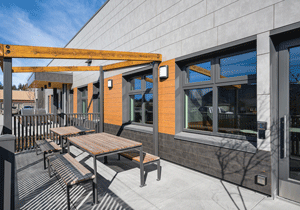
The A-Building Expansion, which houses the School of Engineering Technology and Applied Science programs completes the truncated corner of the site, forming a gateway into the campus. A new urban edge & landscaped area planted with biologically indigenous plant species enhances the public realm.

The prominent north & west facades act as a tool for storytelling, visually symbolizing the aspirations of the institution. Designed to embody the Indigenous concepts of the four-colour medicine wheel and the seven directions, the building also visually signals the coming together of Indigenous and Western aesthetics.

Program

The A Building Expansion sits lightly on the land, and is aligned with the four cardinal directions. The main entrance opens to the East, echoing the traditional approach of a longhouse. In this six storey structure, the lower three floors contain flexible and accessible classrooms, labs, informal learning spaces and food services; while the upper three floors contain flexible workspaces for Faculty and Staff specifically planned for collaboration and student engagement. The building also surrounds an exterior courtyard that serves as an outdoor classroom for teaching in the round. Designed for inclusivity, the facility also incorporates universal Washrooms, lactation rooms, and a multi-faith space to meet the needs of all occupants.

Structure, Form and Materials

The ground floor structure is cast-in-place concrete, above which are five storeys of glulam post and beam construction, with CLT floor panels with concrete topping. Much of the mass timber structure is left exposed.

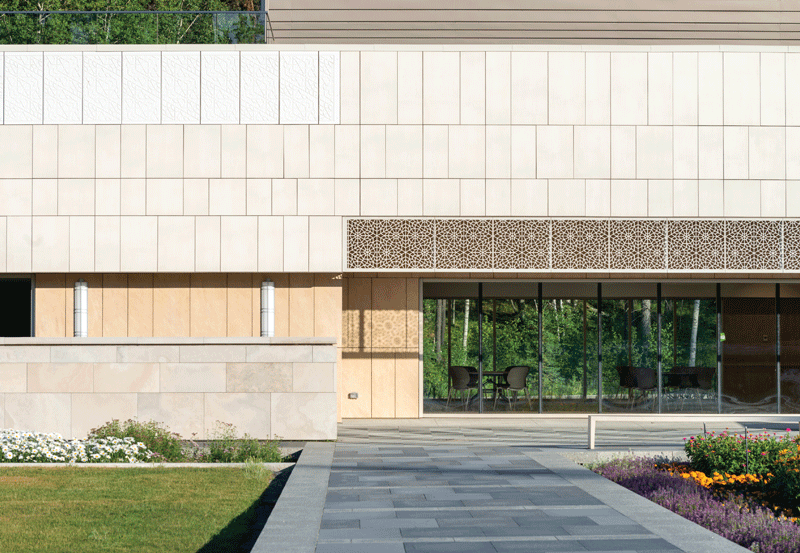
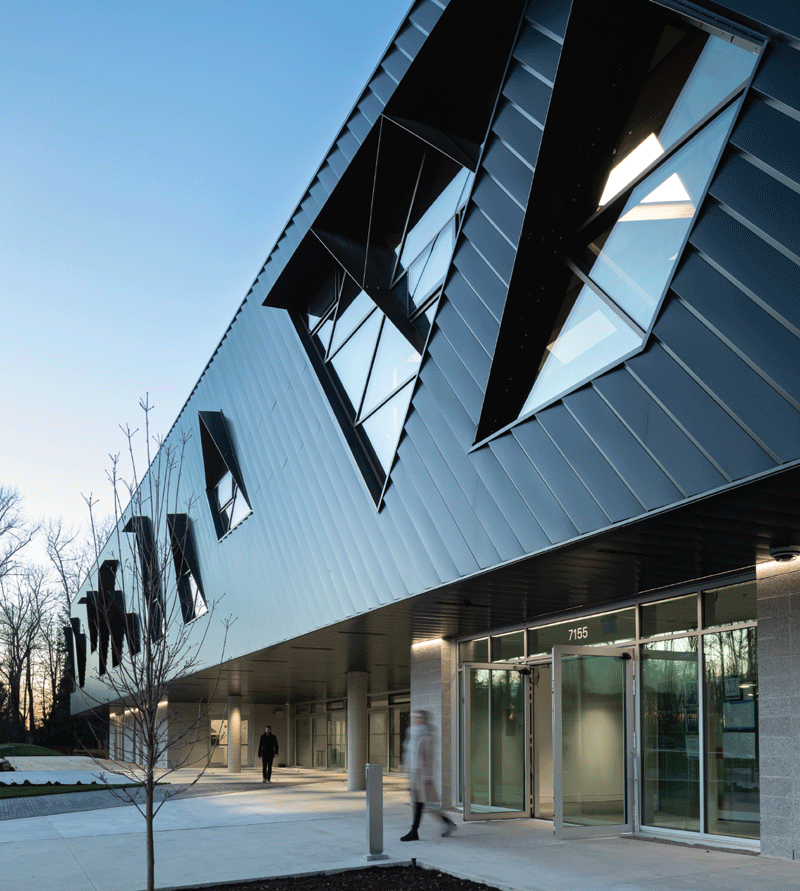
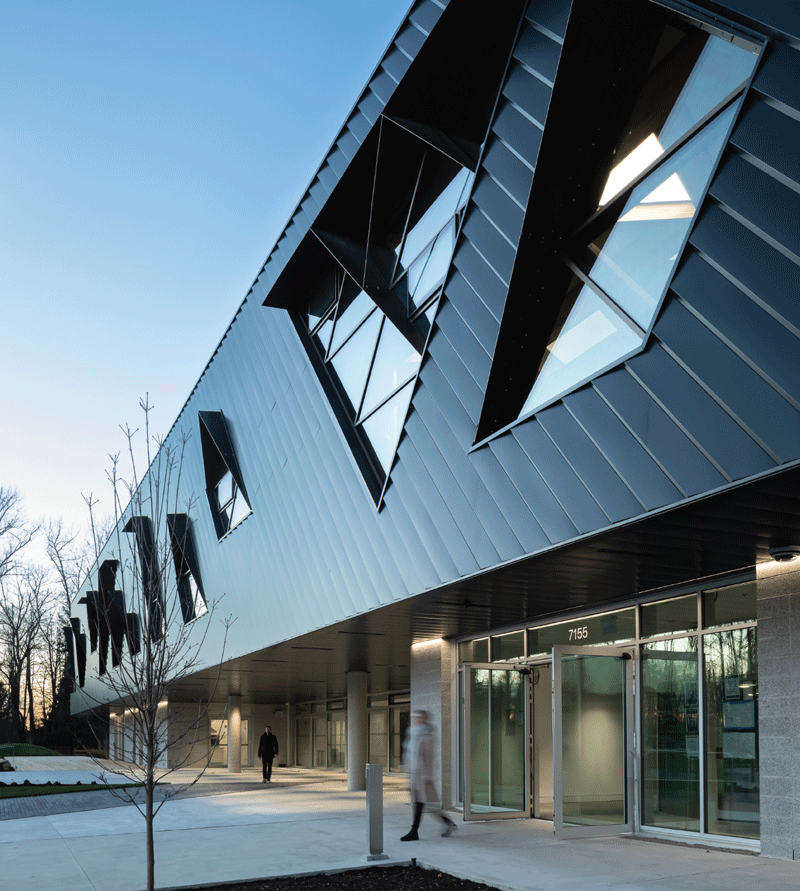
The geometry of the exterior envelope is inspired by the underlying structure in indigenous arts and craft, animal skins and the shingling of traditional haudenosaunee longhouses.  The cladding combines parallelogram and trapezoidal shingled aluminum wall panels in combination with composite wood veneer wall panels, which wrap the building mass and administration floors at the upper levels.  The envelope of the classroom block complements and balances the architectural form, grounding the building through the west of the site. It is clad in large and elegant anthracite grey solid phenolic wall panels.

Large areas of triple glazed aluminum framed curtain wall reveal the underlying wood structure, exposing student, staff and faculty life while alluding to the drawing back of the skins over a traditional Haudenosaunee wigwam frame in response to seasonal temperature changes. 

Interior Design

Internally, the plan is organized along Wisdom Hall, a highly transparent, 4-storey diagonal atrium space for user engagement & study zones with a grand stair that ascends from the East entrance toward the West, lined with Indigenous stories

Entering the building from the East, students ascend the grand stair, animating the main spine of the building through a series of informal learning spaces designed to facilitate spontaneous conversation and the sharing of ideas.

Reaching the top at Level 3, the stair culminates at a large Student hub and café that showcase Indigenous food offerings, allowing students to experience Indigenous culture through its cuisine.

The main circulation corridor along Wisdom Hall features acoustic wood ceiling baffles that undulate to represent the flow of water, a key element that is richly woven through Indigenous stories, customs, and heritage. On each side of the baffles, commissioned artwork tells a Creation Story. Students may learn the story of the Anishinaabe as they walk West to class and the story of Haudenosaunee on their return towards the East.

The cladding combines parallelogram and trapezoidal shingled aluminum wall panels in combination with composite wood veneer wall panels. Tremco supplied all of the roofing products.

Project Performance

  • Energy intensity (building and process energy) = 106 KWhr/m²/year
  • ANNUAL ON-SITE RENEWABLE ENERGY EXPORTED = 69,000 kWh/year
  • ANNUAL NET ENERGY USE INTENSITY = 98 kWh/year
  • Energy savings relative to OBC SB-10 reference building = 40%
  • Annual Energy Cost (ECI) = $14/m²/year

Project Credits

  • Owner/Developer  Centennial College
  • Architect  DIALOG Architects and Smoke Architecture Project Manager  Colliers
  • Design/Build Contractor Ellis Don
  • Landscape Architect  Vertechs Design
  • Civil Engineer Walter Fedy
  • Mechanical & Electrical Engineer  Smith + Andersen
  • Structural Engineer  RJC Engineers
  • Photos  James Brittain

SUBSCRIBE TO THE DIGITAL OR PRINT ISSUE OF SABMAGAZINE FOR THE FULL VERSION OF THIS ARTICLE.
Waterfront Innovation Centre

Transformative project targets LEED Platinum

By Peter Kurkjian and David Copeland

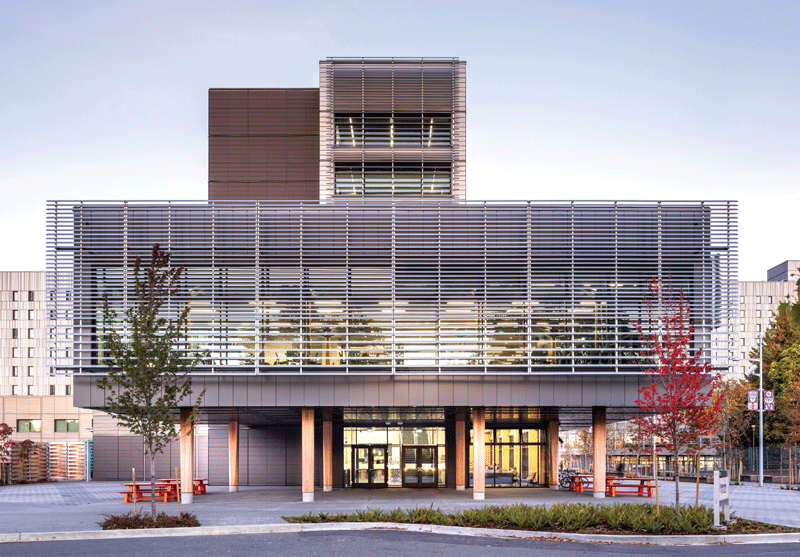
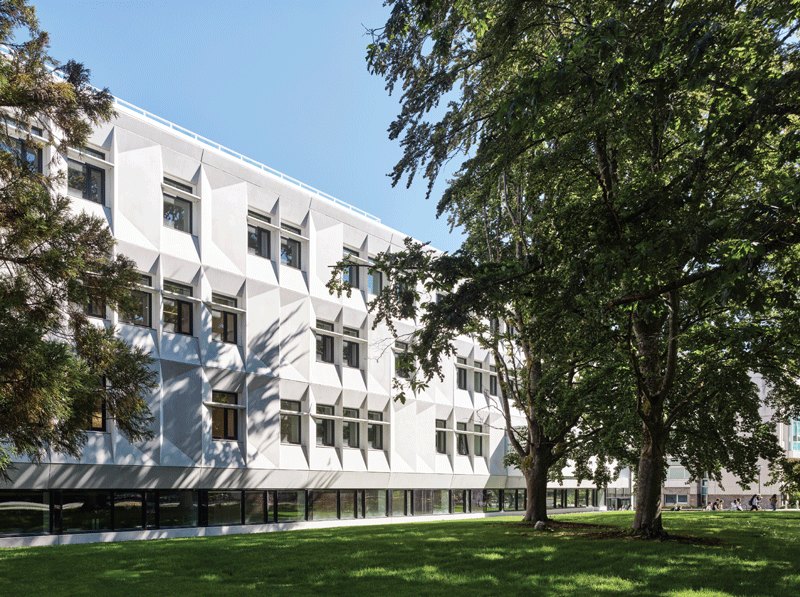
The Waterfront Innovation Centre (WIC) was born out of a competition by Waterfront Toronto in 2015 with the intention of transforming Toronto’s once derelict East Bayfront Precinct into an animated mixed-use community. WIC is a purpose-built commercial development that caters to Toronto’s growing technology and media sectors.
The project consists of two mid-rise buildings connected by a bridge, with a total area of 44,000 sq.m (475,000 sq. ft.). Passive design strategies include optimized natural daylighting, a high-performance curtain wall envelope, green roofs, landscaping with native plants, and excellent transit and bike path connectivity. Active systems include on-site energy generation with an array of solar panels, underfloor air distribution systems, connection to the Enwave deep water cooling district network, and rainwater harvesting. It has achieved LEED v4.1 Platinum certification (Core and Shell), one of Canada’s first developments to achieve this rating.

WIC features three distinct programmatic areas, the ‘Hive’, which is an adaptable, high-performance workplace with unobstructed planning flexibility. The ‘Exchange’, which features gathering areas, labs, and workspaces, and ‘The ‘Nexus’, which converges all three. The Nexus is a light-filled space for both the public and the buildings’ tenants.

Both of WIC’s ’ main entrances feature amphitheatre-styled seating that extends from ground level up to The Nexus. Spanning both buildings, the Nexus houses two expansive lounges with multi-use seating and tables, event space with high-tech meeting areas, 3 cafes, breakout areas and public washrooms.  By providing a distinctive, welcoming and easily accessible interior amenity, the Nexus becomes an extension of the public realm, and invites the public and building users to interact in a readily adaptable space. Retail spaces open out onto the adjacent park frontages and streets.

Externally, native species were used as they are more resilient, promote water conservation and stormwater management, as well as supporting greater biodiversity. A partial green roof filters rainwater and reduces the heat island effect.

Efficient floor plates optimize daylight, with over 90% of leasable space within 12m (40ft.) of the perimeter glazing. As a result, during 85% of annual working hours, artificial lighting is not required.  Photo-electric sensors along the perimeter take advantage of daylight harvesting, and high-performance glazing with a low Solar Heat Gain Coefficient assists in reducing thermal gains.

The Underfloor Air Distribution (UFAD) system has individual, user-controlled diffusers at floor level which circulate clean air from below. This provides comfort by eliminating thermal stratification and improves indoor air quality, with stale air rising above the occupied zone to be replaced by fresh air from below.

The UFAD system supplies low pressure, individual user-controlled ventilation at lower energy than conventional overhead systems. Coupled with a heat recovery system for all ventilation air, high efficiency boilers, and variable frequency drive pumps, WIC achieves a 49% reduction in winter heating and 23% reduction for summer cooling over baseline. The energy reduction is aided by site-generated renewable energy in the form of a 253-kW photovoltaic system located on the roof, supplying 5% of the building’s required energy. An integrated demand-response program allows the building to make operational adjustments before peak demand, reducing  stress on the Ontario electrical grid.

Trane equipment is used extensively in the ventilation system, in the chilled water and hot water systems, in the stormwater system, and in the underfloor air distribution system.

Project Performance

  • Energy Use Intensity (building and process energy) = 172.11KWhr/m²/year
  • Energy intensity reduction relative to reference building under ASHRAE 90.1 2013 = 10%
  • Water consumption from municipal sources = 4247.7 litres/occupant/year
  • Reduction in indoor water consumption relative to reference building under LEED = 42%
  • Reduction in outdoor water consumption
  • relative to reference building under LEED = 62%
  • Recycled material content by value = 20%
  • Regional materials (160km radius) by value = 20%
  • Construction waste diverted from landfill = 81%

Project Credits

  • Owner/Developer  Menkes Developments
  • Architect  Sweeny&Co Architects Inc
  • General Contractor  EllisDon
  • Landscape Architect  Janet Rosenburg Studio
  • Civil Engineer  Stantec
  • Electrical Engineer  Mulvey & Banani
  • Mechanical Engineer  The Mitchell Partnership
  • Structural Engineer  Stephenson Engineering
  • Interior Design (Landlord spaces)  Sweeny&Co Architects Inc
  • Commissioning Agent  JLL
  • LEED Consultant  Green Reason
  • Photos  Tom Arban, Paul Cassselman Photography

Peter Kurkjian, Senior Associate and David Copeland, Associate, both of Sweeny & Co, were project architect and project manager, respectively, on the design team for the project.

SUBSCRIBE TO THE DIGITAL OR PRINT ISSUE OF SABMAGAZINE FOR THE FULL VERSION OF THIS ARTICLE.