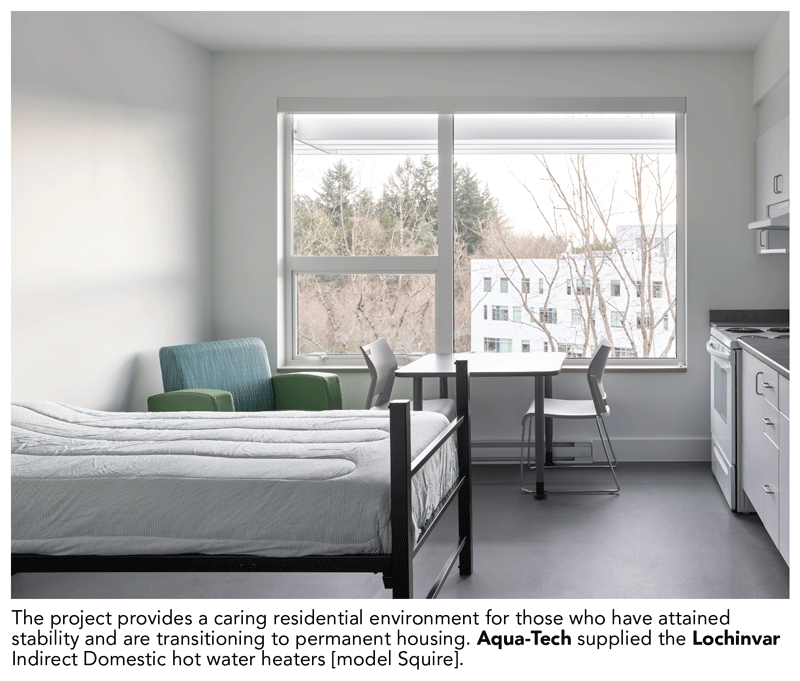
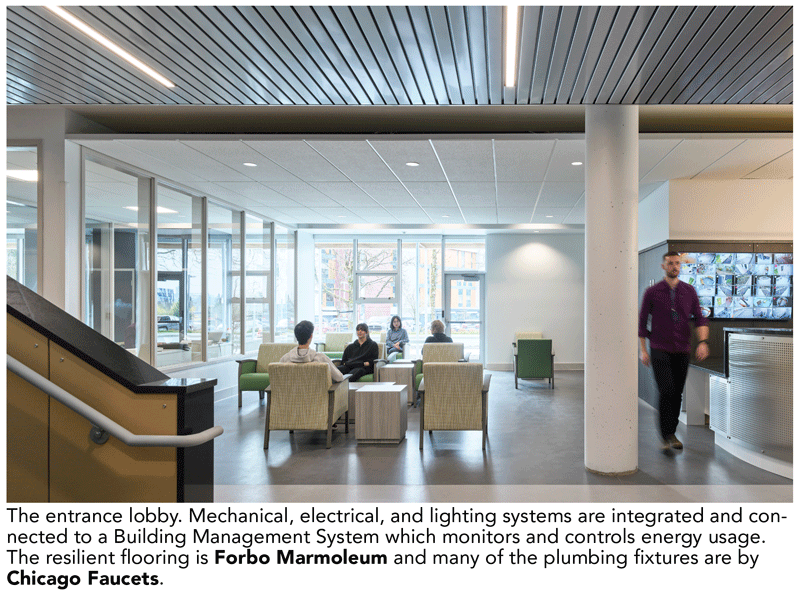
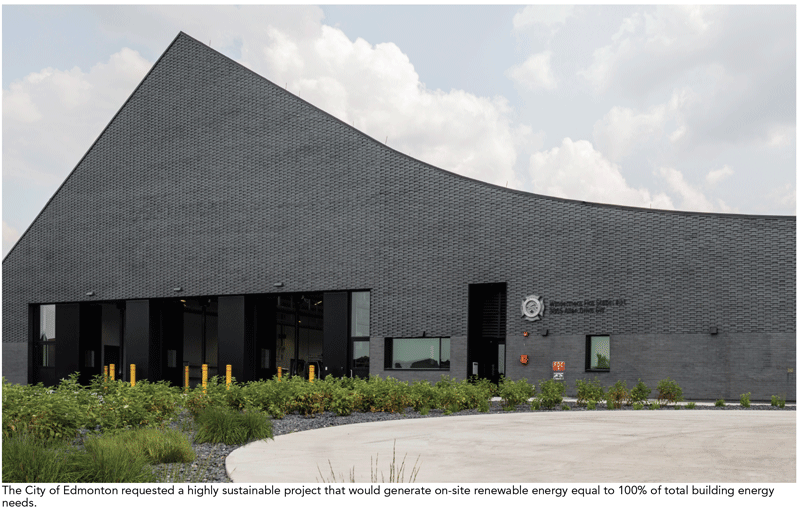
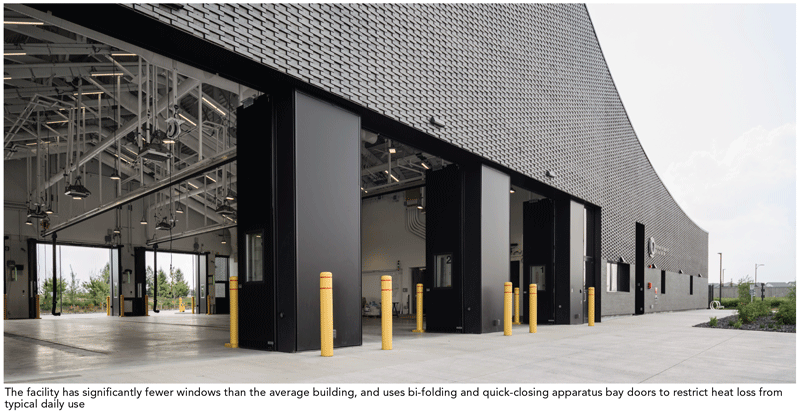
Dedicated to sustainable,
high performance building

Residential (Small) Award – BIRD’S WING PASSIVHAUS DUPLEX +, Vancouver, BC

Jury Comment: “In addition to achieving Passive House performance, this duplex addresses multiple aspects of social sustainability, such as affordability, demographic diversity and ageing in place. It doubles the density in  this former single-family zone, while still respecting the form and scale of the surrounding buildings.“

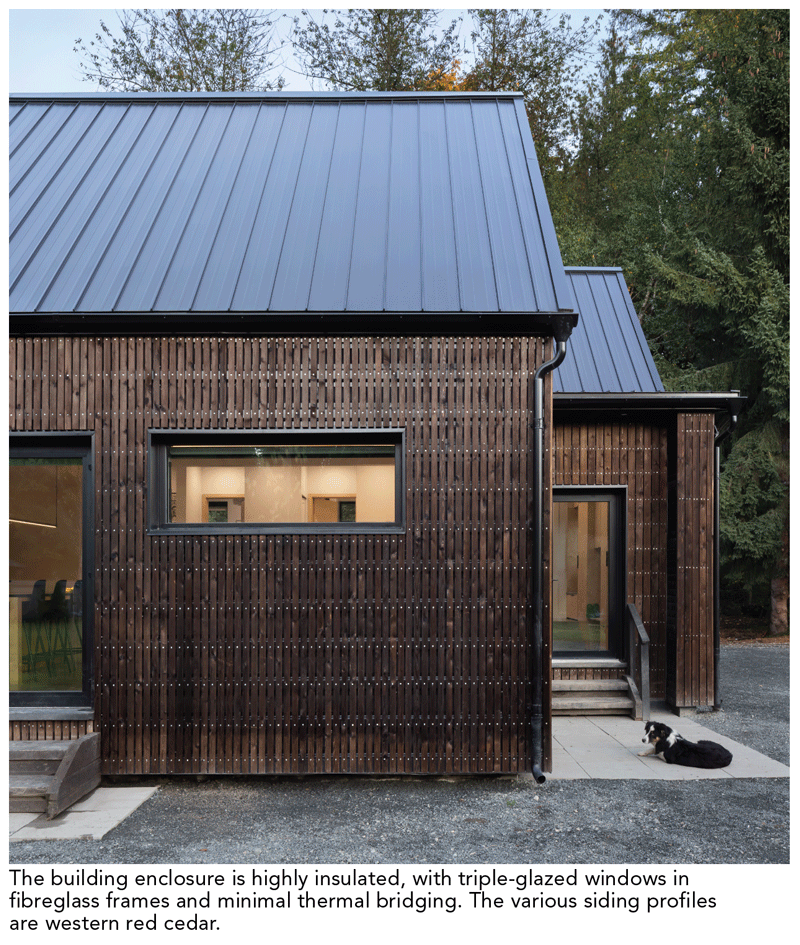
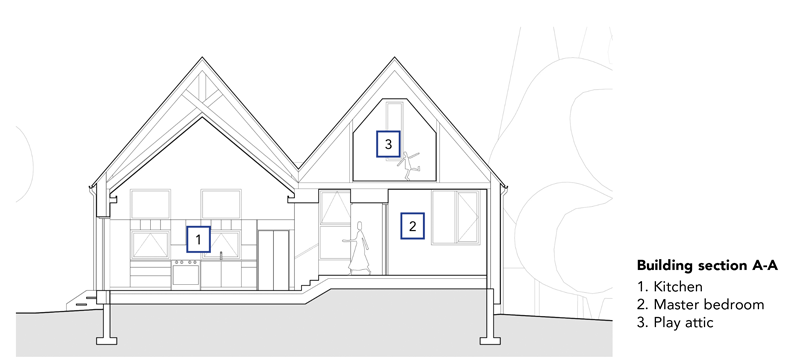
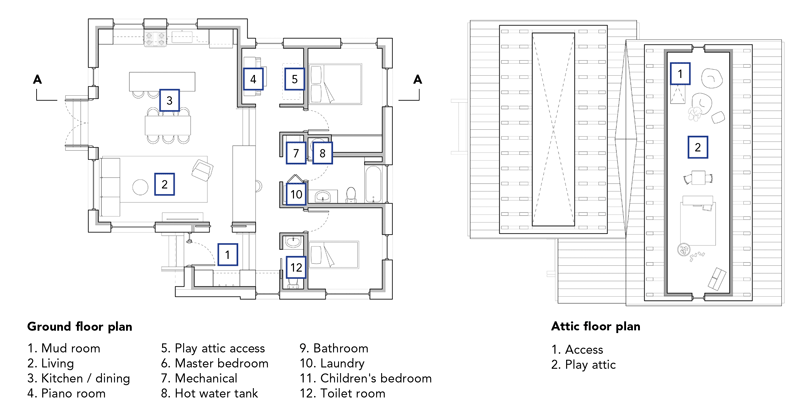
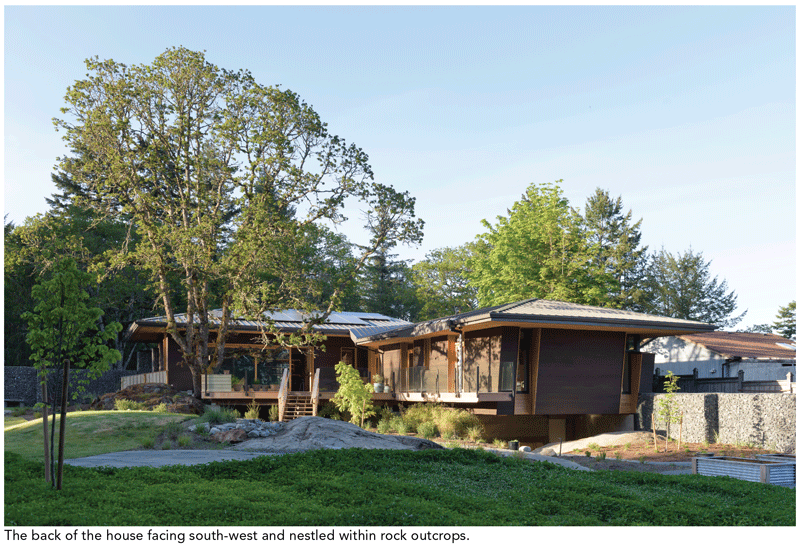
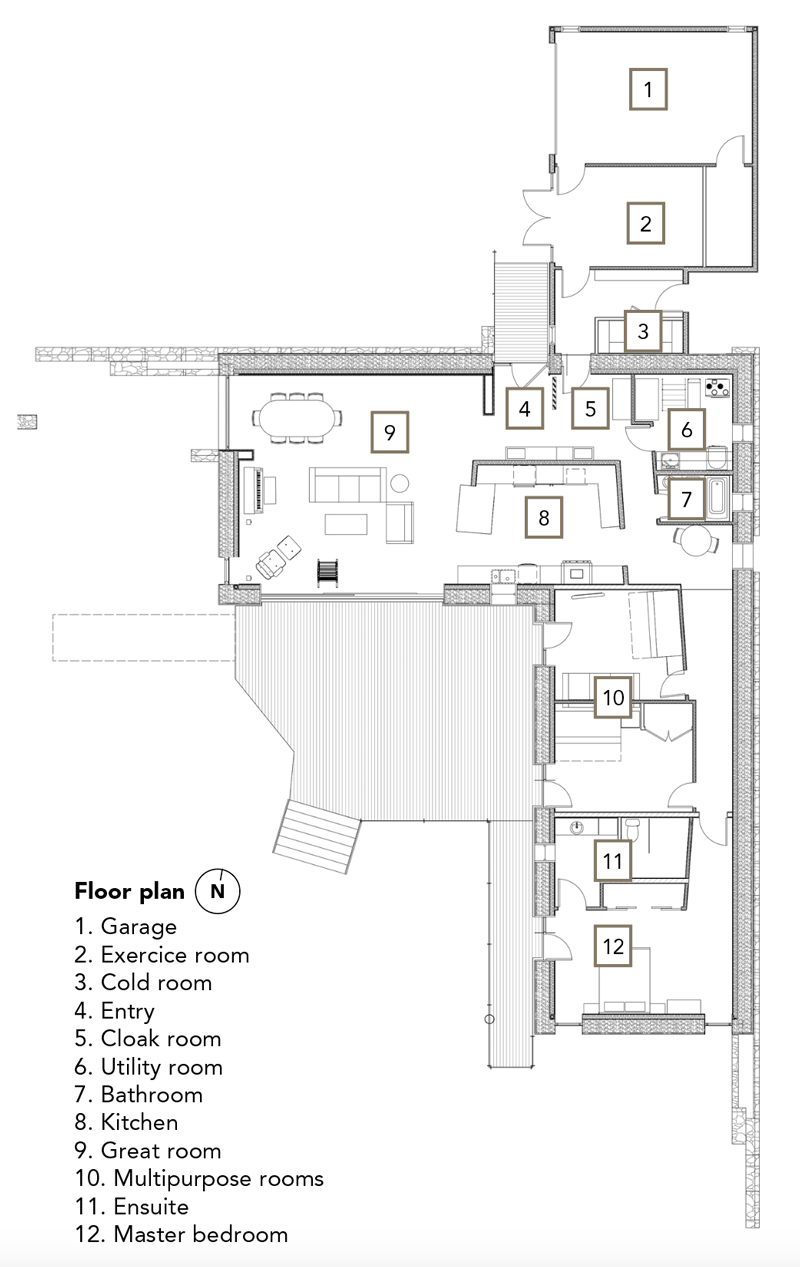
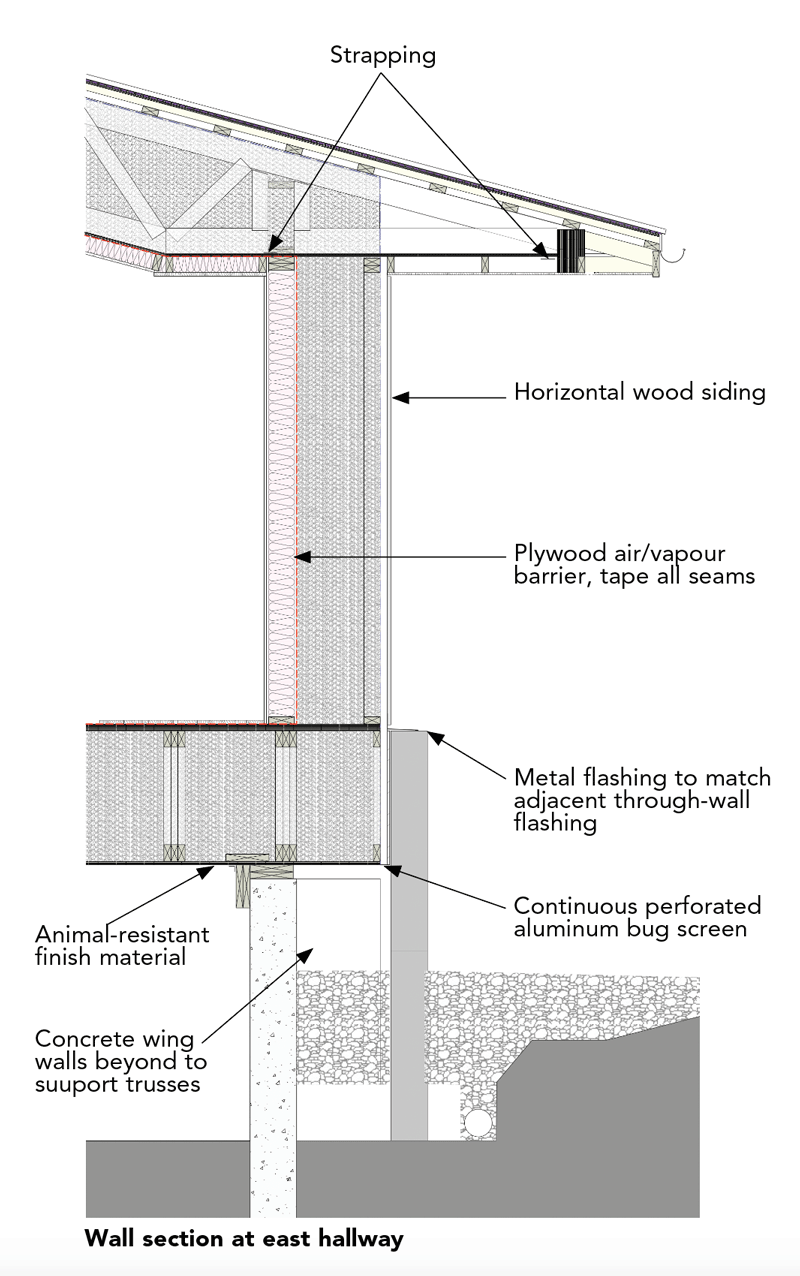
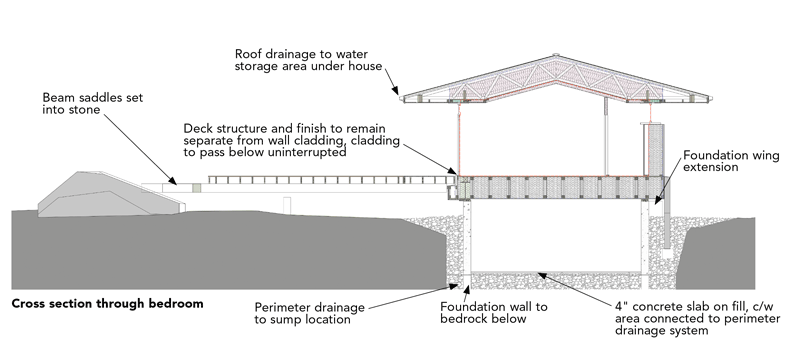
Bird’s Wing Passivhaus Duplex + is a new housing typology that elegantly adjusts to the occupants’ needs for space and flexibility, without waste. The name “Bird’s Wing Passivhaus Duplex +” has several layers of meaning, describing the architecture, planning, and unique objectives of this custom duplex that includes two primary dwelling units as well as two flexible lock-off suites.

The project takes a soft density approach, with four households under its wing, yet keeping within the scale of its single-family neighbourhood. Adaptability is key, with units able to expand and contract for generational flexibility.

The project also addresses  accessibility for ageing-in-place, and affordability with its two primary and two lock off units on a previously single-family lot.

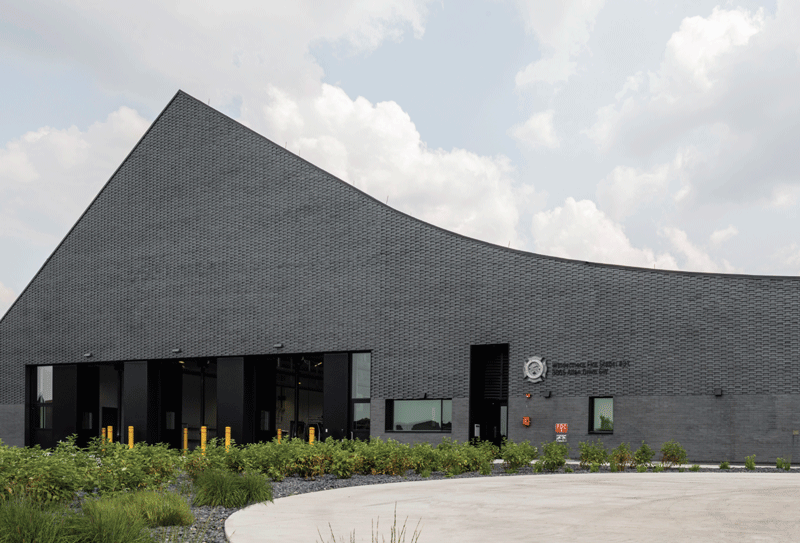
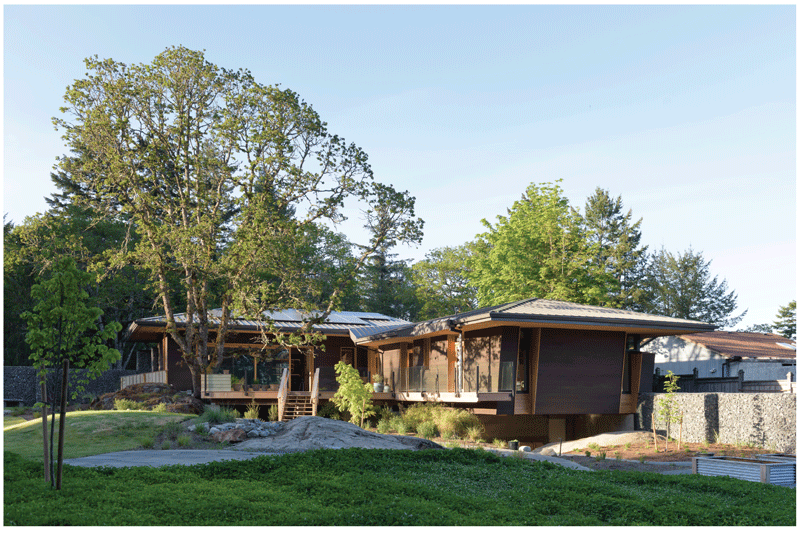
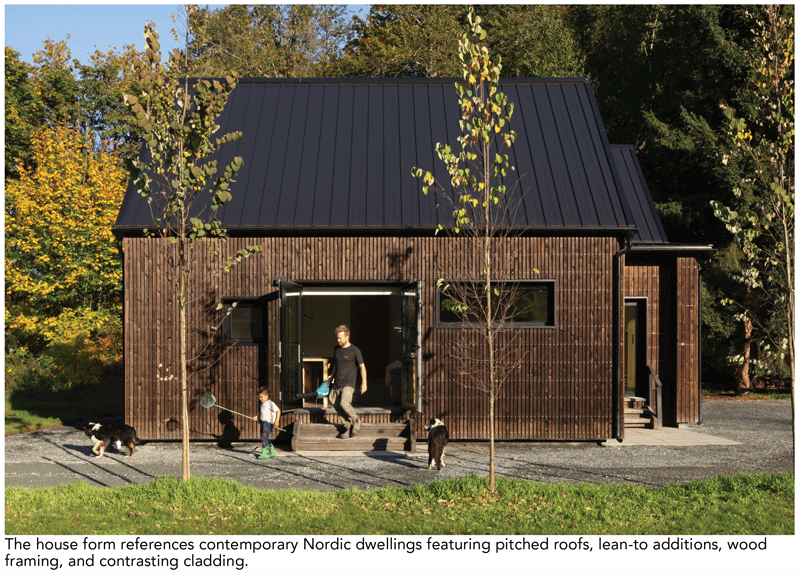
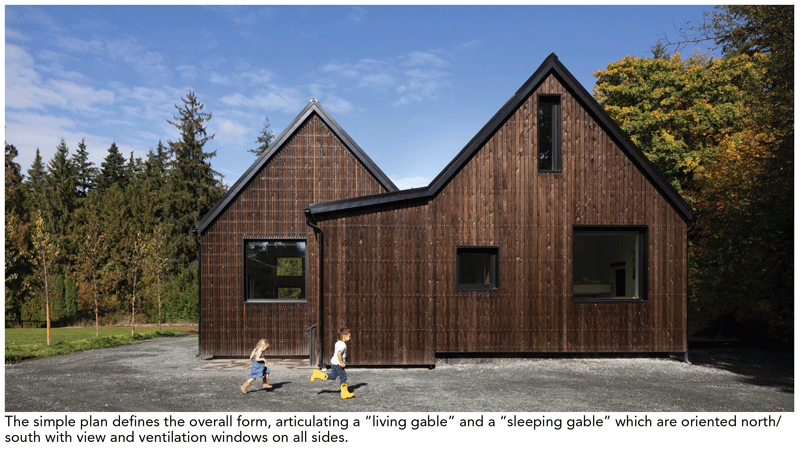
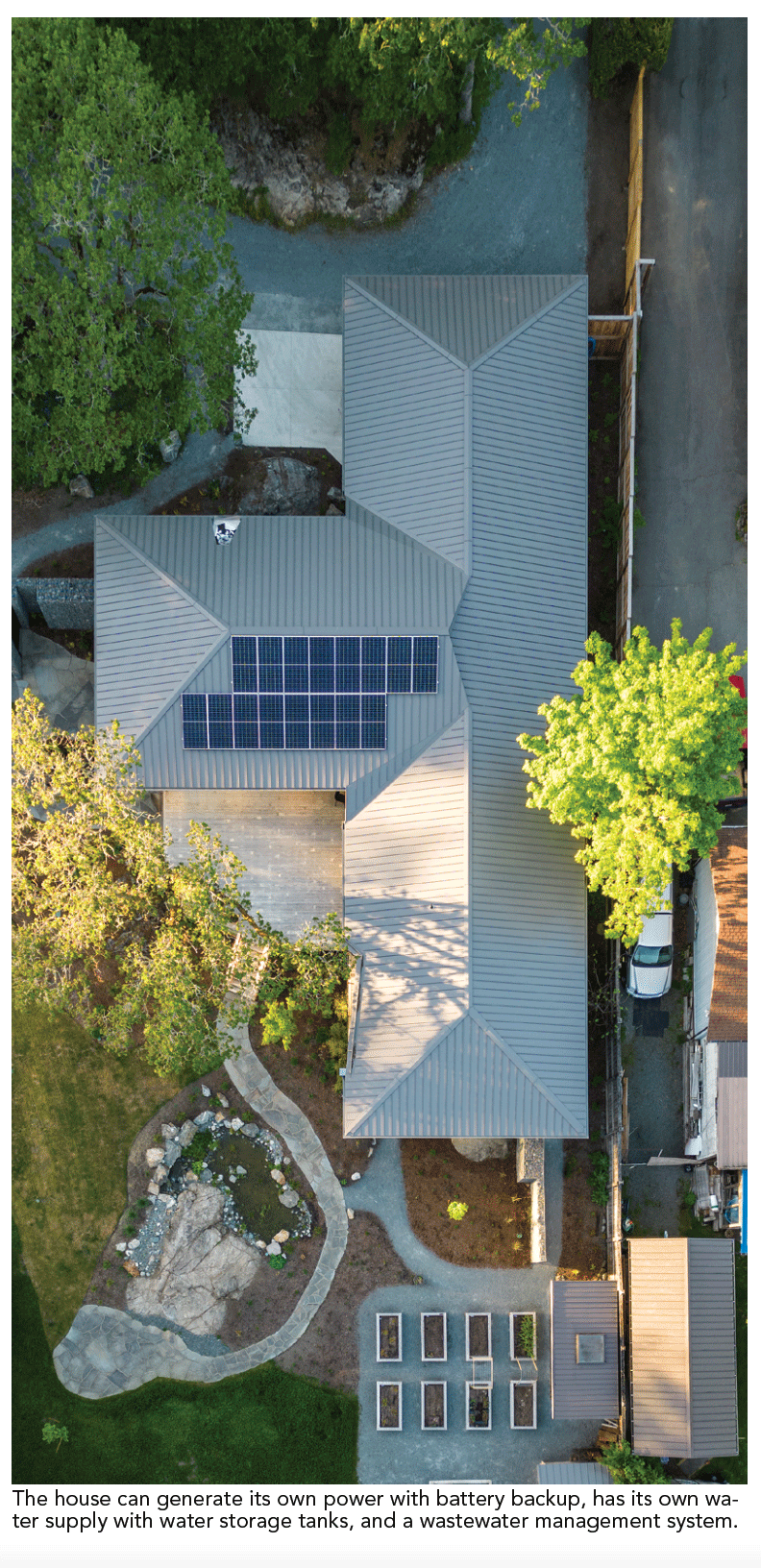
The architecture of Bird’s Wing incorporates a folding roof line, like the wing of a bird in flight. The modern and minimalist design demonstrates a shared commitment to sustainability and innovation. Located in an established neighbourhood on Vancouver’s west side, Bird’s Wing is just two blocks from an active commercial street.

With a Walkscore of 92 and Bikescore of 91 there is rarely a need to drive. However, both parking spaces are equipped with electric car chargers.

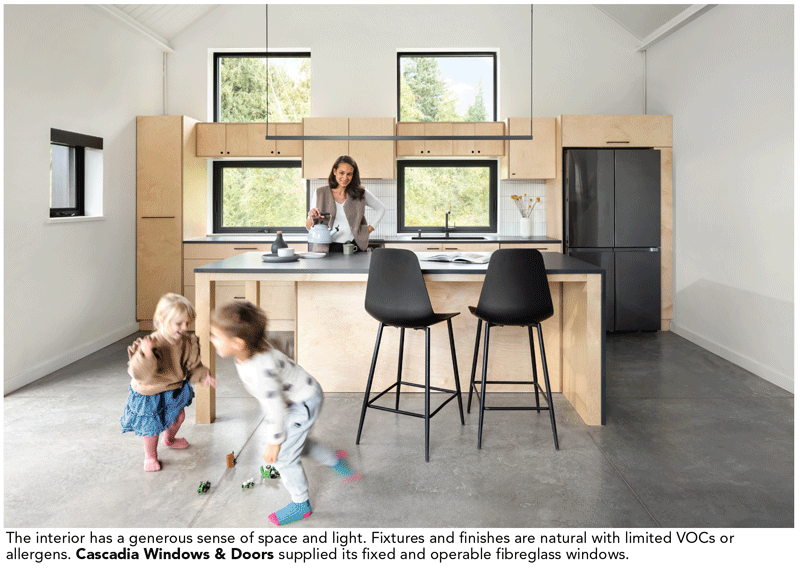
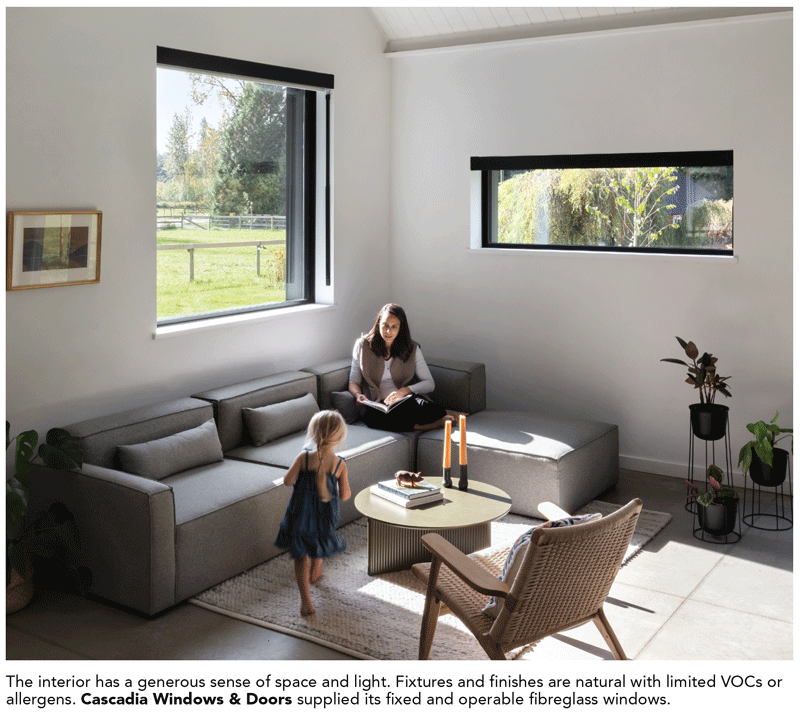
The design is rooted in nature. The result marries thermal efficiency with spatial efficiency in a perfect balance of design, space, and nature.  The four comfortable, yet compact homes are nested within what appears to be a single-family home. Each is unique, bright, and connected to the outside through large operable windows on all sides.

Consistent with Passive House goals of efficiency and simplicity to avoid wasting energy, the design also avoids wasting space or materials. Every square inch is considered, impactful, and multi-functional. The planning is a creative three-dimensional puzzle of interlocking pieces. The suites bend and fold around each other to maximize efficiency and provide evocative volumes within strict zoning regulations.

PROJECT CREDITS

  • Architect  ONE SEED Architecture + Interiors
  • Interior Design  ONE SEED Architecture + Interiors
  • Structural Engineer  Timber Engineering
  • Builder  Naikoon Contracting
  • Certified Passive House Designer  JRG
  • Building Engineering Certifier  CertiPHIers Cooperative
  • Landscape Design  Acre Horticulture
  • Photos  Janis Nicolay

Bird’s Wing brings four households together, with communal outdoor living spaces for larger gatherings. Cascadia Windows & Doors supplied the fixed and operable fibreglass windows from its Universal PH Series.

The duplex interior connects to the exterior through strategically placed openings for ample daylight and cross-ventilation. nVent NUHEAT Mats provide radiant floor heating in the bathrooms and are stocked in standard sizes or can be custom made for a perfect fit. Ideal for sustainable projects, NUHEAT systems are 100% efficient, smart home compatible, ultra-low profile, and easily installed.

The metal roofing and siding is Vicwest.

Proclima Solitex Mento Plus from 475 Supply performs the dual role of water-resistant barrier and air barrier.

SUBSCRIBE TO THE DIGITAL OR PRINT ISSUE OF SABMAGAZINE FOR THE FULL VERSION OF THIS ARTICLE.
Mixed Use Award – CHEKO’NIEN HOUSE  University of Victoria, BC

Jury Comment: “This project is notable for its richly mixed program; including student housing, academic areas and food services. Innovative and progressive, it makes a positive contribution to social life on the urban campus. Selective use of large windows and exposed wood in areas where people gather reinforce their connection to nature.”

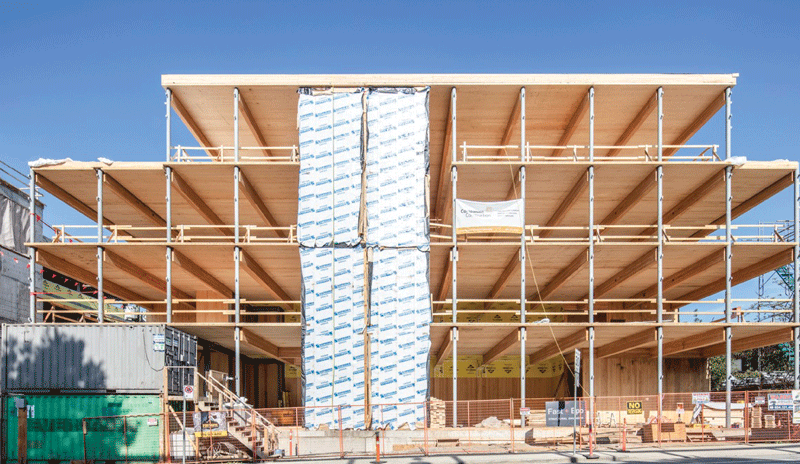
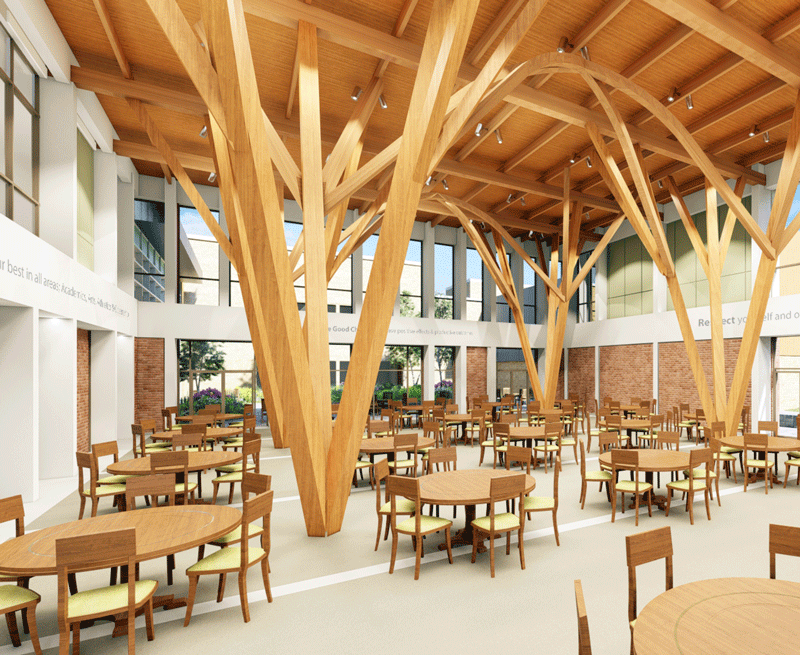
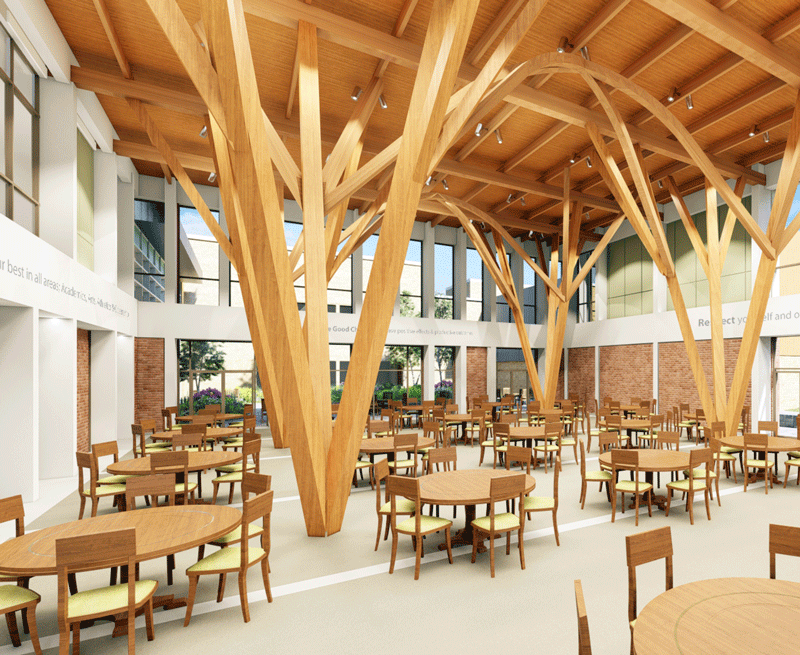
Čeqwəŋín ʔéʔləŋ (Cheko’nien House), the first of two buildings in the Student Housing and Dining project at the University of Victoria (UVic), embodies a transformative approach to student living and community engagement. Its unique design emphasizes social connectivity and sustainability.

The first two storeys house a 600-seat dining hall, a multi-purpose room for 200, a servery, and a commercial kitchen, fostering vibrant community interaction. Above, the 398-bedroom student residence offers modern living spaces tailored to promote student well-being and academic success.

Driven by a steadfast commitment to climate action, Cheko’nien House meets rigorous sustainability standards, including BC Energy Step Code Step 4 and LEED v4 Gold certification, and is on track for Passive House certification. This dedication not only reduces campus-wide CO2 emissions, but also enhances the health and comfort of its residents.

Propelled to preserve greenspace while meeting the growing demand for on-campus housing, the building has a compact footprint and much greater height than any other building on campus. Strategically positioned to catalyze the new Campus Greenway strategy, the building massing shelters the pedestrian realm from rain and shades its transparent ground floor from sun. Other passive design strategies—including fixed sunshades and optimized fenestration—balance daylight, heating, and cooling. Complemented by energy-efficient HVAC and lighting systems, these strategies ensure optimal performance while minimizing energy inputs and carbon emissions.

Working with local Indigenous communities, the design team explored opportunities to recognize and preserve the inherited spirit of place and connect students to Indigenous histories and cultures. A swath of concrete is transformed into a stormwater detention feature, serving the project site and beyond. Trees removed were replaced at a ratio of 3:1, following a planting plan developed through research into native species and consultation with Elders.

Project Credits

  • Owner/Developer  University of Victoria
  • Architect  Perkins&Will
  • General Contractor  EllisDon-Kinetic, A Joint Venture
  • Civil and Electrical Engineer  WSP Canada
  • Mechanical Engineer  Introba
  • Structural Engineer  Fast + Epp
  • Landscape Architect  Hapa Collaborative
  • Commissioning Consultant  WSP Canada
  • Photos  Michael Elkan

Cascadia Windows & Doors supplied the fixed and operable fibreglass windows from its Universal PH Series.

SUBSCRIBE TO THE DIGITAL OR PRINT ISSUE OF SABMAGAZINE FOR THE FULL VERSION OF THIS ARTICLE.
Technical Award – MINISTRY OF CHILDREN & FAMILY DEVELOPMENT, Williams Lake, BC 

Jury Comment: “This project takes an underutilized, poor performing and discarded single-storey retail building and transforms it with a variety of technical interventions that make it net-zero, thus greatly extending its service life. Inside, the plain box has been enlivened with light, colour and cultural references.“

Located in Williams Lake, a city of 10,000 in the Cariboo Region of BC, this project represents the transformation of a 1500 sq.m single-storey retail building into a NetZero Carbon Neutral office for the provincial government. It incorporates a suite of tenant Improvements, base building upgrades and energy retrofits. Together, these strategies enable the project to meet  the GHG reduction requirements mandated by BC’s Climate Change Accountability Act, while at the same time following the Blueprint and Real Property Division guidelines for innovative service delivery.

For the energy retrofit, Passive House design techniques were implemented such as high efficiency triple-glazed windows on the southeast and west facades, enhanced thermal insulation, and the minimization of thermal bridging.

Internally, communal areas were strategically located near these windows with enclosed spaces positioned in the centre. Solatube skylights flood the interior with natural light, while the operable argon-filled windows with low-e coatings reduce reliance on mechanical systems and offer occupants environmental control.

These high-performance windows (with a U-value of 0.15 or R-6.67) enabled the window-to-wall ratio to be increased from 5%  to 20%, enhancing both energy efficiency and occupant comfort. The existing mechanical and electrical systems were upgraded to highly efficient systems with geothermal heating and cooling capabilities.

Based on these upgrades, the energy model predicted a reduction of up to 80% in energy consumption relative to the baseline building. To achieve Net-Zero Energy, the building then offset the remaining 20% of energy consumption through on-site renewable energy in the form of solar photovoltaic (PV) modules covering most of the roof. The project is now certified Zero Carbon Building by CAGBC (V2 – Design Standard).

The daylighting strategies noted above were part of a much-needed redesign of the interior spaces. This redesign integrated WELL principles for occupant health and well-being, Rick Hansen Foundation principles for accessibility, and strategies to enhance Indigenous inclusion.

Project Performance

  • Energy intensity (building and process energy) = 0 KWhr/m²/year
  • Energy intensity reduction relative to reference building = 100%

Project Credits

  • Owner/Developer  Ministry of Children and Family Development
  • Architect  J. Robert Thibodeau Architecture + Design Inc
  • General contractor  Lauren Bros.
  • Landscape Architect  BENCH Site Design Inc.
  • Civil Engineer  True Consulting Group
  • Electrical and Mechanical Engineer  FWD Engineering Ltd. (now TWD Technologies)
  • Structural Engineer  Read Jones Christoffersen Ltd.
  • Geothermal Consultant  GeoTility Geothermal Installations Corp
  • Photovoltaic Consultant  HES PV (now Charge Solar)
  • Acoustic Consultant  BKL Acoustics
  • Energy Consultant  Energy Revolution (Previously with TWD)
  • Photos  James Alfred

The refurbished building is surrounded by landscaping and outdoor spaces to enhance the well-being of occupants. Fibreglass-frame windows were supplied by Cascadia Windows & Doors.   

With the improvements made to the envelope and PV modules covering most of the roof, the building has achieved Net-Zero Energy and is certified Zero Carbon Building by CAGBC (V2 – Design Standard). Many of the plumbing fixtures are Sloan and Chicago Faucets.

The building is equipped with a high-efficiency central ERV system by Winnipeg-based Tempeff

Communal areas were strategically located near windows, with enclosed spaces positioned in the centre. The project uses the BOREAS® dry cooling system by NIMBUS® which can accommodate almost any facility to maximize energy efficiency with Smart Programming that cycles fans as cooling demands change.

SUBSCRIBE TO THE DIGITAL OR PRINT ISSUE OF SABMAGAZINE FOR THE FULL VERSION OF THIS ARTICLE.
Institutional (Large) Award – UBC MACLEOD ENGINEERING BUILDING RENEWAL Vancouver, BC

Jury Comment: “An incredible transformation of an existing building. While much of the upgrade is technically driven, elements such as solar shading have been used to reimagine its Modern identity. The transformation continues on the inside, with new daylighting and ventilation strategies opening up the spaces.”

The MacLeod Building renewal is the most comprehensive retrofit project completed at UBC to date. Driven by a pressing need to improve the seismic and climate resilience of the campus’ modernist architecture, the project transforms a 1963 building nearing the end of its service life into a future-focused, high-performance facility that actively supports and showcases 21st-century learning. Home to the Department of Electrical and Computer Engineering (ECE), MacLeod accommodates teaching, research, and administrative s paces as part of a growing Applied Science precinct.

The previously dark and inward-facing building has been transformed through thoughtfully reconfigured interior and exterior glazing and key measures such as the creation of a welcoming, fully accessible main entry. Complete interior reconfiguration supports evolving pedagogy and research practice through the introduction of extensive visual and spatial interconnection, new active learning and research space, and strategically distributed Informal Learning Spaces (ILS) as collaborative focal points.

Comprehensive renewal represents a holistic sustainability approach: achieving substantial carbon savings through the reuse of 73% of the building’s existing concrete structure; enhancing seismic, climate and operational resilience through benchmark-setting upgrades; avoiding the ecological impact of a re-build or development on a new site leveraging established infrastructure and transportation networks; replacing an inefficient envelope and building systems with high-performance design; and establishing re-imagined, enlivened spaces focused on community, inclusion and accessibility.

Working with existing orientation and massing, the project efficiently combines passive approaches with active systems, integrating solar shading, high SHGC glazing with operable windows and a newly created light and air shaft that acts as the primary return air path for the entire building, connected to rooftop heat recovery units. The envelope and HVAC system were optimized using 2050 weather file energy modelling to ensure future climate resiliency.

The light and air shaft uses the stack effect to reduce fan energy loads, limiting the need for costly, space-consuming ductwork, while introducing visual interconnectivity between floors. Mechanical upgrades include the use of high-efficiency HRVs, demand control ventilation and air-source heat pumps with auxiliary from the District Energy System.

Project Performance

  • Energy Intensity Building and Process Energy  117.5 KWh/m²/year
  • Reduction in energy intensity relative to reference building under ASHRAE 90.1-2010  56.15%
  • Potable water consumption from municipal sources 3875L/occupant/year
  • Reduction in water consumption relative to reference building  25%
  • Construction waste diverted from landfill  81%

Project Credits

  • Architect  Proscenium Architecture + Interiors Inc.
  • Joint Venture Architect Teeple Architects
  • Owner/Developer University of British Columbia
  • General contractor  Heatherbrae Builders
  • Landscape Architect  PFS Studio
  • Civil Engineer  Core Group
  • Electrical Engineer  AES Engineering
  • Mechanical engineer  AME Group
  • Structural engineer  WSB Consulting Engineers
  • Building Code Consultants  LMDG
  • Building Envelope  RJC Engineers
  • Geotechnical Engineer EXP
  • Sustainability Consultant  Recollective
  • Photos  Andrew Latreille Architectural Photography

Some of the renewal measures include the reuse of 73% of the building’s existing concrete structure and replacing the inefficient envelope and building systems. Fibreglass-frame windows were supplied by Cascadia Windows & Doors.   

Reconfigured interior and exterior glazing allows for more natural lighting. Much of the new resilient flooring is Forbo Marmoleum.

SUBSCRIBE TO THE DIGITAL OR PRINT ISSUE OF SABMAGAZINE FOR THE FULL VERSION OF THIS ARTICLE.
Cold Air Distribution – a novel approach to meeting Passive House cooling loads?

By Andrew Peel

The Passive House Standard was developed with the intent of designing and constructing buildings whose space heating load could be entirely met through the ventilation supply air required for adequate indoor air quality. Early examples, including the Stadtwerke Hannover Passive House estate in Hannover, conclusively demonstrated that this goal can be achieved in practice. 

As Passive House expanded into climates requiring active cooling, this goal was expanded to include meeting the entire space cooling load via the ventilation supply air. However, delivery temperatures of around 13oC limit the cooling capacity of the ventilation supply air to a level that is generally inadequate for this purpose. To increase the cooling capacity, it is theoretically and practically possible to reduce the supply air temperature. Indeed, ASHRAE has developed a designer’s guide to cold air distribution (CAD), a cooling strategy to which ventilation supply air cooling belongs.

To date, CAD has been applied to industrial and commercial buildings.  However, mechanical designers are uncomfortable adopting such an approach for residential buildings, due to three primary concerns:

1) The risk of condensation on the diffuser, caused by an indoor dewpoint temperature that is higher than the colder supply air temperature.

2) The risk of occupant discomfort, due to improper mixing of supply air and room air, leading to air dumping and cold draughts.

3) The risk of mould growth on the interior finish in the vicinity of the diffuser due to reduced surface temperatures.

The author has undertaken laboratory experiments to determine under what conditions CAD is feasible in residential buildings.  An instrumented suite mock-up was created within two identical test chambers located within a rooftop test facility of the University of Toronto. The mock-up was intended to represent a typical residential suite room.

The investigation examined the influence of the following key parameters on the three risks noted above:

• supply air flow rate,

• supply air velocity,

• diffuser type,

• diffuser location,

• insulation thickness,

• air and vapour sealing,

• diffuser coating, and

• position in room.

This innovative solution is a funding recipient of the Phase 2 of the Building for the Future Round of the Housing Supply Challenge. This challenge, administered by Canada Mortgage and Housing Corporation, seeks to remove barriers to housing supply in Canada.  Peel Passive House has received funding from an undisclosed source to pilot CAD in six multi-unit residential buildings across Canada. The buildings cover a wide cross section of geographic areas, climate zones, provinces, tenant demographics, small and medium size, rural and urban, and new builds, and retrofits. Beyond implementation, substantial product development is required to meet the more demanding technical specifications and to mitigate common implementation issues in construction. 

Andrew Peel is principal of Peel Passive House Consulting Ltd. Insert this text and link … For more information https://www.peelpassivehouse.ca/

Embassy Commons

Barren site revitalized for supportive housing and community service

By Emma Cubitt

After sitting vacant for over a decade, the site of the Embassy Hotel has undergone dramatic transformation with the addition of affordable housing, community programming, and new arts and commercial spaces along a busy corridor in London, Ontario.

Originally constructed in the 1900s, the Embassy Hotel in London’s Old East Village drew crowds with live music, and housed the artist-led Embassy Cultural Hub for decades.  The structure was the city’s oldest hotel still in operation, until it was lost to fire in 2009.  After a decade standing vacant, Indwell – with help from Tricar Developments – purchased the land to build much-needed, permanent, supportive housing in order to address the needs of London’s homeless residents.

The COVID-19 pandemic amplified various pressures that the Old East Village had experienced for years, particularly homelessness and its associated negative impacts on lives and businesses. Redevelopment presented an opportunity to provide shelter and supports for vulnerable residents while celebrating and reinvesting in the cultural heritage of the community. 

The former brownfield site now features a 4,560 sq.m three-storey structure with 11 parking spaces. Embassy Commons consists of two primary occupancies: residential and commercial. The building provides 72 new, affordable one- and two-bedroom apartments, but is functionally designed as two ideally-sized communities, each with distinct street addresses.  On a purely human level, it is a place that a diverse range of tenants rebuilding their lives after experiencing homelessness and other debilitating conditions can call home. 

Featuring dedicated space for community programming and office functions, the building incorporates built-in supports for residents, including nursing, addiction guidance, and mental health counselling.  Three commercial units, housing the Squeaky Wheel Bike Co-op, a pharmacy, and Edgar and Joe’s Café, welcome locals to interact with (and reinvest in) their neighbourhood.

With Indwell’s vision of Hope & Homes for All in mind, the intent was to create a supportive housing community which reflected vitality, hopefulness, and uplifting of the human experience for both tenants and passersby.  Key to this inclusive vision is minimizing the project’s long-term environmental impact; thus, PHIUS+ Passive House performance standards were followed.

Energy Performance & GHG Emissions

As design modelling achieved 38% energy savings and 32% emissions reductions when compared to 2015 NECB requirements, Indwell strove beyond their typical PHIUS+ Passive House performance standards for this project, pursuing an additional goal of attaining net-zero operational carbon emissions by adding a 92KW solar array to the roof. 

Design features key to the energy savings included:

  • Final whole building air tightness result of 0.045 cfm/sq.ft. @ 50Pa (meeting Passive House standards)
  • Improved, effective floor slab insulation value, R(IP)-22
  • Improved, effective above-grade wall enclosure insulation value, R(IP)-32
  • Improved, effective roof assembly insulation value, R(IP)-44
  • Optimized window-to-wall ratio (reducing excessive fenestration)
  • Fiberglass window frames with triple-pane glass by INLINE Fiberglass
  • Centralized Energy Recovery Ventilation (ERV) for residential and common areas
  • Air-source Variable Refrigerant Flow (VRF) heat pump heating and cooling systems
  • High-efficiency, gas-fired domestic hot water heaters
  • Reduced lighting power density in residential common areas, offices, commercial spaces, and exterior

Project Credits

  • Owner/Developer  Indwell
  • Architect  Invizij Architects Inc
  • Structural Engineer  Kalos Engineering Inc
  • Mechanical/Electrical Engineer  CK Engineering Inc
  • Civil Engineer Stantec
  • Landscaping Consultant  Ron Koudys Landscape Architects
  • Passive House Consultant 
  • Zon Engineering Inc
  • Project Manager  Graceview Construction
  • Photos  Industryous & Invizij Architects

Mosaic artwork adorns the streetscape in three parts. Inline Fiberglass provided triple-gazed tilt and turn windows.

The interior courtyard and two rooftop patios provide a safe place for tenants to get fresh air. Centralized Energy Recovery Ventilation (ERV) from Swegon for the residential and common areas contributes to 38% energy savings.

The Squeaky Wheel Bike Co-op. The 72-unit building uses air-source variable refrigerant Flow (VRF) heat pump heating and cooling systems by Mitsubishi Electric Sales Canada.

SUBSCRIBE TO THE DIGITAL OR PRINT ISSUE OF SABMAGAZINE FOR THE FULL VERSION OF THIS ARTICLE.
Cheko’nien House

Energy efficiency, resilience, and emission reductions on a grand scale

By Alex Minard

Cheko’nien (Čeqʷəŋín ʔéʔləŋ) House is the first of two buildings that together comprise the new Student Housing and Dining project at the University of Victoria (UVic) that embodies a transformative approach to student living and community engagement.

The unique design emphasizes social connectivity and sustainability. The first two storeys house a 600-seat dining hall, a multi-purpose room for 200, a servery, and a commercial kitchen, while above a 398-bedroom student residence offers modern living spaces tailored to promote student well-being and academic success.

The facility supports UVic in its commitment to energy efficiency, climate resilience, and GHG emission reductions, as outlined in the university’s Sustainability Action Plan. The project has achieved Step 4 of the BC Energy Code and LEED v4 Gold certification, and is on track for Passive House certification.

“Passive House allows us to meet a number of our objectives for sustainability and the student experience, and was the natural choice for the new Student Housing and Dining buildings,” says Mike Wilson, Director of Campus Planning and Sustainability.

Simultaneously addressing the need to preserve greenspace while meeting the growing demand for on campus student housing, the building has a compact footprint and much greater height than any other building on campus. Strategically positioned to catalyze the new Campus Greenway strategy, the building massing shelters the pedestrian realm from rain and shades its transparent ground floor from sun.

Achieving Passive House energy performance depends to a significant degree on passive design strategies. These include fixed sunshades and optimized fenestration to balance daylight, heating, and cooling. Complemented by energy-efficient HVAC and lighting systems and a high-performance building envelope, these strategies ensure optimal performance while minimizing energy inputs and carbon emissions.

From inside to outside, the exterior walls comprise: 16mm Gypsum board; 152mm metal studs; exterior gypsum sheathing;  vapour non-permeable self adhered sheet air/weather barrier; 203mm low density mineral wool with LKME clips @ 400mm o/c horizontally and 610mm o/c vertically; air gap and cladding.

Insulation, shading, and thermal bridge reduction all contribute to high energy efficiency, as do triple glazing and a tested airtightness of 0.22 ACH50—approximately one third of the Passive House limit. The resulting reduction in energy demand for heating and cooling means that  the building can be powered almost entirely by hydroelectricity from British Columbia’s clean energy grid. This considerably reduces the use of fossil fuels.

However, serving approximately 8,700 meals per day, the large commercial kitchen represents a significant amount of the energy demand for the building. Employing a robust energy reduction strategy, the kitchen is designed to be five to six times more energy efficient than conventionally equipped equivalents —reducing greenhouse gas emissions by 80% for the entire building.

In addition to the commercial kitchen, the 398 bedrooms mean the project has an inherently  high demand for domestic hot water (DHW)—roughly 27,750 L/day. A waste heat recovery system from the refrigeration system, kitchen exhaust, dishwashers, and shower drains, is used to pre-heat water. Captured heat from the kitchen also preheats supply air, resulting in an 82% reduction in heating demand.

Project Credits

  • Owner/Developer  University of Victoria
  • Architect  Perkins&Will
  • General Contractor  EllisDon-Kinetic, A Joint Venture
  • Civil and Electrical Engineer  WSP Canada
  • Mechanical Engineer  Introba
  • Structural Engineer  Fast+Epp
  • Landscape Architect  Hapa Collaborative
  • Commissioning Consultant  WSP Canada
  • Photos  Michael Elkan

The housing entrance is located on the new north-south greenway that connects the residential district. Cascadia Windows & Doors supplied the fixed and operable fibreglass windows from its Universal PH Series.

Interconnections among spaces create a vibrant and dynamic environment. A mixed-mode ventilation system using semi-centralized Swegon Gold RXF HRVs deliver excellent airflow to the student quarters, augmented by operable windows and regulated by exposed thermal mass.

The glazed aluminum curtainwalls, exterior sun control devices, and interior aluminum framed storefronts and doors by Phoenix Glass provide abundant natural light and a visual connection to the outside.

ALEX MINARD ARCHITECT AIBC, MRAIC, CPHD, LEED AP BD+C IS PRINCIPAL AT PERKINS&WILL, VANCOUVER.

SUBSCRIBE TO THE DIGITAL OR PRINT ISSUE OF SABMAGAZINE FOR THE FULL VERSION OF THIS ARTICLE.
Exterior details for High-Performance Enclosures Rear-Ventilated Rainscreen (RVRS) and Cladding Types

Jeff Ker, Engineered Assemblies

Facades systems have always been one of the most important parts of sustainability. We are only now coming around to realize just how important. Facades, if done properly, will be a rear ventilated rainscreen. They will be part of an outboard insulated envelope and will be high performance. In keeping with that methodology, they will then be the Primary Passive Environmental Control System.

Facades have always been on the front lines so to speak. They are often the single largest building component charged with insulation in addition to being most vulnerable to the substantial dictator – the environment.

Managing the abuse the environment delivers is a holistic endeavour and is only possible with a combination of materials, good design and proper assembly. If we had to pick one ingredient to start with, ventilation is the first. Whether you have a marginally absorbent façade material or not, ventilation is always good – never bad. It helps the entire assembly maintain a handle on moisture.

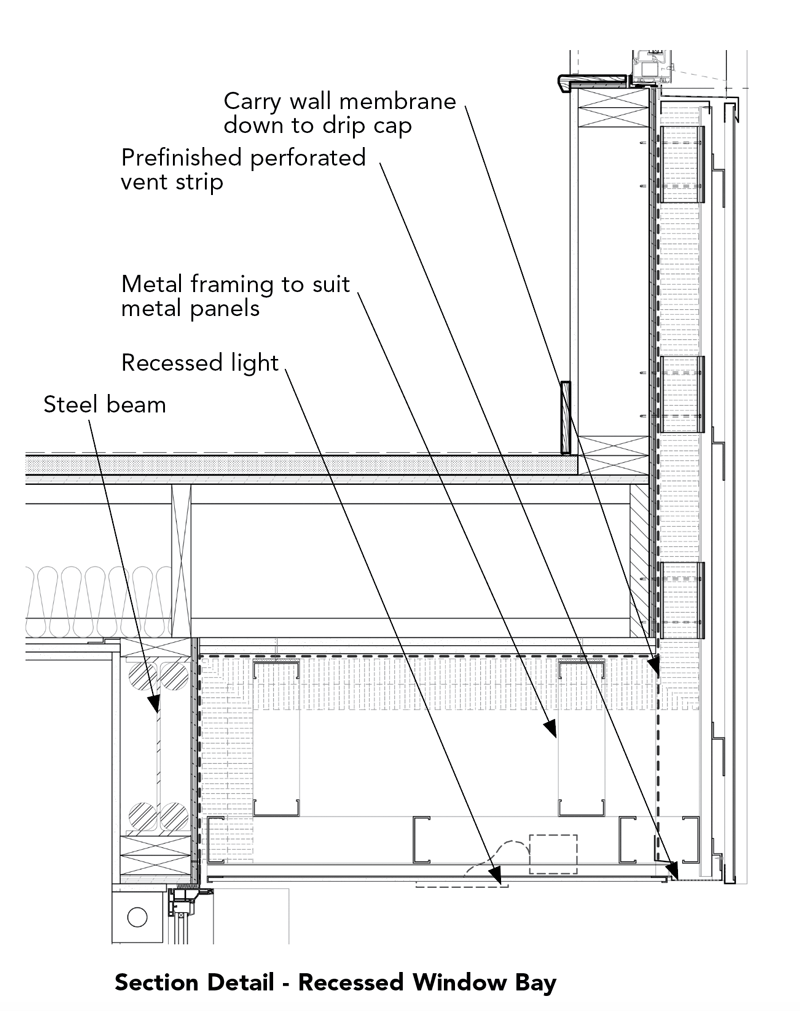
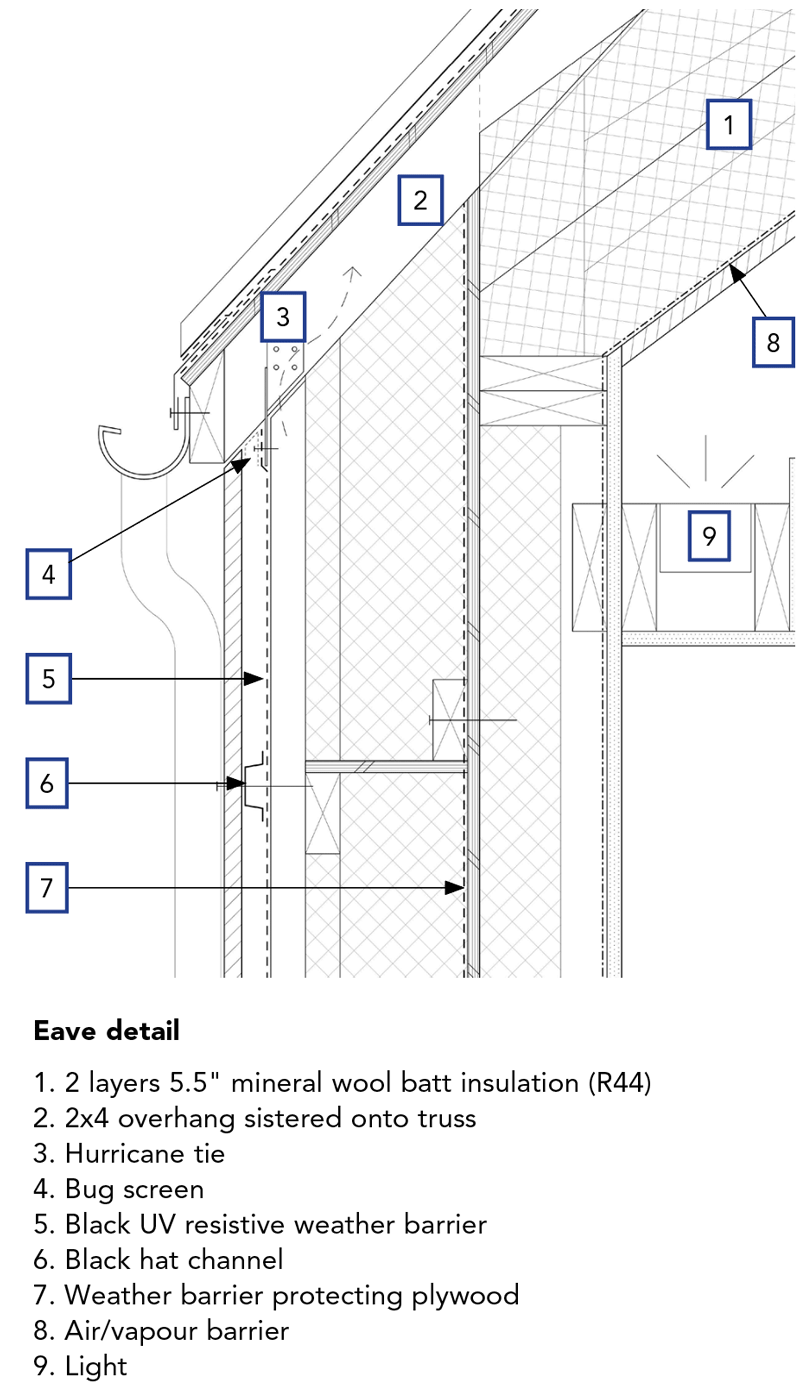
Having an active plenum, as outlined in the drawing detail, ensures the circulation of air is constant in good times and bad. The plenum can only function best when unobstructed and with the combination of adequate intake and exhaust vents.

Having adequate ventilation/air flow means the substructure supporting the façade material can see a longer lifespan and the insulation can function at its maximum potential in its dry state.

Placing a secondary drainage plane in front of the insulation (behind the plenum) will further thwart the intrusion of precipitation, minimize wind washing, and provide a visually pleasing veil to hide substructure and insulation through open joints of facade panels.

When all the components are chosen and assembled in the spirit of achieving their greatest lifespan, we can avoid premature demolition and concentrate on maximizing thermal performance and moisture management. This, in itself, is a pathway to sustainability.

The RVRS Design Guide by Engineered Assemblies is available for download in EN + FR: https://www.engineeredassemblies.com/systems.

Cladding Types – Numerous, resilient claddings are available for high-performance buildings: metal, fibre cement, ceramic, high pressure laminate, brick, masonry and precast concrete.

Most facade materials can be attached using connectors designed to minimize thermal bridging, such as the Cascadia clip, mentioned earlier, or the TcLip by Engineered Assemblies, which was recently Passive House certified.

The EQUITONE high-density fibre cement facade material is a composite of cement, cellulose and mineral materials, reinforced by a visible matrix, which can be transformed in any size or shape for crisp, monolithic details.

TONALITY is an example of a one-layer extruded ceramic in a size range of 150mm-600mm high x 2,000mm long with hidden fastener attachment in a lift and lock system for installation horizontally and vertically on facades or soffits. It can be supplied in numerous colours and shapes: grooves, waves, and random patterns, for pleasing architectural effects.

High Pressure Laminate, or phenolic consists of kraft paper, decorative paper, resins and coatings. It’s a technology that has been accomplished by many companies around the world. The manufacturers use similar materials and processes, and this technology has had a long life.

FRONTEK, from Spain-based Greco Gres Internacional, is extruded porcelain with inner and outer layers that adds a volumetric and sculptural effect to the facade. Their use on a ventilated facade system has shown FRONTEK panels to reduce outside noise and insulate against solar radiation, provide high resistance to water absorption and abrasion, and facilitate easy handling and installation with all types of facade systems because of their internal honeycomb structure.

Trespa makes a decorative high-pressure compact laminate (HPL) with an integral surface for exterior cladding which is highly weather-resistant, colour stable, impact resistant, and easy to clean. The TRESPA® Pura® NFC is made of up to 70% natural fibres which go through an advanced manufacturing process. All Pura® NFC products are certified according to PEFC™ standard.

SUBSCRIBE TO THE DIGITAL OR PRINT ISSUE OF SABMAGAZINE FOR THE FULL VERSION OF THIS ARTICLE.
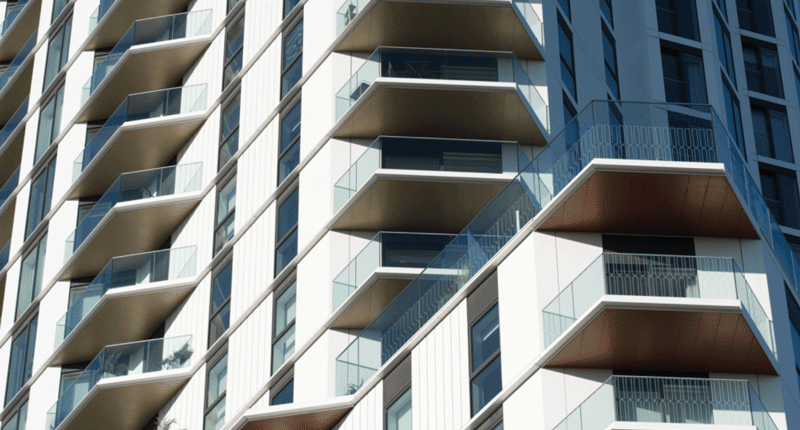
Windows for high-performance enclosures

Windows are obvious critical components of building enclosures, especially those designed for the highest performance of Net Zero and Passive House. Select manufacturers and suppliers are meeting the demands of the high-performance building market which they see as only growing in the coming years.  

Innotech Windows + Doors in Langley, BC shares the views of most select window suppliers that building codes throughout Canada, such as the BC Energy Step Code, is giving rise to a surge in buildings, including single-family homes and multi-family high-rise buildings, designed and built to achieve high energy efficiency, if not the Passive House Standard.

Innotech serves the high-performance market and recently introduced its Defender 88PH+ XI, the first Passive House Institute cold climate certified window manufactured in North America and the first uPVC Passive House Institute cold climate certified window in the world. Both are significant achievements for the North American fenestration industry and long-awaited performance milestones for the North American Passive House building industry.

The Defender 88PH+ XI exceeds the criteria for the cold climate region (or climate zone 2) as defined by the Passive House Institute. The fixed window has a Uw of 0.59 W/(m²K), Uw,inst of 0.60 W/(m²K) and temperature factor of 0.77, while the operable (turn and turn) window has a Uw of 0.60 W/(m²K), Uw,inst of 0.64 W/(m²K) and temperature factor of 0.78. Both the fixed window and the operable window achieve a Passive House efficiency class of phA for the cold climate region, while providing air tightness, water resistance and structural performance.

Inline Fiberglass in Toronto is a pioneer in the Canadian fiberglass window and door industry with the distinct advantage of controlling all aspects of design, production and quality. Beginning with the manufacturing of lineals, using the pultrusion process, to design and final assembly of windows and doors, Inline has earned its reputation for producing high performing windows and doors. The company was an early adopter of fiberglass because the material resists swelling, rotting, and warping for long-lasting durability. Its fiberglass frames are as strong as low carbon steel and eight times stronger than vinyl.

Inline’s Larry Bidner says that its advanced pultrusion technology allows the production of lineals/frames with a higher glass loading than traditional fiberglass frames. This higher glass loading provides a higher strength and a lower thermal expansion rate. Its fiberglass frames expand at virtually the same rate as glass to maintain a tight seal and maintain resistance to leaks and window failures that can compromise energy efficiency and long-term performance. More recently, Inline has introduced its line of fiberglass Passive House-certified windows.

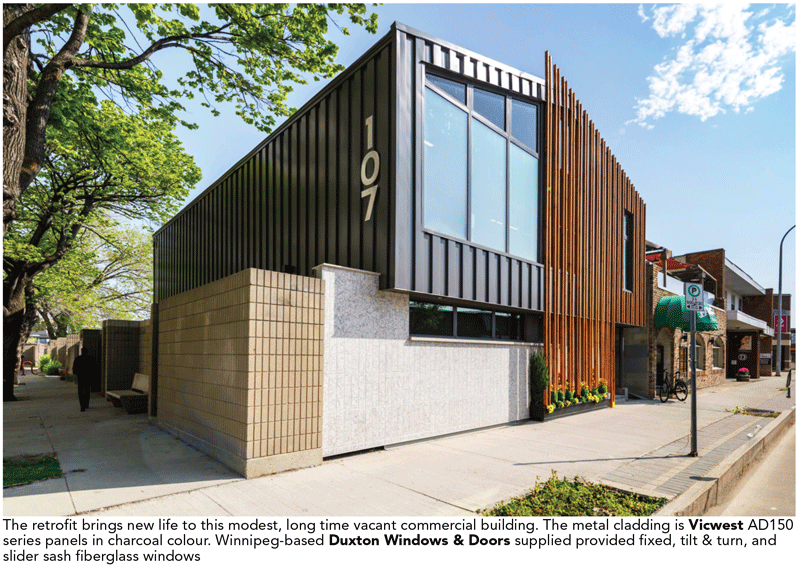
The FiberWall™ series by Duxton Windows & Doors in Winnipeg has been used in Net Zero buildings, both in commercial and residential settings.  The fiberglass lineals in combination with triple-pane double low-e glass and a warm edge Endur spacer result in u-values down to 0.79 W/m2K. Duxton is working toward ever lower u-values for thermal performance, especially as the high-performance building market becomes more important and, as it believes, the BC Step Code gradually takes effect and spreads to other jurisdictions. The company will focus on the casement/awning category which have excellent air-tightness and are familiar to Canadians.

Cascadia Windows & Doors—based in Langley, BC—designs and manufactures commercial grade, high-performance fiberglass windows, doors, and window wall, plus the Cascadia Clip fiberglass cladding attachment.

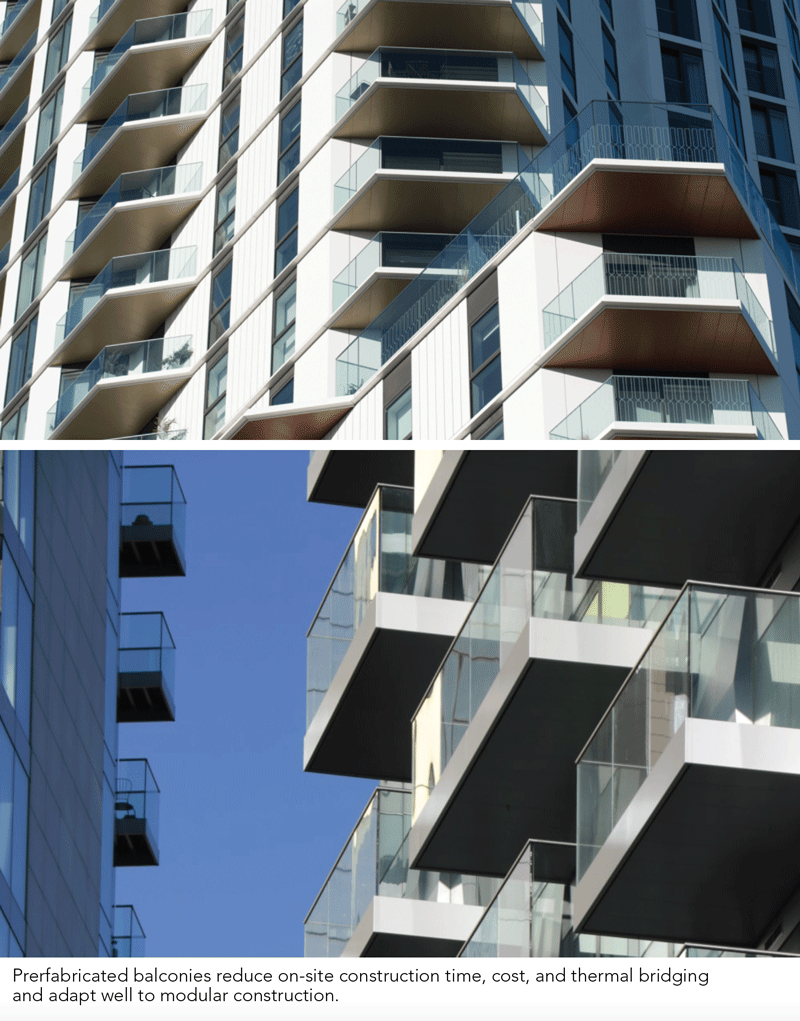
 Its standard window products—the Universal Series—boast up to 250% improved thermal performance compared to traditional aluminum windows, making them suited to commercial and residential Passive House projects. In 2023, Cascadia launched a Juliet Balcony product to reduce thermal bridging associated with balconies and is working on an Environmental Product Declaration (EPD) for its windows.

JELD-WEN has a platform of high-performance casement, awning and fixed windows that can reach beyond Tier 5 of the NBC 2020 and that can reach a 0.79 U Value with a variety of glass options offering both medium and low solar gain. The JWC 8500 series is well positioned, with a 26% slimmer frame that allows more natural light while maintaining window strength, to help builders improve their building envelopes and contribute to a lower operational carbon output.

KALWALL in Manchester, NH has developed highly unique translucent daylighting systems which it says are the most highly insulating in the world. It offers museum-quality daylighting™ to improve indoor environmental quality, reduce a building’s carbon footprint, and bring measurable energy savings to owners and tenants. The company has recently launched KALWALL® 175CW, the first in a series of new translucent insulated glazing units (TIGUs) which allows mixing and matching with other infill glazings and claddings for various façade design possibilities. KALWALL 175CW TIGUs are nominally 1-3/4” and fully thermally broken.

Toronto-based VETTA Windows and Doors offers high-quality European triple-glazed windows and doors, all made from sustainably harvested wood and specifically designed for high performance Passive House and Net Zero buildings. This includes PHI certified windows and doors.

According to Carolyn Sedgwick, VP at VETTA Windows & Doors, its products use only wood harvested from sustainably managed forests, a leading method of carbon capture critical for climate resiliency as recommended by the UN Intergovernmental Panel on Climate Change. It notes the embodied carbon of its wood windows and doors, when factoring in their carbon sink benefit, at about 0 kg/CO2e per m².

In 2023 the company introduced the Summit C108, a PHI Cold Climate Certified operable alu-clad wood window. With an overall Uw value of 0.65 w/m²K, it delivers exceptional performance and refined  modern design. 

NZP Fenestration in Longueuil, QC specializes in providing high-performance fenestration solutions for Passive House, Net Zero Energy, and Zero Carbon projects. Its Passivhaus-certified windows significantly exceed current standards with its multipoint locking system for optimal sealing, while its triple glazing achieves performance levels of up to R11.4. NZP also offers lift and slide doors available in sizes up to 21 feet with R11.4 glazing; insulated glass swing doors with a multipoint lock system and customizable sizes; triple glazing systems; insulated frames to minimize heat loss; and customizable design to integrate into any project.

Varsa Windows & Doors in Surrey, BC offers the Passive House-certified Rehau Geneo tilt-turn windows and doors (UPVC) composed of RAU-FIPRO®, a proprietary fibre composite material similar to that employed in aeronautic construction and racing vehicles, making it the first fully-reinforced polymer window profile system that doesn’t rely on steel for its strength. RAU-FIPRO also provides excellent acoustical and thermal performance, especially given the absence of steel which can cause thermal bridging. Available as tilt-turn, hopper and fixed configurations, with centre seal and optional thermo-modules, Geneo achieves thermal insulation values up to the stringent passive house standard.

Varsa also offers ALUMIL S91 consisting of the hinged insulated system SMARTIA s91, an alternative for frames with concealed sash and fittings. Its significantly reduced visible aluminum face width maximizes natural light along with high thermal insulation and watertightness. And finally, it is one of the few companies to have a Passive House-certified curtain wall: ALUMIL M7.

SUBSCRIBE TO THE DIGITAL OR PRINT ISSUE OF SABMAGAZINE FOR THE FULL VERSION OF THIS ARTICLE.
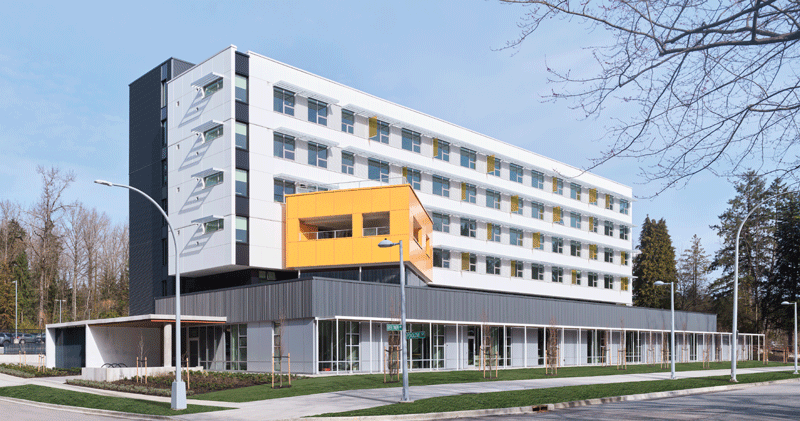
ENCLOSURES for high performance and passive house buildings

By Brian Hubbs and Michael Wilkinson

When designing low energy, high performance buildings, the role of enclosure design is critically important: including maximizing thermal performance through super-insulation, air tightness and the  mitigation of thermal bridging;  control of solar heat gain through shading and glass selection to minimize overheating risk; and natural ventilation  through operable windows.   
While these strategies are designed to optimize  the management of heat, air and thermal performance, from an architect’s or structural engineer’s perspective, the enclosure is also crucial to the structural support and overall aesthetic of the building. 

Context – In the last quarter of the 20th century, the energy performance of buildings did not change as much as one might expect with technological innovation. With the introduction of higher performing materials, components, and systems, building forms simultaneously became more complex, with a multitude of corners and balconies. Together with the growing aesthetic demand for large areas of glazing, this negated many of the advances in performance that might otherwise have been made.

To add to this challenge, the comparative energy performance targets included in many current energy Codes and standards, where designs are modelled to achieve a percentage improvement over a prescribed reference building, have historically demonstrated little to no correlation between in-service building energy use and the percentage improvement over the baseline building that was modelled. There has been a growing realization that the modelled energy consumption during design may differ by more than 100% from the measured energy use after the building is occupied.

The Need for Absolute Energy Targets – RDH focuses on the building science of enclosure design and believes that to move forward, we must commit to measurable targets for modelling energy use. While there will still be discrepancies between the modelled and actual energy use with this approach, the absolute performance metrics will drive design decisions which will tend to result in more consistent reductions in building energy use.

Over the past 10 years in Canada, the Passive House Standard has gained in popularity, particularly for large buildings. Passive House has absolute energy targets for space heating and cooling; airtightness is always measured empirically at regular intervals throughout the construction process; primary energy use now factors in renewables, as well as the transmission losses between the point of energy generation and the building to which energy is being supplied.

In recent years, a consensus has developed that the comparative energy performance targets are not getting us where we need to go if the goal is Net Zero Energy. British Columbia legislation through the BC Energy Step Code now relies on absolute energy use intensity targets; for which the Passive House Standard deserves some credit.

The Importance of Enclosure Design – Heating demand is critical; with enclosure design determining  the losses and gains that will be experienced through the glazed assemblies and  solid elements, and by air leakage losses. These may be offset by solar heat gain; or by  interior heat generation from occupants, electronics and other equipment.

This ‘absolute target’ approach is being taken up across the country, and will soon be part of national energy codes. The Passive House standard reduces demands to the point where mechanical systems can be scaled back substantially.

Enclosure design is critical to achieving low energy intensity. The areas of focus are:

  • Minimizing  thermal bridging
  • Achieving  high levels of air tightness
  • Specifying high levels of insulation
  • Specifying high-performance fenestration.

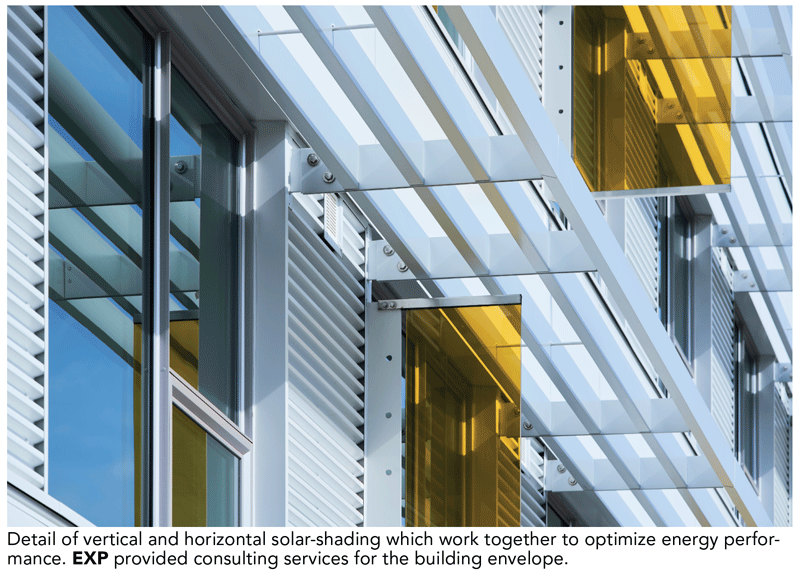
In British Columbia, performance of the  first generation of Passive House buildings  has indicated that overheating can be a concern. With high performance enclosure design, we must also manage incident solar radiation and related heat gain. Comfort is the key goal. One important factor is the solar heat coefficient of the glass. Careful specification can ensure the glass on each elevation has the appropriate shading coefficient. South and west elevations can also benefit from fixed or operable shades, on the exterior, rather than interior of the building.

The Importance of Testing – First, the building must be pressurized, then filled with smoke, leakage monitored and then remedied. Remediation is most cost effective during construction while the surfaces and joints are accessible. Commissioning is not a final step, it is an ongoing process throughout the construction stage. 

As part of that process, individual building enclosure system mock ups can often be individually tested before the entire building is sealed to provide valuable feedback to the project team.

Enclosure Design and Installation – High performance building enclosures can be very different in appearance. Whatever the system, cladding attachments are often key; as their material, design and spacing can all potentially impact thermal bridging and overall enclosure performance either positively or negatively. 

Site built enclosures are generally favoured for non-high-rise buildings. If the walls are site built, site installation of membranes, clips, insulation and exterior finishes occur sequentially and should be carefully inspected at every phase. For example, this approach was used successfully on the Clayton Community Centre, which became the first Community Centre in North America to achieve Passive House certification. 

Site built enclosures can also be used on larger buildings but this is dependent on the local construction market and other considerations. This will require exterior access (scaffolding, mast climbers, etc.) which can be expensive, and can also result in poorer quality control and additional safety concerns. Speed of installation and limited room for staging on site are also considerations that drive prefabrication.

For high-rise residential buildings in many construction markets, panelized window wall is often the default choice. However, this approach generally provides insufficient thermal performance for buildings targeting aggressive energy performance targets such as Passive House. However, window wall can be combined with higher performance opaque panel systems such as precast concrete sandwich panels to overcome this challenge. Window wall systems are generally cost-effective, but have limited energy performance, when compared with precast concrete sandwich panels where insulation is sandwiched between two layers of concrete connected with low conductivity ties.

One example that combines window wall and precast sandwich panels, is Coal Harbour Phase 2 by Henriquez Partners, currently under construction in Vancouver and targeting Passive House certification. Having thermal mass on the inside of the prefabricated panels can also help to temper interior temperature fluctuations and reduce overheating risk. 

Another attractive option may be a ‘mega panel’ curtain wall system with sufficient levels of exterior insulation and high-performance triple-glazed punched windows, typically spanning floor-to-floor. The large panel size, increases the speed of erection, and also reduces the number of mullions and transoms that are possible sources of thermal bridging. 

Engineered Assemblies notes that facades, if done properly, will be a rear ventilated rainscreen. They will be part of an outboard insulated envelope and will be high performance. In keeping with that methodology, they will then be the Primary Passive Environmental Control System.

Numerous, resilient claddings are available for high-performance buildings. EQUITONE high-density fibre cement facade material is a composite of cement, cellulose and mineral materials, reinforced by a visible matrix, which can be transformed in any size or shape for crisp, monolithic details.

FRONTEK products  of extruded porcelain used on a ventilated facade system has shown to reduce outside noise, insulate against solar radiation, to provide high resistance to water absorption and abrasion. 

More details at https://sabmagazine.com/exterior-details-for-high-performance-enclosures-rear-ventilated-rainscreen-rvrs-and-cladding-types/

SUBSCRIBE TO THE DIGITAL OR PRINT ISSUE OF SABMAGAZINE FOR THE FULL VERSION OF THIS ARTICLE.