Dedicated to sustainable,
high performance building

THE WELLINGTON

THE WELLINGTON

Good design and high performance break stereotype of affordable housing

By Stephen Kopp

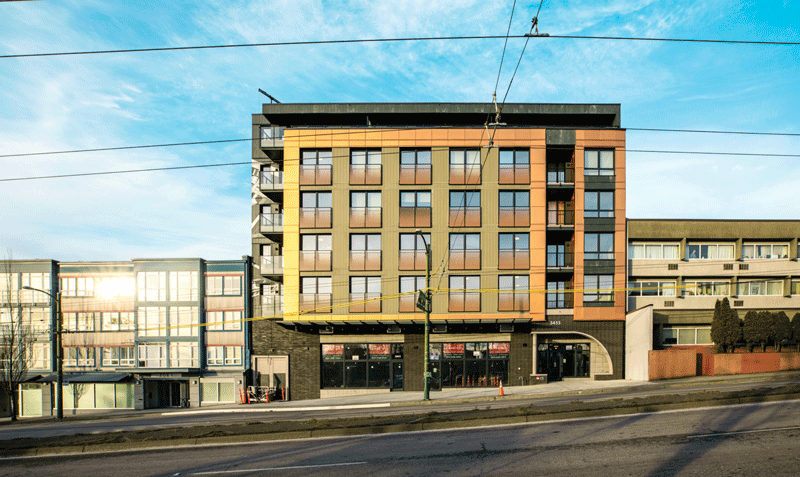
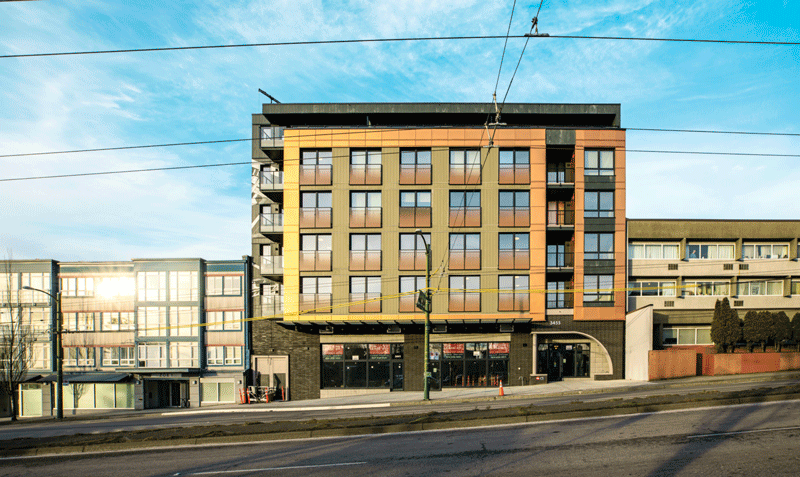
Located at the historic intersection of Union & Wellington streets in the heart of Saint John, The Wellington is a 6-storey mixed-use development, with ground floor commercial space and 5 upper floors containing a total of 47 affordable and market rate apartment units.

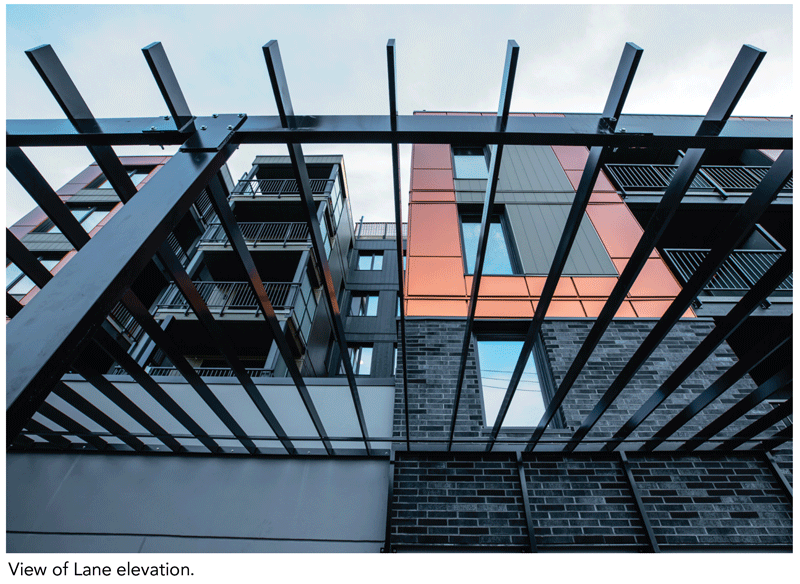
On a tight urban site, the building massing steps back in three volumes to reveal the neighbouring landmark Loyalist House, views of historic church towers on Germain Street, and the leafy maples of Queen Square in the distance. A quarried stone-clad podium level with a wood entrance wall, together with the striking glazing pattern above are aesthetic departures from the standard box that often characterizes low-cost development. In the city of Saint John 22.5% of people live in poverty.

There are many barriers to people breaking the cycle of poverty, at the heart of which is access to affordable housing. Affordable housing projects often look low-cost, resulting in residents being further ostracized by their communities. These realities reinforce acre Architects’ conviction that modern housing should encompass sustainability, affordability and accessibility, and at the same time counter the stereotype that affordability and good design are mutually exclusive.

DESIGN APPROACH

Designed to international Passive House standards, The Wellington is the first (soon to be) PH certified affordable housing project completed in Atlantic Canada.

The building employs the main tenets of Passive House design, and while not unique in its approach, the building exceeded performance expectations during its multiple testing periods. As such, it has set an important precedent for the Maritimes.

In keeping with Passive House standards, Acre Architects created an envelope with a balance of airtight design, high insulation value, and carefully considered window details.

Beyond the base wall assembly, which achieves a min. R-value of 55 for the roof and 37 for the walls, coordination with mechanical and electrical consultants was critical to minimize penetrations through the building envelope.

Internally, the heating and cooling system for the Wellington employs a highly efficient variable refrigerant flow (VRF) design that is able to deliver simultaneous heating and cooling year round. Each suite is equipped with a wall mounted evaporator unit that is integrated into the central VRF system.

The system is able to meet the heating targets even on the coldest days of the year. On exceptionally cold days, the building is equipped with electric baseboard heaters that supplement the heating load if required.

PROJECT CREDITS

  • OWNER/DEVELOPER Saint John Non-Profit Housing Inc.
  • ARCHITECT Acre Architects
  • GENERAL CONTRACTOR John Flood & Sons Construction
  • COMMISSIONING (PHIUS VERIFICATION) RDH Building Science
  • ENERGY MODELLING ZON Engineering
  • LANDSCAPE ARCHITECT Brackish Landscape Studio
  • CIVIL ENGINEER Fundy Engineering & Consulting
  • ELECTRICAL/ MECHANICAL ENGINEER Fundy Engineering & Consulting
  • STRUCTURAL ENGINEER Blackwell Structural Engineers
  • FIRE PROTECTION RJ Bartlett Engineering Ltd.
  • PASSIVE HOUSE CONSULTANT Zon Engineering
  • PHOTOS Julien Parkinson

PROJECT PERFORMANCE

  • ENERGY INTENSITY REDUCTION RELATIVE TO REFERENCE BUILDING
  • (DESIGN CALCULATION UNDER 2015 NECB) = 57% 
  • ENERGY INTENSITY (HEATING AND COOLING) = 10.1 KWhr/m2/year
  • ENERGY INTENSITY (HEATING) = 6.8 KWh/m2/year
  • ENERGY INTENSITY (COOLING) = 3.2 KWh/m2/year

Gold window frame extrusion detail. High-performing windows and frames were sought, with the additional ambition of finding a thin, low-profile frame in contrast to the less elegant ‘chunky’ units often used. The window units were sealed during installation with Contega Tape from 475 High Performance Building Supply.

SUBSCRIBE TO THE DIGITAL OR PRINT ISSUE OF SABMAGAZINE FOR THE FULL VERSION OF THIS ARTICLE.

INTERVIEW WITH

Irene Rivera and Esther van Eeden: Designing the Passive House Putman Family YWCA

Irene Rivera, associate architect, and Esther van Eeden, director of high-performance buildings, at Kearns Mancini Architects in Toronto (kmai.com), were part of the design team of the Passive House certified Putman Family YWCA in Hamilton which received the Technical Award in the SABMag 2023 Canadian Green Building Awards, https://sabmagazine.com/2023-winners-sabmag-canadian-green-building-awards/

1. Kearns Mancini had completed some Passive House projects previously, but why did you recommend Passive House construction for this project?

Beyond energy efficiency, KMAI sees Passive House as a pathway to resiliency and social equity. During early client presentations on what Passive House can do, the client noticed that their core values and strategic priorities aligned perfectly with Passive House goals, and that is what got things rolling. KMAI worked with the client to provide the information necessary to secure environmental and energy incentives. In the end, the client embraced the benefits of Passive House design.

2. What drew you to use all precast concrete construction as opposed to other materials?

The client wanted a building that was robust, both physically and aesthetically. They also wanted a factorybuilt solution to reduce the construction risks, so a precast concrete building was a good solution. The project was delivered with CCDC 5B-2010 Construction Management. The total precast system satisfies thermal, airtightness, and structural criteria in factory-built components from a local manufacturer. This reduced the use of traditional formwork, auxiliary elements, erection time and waste.

3. How did you adapt the Passive House detailing to precast concrete?

The precast concrete manufacturer adapted its wall system to meet Passive House requirements. After some research, a higher thermal conductivity exterior wall insulation was used, and the structural wall ties were swapped to achieve the maximum structural strength with the lowest thermal transmittance. The next step was to connect the different parts of the building envelope; there were many changes and design iterations until we found the optimal solution to meet the PH intent, constructability, and cost-effectiveness. Workshops were held to walk all disciplines through where the penetrations would be and how they would be insulated and sealed. This ensured correct locations for pre-drilling holes before the panels arrived at the site and avoided any changes on site.

4. What are the main lessons have you learned in the Passive House projects you have completed?

One of the main lessons is having the Construction Manager and the manufacturer on board at an early stage of the design. This is crucial as throughout this project valuable insights into elements like design constraints, constructability, logistics, or specific trade scheduling can help reduce risks, costs, and expedite construction, making sure the Passive House certification can be met. Even the staff from the YWCA went through some passive house training. Another equally important lesson is that Passive House Design not be at odds with good architectural design, and the Putman YWCA building is the perfect example. This project redefines the way people think of energy-efficient design within the context of providing affordable housing.

5. Do you see Passive House design gaining more prominence in your future projects?

Definitely. Passive House is the most rigorous energy performance standard in the world. It doesn’t take a tick-box approach to sustainability, and clients are starting to recognize the true energy savings Passive House buildings deliver and the value it unlocks.

High-performance buildings are going to be the new normal and we as architects have a deep responsibility to act and not ignore the climate impacts of our buildings.

SUBSCRIBE TO THE DIGITAL OR PRINT ISSUE OF SABMAGAZINE FOR THE FULL VERSION OF THIS ARTICLE.

VIEWPOINT

RIGHTS OF NATURE: Pathways to legal Personhood for the Fraser River Estuary

By Avery Pasternak and Kristen Walters, University of British Columbia and Raincoast Conservation Foundation “Imbuing the estuary with legal standing and personality captures the estuary’s intrinsic value as a living organism, beyond what resources it can provide to support economic growth and industrialization.”

INTRODUCTION

The objective of this research project was to better understand the feasibility of granting legal personhood to the Fraser River Estuary. The resultingreport seeks to provide an overview of the key legal pathways towards recognition of nature as a rights- bearing legal subject. We examined case studies from jurisdictions across the world alongside the current state of Canada and British Columbia’s environmental law regime to determine which legal pathways are the most feasible to accord the Fraser River Estuary legal rights and recognition.

PROJECT CONTEXT

As the largest river in western Canada and one of the most productive salmon-bearing rivers in the world, the Fraser River is a critically important ecosystem and economic driver for the region. The Fraser River Estuary, located at the mouth of the river where it meets Georgia Strait in the Pacific Ocean, is one of the province’s most biodiverse regions, providing vital habitat for many bird, fish, and mammal species.

Juvenile salmon rely on this estuary for food and protection during a critical phase of their development as they transition from freshwater to the marine environment. However, ongoing colonization and industrialization have had devastating impacts on estuarine ecosystem health and Fraser River salmon populations.

Governance of the estuary is antiquated, and the current state of Canada’s environmental laws take an extractive approach to ecosystem management that fails to protect plant and animal species. British Columbia, a province whose identity is tied to its biodiversity, has no standalone protections for wildlife, such as endangered species legislation.

Regulators are unable, or unwilling, to address many of the existential threats facing species and habitats within the Fraser River Estuary. In many cases, environmental law authorizes this ecosystem’s degradation by fragmenting interconnected habitats into ‘natural resources’ to be industrialized in the pursuit of economic growth.

The regulatory landscape perpetuates land-use, water management, and species management decisions to be made in silos, failing to account for the cumulative effects ongoing habitat destruction and degradation has on the resilience of the estuarine ecosystem. The estuary, and all the living things it supports, are not viewed as having intrinsic worth.

Economic imperatives consistently override the need for ecological protection, and as a result, threaten the very existence of one of the most ecologically important regions in the province. The Rights of Nature is a growing body of law that seeks to reframe how nature is conceptualized under the law, and subsequently how it is governed, by broadening the legal impetus for its protection.

Laws granting rights to nature are not a catch-all solution, but rather a supplement to pre-existing conservation, restoration, and species recovery initiatives.

The report explores the permutations of rights of nature laws in jurisdictions worldwide and examines their compatibility within Canada’s regulatory environment. It seeks to determine how granting the Fraser River Estuary legal rights and standing could produce much-needed changes to governance in the region and how those changes could accelerate conservation efforts already taking place.

SUBSCRIBE TO THE DIGITAL OR PRINT ISSUE OF SABMAGAZINE FOR THE FULL VERSION OF THIS ARTICLE.
A FRAMEWORK FOR REGENERATIVE DESIGN

By Colin Rohlfing

According to the August 2021 report from Working Group 1 of the Intergovernmental Panel on Climate Change (WPG-1), ‘it is only possible to avoid warming of 1.5 °C or 2.0 °C with associated catastrophic impacts, if massive and immediate cuts in greenhouse gas (GHG) emissions are made’ before 2030. In short, we have less than eight years to drastically reduce global carbon emissions and avoid the direst impacts of climate change.

As we know, the built environment plays a significant role in climate change — from how projects are constructed, to how they’re used, to how they are disassembled at end of life. For some time now, the design and construction field has implemented increasingly stringent “high performance” design practices to minimize those impacts and there have been progress. Since the implementation of the AIA 2030 Challenge in 2005, the building sector has reduced GHG emissions by 30% even with a nearly 20% increase in floor area. The industry is on target to achieve a 72% reduction by the year 2030. However, these reductions alone are not enough and we must keep pushing towards faster, net positive benefits for a variety of focus areas such as water, ecology, human health and equity.

As a design industry, we must radically transform the way we approach design; to think beyond the immediate boundaries of our projects to EMBRACE broader interconnected social and ecological systems. We must move beyond the equilibrium of sustainability towards design that has net positive benefits. We need to think about our developments not in the context of doing less harm, but actually doing good.

In other words, our projects need to actively regenerate or contribute positive impacts to the people who use them and the local ecology that surrounds them.

REGENERATIVE DESIGN

The term “Regenerative Design” describes a process that mimics nature itself by restoring or renewing its own sources of energy and materials. At HDR, we view regenerative design as design that reconnects humans and nature through the continuous renewal of evolving socio-ecological systems. It emulates natural systems for the continuous renewal of societal and ecological functions. A Regenerative Design approach embodies six core principles:

1. Regenerative design achieves net-positive impacts for ecology, health and society. A regenerative project establishes performance metrics in these three areas to remediate the harm that has resulted from decades of conventional development. Because it emulates natural ecological systems, regenerative design incorporates leading edge design for wellness and actively participates in unique, place-driven solutions that address issues of social equity.

2. Regenerative design is flexible, and can be applied to all project types and sizes. Regenerative design does not discriminate, nor does it apply only to certain types of projects. HDR has developed a regenerative design framework that has the ability to accommodate design projects of all sizes, typologies and levels of performance.

The framework moves beyond conventional high performance design to pursue “net positive” impacts for carbon, water, nutrients, air, biodiversity, social and health categories.

3. Regenerative design is evidence based, data driven and measured against multiple metrics. Regenerative project goals are established using a pristine reference site as a baseline. Its associated natural performance metrics exceed code and regulatory standards. These metrics are scientifically defensible and are established using Geographical Information System (GIS) maps; together with data from federal and provincial governments; and research conducted by universities and other recognized social and ecological enterprises. Benchmarking /goal setiing Modeling and verification

4. Regenerative design continuously evolves and renews. Regenerative design includes projection modelling of place-appropriate performance indicators in the following categories:

  • air
  • carbon
  • water
  • nutrients
  • biodiversity
  • health
  • social equity and community wellbeing

These indicators will fluctuate and are influenced by short- and long-term disturbances of socio-ecological systems.

SUBSCRIBE TO THE DIGITAL OR PRINT ISSUE OF SABMAGAZINE FOR THE FULL VERSION OF THIS ARTICLE.
BUILDING NX RETROFIT

A first for Passive House certification

By Holly Jordan

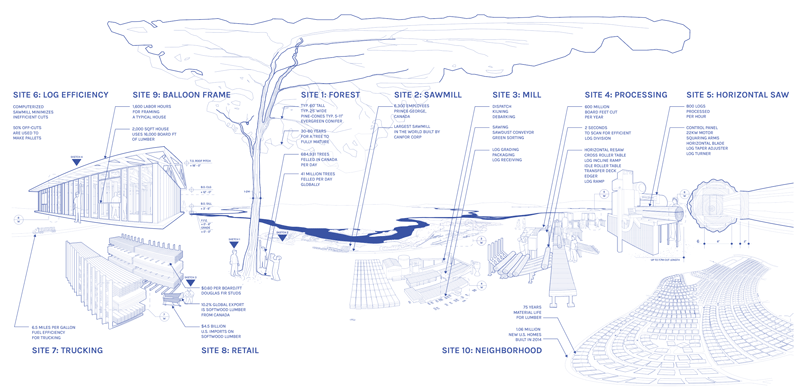
Building NX was constructed in 1989 as the main library for Humber College, also serving as the gateway to its North Campus. When the main library and entrance moved to the Learning Resource Commons, the five-storey concrete structure became an office area for faculty.

In 2015, Humber College launched its Integrated Energy Master Plan (IEMP) a long-term strategy designed to achieve 50% reductions in energy and water consumption and 30% reduction in carbon emissions across all its campuses by 2034. With major deficiencies in its base building systems and building envelope, including water leakage and air infiltration, a complete retrofit of Building NX was identified as a high priority.

Typical of 1980s design and construction, Building NX featured large sections of glass block and geometric articulation of the building form.

The extensive use of glass block reduced the thermal performance of the envelope; increased interior glare, and limited prime views to the campus courtyard. A large central skylight and a protruding entrance were vulnerable to water leakage and were also major sources of heat loss.

DESIGN APPROACH

Given these existing conditions, the design team identified the strategies necessary to achieve the desired performance goals:

  • • Replace windows and walls with high-performance assemblies
  • • Remove chamfers from building form to reduce surface area
  • • Improve roof insulation
  • • Remove and infill skylight to address thermal and water leakage
  • Internalize vestibule to minimize heat loss
  • Separate canopy from building, both structurally and thermally

Following the change of occupancy from library to office in 2015, staff quickly found that the building was drafty, and work stations experienced solar glare and uneven lighting. To address these issues, the new building envelope uses punched windows with vision glazing, lower heads, and sills raised to desk height. Larger glazed openings are used at entrances and in key common areas.

Overall, the window-to-wall ratio has been reduced from 44% to 14%, yet still provides daylight to workspaces. Additionally, the high-performance, triple-glazed units achieve a superior level of thermal comfort, introduce operable windows and re-establish the visual relationship between interior and exterior. To improve airflow, the HVAC system was upgraded to a dedicated outdoor air system (DOAS) with local heating and cooling and heat pumps for space conditioning.

PROJECT PERFORMANCE

  • TOTAL ENERGY INTENSITY (UPGRADED BUILDING) = 58.4 kWh/m2/year
  • BASE BUILDING = 64 kWh/m2/year
  • PROCESS ENERGY = 22kWh/m2/year
  • ONSITE RENEWABLE ENERGY GENERATION = 31 kWh PHOTOVOLTAIC ROOFTOP ARRAY
  • ENERGY REDUCTION COMPARED TO EXISTING BUILDING = 70%

PROJECT TEAM

  • ARCHITECT B+H Architects
  • OWNER/DEVELOPER Humber College
  • GENERAL CONTRACTOR Bird Construction
  • ELECTRICAL / MECHANICAL ENGINEER Morrison Hershfield
  • STRUCTURAL ENGINEER Morrison Hershfield
  • COMMISSIONING AGENT Morrison Hershfield
  • ENERGY MODEL RDH Building Science Inc
  • BUILDING ENVELOPE Morrison Hershfield
  • PHOTOS Double Space Photo

SUBSCRIBE TO THE DIGITAL OR PRINT ISSUE OF SABMAGAZINE FOR THE FULL VERSION OF THIS ARTICLE.

MOSAÏQ COMMUNITY HOUSING

Urban infill delivers comfort and affordable living

By Marc Thivierge

The construction of the affordable housing complex known as “Mosaïq” is part of a much larger multiblock redevelopment set in the urban core of Ottawa’s Little Italy. The program called for a significant increase in density while designing to the stringent sustainability provisions of Passive House (PHIUS).

The initial concept of a single taller passive house building evolved into a three-building scheme which eased community acceptance and made for a more resolved urban experience.

However, the budget implications meant that the passive house component had to be contained to the taller building.

Nevertheless, the townhouses are integral to the project as they are tied into the overall energy system. Excess energy from the townhouses is used to heat the larger building, and their roof surfaces also account for a large proportion of the photovoltaic array.

Super-insulated airtight building envelopes reduce utility costs significantly for the low-income tenants. A partnership with Hydro Ottawa provides carbon neutral hydro-electric power in exchange for electricity generated by the building’s large rooftop PV array.

The site is part of a large urban parcel that was developed for social housing in the 1960s. After more than 50 years, those original townhomes had reached the end of their service life. This project is the first phase of a sustainable design vision that will provide higher density affordable housing while weaving into the existing urban fabric and enhancing community life. Site design included preserving some of the site’s existing trees, maintaining 35% of the site as landscaped open space with native plants, a children’s play area, and permeable surfaces to reduce stormwater runoff.

The integration of pedestrian paths with an array of amenity spaces and activity centres provides a platform for community building and health.

These include a gym, community garden, maker room, teaching kitchen, and multipurpose rooms. With easy access to nearby bike paths, cycling is encouraged as well with the provision of generous bike storage and maintenance facilities.

The building envelope consists of continuous insulation, the elimination of thermal bridges, highperformance triple-pane windows with U-values (IP) between 0.13 and 0.145, and air sealing of exterior components to 0.08 cfm50/ft.. Fresh air is provided through balanced ventilation with heat and moisture recovery.

The building was designed with window-to-wall ratios optimized by orientation and to achieve a radiation balance that allows winter solar gain to offset heating needs; and with window reveal depths, shading elements and glazing SHGC tuned to mitigate unwanted solar gains in the summer.

PROJECT INFO

  • SITE AREA 4,715 m2
  • BUILDING GROSS FLOOR AREA 8,903 m2
  • ENERGY INTENSITY 60.6 KWhr/m2/year [Includes base building and process energy]
  • REDUCTION IN ENERGY INTENSITY BASED ON NECB 2015 18%

PROJECT CREDITS

  • OWNER Ottawa Community Housing
  • ARCHITECT Hobin Architecture: Marc Thivierge, Doug Brooks, Gord Lorimer, Barry Hobin
  • STRUCTURAL ENGINEER WSP
  • CIVIL ENGINEER DSEL
  • ELECTRICAL AND MECHANICAL ENGINEER Goodkey Weedmark and Associates
  • LANDSCAPE ARCHITECT CSW Landscape Architects
  • PASSIVE HOUSE DESIGNER Prudence Ferreira
  • COMMISSIONING AGENT Geo-Energie Inc
  • GENERAL CONTRACTOR EllisDon
  • BUILDING ENVELOPE CONSULTANT AND ENERGY MODELLING Morrison Hershfield
  • INTERIOR DESIGN Grant-Henley Design
  • PHOTOS 1, 2, 4, 6: Gleb Gomberg; 3: Steve Clifford, 5: Arriv Properties

Detail of windows by INLINE Fiberglass at south facade. In the event of power outages, the highperformance building envelopes would allow residents to shelter comfortably in place indefinitely, with ventilation systems remaining operational via the emergency back-up generator.

View of a lounge area. The mechanical system harvests waste heat for reuse in the buildings. Continuous fresh air ventilation is provided by two Swegon Gold RX energy recovery ventilators with MERV 13 filtration.

SUBSCRIBE TO THE DIGITAL OR PRINT ISSUE OF SABMAGAZINE FOR THE FULL VERSION OF THIS ARTICLE.

BIRD’S WING DUPLEX

Creative spatial design makes for flexible living

By Allison Holden Pope

Located in an established single-family neighbourhood on the west side of Vancouver, this project takes advantage of recent zoning changes to create an energy efficient duplex, with lock-off suites, combining thermal efficiency and spatial flexibility, within an architectural expression that is both minimalist and contextual.

The project goes beyond the basic concerns of Passive House certification for energy efficiency and indoor air quality to embrace broader community issues of affordability and aging in place.

In Vancouver, where land comes at a premium, splitting the cost of land and construction between two families, while also creating income generating rental suites, made the dream of building a custom Passive House a reality for our clients. We capitalized on the City of Vancouver’s floor area incentives, which encourage Passive House construction by compensating owners for the additional space occupied by the thick envelope assemblies. These incentives increased the permissible FSR by 18%; translating into an additional 33.4m2 of useable interior floor area. This was a game changer for our clients, allowing each unit to have an additional bedroom and bathroom.

The folding roof line, like the wing of a bird in flight, is a modern take on a traditional gabled profile. The footprint of the home is continuous from foundation to roof, and incorporates a single notch in plan to create architectural interest while keeping the thermal envelope simple.

Nestled into the space created by this step-in plan, the main floor unit has a large south-facing covered front porch, featuring a Tyndall stone clad landscape wall for privacy. Above, and wrapped in the protective wing-like roof, the upper unit has a south-facing balcony. These outdoor spaces create a flow from inside to out while having a level of privacy from the street.

The planning of the duplex was an exercise in spatial optimization, as with a creative three-dimensional puzzle of interlocking pieces. The suites bend and fold around each other to maximize efficiency and create evocative volumes within the strict zoning regulations.

PROJECT CREDITS

  • ARCHITECT  ONE SEED Architecture + Interiors
  • INTERIOR DESIGN
  • ONE SEED Architecture + Interiors
  • STRUCTURAL ENGINEER Timber Engineering
  • BUILDER Naikoon Contracting
  • CERTIFIED PASSIVE HOUSE DESIGNER  JRG Building Engineering
  • CERTIFIER CertiPHIers Cooperative
  • LANDSCAPE DESIGN Acre Horticulture
  • PHOTOS Janis Nicolay

The duplex interior connects to the exterior through strategically placed windows and doors for ample daylight and cross-ventilation. Proclima Solitex Mento Plus from 475 High Performance Building Supply performs the dual role of water-resistant barrier and air barrier.

SUBSCRIBE TO THE DIGITAL OR PRINT ISSUE OF SABMAGAZINE FOR THE FULL VERSION OF THIS ARTICLE.

THE CONSTRUCTION TECHNOLOGY REVOLUTION

A Catalyst for High-Performance Buildings and Industry Transformation

By Passive House Canada CEO, Chris Ballard Passive House Canada is happy to introduce the annual Passive House issue of SABMag which profiles recently completed Passive House-certified projects from across the country.

We are in overlapping climate, housing, and affordability crises and we must turn to the construction industry to help build and retrofit our way out. But would you turn to an industry that has been notoriously slow to digitize, lagging almost every other sector? Whose productivity underperformed the rest of the economy? What if I told you that the tides are turning, and the construction industry is on the brink of a technological revolution that could redefine our approach to sustainable, high-performance buildings?

THE LONG OVERDUE DIGITAL TRANSFORMATION – In 2016, McKinsey ranked the construction industry as second last to digitize, only ahead of agriculture. For two decades, global labour-productivity growth in construction averaged a mere one percent a year, compared to 2.8 percent for the world economy and 3.6 percent in manufacturing.

Canada's construction productivity also lagged significantly. Even more concerning, Canada's construction industry faces a severe labour shortage, with an 80,000-position vacancy rate in 2022 and an aging workforce that will require 245,100 new workers over the next decade. Without significant innovation, the sector has been stuck in the past, but perhaps we are witnessing that start of a seismic shift.

In 2019, venture capital investment in Construction Technology (ConTech) outpaced non-construction funding by a factor of 15. Parts of the industry are finally embracing multi-service platforms, 3-D printing, modularization, robotics, digital-twin technology, artificial intelligence, and analytics. But is this enough to help solve our overlapping crises?

CUTTING CARBON EMISSIONS WITH BETTER DATA – Climate change is a pressing issue, and the construction industry is a significant contributor to carbon emissions. In 2019, the building sector accounted for 12.5 percent of Canada’s total greenhouse gas (GHG) emissions, primarily from burning fossil fuels for heating (18 percent with electricity included). When the impact of construction, materials and waste is included, the number is much larger.

Environmental Product Declarations (EPDs) and Lifecycle Assessments (LCAs) are both critical digital tools for an evolving construction industry to evaluate systematically the environmental impact of building materials and processes. An EPD is a standardized document that provides specific environmental data of a product based on predetermined parameters.

EPDs are generally derived from LCAs. An LCA is a comprehensive analysis that evaluates the environmental impacts associated with all the stages of a product's life—from raw material extraction through materials processing, manufacture, distribution, use, repair and maintenance, and disposal or recycling.

LCAs and EPDs work in tandem to provide comprehensive and standardized data on the environmental impact of materials and processes. This data enables architects, engineers, and builders to make informed decisions on material selection, design, and construction methods, thereby optimizing for both reduced carbon emissions and resource efficiency.

The standardized nature of EPDs also facilitates the reuse and recycling of building components, contributing to a more circular economy in construction.

Innovations like AI and machine learning could further amplify the effectiveness of EPDs and LCAs, enabling more dynamic, data-driven decision-making in construction.

These technological advancements not only promise to make the industry more efficient but also pave the way for a more sustainable and circular economy in construction.

ADVANCING HIGH-PERFORMANCE PREFABRICATION – Prefabrication is not new, its adoption has been slow in North America, but signs point toward change.

Total revenue in the North American market for prefabrication and modular-construction real estate projects grew by a factor of 2.4 from 2015-2018, rising from $2 to $4.9 billion. Prefabricated buildings encompass a range of construction methods, including modular, panelized, precut, structural insulated panels (SIPs), hybrid systems, and 3D printing. They offer a multi-faceted solution to some of the construction industry's most pressing challenges. Built off-site, they enable greater efficiency and reduced waste, contributing to significant reductions in both embodied and operational carbon emissions. Prefabrication also fosters a circular economy by enabling waste reduction, component reuse, and design adaptability. Additionally, the mass production approach of prefab buildings leads to cost efficiency, reduced labour costs, and faster build times, enhancing affordability and predictability. 

SUBSCRIBE TO THE DIGITAL OR PRINT ISSUE OF SABMAGAZINE FOR THE FULL VERSION OF THIS ARTICLE.
Technical Award

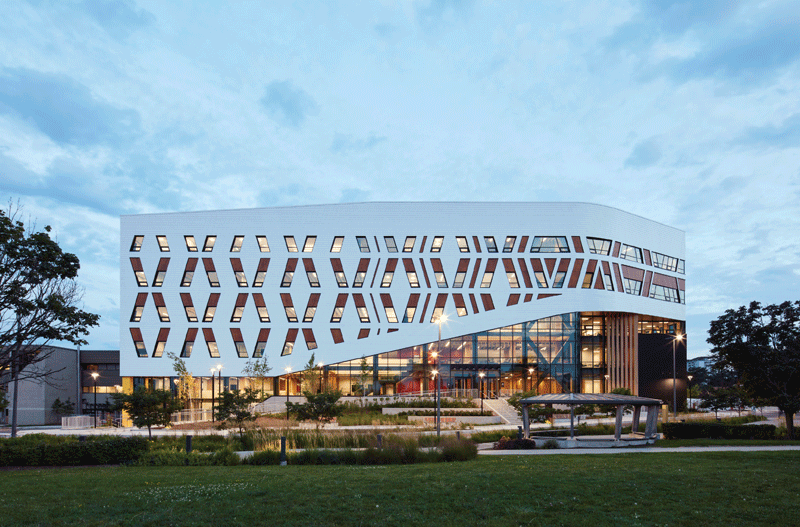
The Putman Family YWCA, Hamilton, ON

Jury Comment: “This precast concrete structure is a great example of an industry adapting to the challenges it faces in regard to sustainability. Creating a high performance building that is quick to construct and has a long service life is in itself commendable; that the building also serves the most vulnerable sectors of our community makes its contribution all the more valuable.”

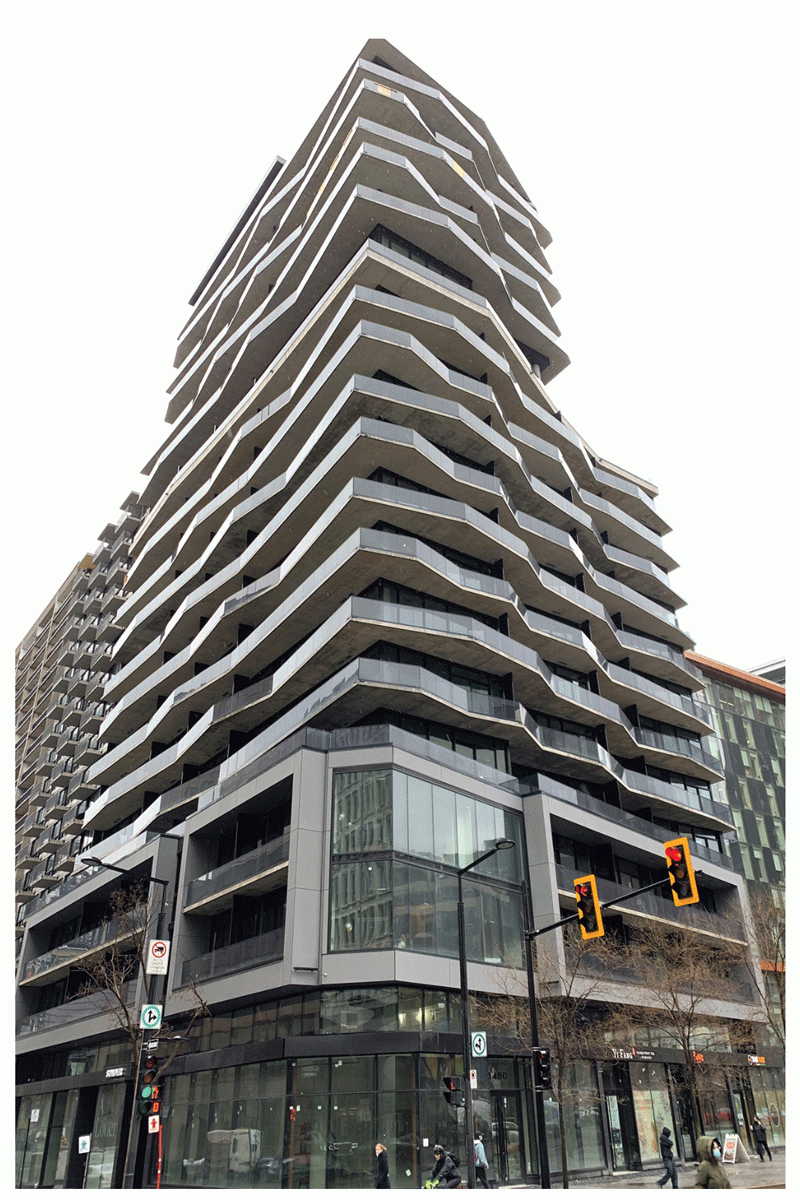
This project is Hamilton’s first affordable housing residence for women and children, prioritizing those from Indigenous and marginalized groups. The six-storey building comprises five floors of apartments above a ground floor podium. The podium, flanked by a community garden, includes a gathering space, an Innovation Centr and health and wellness programming for seniors.

Architecturally, the intent was to reflect the tradition of Hamilton as a Steel Town and to use local materials and manufacturers where possible. The brick clad podium reflects the scale and materiality of the neighbourhood, connecting the community programming with the street.

The pursuit of Passive House certification is consistent with supportive housing projects across the country, as it significantly reduces operating costs, while providing a high level of indoor environmental quality for residents. These attributes align with the YWCA’s core mission to provide comfortable, healthy, secure, resilient, and safe housing for women.

Construction Approach

In taking on PH design standards, the client wished to pursue a factory-built solution to reduce the uncertainties still associated with a high-performance building. At this scale, the project team was most comfortable with a modular precast concrete solution.

Analysis concluded that a factory-built concrete building could significantly reduce embodied carbon when compared with that of conventional cast-in-place. Hollowcore prestressed floor elements reduced the depth to span ratio, minimizing the volume (and hence weight) of concrete per unit of floor area.   All precast concrete and steel elements were manufactured in Hamilton.

The building uses a total precast system with a sandwich panel forming the Passive House compliant thermal, air-tight, structural, weathering, and aesthetic façade in one factory-built component.  Using locally manufactured precast concrete reduced the use of traditional formwork, auxiliary elements, and waste.

In turn, factory prefabrication reduced erection times and required only a single crane and a flat bed truck. As a result, truck idling, traffic congestion, construction site emissions and site lighting requirements were all reduced; as were noise, pollution and other environmental impacts on the surrounding community.

The building is a prefabricated total precast concrete construction, including the exterior finishes as seen with the “corduroy” dark slate textured precast concrete finish on the north and west elevations. SIGA membranes and tapes contribute to the integrity of the air barrier.

Project Credits

  • Owner/Developer  YWCA Hamilton
  • Architect  Kearns Mancini Architects Inc.
  • General contractor  Schilthuis Construction Inc.
  • Civil engineer  RJC Engineers
  • Structural Engineer  RJC Engineers
  • Precast Concrete  Coreslab Structures Photos Kearns Mancini Architects Inc. & Co.

Project Performance

  • Energy Intensity 95 KWhr/m2/year
  • The building is Passive House certified
  • Construction materials diverted from landfill  70%
  • Recycled materials content by value  4.75 %
  • Regional materials by value  60%

SUBSCRIBE TO THE DIGITAL OR PRINT ISSUE OF SABMAGAZINE FOR THE FULL VERSION OF THIS ARTICLE.
Institutional (Small) Award

Bill and Helen Norrie Library, Winnipeg, MB

Jury Comment: “This project clearly articulated the social and cultural focus that has become the primary role of community libraries. Taking visual cues from the Metis village that occupied the site, the building evokes the traditional ‘Big House’. The social, cultural and educational agenda is underpinned by the low embodied carbon and operating energy of the building.”
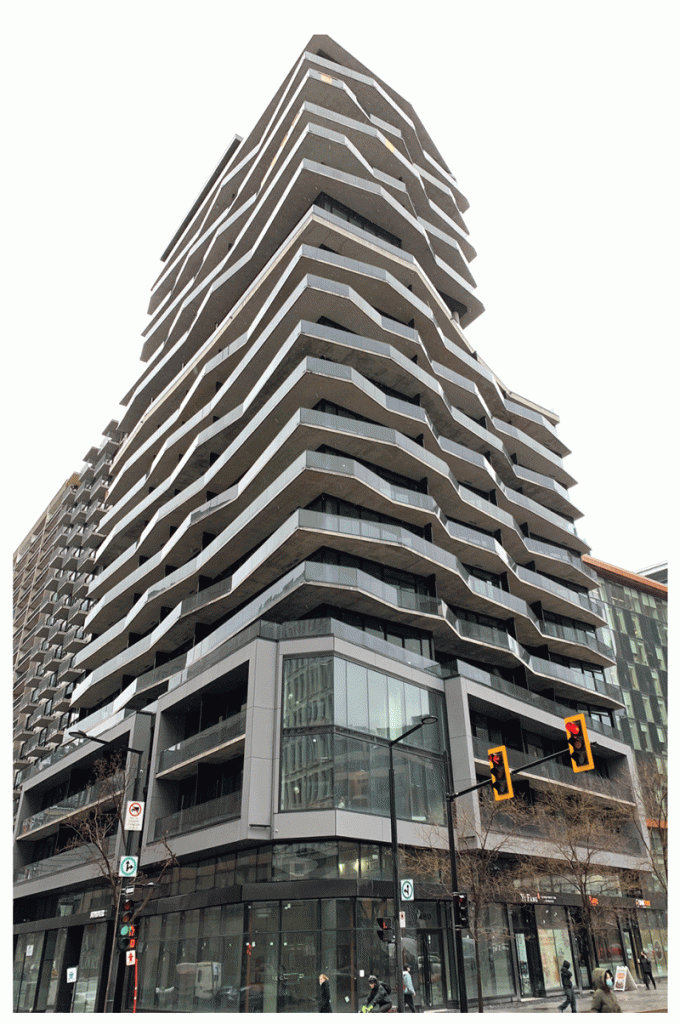
Located on a busy recreational campus, the 1,300 sq. m library unites the physical energy of the broader site with engaging social spaces to create a home-away-from-home for the community.

Inspired by the Métis heritage and dense residential context of the site, the library is conceived as a ‘big house’, reflecting diverse experiences of home — reading on the porch, playing in the backyard or gathering around the living room fireplace.

The building is strategically oriented on an east-to-west axis on the compact site to maximize daylight

into the library year-round. Positioned to absorb solar heat in the winter and support solar shading in the summer, overhangs minimize glare, direct sunlight and mitigate unwanted heat gain. These strategies reduce energy consumption and costs, and support visitor well-being.

The high performing building envelope, radiant in-floor heating and cooling zones, and a linear, active chilled beam system optimize resource efficiency and support thermal comfort.

Anchoring the approach to the site, a low semicircular bench serves as a resting place while waiting for the bus. Convenient bike storage ties into cycling and walking paths, encouraging active commutes to and from the library and nearby amenities. The modest campus parking lot includes the first EV charging station at a Winnipeg public library.

From the cozy living room and interactive children’s area to the multi-purpose room that accommodates diverse programming, community members of all ages can relax, play and build relationships. Strong visual connections between spaces indoors and out promote awareness of one’s surroundings and contribute to the inclusive family-friendly environment.

Extensive glazing on the north and south facades floods the open, linear library with daylight, creating a bright and uplifting interior setting. Daylight and occupancy sensors maintain consistent lighting levels, while simultaneously reducing the lighting load by at least 50%. All lighting is LED and lighting levels meet IESNA recommendations.

Fresh air is provided by a dedicated 90% efficient, dual core, energy recovery ventilation unit, minimizing long-term maintenance and costs. Demand control, fresh air ventilation is integrated and modulated in conjunction with the zoned VAV boxes to reduce energy use. A minimum MERV 13 Filtration is provided, and fresh air quality meets the requirements of AHSRAE 62-2007.

The building is equipped with a high-efficiency central ERV system, specifically an RG 2000, by Winnipeg-based Tempeff. Acting as the building’s lungs, the ERV not only recovers heat, but also factors in humidity making it the best choice for occupant comfort in a cold climate. The ERV makes use of Dual-Core technology, allowing for continuous fresh air supply and frost-free operation in this climate.

Project Credits

  • Architect  LM Architectural Group
  • Owner/Developer  City of Winnipeg
  • General contractor  Gateway Construction and Engineering Ltd
  • Landscape Architect  HTFC Planning & Design
  • Civil Engineer  Sision Blackburn Consulting
  • Electrical, Mechanical and Structural Engineer  Tower Engineering Group
  • Commissioning Agent Integrated Designs Inc
  • Sustainability Consultant  Footprint
  • Photos  Lindsay Reid

Project Performance

  • Energy Intensity  180 KWhr/m2/year
  • Reduction in Energy Intensity  44 % (Based on NECB 2011)
  • Water Consumption from municipal source  11,000 litres/occupant/year
  • Reduction in Water Consumption  25%
  • Construction materials diverted from landfill  40%
  • Recycled materials content by value  20%

SUBSCRIBE TO THE DIGITAL OR PRINT ISSUE OF SABMAGAZINE FOR THE FULL VERSION OF THIS ARTICLE.