Dedicated to sustainable,
high performance building

Solar Air Heating


Flagship projects show versatility of solar air heating
By Bärbel Epp

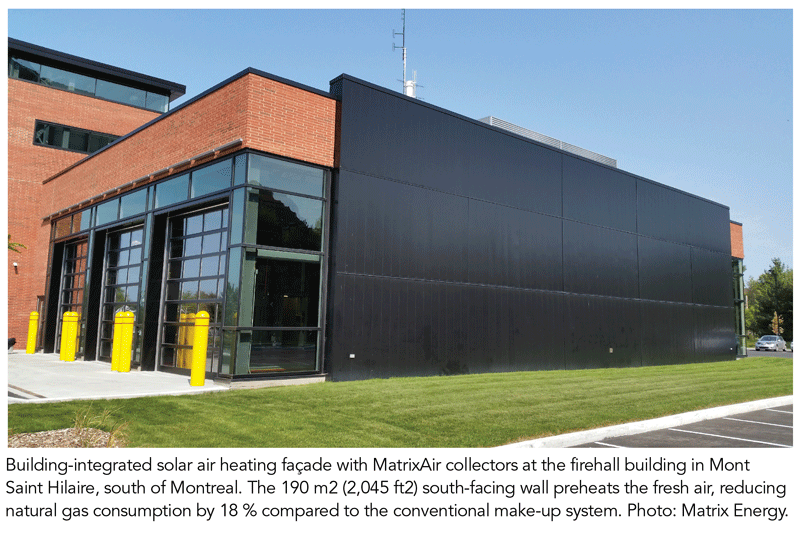
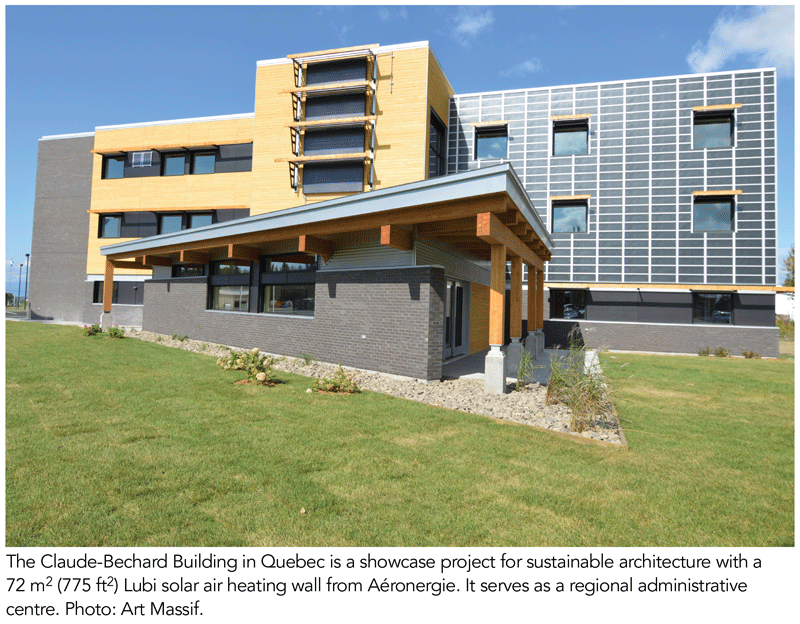
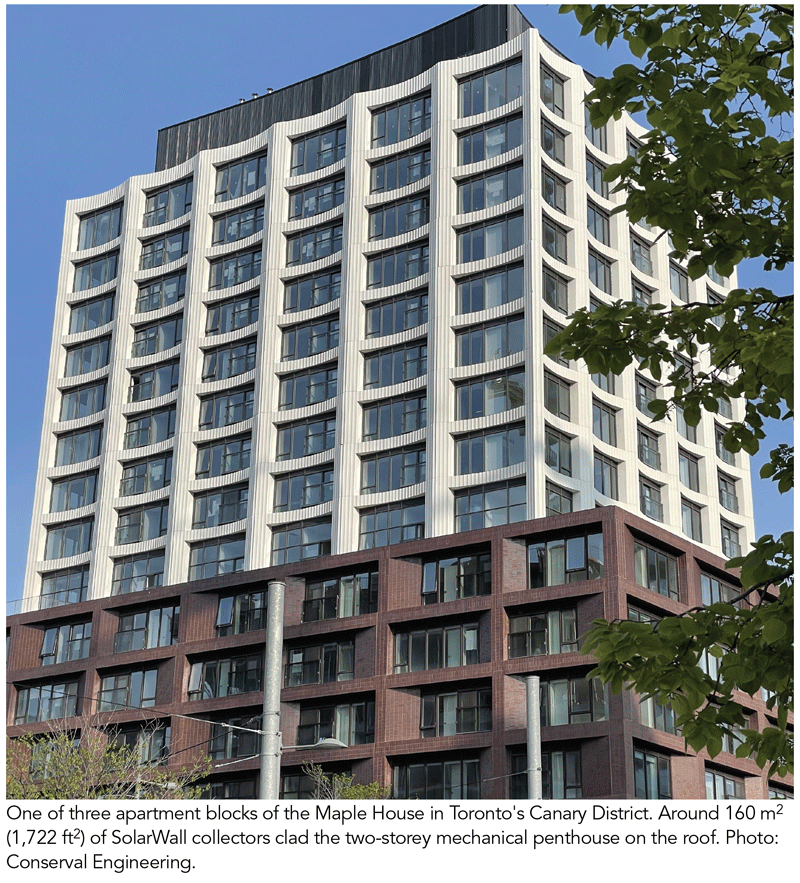
Canada is the global leader in solar air heating. The market is driven by a strong network of experienced system suppliers, optimized technologies, and some funding programs which are presenting cost-effective, façade-integrated systems as a practical solution for reducing onsite natural gas consumption.

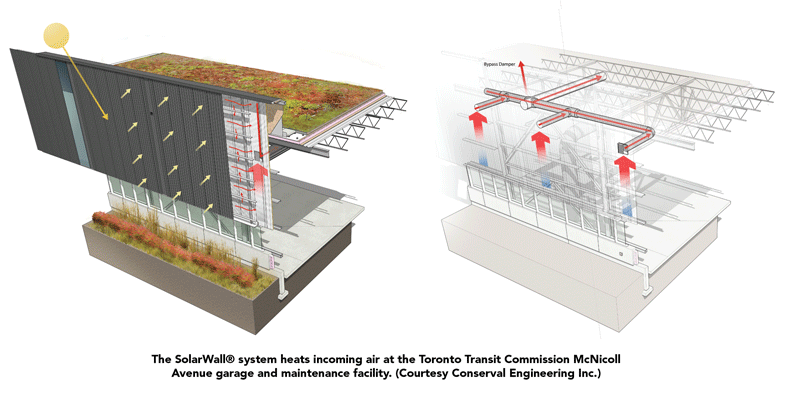
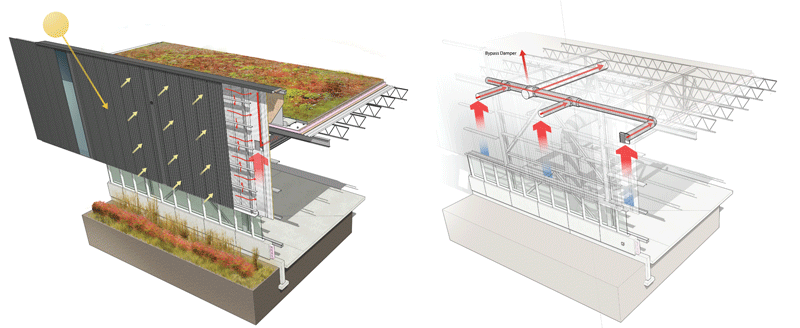
Solar air heating is among the most cost-effective applications of solar thermal energy. The systems contribute to space heating and preheating fresh air for ventilation, typically using glazed or unglazed perforated solar collectors. The collectors draw in outside air, heat it using solar energy, and then distribute it through ductwork to meet building heating and fresh air needs.

For the past seven years, Canada has led the world in solar air heating adoption. The four key suppliers – Trigo Energies, Conserval Engineering, Matrix Energy, and Aéronergie – reported a combined 26,203 m2 (282,046 ft2) of collector area sold last year. Several of these providers are optimistic about the growing demand. These findings come from the newly released Canadian Solar Thermal Market Survey 2024, commissioned by Natural Resources Canada.

Despite its cold climate, Canada benefits from strong solar potential with solar irradiance rivaling or even exceeding that of parts of Europe. This makes solar air heating not only viable, but especially valuable in buildings with high fresh air requirements including schools, hospitals, and offices.

A retrofit for improved energy performance

Most Trigo Energies installations are in Quebec where funding programs are offered by Hydro Quebec, the gas utility Energir and the Ministry of Natural Resources EcoPerformance program. Trigo Energies works with partner contractors to install mostly retrofit projects where knowledge of HVAC engineering is as important as experience with solar thermal and architecture.

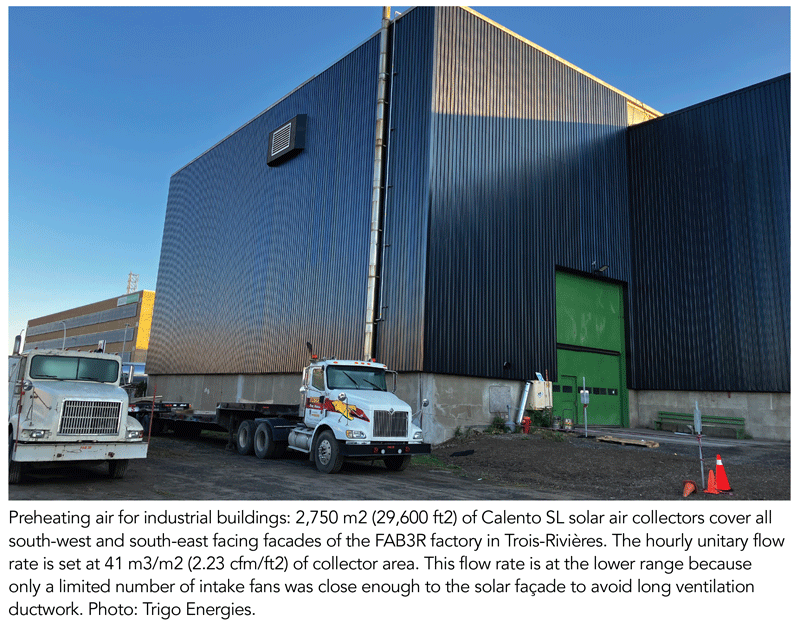
One recent Trigo installation is at the FAB3R factory in Trois-Rivières which specializes in manufacturing, repairing, and refurbishing large industrial equipment. Its air heating and ventilation system needed urgent renovation because of leakages and discomfort for the workers.

The majority of the new 2,750 m2 (29,600 ft2) solar façade at FAB3R covers approximately 13 % of the factory’s annual heating demand, which is otherwise met by natural gas. Trigo Energies equipped the façade with its high-performance Calento SL collectors, featuring a notable innovation: a selective, low-emissivity coating that withstands outdoor conditions.

Introduced by Trigo in 2019 and manufactured by Almeco Group from Italy, this advanced coating is engineered to maximize solar absorption while minimizing heat loss via infrared emission, enhancing the overall efficiency of the system.

The high efficiency coating is now standard in Trigo’s air heating systems and delivers a 25 to 35 % increase in yield over the former generation of solar air collectors with black paint. Testing conducted at Queen’s University confirms this performance advantage. Researchers measured the performance of transpired solar air collectors both with and without a selective coating, mounted side-by-side on a south-facing vertical wall. 

The results showed that the collectors with the selective coating produced 1.3 to 1.5 times more energy than those without it. In 2024, the monitoring results were jointly published by Queen’s University and Canmet Energy in a paper titled, “Performance Comparison of a Transpired Air Solar Collector with Low-E Surface Coating”.

Selective coating, also used on other solar thermal technologies including glazed flat plate or vacuum tube collectors, has a distinctive blue colour. Trigo customers can, however, choose between blue and black finishes. Going from the normal blue selective coating to black selective coating loses about 1 % in solar efficiency. 

The SolarWall® system heats incoming air at the Toronto Transit Commission McNicoll Avenue garage and maintenance facility. (Courtesy Conserval Engineering Inc.)

SUBSCRIBE TO THE DIGITAL OR PRINT ISSUE OF SABMAGAZINE FOR THE FULL VERSION OF THIS ARTICLE.

Getting MURBs to Net Zero: The Expanding Role of Energy Simulation in Design

Integrating envelope design, heat pumps, energy storage, renewables 

By Chris Flood

Multi-Unit Residential Buildings (MURBs) occupy a critical place in Canada’s urban decarbonization strategy. These high-density residential forms are growing rapidly in every major city and represent a large share of new construction floor area. They also embody a paradox: MURBs can be more energy-efficient per capita than low-rise housing, yet their dependence on centralized heating and cooling systems, complex envelope geometries, and dense electrical loads present substantial challenges to achieving net-zero performance.

Against this backdrop, energy simulation is evolving from a compliance exercise into a design intelligence tool. For decades, simulations were deployed at the end of design – largely to demonstrate NECB or ASHRAE 90.1 compliance to regulators. Today, forward-looking design teams are integrating simulation from the earliest concept stages. This transition is enabling more robust decision-making around electrification, heat pump system selection, code compliance, and carbon reduction strategies.

This article explores the shift in the role of simulation, the pathways for electrification in MURBs, and how integrated modelling is helping teams navigate code complexity, manage grid impacts, and deliver projects that balance cost-effectiveness with sustainability.

From Compliance Tool to Design Intelligence

Historically, simulation models were “back-end” tools. A building was designed, and then a model was created to prove that it complied with minimum standards. The process was often siloed, with little feedback between the energy model and the architectural or mechanical design.

That paradigm is changing. Several factors are driving this evolution:

1. Code escalation: NECB 2020 introduces tighter envelope and system requirements. Provincial frameworks such as the BC Energy Step Code and the Toronto Green Standard demand not just compliance, but tiered performance improvements.

2. Electrification pressure: Cities and provinces are phasing out fossil-fuel-based heating, forcing design teams to compare heat pump strategies head-to-head.

3. Carbon accounting: Owners and regulators are increasingly prioritizing greenhouse gas intensity over raw energy use.

4. Grid constraints: Utilities face strain from coincident heating loads during cold snaps, making demand-side management and load shifting critical.

In this environment, simulation is being leveraged iteratively and strategically. Models are now decision-support engines, allowing engineers to test design concepts before they are fixed, explore alternative technologies, and quantify lifecycle cost and carbon outcomes.

Reducing Design Heating Loads:

The First Lever

A key insight from simulation-driven design is that load reduction often trumps system efficiency. A poorly insulated or leaky envelope forces even the best heat pump to work harder, inflating equipment sizes and utility bills.

Strategies to Reduce Heating Loads

1. Envelope Optimization:

  •  High-performance glazing with low U-values and tuned solar heat gain coefficients (SHGCs).
  •  Continuous insulation strategies to minimize thermal bridging.
  •  Airtightness testing and detailing to reduce infiltration.

2. Internal Loads Management:

  •  High-efficiency appliances and LED lighting.
  •  Smart zoning and control strategies to avoid over-conditioning unoccupied spaces.

Getting MURBs to Net Zero: The Expanding Role of Energy Simulation in Design: Integrating envelope design, heat pumps, energy storage, renewables. One heat pump product, the Nordic W Series Commercial heat pump is a geothermal water-to-water system engineered for large buildings. Designed for radiant in-floor heating and fan coil coilin, this heat pump offers capacities from 9 to 81 tons and supports open or closed loop configurations with reversible heating and cooling and integrated phase protection.

Chris Flood, a mechanical engineer with more than 20 years’ experience within the building services industry, is vice president, Canada, for IES.

SUBSCRIBE TO THE DIGITAL OR PRINT ISSUE OF SABMAGAZINE FOR THE FULL VERSION OF THIS ARTICLE.