Dedicated to sustainable,
high performance building

MOSAÏQ COMMUNITY HOUSING

Urban infill delivers comfort and affordable living

By Marc Thivierge

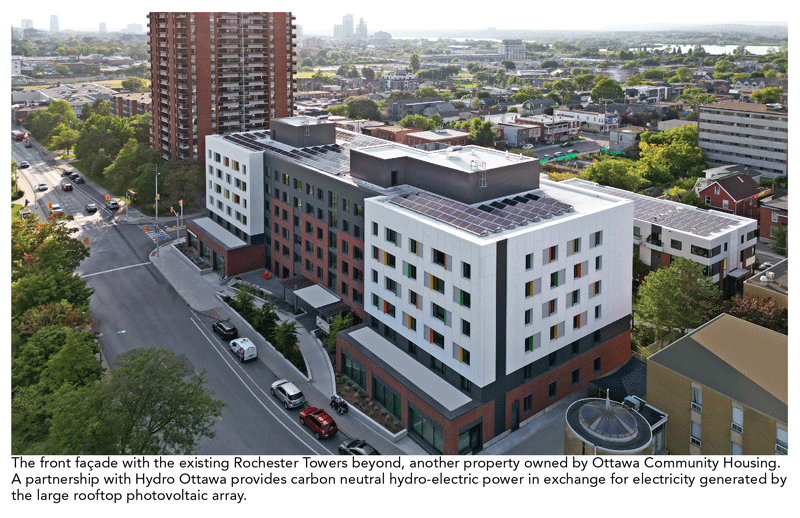
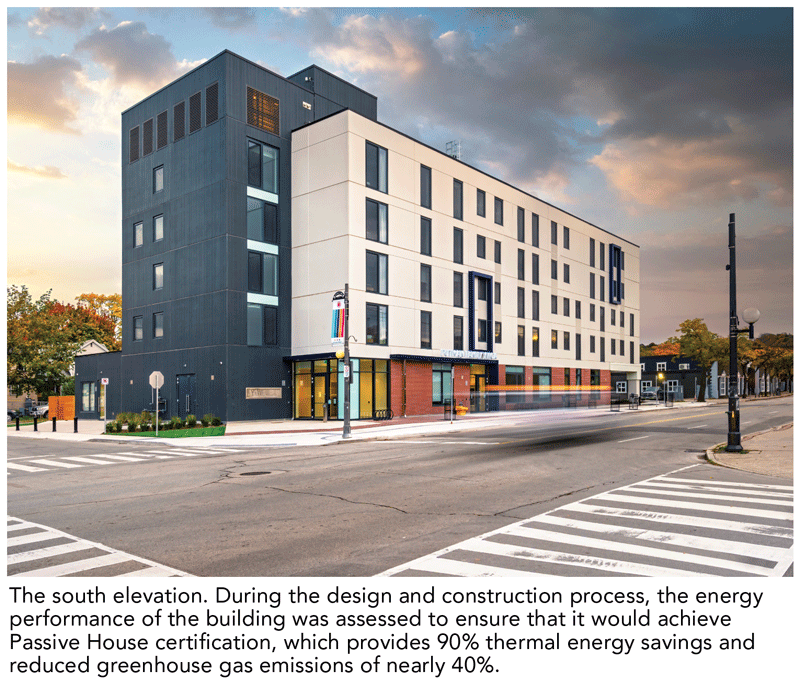
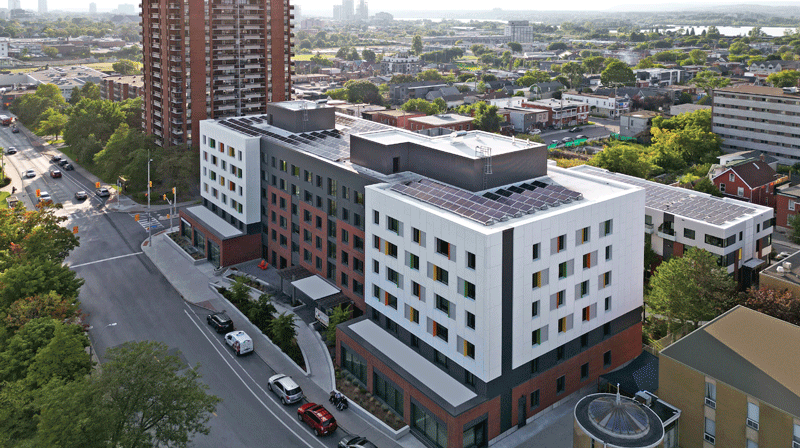
The construction of the affordable housing complex known as “Mosaïq” is part of a much larger multiblock redevelopment set in the urban core of Ottawa’s Little Italy. The program called for a significant increase in density while designing to the stringent sustainability provisions of Passive House (PHIUS).

The initial concept of a single taller passive house building evolved into a three-building scheme which eased community acceptance and made for a more resolved urban experience.

However, the budget implications meant that the passive house component had to be contained to the taller building.

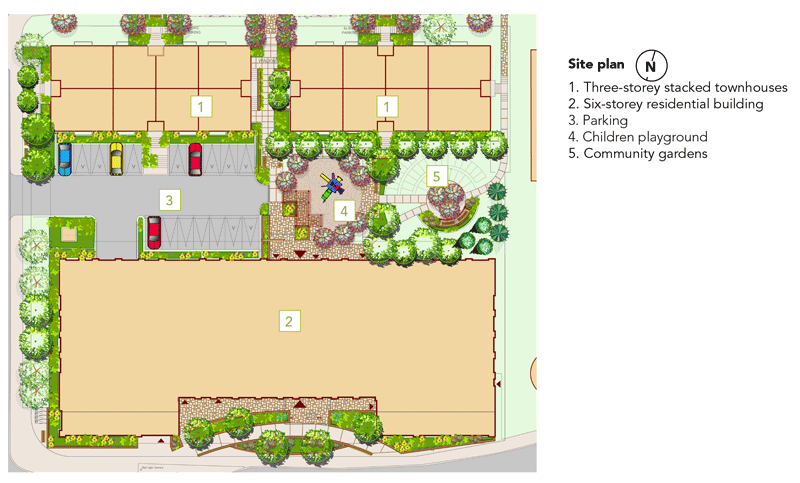
Nevertheless, the townhouses are integral to the project as they are tied into the overall energy system. Excess energy from the townhouses is used to heat the larger building, and their roof surfaces also account for a large proportion of the photovoltaic array.

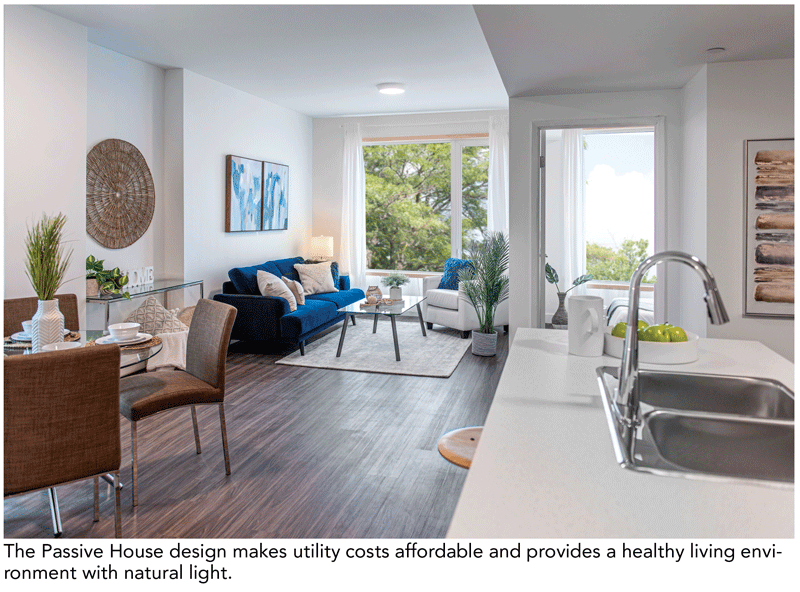
Super-insulated airtight building envelopes reduce utility costs significantly for the low-income tenants. A partnership with Hydro Ottawa provides carbon neutral hydro-electric power in exchange for electricity generated by the building’s large rooftop PV array.

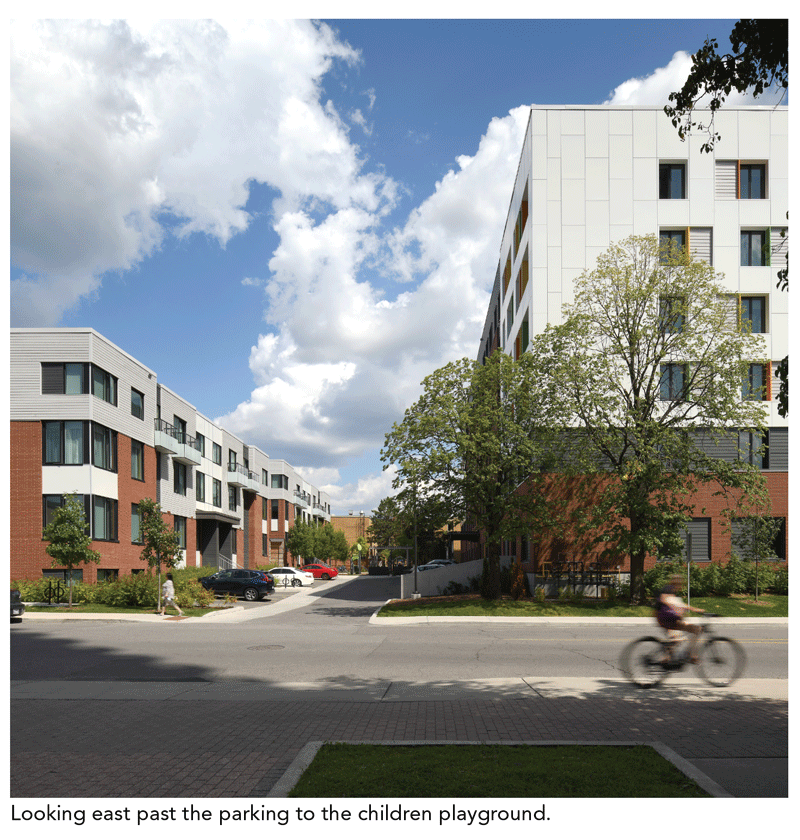
The site is part of a large urban parcel that was developed for social housing in the 1960s. After more than 50 years, those original townhomes had reached the end of their service life. This project is the first phase of a sustainable design vision that will provide higher density affordable housing while weaving into the existing urban fabric and enhancing community life. Site design included preserving some of the site’s existing trees, maintaining 35% of the site as landscaped open space with native plants, a children’s play area, and permeable surfaces to reduce stormwater runoff.

The integration of pedestrian paths with an array of amenity spaces and activity centres provides a platform for community building and health.

These include a gym, community garden, maker room, teaching kitchen, and multipurpose rooms. With easy access to nearby bike paths, cycling is encouraged as well with the provision of generous bike storage and maintenance facilities.

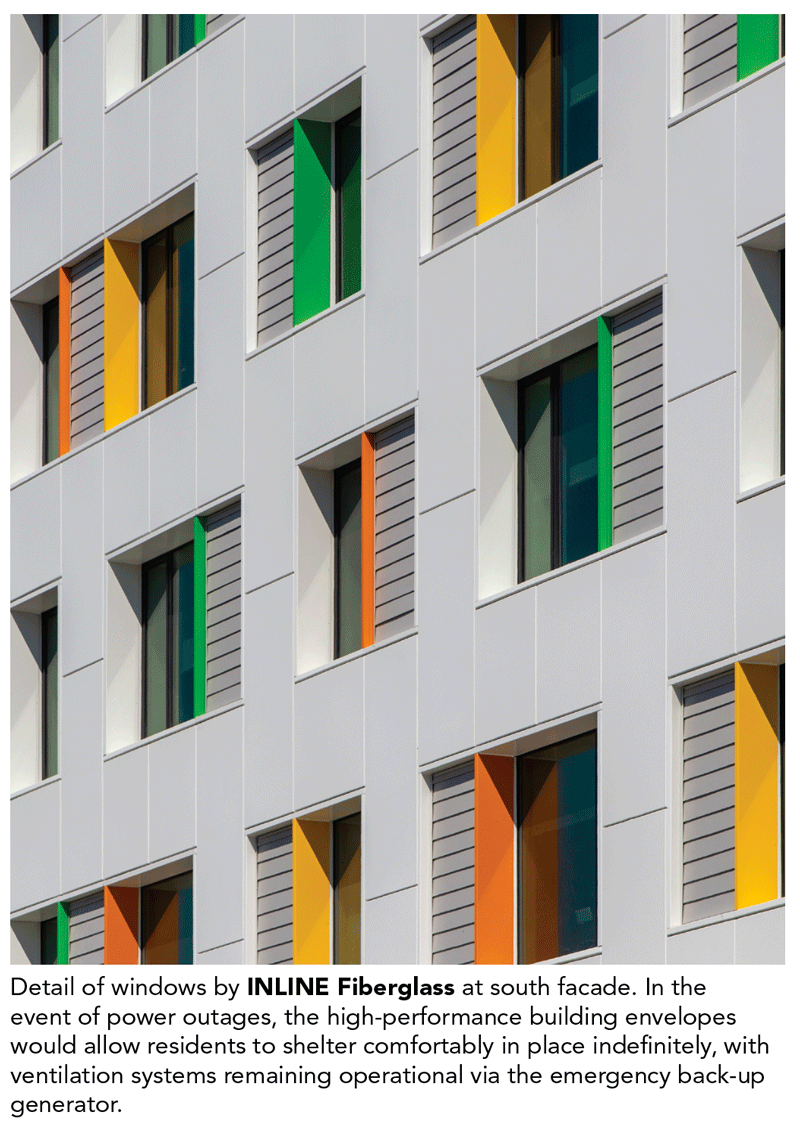
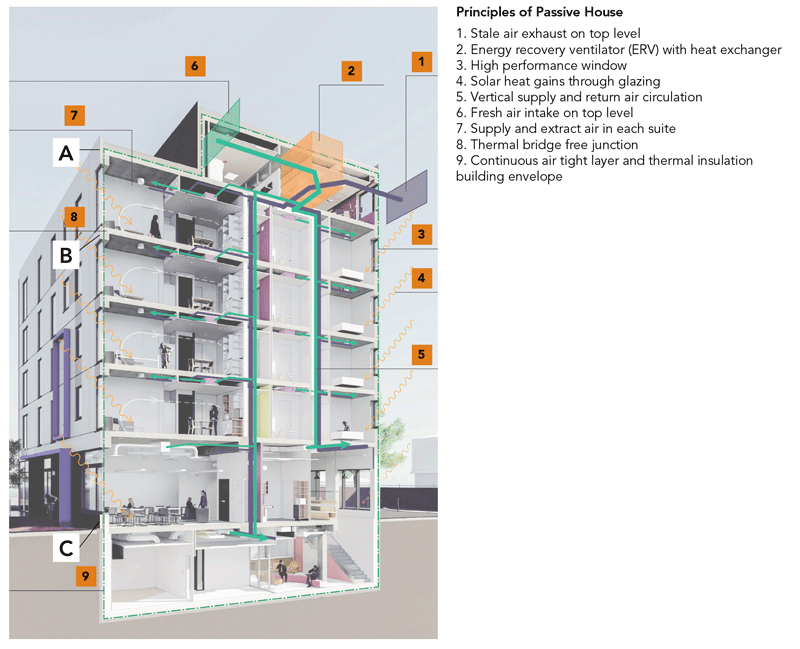
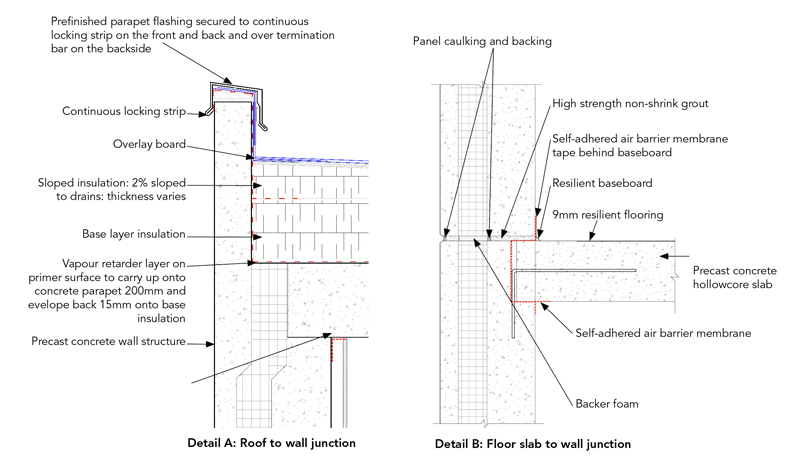
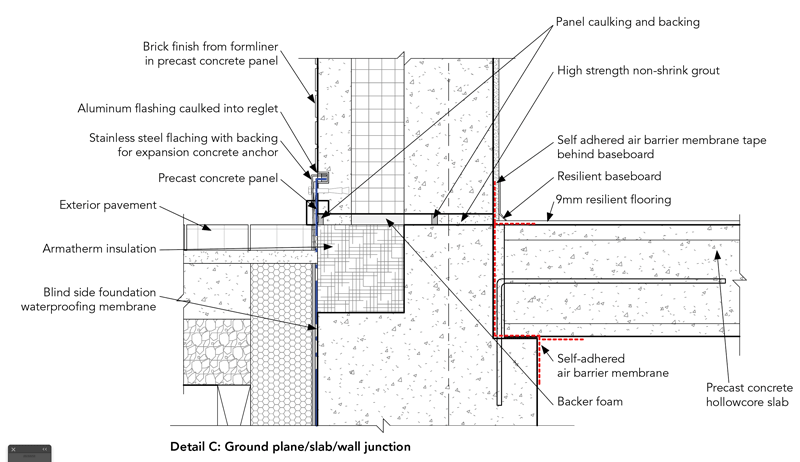
The building envelope consists of continuous insulation, the elimination of thermal bridges, highperformance triple-pane windows with U-values (IP) between 0.13 and 0.145, and air sealing of exterior components to 0.08 cfm50/ft.. Fresh air is provided through balanced ventilation with heat and moisture recovery.

The building was designed with window-to-wall ratios optimized by orientation and to achieve a radiation balance that allows winter solar gain to offset heating needs; and with window reveal depths, shading elements and glazing SHGC tuned to mitigate unwanted solar gains in the summer.

PROJECT INFO

  • SITE AREA 4,715 m2
  • BUILDING GROSS FLOOR AREA 8,903 m2
  • ENERGY INTENSITY 60.6 KWhr/m2/year [Includes base building and process energy]
  • REDUCTION IN ENERGY INTENSITY BASED ON NECB 2015 18%

PROJECT CREDITS

  • OWNER Ottawa Community Housing
  • ARCHITECT Hobin Architecture: Marc Thivierge, Doug Brooks, Gord Lorimer, Barry Hobin
  • STRUCTURAL ENGINEER WSP
  • CIVIL ENGINEER DSEL
  • ELECTRICAL AND MECHANICAL ENGINEER Goodkey Weedmark and Associates
  • LANDSCAPE ARCHITECT CSW Landscape Architects
  • PASSIVE HOUSE DESIGNER Prudence Ferreira
  • COMMISSIONING AGENT Geo-Energie Inc
  • GENERAL CONTRACTOR EllisDon
  • BUILDING ENVELOPE CONSULTANT AND ENERGY MODELLING Morrison Hershfield
  • INTERIOR DESIGN Grant-Henley Design
  • PHOTOS 1, 2, 4, 6: Gleb Gomberg; 3: Steve Clifford, 5: Arriv Properties

Detail of windows by INLINE Fiberglass at south facade. In the event of power outages, the highperformance building envelopes would allow residents to shelter comfortably in place indefinitely, with ventilation systems remaining operational via the emergency back-up generator.

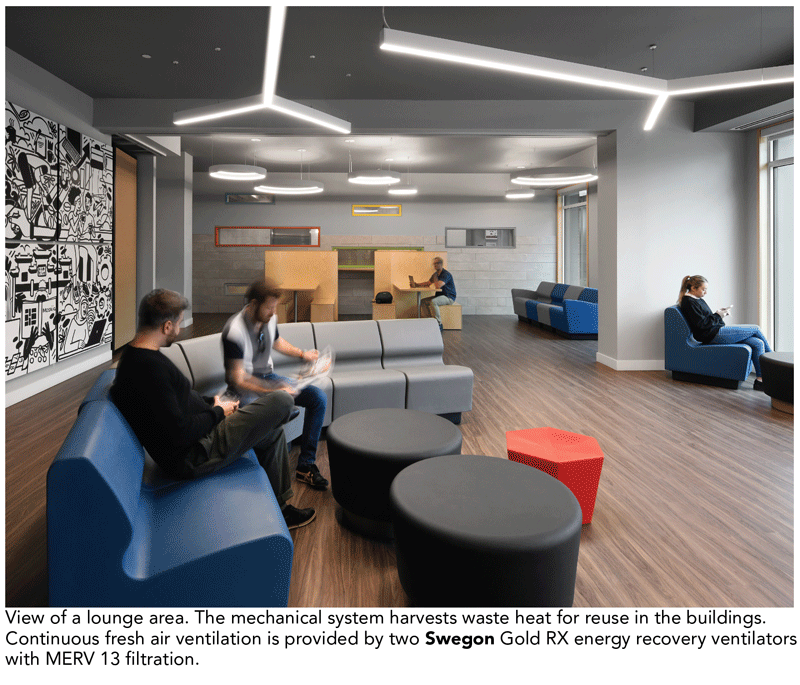
View of a lounge area. The mechanical system harvests waste heat for reuse in the buildings. Continuous fresh air ventilation is provided by two Swegon Gold RX energy recovery ventilators with MERV 13 filtration.

SUBSCRIBE TO THE DIGITAL OR PRINT ISSUE OF SABMAGAZINE FOR THE FULL VERSION OF THIS ARTICLE.
BIRD’S WING DUPLEX

Creative spatial design makes for flexible living

By Allison Holden Pope

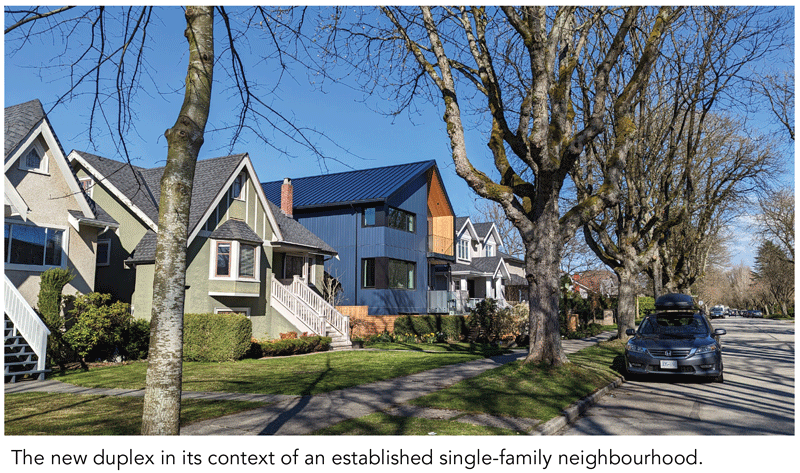
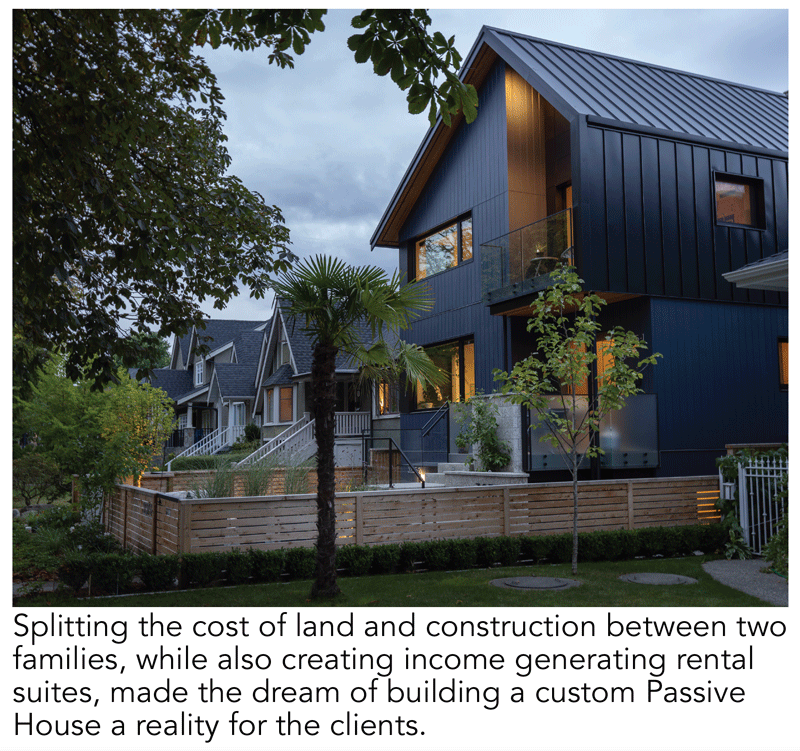
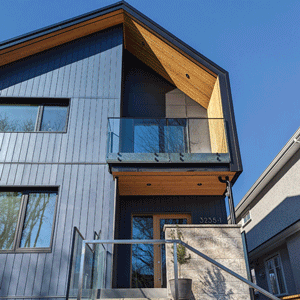
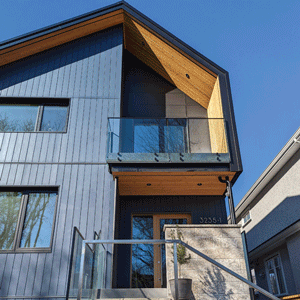
Located in an established single-family neighbourhood on the west side of Vancouver, this project takes advantage of recent zoning changes to create an energy efficient duplex, with lock-off suites, combining thermal efficiency and spatial flexibility, within an architectural expression that is both minimalist and contextual.

The project goes beyond the basic concerns of Passive House certification for energy efficiency and indoor air quality to embrace broader community issues of affordability and aging in place.

In Vancouver, where land comes at a premium, splitting the cost of land and construction between two families, while also creating income generating rental suites, made the dream of building a custom Passive House a reality for our clients. We capitalized on the City of Vancouver’s floor area incentives, which encourage Passive House construction by compensating owners for the additional space occupied by the thick envelope assemblies. These incentives increased the permissible FSR by 18%; translating into an additional 33.4m2 of useable interior floor area. This was a game changer for our clients, allowing each unit to have an additional bedroom and bathroom.

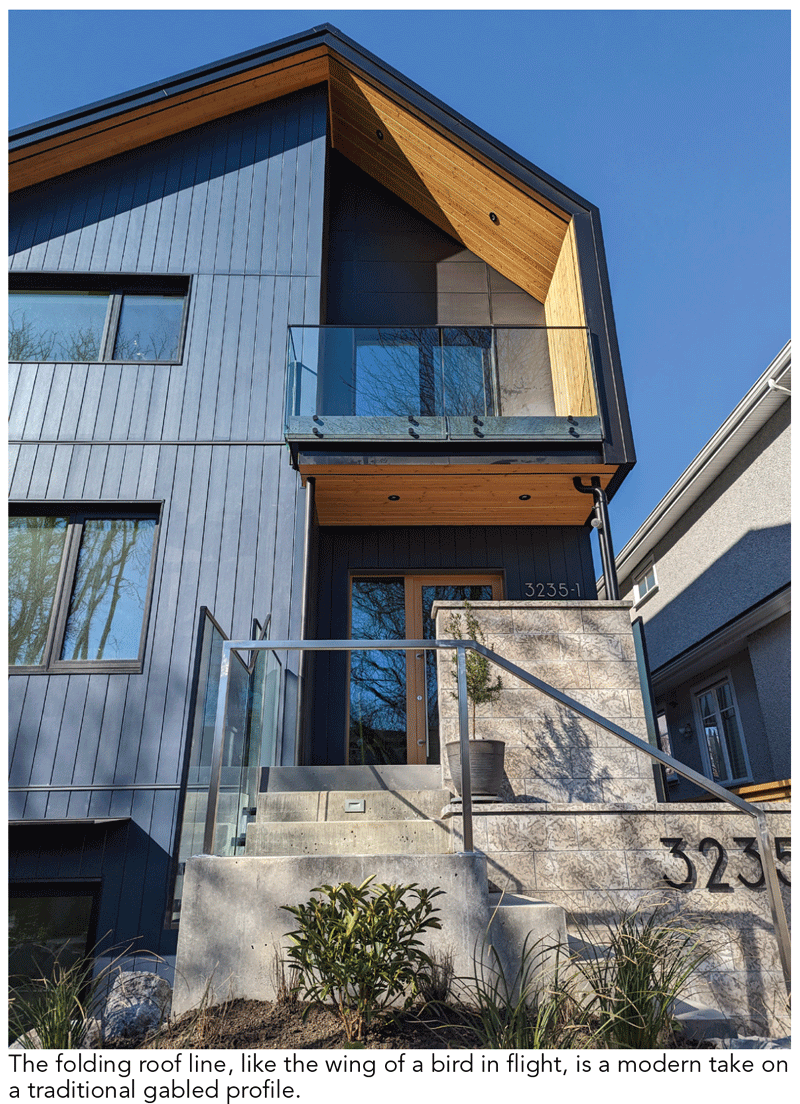
The folding roof line, like the wing of a bird in flight, is a modern take on a traditional gabled profile. The footprint of the home is continuous from foundation to roof, and incorporates a single notch in plan to create architectural interest while keeping the thermal envelope simple.

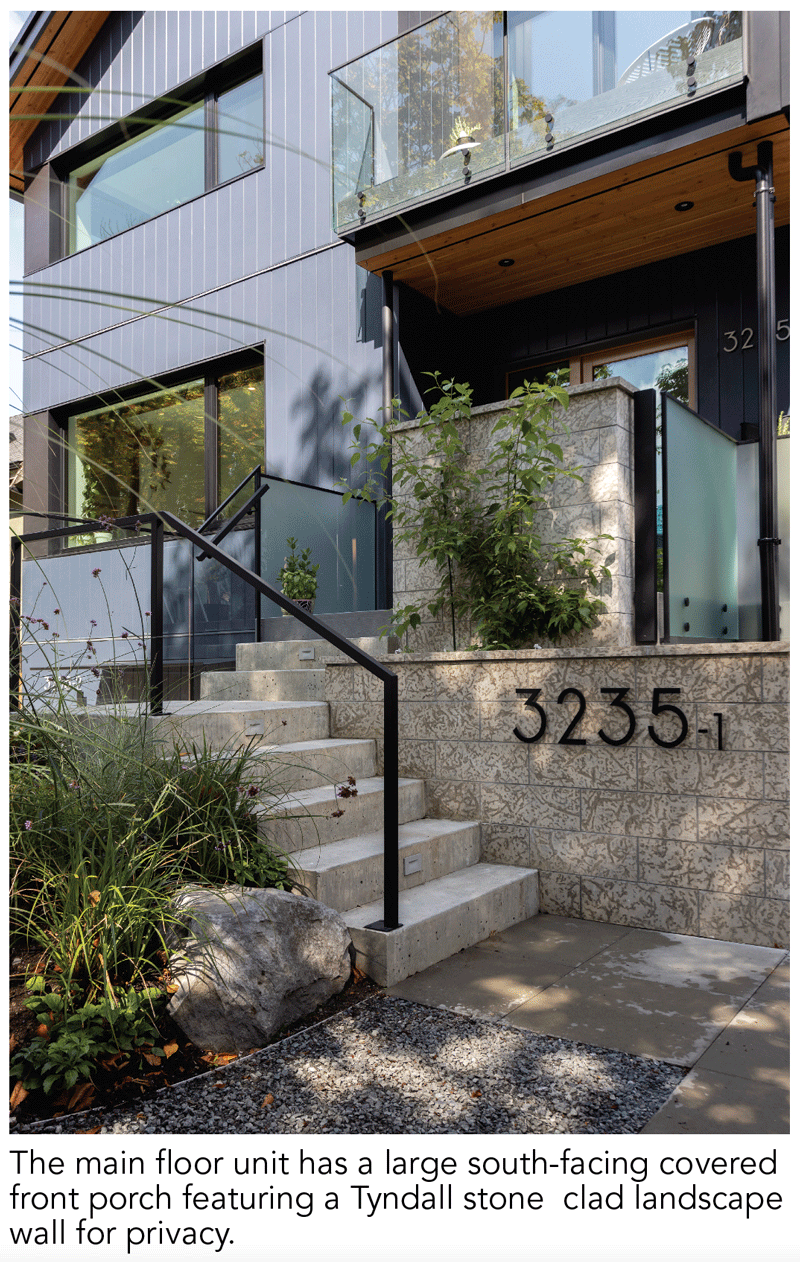
Nestled into the space created by this step-in plan, the main floor unit has a large south-facing covered front porch, featuring a Tyndall stone clad landscape wall for privacy. Above, and wrapped in the protective wing-like roof, the upper unit has a south-facing balcony. These outdoor spaces create a flow from inside to out while having a level of privacy from the street.

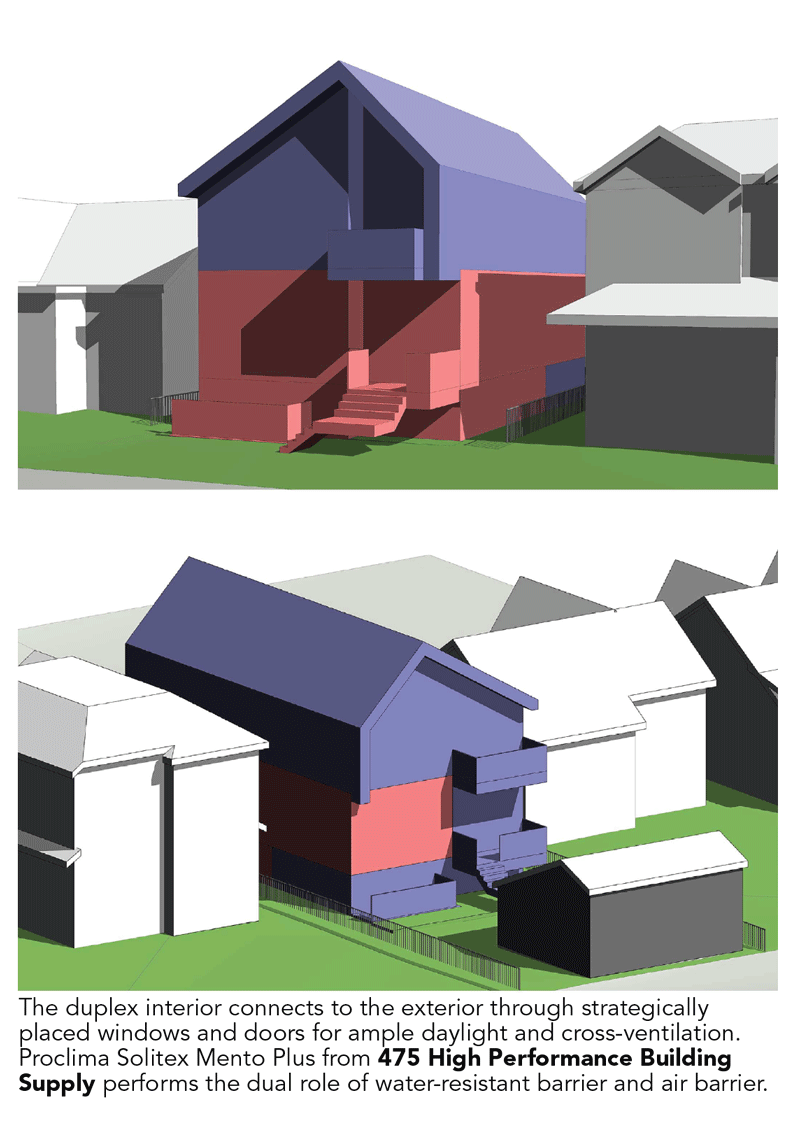
The planning of the duplex was an exercise in spatial optimization, as with a creative three-dimensional puzzle of interlocking pieces. The suites bend and fold around each other to maximize efficiency and create evocative volumes within the strict zoning regulations.

PROJECT CREDITS

  • ARCHITECT  ONE SEED Architecture + Interiors
  • INTERIOR DESIGN
  • ONE SEED Architecture + Interiors
  • STRUCTURAL ENGINEER Timber Engineering
  • BUILDER Naikoon Contracting
  • CERTIFIED PASSIVE HOUSE DESIGNER  JRG Building Engineering
  • CERTIFIER CertiPHIers Cooperative
  • LANDSCAPE DESIGN Acre Horticulture
  • PHOTOS Janis Nicolay

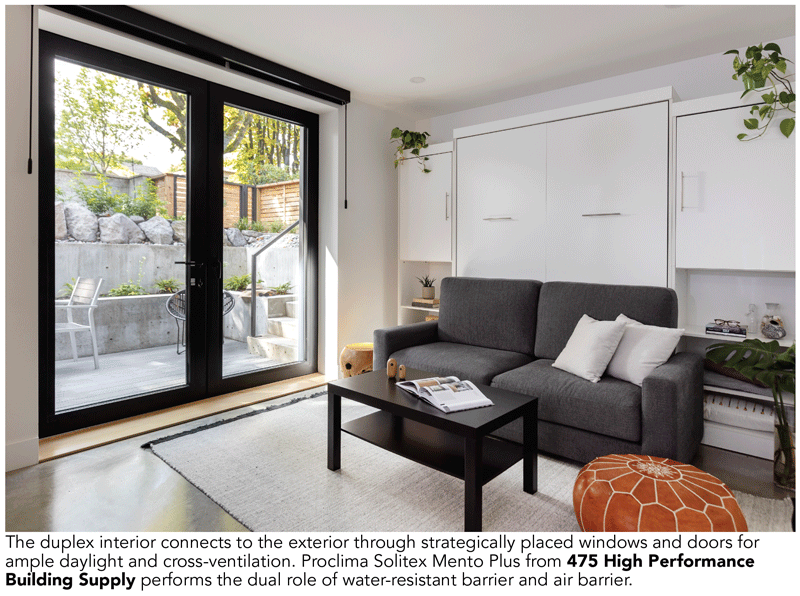
The duplex interior connects to the exterior through strategically placed windows and doors for ample daylight and cross-ventilation. Proclima Solitex Mento Plus from 475 High Performance Building Supply performs the dual role of water-resistant barrier and air barrier.

SUBSCRIBE TO THE DIGITAL OR PRINT ISSUE OF SABMAGAZINE FOR THE FULL VERSION OF THIS ARTICLE.
THE CONSTRUCTION TECHNOLOGY REVOLUTION

A Catalyst for High-Performance Buildings and Industry Transformation

By Passive House Canada CEO, Chris Ballard Passive House Canada is happy to introduce the annual Passive House issue of SABMag which profiles recently completed Passive House-certified projects from across the country.

We are in overlapping climate, housing, and affordability crises and we must turn to the construction industry to help build and retrofit our way out. But would you turn to an industry that has been notoriously slow to digitize, lagging almost every other sector? Whose productivity underperformed the rest of the economy? What if I told you that the tides are turning, and the construction industry is on the brink of a technological revolution that could redefine our approach to sustainable, high-performance buildings?

THE LONG OVERDUE DIGITAL TRANSFORMATION – In 2016, McKinsey ranked the construction industry as second last to digitize, only ahead of agriculture. For two decades, global labour-productivity growth in construction averaged a mere one percent a year, compared to 2.8 percent for the world economy and 3.6 percent in manufacturing.

Canada's construction productivity also lagged significantly. Even more concerning, Canada's construction industry faces a severe labour shortage, with an 80,000-position vacancy rate in 2022 and an aging workforce that will require 245,100 new workers over the next decade. Without significant innovation, the sector has been stuck in the past, but perhaps we are witnessing that start of a seismic shift.

In 2019, venture capital investment in Construction Technology (ConTech) outpaced non-construction funding by a factor of 15. Parts of the industry are finally embracing multi-service platforms, 3-D printing, modularization, robotics, digital-twin technology, artificial intelligence, and analytics. But is this enough to help solve our overlapping crises?

CUTTING CARBON EMISSIONS WITH BETTER DATA – Climate change is a pressing issue, and the construction industry is a significant contributor to carbon emissions. In 2019, the building sector accounted for 12.5 percent of Canada’s total greenhouse gas (GHG) emissions, primarily from burning fossil fuels for heating (18 percent with electricity included). When the impact of construction, materials and waste is included, the number is much larger.

Environmental Product Declarations (EPDs) and Lifecycle Assessments (LCAs) are both critical digital tools for an evolving construction industry to evaluate systematically the environmental impact of building materials and processes. An EPD is a standardized document that provides specific environmental data of a product based on predetermined parameters.

EPDs are generally derived from LCAs. An LCA is a comprehensive analysis that evaluates the environmental impacts associated with all the stages of a product's life—from raw material extraction through materials processing, manufacture, distribution, use, repair and maintenance, and disposal or recycling.

LCAs and EPDs work in tandem to provide comprehensive and standardized data on the environmental impact of materials and processes. This data enables architects, engineers, and builders to make informed decisions on material selection, design, and construction methods, thereby optimizing for both reduced carbon emissions and resource efficiency.

The standardized nature of EPDs also facilitates the reuse and recycling of building components, contributing to a more circular economy in construction.

Innovations like AI and machine learning could further amplify the effectiveness of EPDs and LCAs, enabling more dynamic, data-driven decision-making in construction.

These technological advancements not only promise to make the industry more efficient but also pave the way for a more sustainable and circular economy in construction.

ADVANCING HIGH-PERFORMANCE PREFABRICATION – Prefabrication is not new, its adoption has been slow in North America, but signs point toward change.

Total revenue in the North American market for prefabrication and modular-construction real estate projects grew by a factor of 2.4 from 2015-2018, rising from $2 to $4.9 billion. Prefabricated buildings encompass a range of construction methods, including modular, panelized, precut, structural insulated panels (SIPs), hybrid systems, and 3D printing. They offer a multi-faceted solution to some of the construction industry's most pressing challenges. Built off-site, they enable greater efficiency and reduced waste, contributing to significant reductions in both embodied and operational carbon emissions. Prefabrication also fosters a circular economy by enabling waste reduction, component reuse, and design adaptability. Additionally, the mass production approach of prefab buildings leads to cost efficiency, reduced labour costs, and faster build times, enhancing affordability and predictability. 

SUBSCRIBE TO THE DIGITAL OR PRINT ISSUE OF SABMAGAZINE FOR THE FULL VERSION OF THIS ARTICLE.
Technical Award

The Putman Family YWCA, Hamilton, ON

Jury Comment: “This precast concrete structure is a great example of an industry adapting to the challenges it faces in regard to sustainability. Creating a high performance building that is quick to construct and has a long service life is in itself commendable; that the building also serves the most vulnerable sectors of our community makes its contribution all the more valuable.”

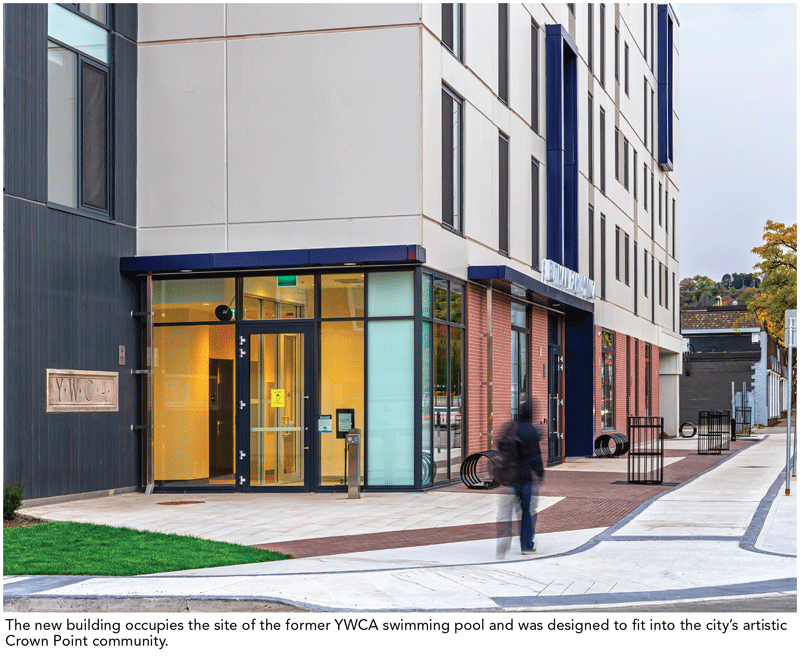
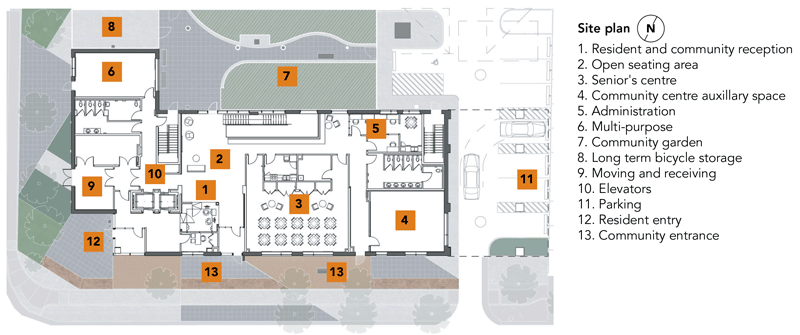
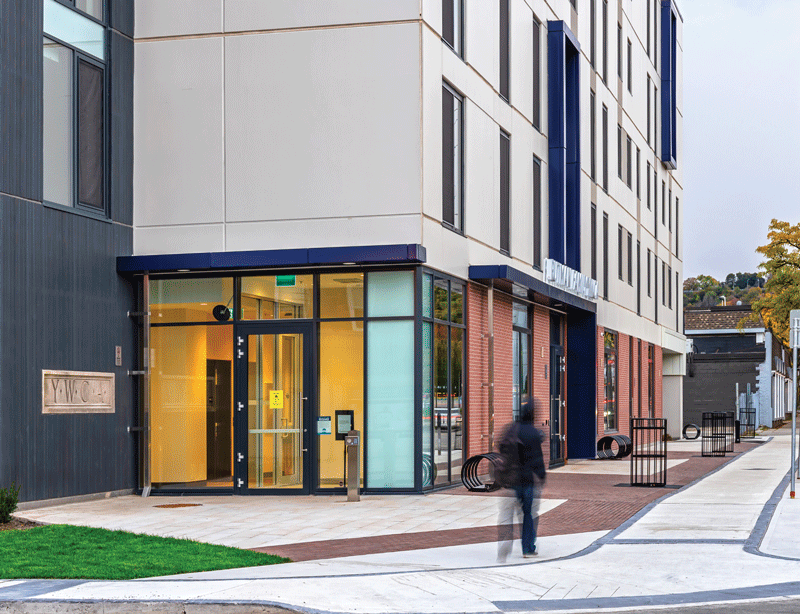
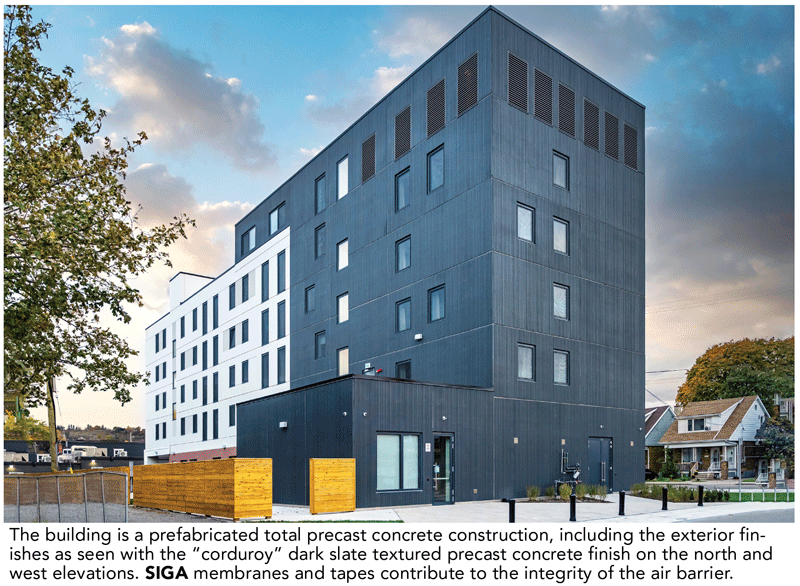
This project is Hamilton’s first affordable housing residence for women and children, prioritizing those from Indigenous and marginalized groups. The six-storey building comprises five floors of apartments above a ground floor podium. The podium, flanked by a community garden, includes a gathering space, an Innovation Centr and health and wellness programming for seniors.

Architecturally, the intent was to reflect the tradition of Hamilton as a Steel Town and to use local materials and manufacturers where possible. The brick clad podium reflects the scale and materiality of the neighbourhood, connecting the community programming with the street.

The pursuit of Passive House certification is consistent with supportive housing projects across the country, as it significantly reduces operating costs, while providing a high level of indoor environmental quality for residents. These attributes align with the YWCA’s core mission to provide comfortable, healthy, secure, resilient, and safe housing for women.

Construction Approach

In taking on PH design standards, the client wished to pursue a factory-built solution to reduce the uncertainties still associated with a high-performance building. At this scale, the project team was most comfortable with a modular precast concrete solution.

Analysis concluded that a factory-built concrete building could significantly reduce embodied carbon when compared with that of conventional cast-in-place. Hollowcore prestressed floor elements reduced the depth to span ratio, minimizing the volume (and hence weight) of concrete per unit of floor area.   All precast concrete and steel elements were manufactured in Hamilton.

The building uses a total precast system with a sandwich panel forming the Passive House compliant thermal, air-tight, structural, weathering, and aesthetic façade in one factory-built component.  Using locally manufactured precast concrete reduced the use of traditional formwork, auxiliary elements, and waste.

In turn, factory prefabrication reduced erection times and required only a single crane and a flat bed truck. As a result, truck idling, traffic congestion, construction site emissions and site lighting requirements were all reduced; as were noise, pollution and other environmental impacts on the surrounding community.

The building is a prefabricated total precast concrete construction, including the exterior finishes as seen with the “corduroy” dark slate textured precast concrete finish on the north and west elevations. SIGA membranes and tapes contribute to the integrity of the air barrier.

Project Credits

  • Owner/Developer  YWCA Hamilton
  • Architect  Kearns Mancini Architects Inc.
  • General contractor  Schilthuis Construction Inc.
  • Civil engineer  RJC Engineers
  • Structural Engineer  RJC Engineers
  • Precast Concrete  Coreslab Structures Photos Kearns Mancini Architects Inc. & Co.

Project Performance

  • Energy Intensity 95 KWhr/m2/year
  • The building is Passive House certified
  • Construction materials diverted from landfill  70%
  • Recycled materials content by value  4.75 %
  • Regional materials by value  60%

SUBSCRIBE TO THE DIGITAL OR PRINT ISSUE OF SABMAGAZINE FOR THE FULL VERSION OF THIS ARTICLE.
Institutional (Small) Award

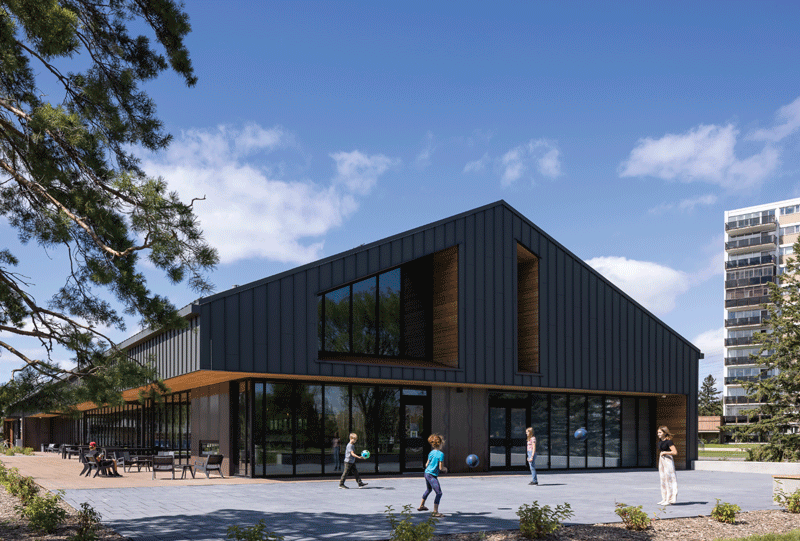
Bill and Helen Norrie Library, Winnipeg, MB

Jury Comment: “This project clearly articulated the social and cultural focus that has become the primary role of community libraries. Taking visual cues from the Metis village that occupied the site, the building evokes the traditional ‘Big House’. The social, cultural and educational agenda is underpinned by the low embodied carbon and operating energy of the building.”

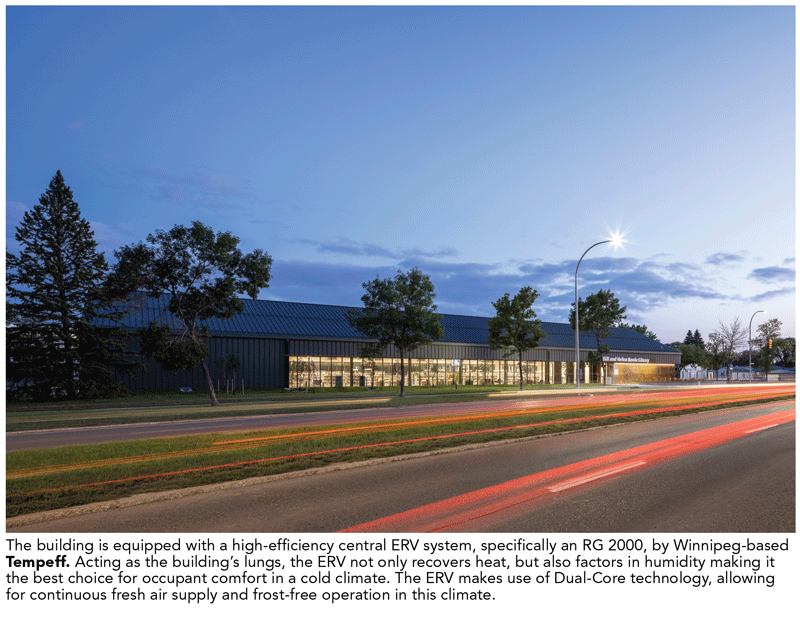
Located on a busy recreational campus, the 1,300 sq. m library unites the physical energy of the broader site with engaging social spaces to create a home-away-from-home for the community.

Inspired by the Métis heritage and dense residential context of the site, the library is conceived as a ‘big house’, reflecting diverse experiences of home — reading on the porch, playing in the backyard or gathering around the living room fireplace.

The building is strategically oriented on an east-to-west axis on the compact site to maximize daylight

into the library year-round. Positioned to absorb solar heat in the winter and support solar shading in the summer, overhangs minimize glare, direct sunlight and mitigate unwanted heat gain. These strategies reduce energy consumption and costs, and support visitor well-being.

The high performing building envelope, radiant in-floor heating and cooling zones, and a linear, active chilled beam system optimize resource efficiency and support thermal comfort.

Anchoring the approach to the site, a low semicircular bench serves as a resting place while waiting for the bus. Convenient bike storage ties into cycling and walking paths, encouraging active commutes to and from the library and nearby amenities. The modest campus parking lot includes the first EV charging station at a Winnipeg public library.

From the cozy living room and interactive children’s area to the multi-purpose room that accommodates diverse programming, community members of all ages can relax, play and build relationships. Strong visual connections between spaces indoors and out promote awareness of one’s surroundings and contribute to the inclusive family-friendly environment.

Extensive glazing on the north and south facades floods the open, linear library with daylight, creating a bright and uplifting interior setting. Daylight and occupancy sensors maintain consistent lighting levels, while simultaneously reducing the lighting load by at least 50%. All lighting is LED and lighting levels meet IESNA recommendations.

Fresh air is provided by a dedicated 90% efficient, dual core, energy recovery ventilation unit, minimizing long-term maintenance and costs. Demand control, fresh air ventilation is integrated and modulated in conjunction with the zoned VAV boxes to reduce energy use. A minimum MERV 13 Filtration is provided, and fresh air quality meets the requirements of AHSRAE 62-2007.

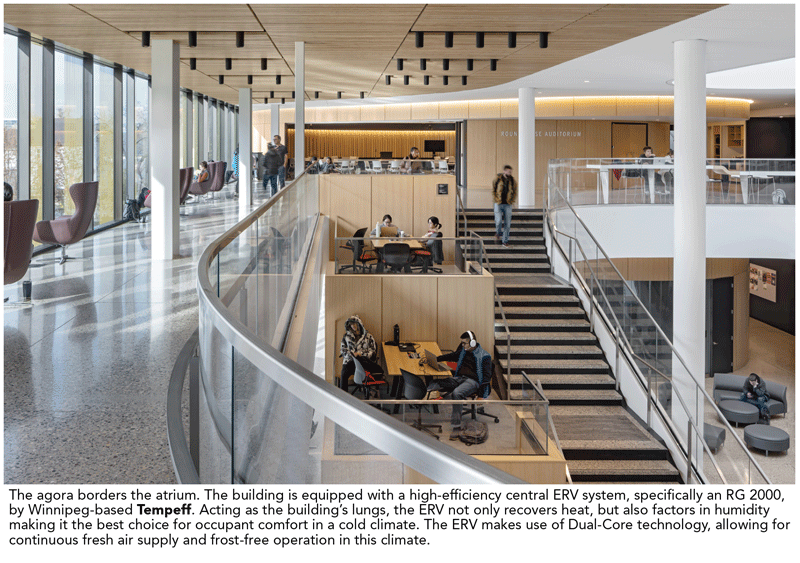
The building is equipped with a high-efficiency central ERV system, specifically an RG 2000, by Winnipeg-based Tempeff. Acting as the building’s lungs, the ERV not only recovers heat, but also factors in humidity making it the best choice for occupant comfort in a cold climate. The ERV makes use of Dual-Core technology, allowing for continuous fresh air supply and frost-free operation in this climate.

Project Credits

  • Architect  LM Architectural Group
  • Owner/Developer  City of Winnipeg
  • General contractor  Gateway Construction and Engineering Ltd
  • Landscape Architect  HTFC Planning & Design
  • Civil Engineer  Sision Blackburn Consulting
  • Electrical, Mechanical and Structural Engineer  Tower Engineering Group
  • Commissioning Agent Integrated Designs Inc
  • Sustainability Consultant  Footprint
  • Photos  Lindsay Reid

Project Performance

  • Energy Intensity  180 KWhr/m2/year
  • Reduction in Energy Intensity  44 % (Based on NECB 2011)
  • Water Consumption from municipal source  11,000 litres/occupant/year
  • Reduction in Water Consumption  25%
  • Construction materials diverted from landfill  40%
  • Recycled materials content by value  20%

SUBSCRIBE TO THE DIGITAL OR PRINT ISSUE OF SABMAGAZINE FOR THE FULL VERSION OF THIS ARTICLE.

Residential (Large) Award

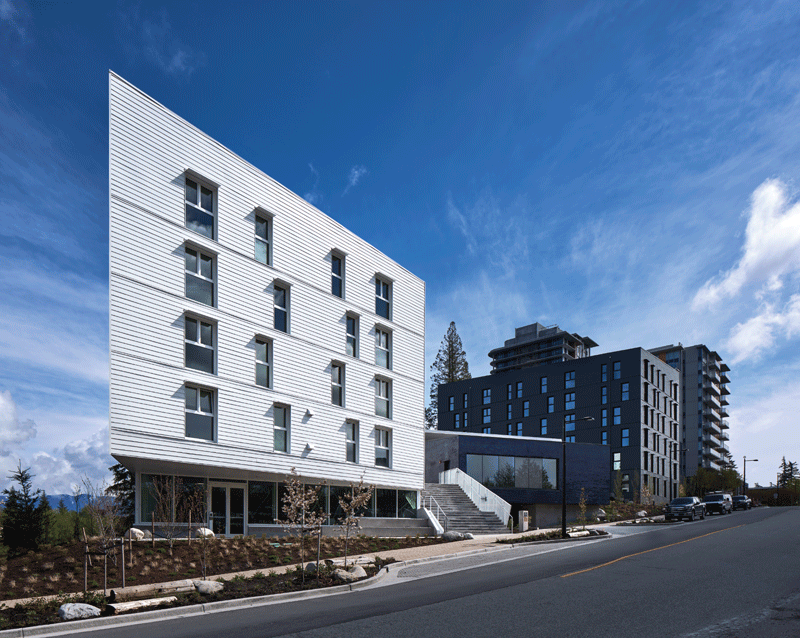
SFU Affordable Housing, Burnaby, BC

Jury Comment: “Providing much needed affordable accommodation for previously under-served sectors of the student population, this project is notable for its strong community focus, the multiple opportunities it creates for interaction between residents, and its strong connection with nature. Attention to detail and comprehensive data supported impressive energy performance.”

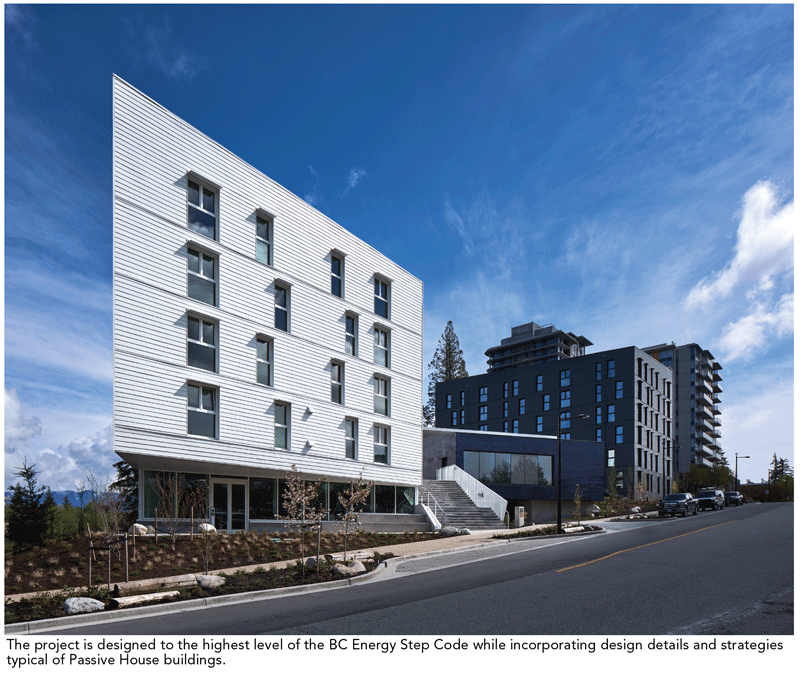
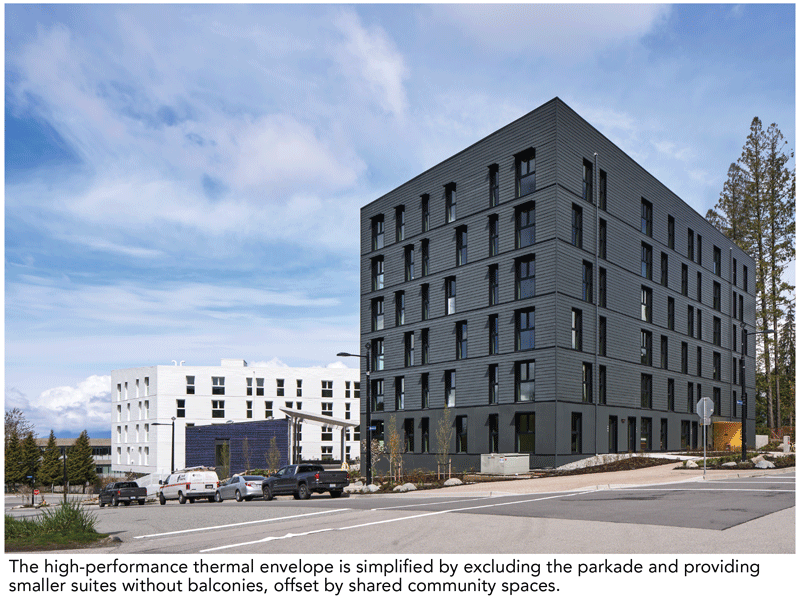
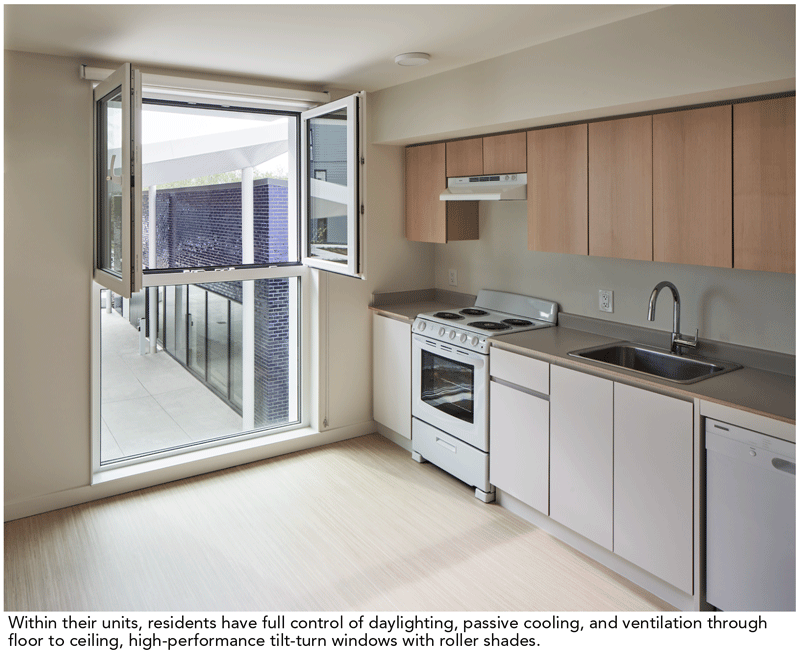
Simon Fraser University (SFU) Affordable Housing is a high-performance, community-oriented housing project that strives to promote connection—people to one another, students to university, residents to neighbourhood, and everyone to nature.

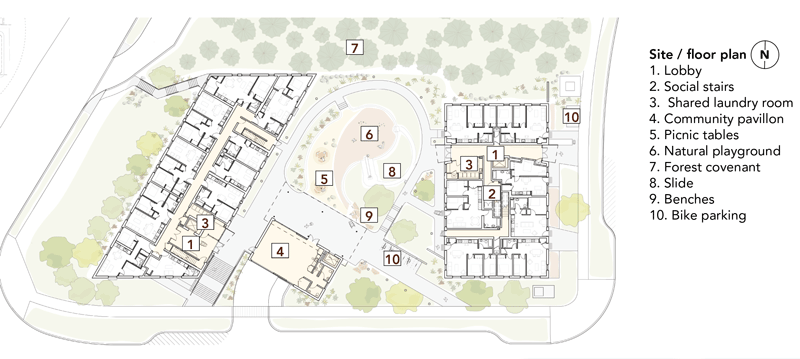
Located near a daycare and elementary school in the UniverCity neighbourhood at SFU’s Burnaby campus, the project provides 90 below-market student rental apartments that prioritize underserved communities with accessible, adaptable, and family-oriented housing—demographics with modest incomes and limited access to transportation, amenities, and community support.

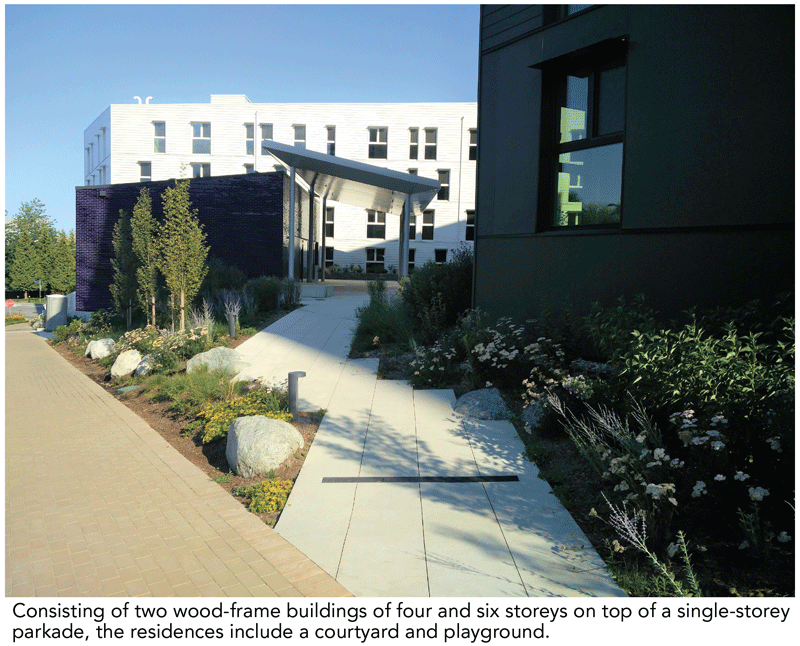
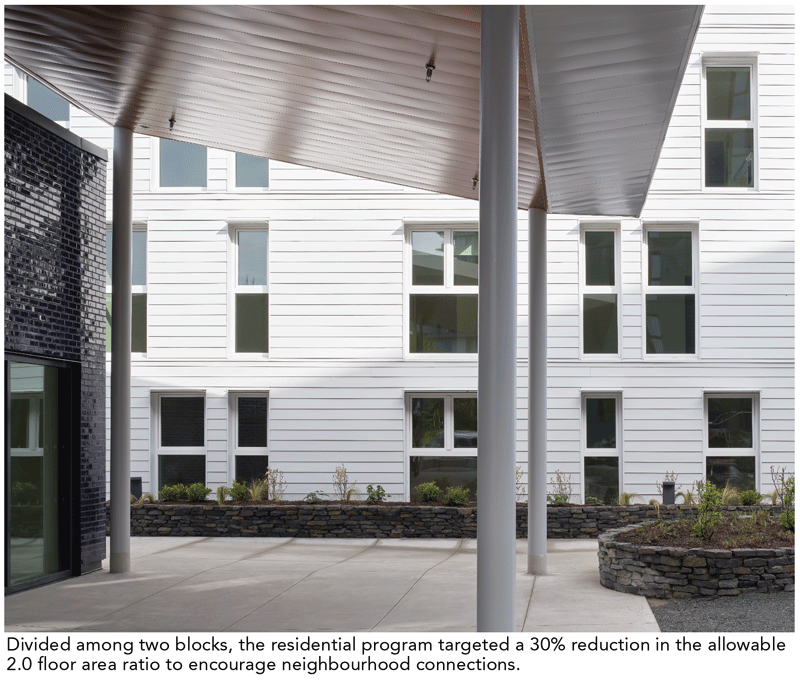
Consisting of two wood-frame buildings of four and six storeys on top of a single-storey parkade, the residences are supported by a blend of amenities to cultivate community connections including a courtyard and playground, multipurpose pavilion, shared laundries and study rooms, and a bicycle workshop to support active transportation.

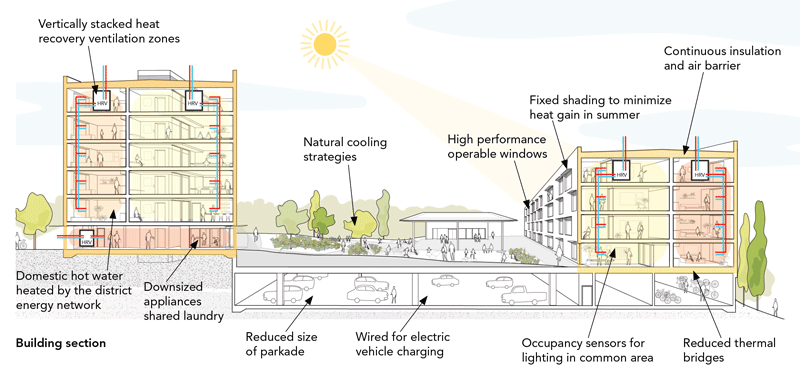
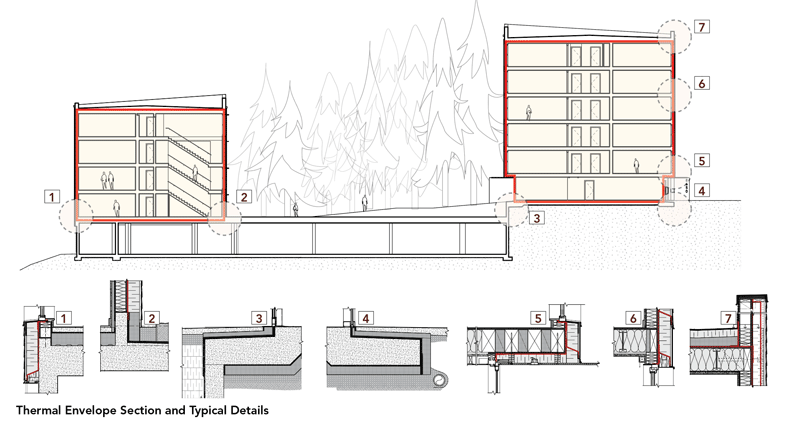
Utilizing simple massing with a high-performance envelope and rigorous attention to detailing along with PHPP and THERM modelling, the project surpassed Step 4 of the BC Energy Step Code and was recognized as a Clean Net-Zero Energy Ready award winner. Completed in 2022 on a conventional wood-frame construction budget, the project continues to be leveraged as a case study for local industry and academia in the design and construction of high-performance buildings.

The project started with a complex site and client challenge to deliver Passive House performance on a conventional construction budget while prioritizing community and occupant well-being. Certification was an initial goal, but was relatively new to the market when the project was initiated in 2014, leading to disproportionately large cost premiums and constraints.

Project Credits

  • Architect  Local Practice Architecture + Design
  • Project Manager  JLL
  • Owner/Developer  SFU Community Trust
  • General Contractor  Peak Construction Group
  • Landscape Architect  space2place
  • Civil Engineer  H.Y. Engineering
  • Electrical Engineer and Structural Engineer Associated Engineering
  • Mechanical Engineer  Rocky Point Engineering
  • Fire Protection  Mfpe Engineering
  • Building Envelope  RDH Buiding Science
  • Energy Model  Tandem Architecture Écologique
  • Building Code  Jensen Hughes
  • Cost & Constructability  Heatherbrae Builders
  • Photos  Latreille Photography

Project Performance

  • Energy Intensity  49.82 KWhr/m2/year
  • Reduction in Energy Intensity  62% (Based on BCBC – 2012 Energy Step Code Level 2*)
  • Water Consumption from municipal source  67,262 litres/occupant/year
  • Reduction in Water Consumption  11%
  • Construction materials diverted from landfill  66%

SUBSCRIBE TO THE DIGITAL OR PRINT ISSUE OF SABMAGAZINE FOR THE FULL VERSION OF THIS ARTICLE.

Commercial/Industrial (Large) Award

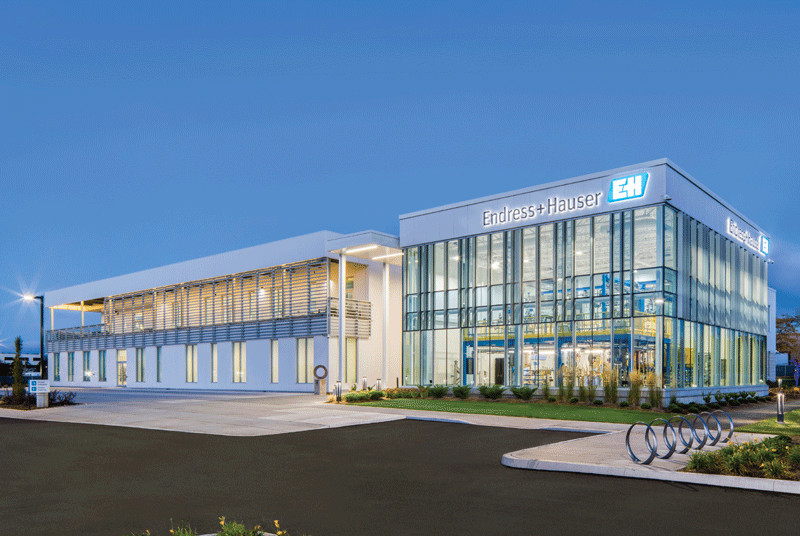
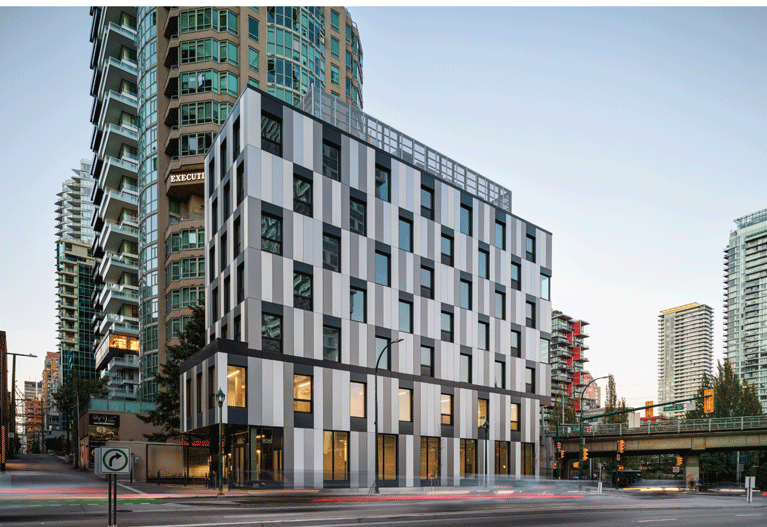
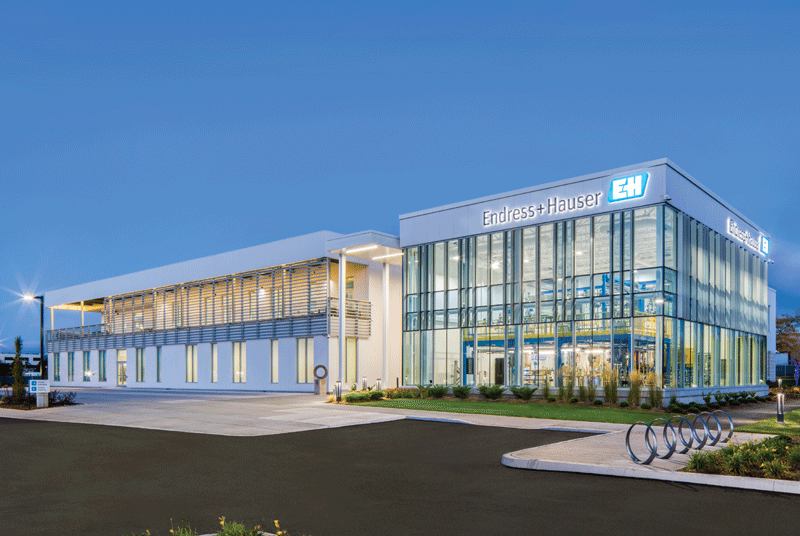
Endress + Hauser Customer Experience Centre – Burlington, ON

Jury Comment: “This project is notable for setting and pursuing high environmental performance goals: achieving net Zero Carbon and awaiting confirmation of LEED Gold certification. The interior addresses the health and wellbeing of employees through its socially focused program organization and brightly lit interior spaces. The positive response has catalyzed broader changes at its parent company in Switzerland.”

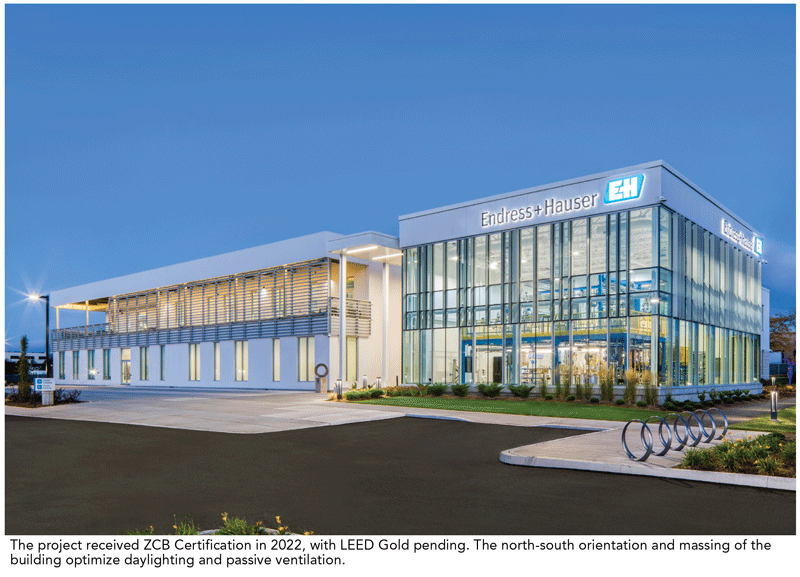
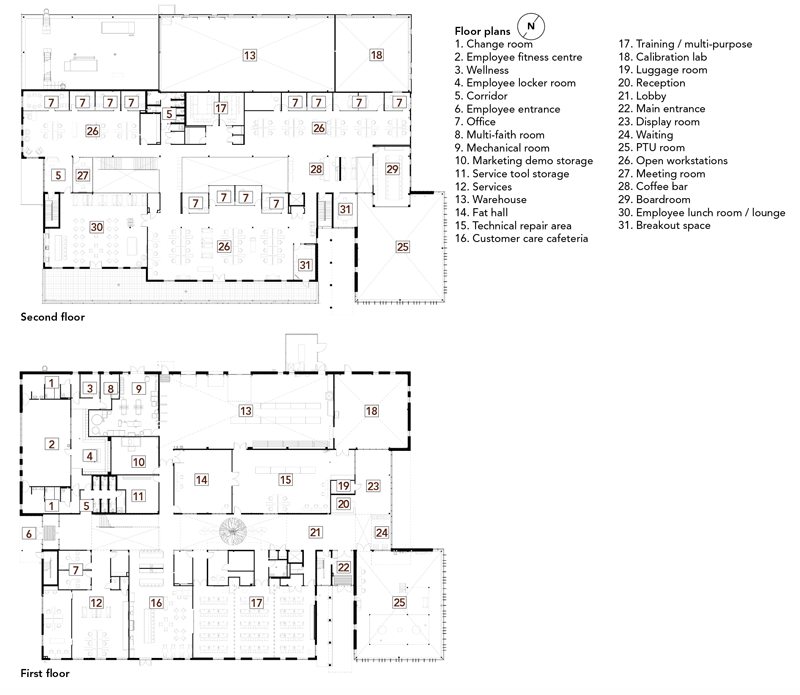
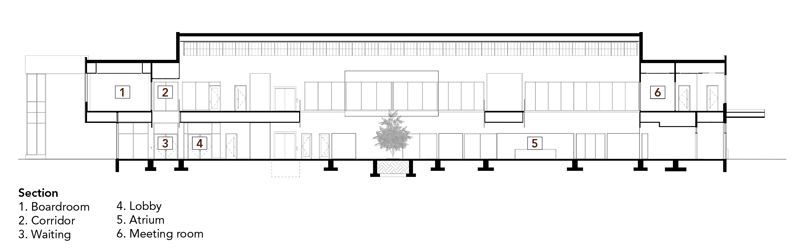
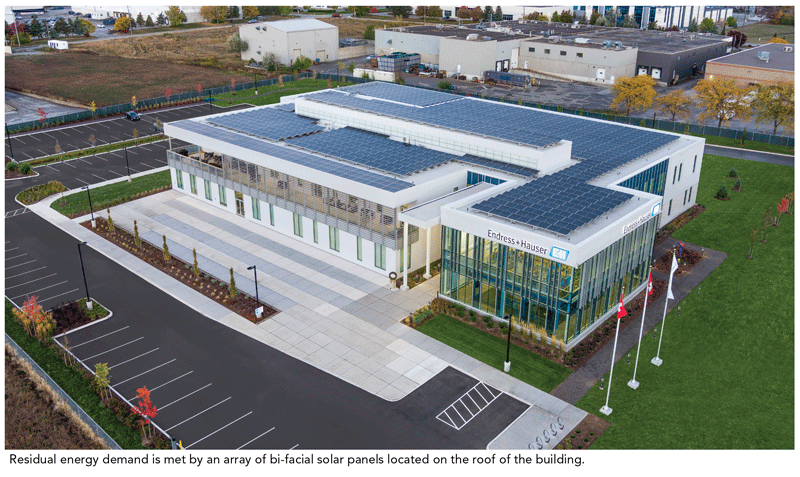
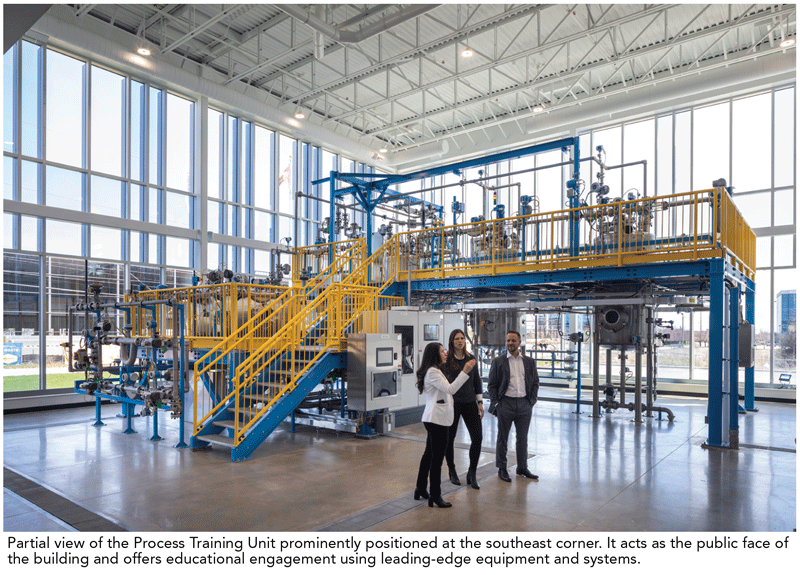
The ZCB Certified, LEED Gold pending Endress+Hauser Customer Experience Centre in Burlington was designed as a gift for its employees from the Swiss-owned company. The 4400 sq. m, $24 million environment is a sunlit, open concept space, uniquely tailored for the employees and engaging for visitors who have come to experience its Process Training Unit (PTU) and calibration labs. 

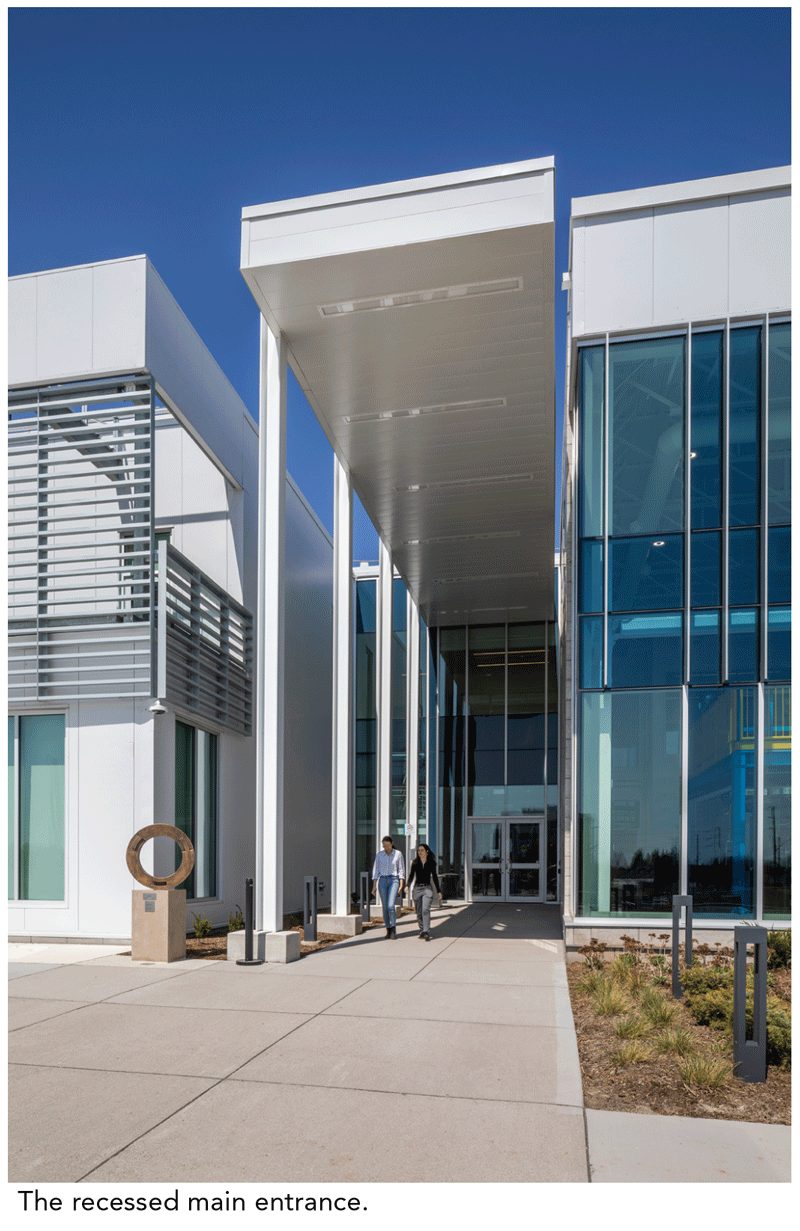
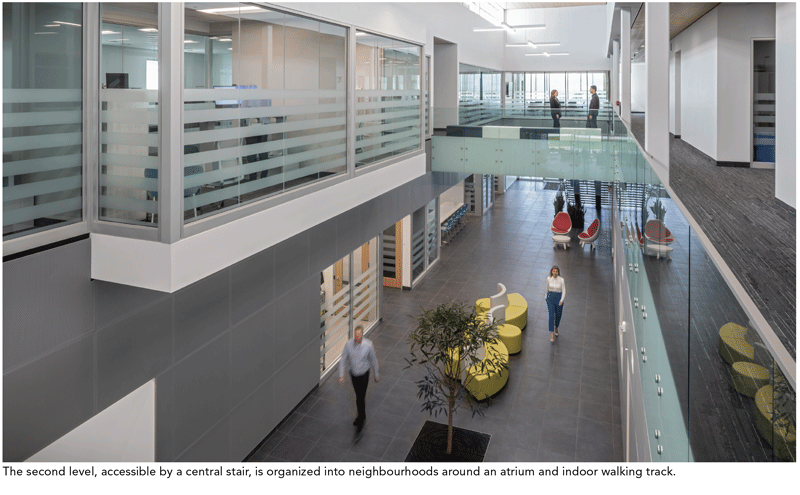
The glass enclosed PTU is prominently positioned at the southeast corner, acting as the public face of the building; and offering educational engagement with the leading-edge equipment and systems it contains. The ground floor is home to a program of training spaces, calibration lab, and private employee wellness areas. The second level, accessible by a central stair, is organized into neighbourhoods around an atrium and indoor walking track. The open working environments are each slightly different based on their particular functions. The facility is punctuated with coffee nooks and seating areas to promote impromptu exchanges and casual meetings.

A large exterior patio extends along the southern façade of the second storey, with direct connections to the employee kitchen, office workstations and breakout space. Fitness centres, and exterior walking tracks, compliment the organizational focus on health and wellness.

At the outset of this project, it was clear sustainable leadership was central to the company’s culture and identity. The design team pitched a business case, offering Endress + Hauser a way to exceed its standard commitment to LEED Silver certification. 

Project Credits

  • Owner/Developer  Endress + Hauser
  • Architect  McCallum Sather
  • General Contractor  G.S. Wark Construction
  • Landscape Architect  GSP Group
  • Civil Engineer  MTE
  • Electrical and Structural Engineer WSP
  • Mechanical Engineer  McCallum Sather
  • Commissioning Agent  CFMS-West Consulting Inc.
  • Other Engineering Service RWDI
  • Photos  Philip Castleton

Project Performance

  • Energy Intensity  73.95 KWhr/m2/year
  • Reduction in Energy Intensity  26.05% (Based on NECB 2015)
  • Reduction in Water Consumption  33.2%
  • Construction materials diverted
  • from landfill 76.38%

SUBSCRIBE TO THE DIGITAL OR PRINT ISSUE OF SABMAGAZINE FOR THE FULL VERSION OF THIS ARTICLE.

Institutional (Small) Award

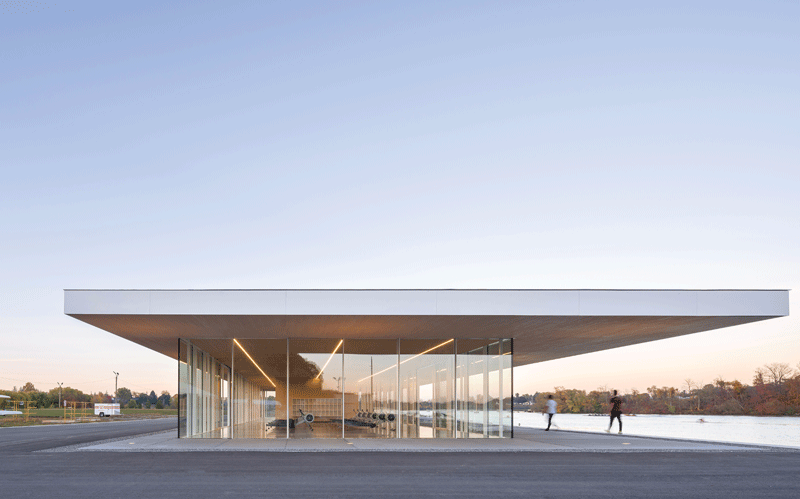
Neil Campbell Rowing Centre – St. Catharines, ON

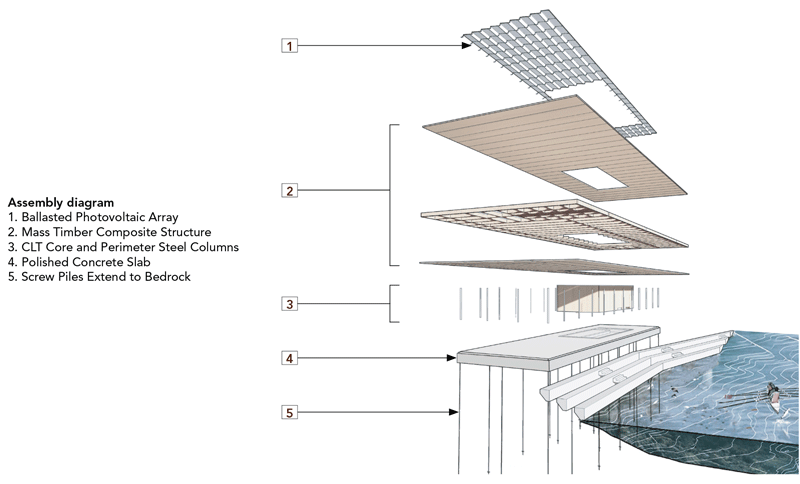
Jury Comment: “A very elegant solution that achieves high standards of environmental performance without compromising aesthetics. The form is simple and the material palette robust. The thought processes required to resolve the detailing of the mass timber roof and to ensure there was no thermal bridging through the envelope were thoroughly and convincingly documented.” 

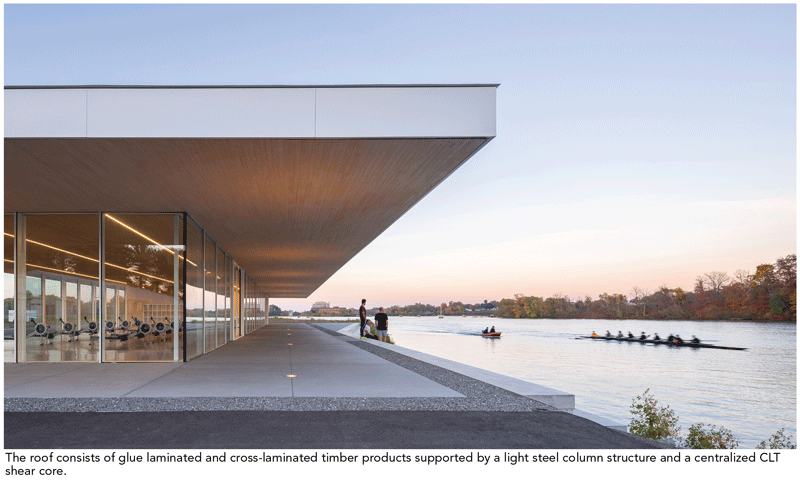
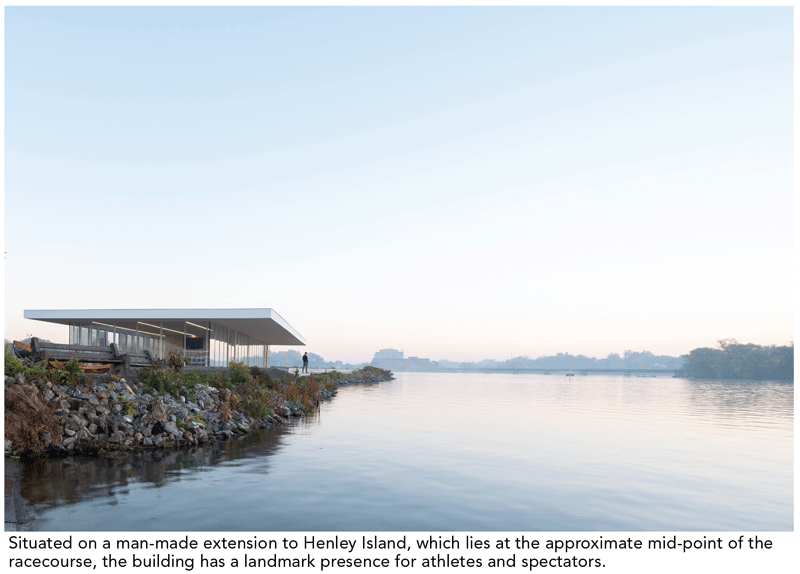
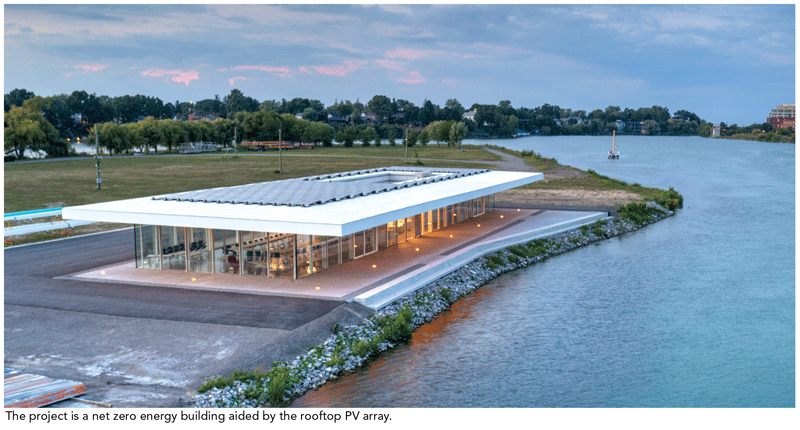
This project demonstrates how simple, elemental, and respectful design can support a broad spectrum of uses and enhance the identity of a venerable place, while achieving both Net-Zero Energy and Zero-Carbon Emission benchmarks.

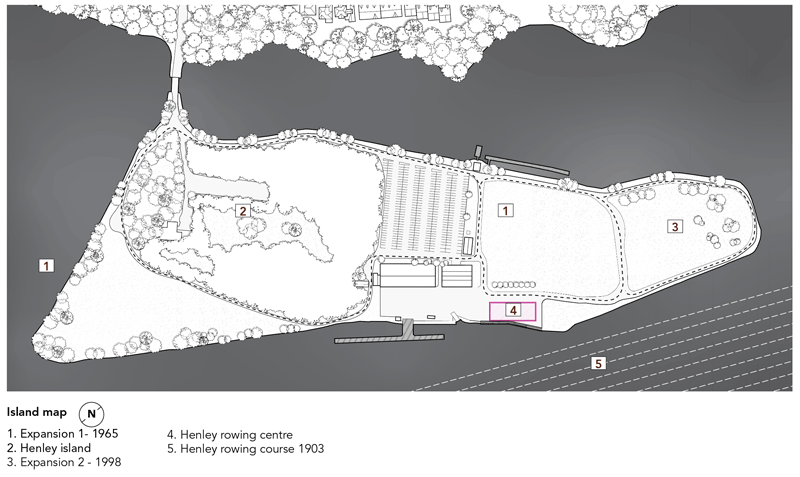
The NCRC was a key venue for the 2022 Canada Summer Games and will host the 2024 World Rowing Championships. Beyond this, it will provide year-round fitness and rowing training for Canadian athletes, continuing the site’s rich history of competition that began in 1903.

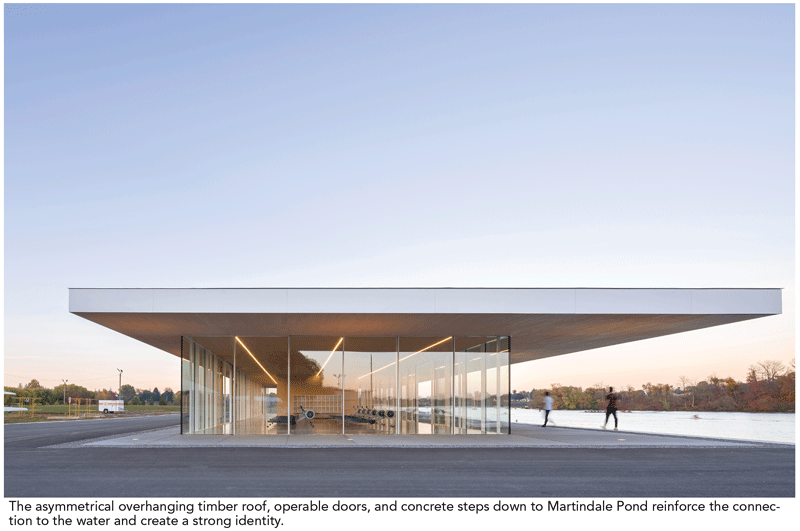
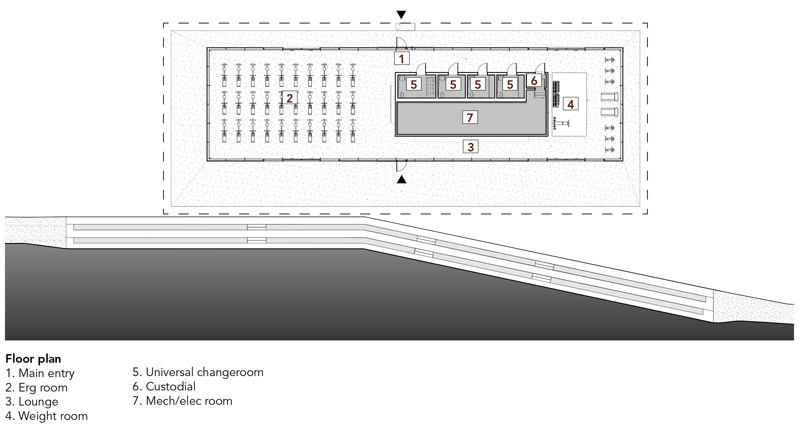
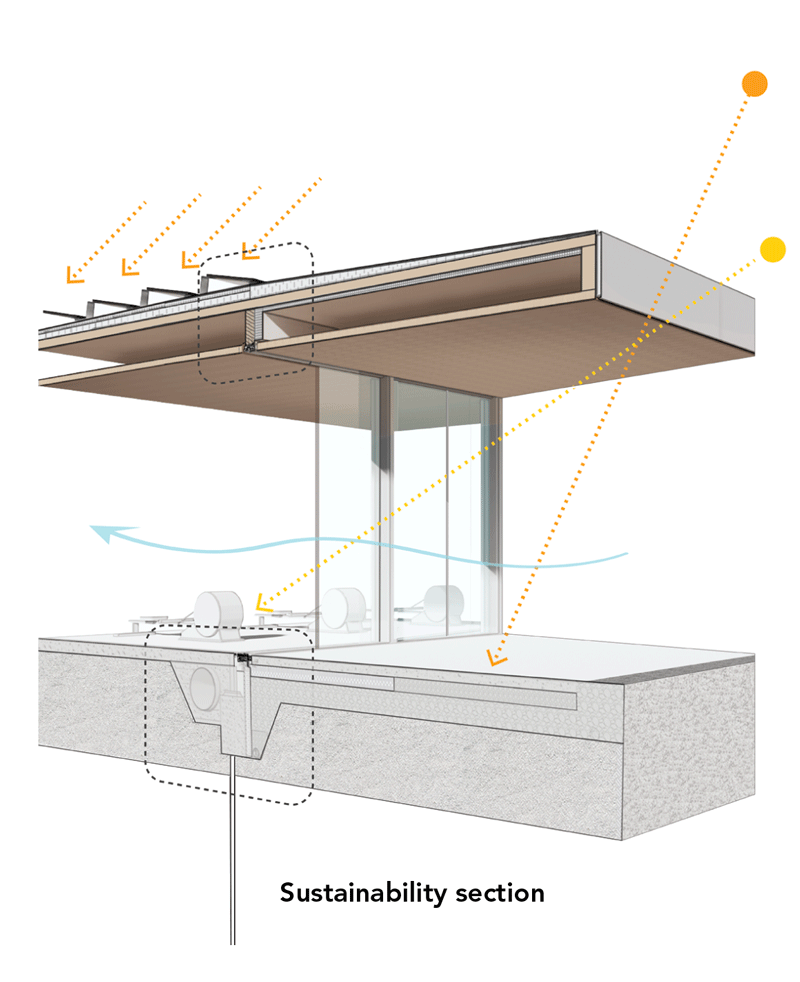
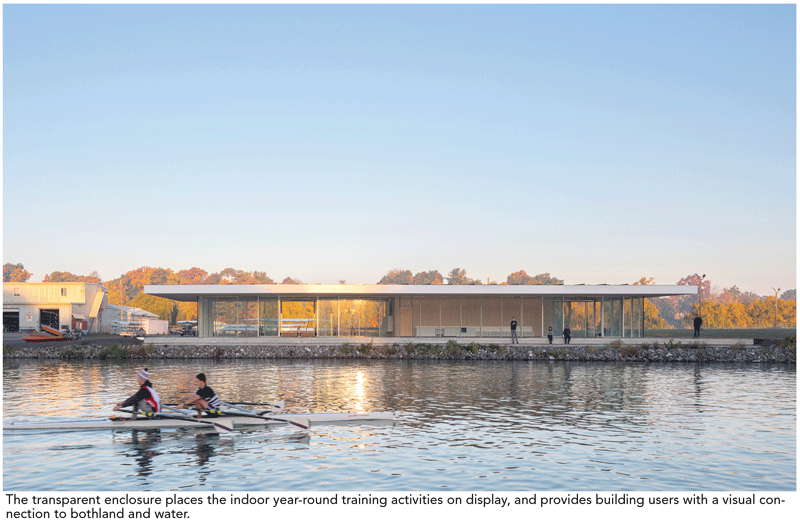
The form of the building is generated by the roof, which is designed with an innovative mass timber system utilizing Canadian glue laminated and cross-laminated timber products, and is held aloft by a light steel column structure and a centralized CLT shear core. The asymmetrical overhanging timber roof, operable doors, and concrete steps down to Martindale Pond further reinforce the connection to the water and create a strong identity for the club.

The building includes a simple and robust material palette; a high-performance building envelope; passive sun control and low-energy mechanical and electrical systems in order to enhance environmental sustainability and reduce ongoing operating and maintenance costs.

The NCRC is situated on a man-made extension to Henley Island, which lies at the approximate mid-point of the race course. The building is configured to provide shade on an otherwise open site and to make a strong connection to the water for athletes and spectators. This conection was facilitated by clearing weeds and debris from the water’s edge and creating long concrete steps that also serve as spectator seating.

Siting the building north of the asphalt staging area completes a courtyard already bounded by the sheds to the west, rising topography to the south, and Martindale Pond to the east. The sense of enclosure raises the excitement by focusing attention on race preparations.

Project Credits

  • Owner/Developer  Canadian Henley Rowing Corp
  • Architect  MJMA Architecture & Design
  • Joint Venture Architect  Raimondo + Associates Architects
  • General Contractor  Aquicon Construction
  • Landscape Architect  MJMA Architecture & Design
  • Civil Engineer  Upper Canada Consultants
  • Mechanical and Electrical Engineer  Smith + Andersen
  • Structural Engineer  Blackwell
  • Environmental Graphics  MJMA Architecture & Design
  • Photos  Scott Norsworthy

Project Performance

  • Energy Intensity: 0 KWhr/m2/year (83 KWhr/m2/year which is offset by PV array)
  • Reduction in Energy Intensity: 38% (Based on NECB 2017)
  • Water Consumption from municipal source: 33.5 litres/occupant/year
  • Reduction in Water Consumption: 21%
  • The building was just recently “CaGBC Zero Carbon Design Certified”.

SUBSCRIBE TO THE DIGITAL OR PRINT ISSUE OF SABMAGAZINE FOR THE FULL VERSION OF THIS ARTICLE.
Institutional (Small) Award

Bill and Helen Norrie Library – Winnipeg, MB

Jury Comment: “This project clearly articulated the social and cultural focus that has become the primary role of community libraries. Taking visual cues from the Metis village that occupied the site, the building evokes the traditional ‘Big House’. The social, cultural and educational agenda is underpinned by the low embodied carbon and operating energy of the building.”

Located on a busy recreational campus, the 1,300 sq. m library unites the physical energy of the broader site with engaging social spaces to create a home-away-from-home for the community.

Inspired by the Métis heritage and dense residential context of the site, the library is conceived as a ‘big house’, reflecting diverse experiences of home — reading on the porch, playing in the backyard or gathering around the living room fireplace.

The building is strategically oriented on an east-to-west axis on the compact site to maximize daylight

into the library year-round. Positioned to absorb solar heat in the winter and support solar shading in the summer, overhangs minimize glare, direct sunlight and mitigate unwanted heat gain. These strategies reduce energy consumption and costs, and support visitor well-being.

The high performing building envelope, radiant in-floor heating and cooling zones, and a linear, active chilled beam system optimize resource efficiency and support thermal comfort.

Anchoring the approach to the site, a low semicircular bench serves as a resting place while waiting for the bus. Convenient bike storage ties into cycling and walking paths, encouraging active commutes to and from the library and nearby amenities. The modest campus parking lot includes the first EV charging station at a Winnipeg public library.

From the cozy living room and interactive children’s area to the multi-purpose room that accommodates diverse programming, community members of all ages can relax, play and build relationships. Strong visual connections between spaces indoors and out promote awareness of one’s surroundings and contribute to the inclusive family-friendly environment.

Extensive glazing on the north and south facades floods the open, linear library with daylight, creating a bright and uplifting interior setting. Daylight and occupancy sensors maintain consistent lighting levels, while simultaneously reducing the lighting load by at least 50%. All lighting is LED and lighting levels meet IESNA recommendations.

Fresh air is provided by a dedicated 90% efficient, dual core, energy recovery ventilation unit, minimizing long-term maintenance and costs. Demand control, fresh air ventilation is integrated and modulated in conjunction with the zoned VAV boxes to reduce energy use. A minimum MERV 13 Filtration is provided, and fresh air quality meets the requirements of AHSRAE 62-2007.

Project Credits

  • Architect  LM Architectural Group
  • Owner/Developer  City of Winnipeg
  • General contractor  Gateway Construction and Engineering Ltd
  • Landscape Architect  HTFC Planning & Design
  • Civil Engineer  Sision Blackburn Consulting
  • Electrical, Mechanical and Structural Engineer  Tower Engineering Group
  • Commissioning Agent Integrated Designs Inc
  • Sustainability Consultant  Footprint
  • Photos  Lindsay Reid

Project Performance

  • Energy Intensity  180 KWhr/m2/year
  • Reduction in Energy Intensity  44 % (Based on NECB 2011)
  • Water Consumption from municipal source  11,000 litres/occupant/year
  • Reduction in Water Consumption  25%
  • Construction materials diverted from landfill  40%
  • Recycled materials content by value  20%

SUBSCRIBE TO THE DIGITAL OR PRINT ISSUE OF SABMAGAZINE FOR THE FULL VERSION OF THIS ARTICLE.
Institutional (Large) Award

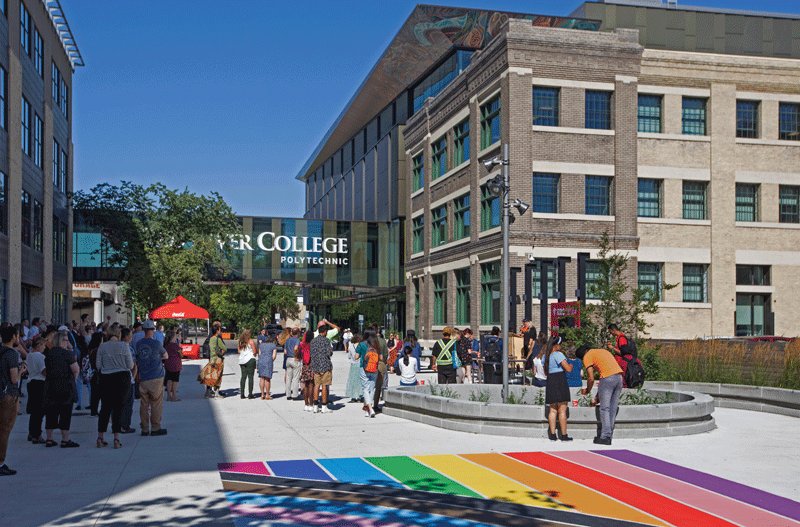
Manitou A BI BII Daziigae, RRC Polytech – Winnipeg, MB 

Jury Comment: “This project successfully resolves a complex program that includes the integration of a brick and beam heritage structure. It incorporates a variety of well thought out details and design solutions, achieving a harmonious relationship with its historic context, providing engaging communal spaces, and setting a technical precedent with its ‘shape-shifting’ photovoltaic cladding.”
Manitou a bi Bii daziigae is a post-secondary learning hub that unites a repurposed brick and beam heritage building with new construction, creating an engaging crossroads in Winnipeg’s historic Exchange District – the city’s Innovation Alley.

Targeting LEED Gold Certification, the 9,300 sq.m. building provides flexible, high-tech, and interactive spaces that nurture creativity and collaboration, and connects students with education and industry professionals to facilitate social innovation, enterprise and pioneering research. 

These aspirations informed the design process, and the completed building reflects a sense of wonder, imagination, empathy, mystery and passion. It is hoped that the Innovation Centre will inspire these qualities in students and faculty.

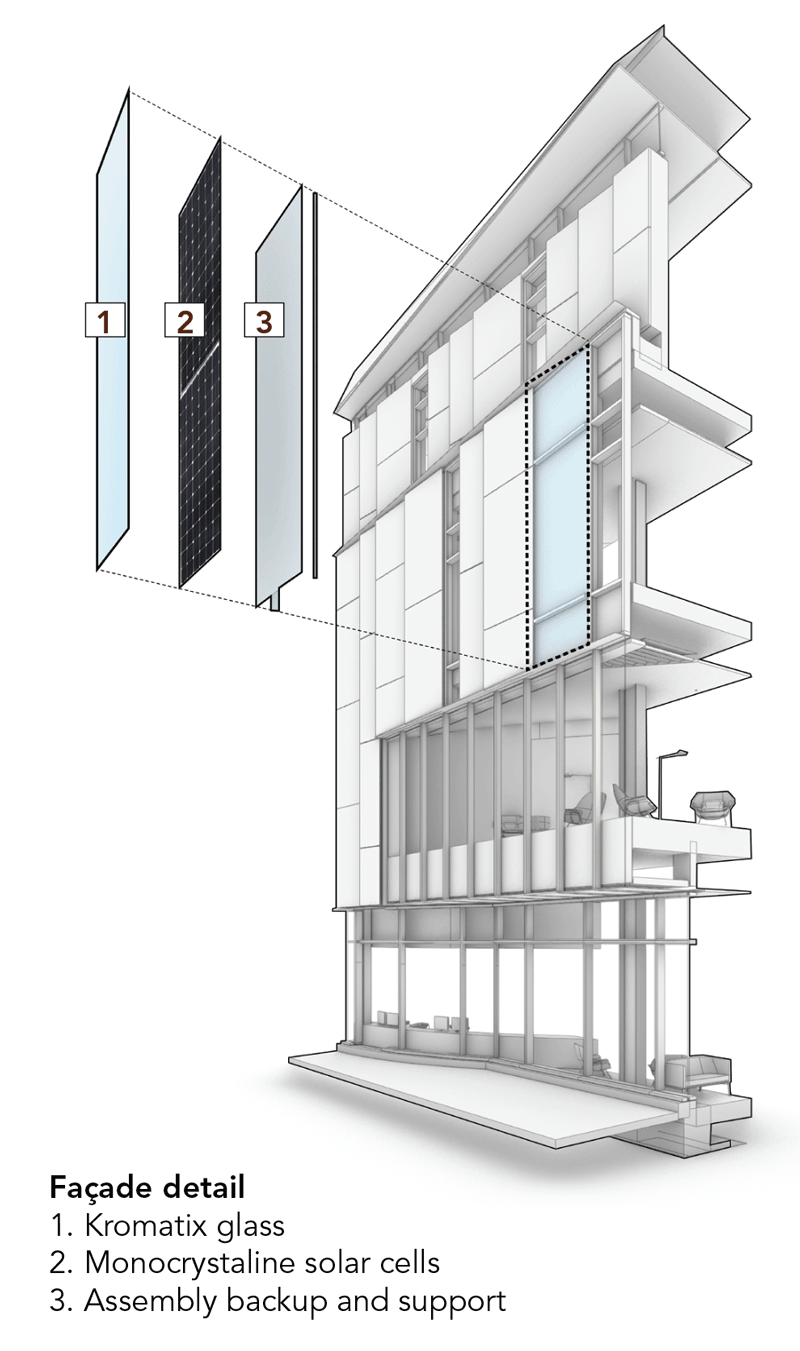
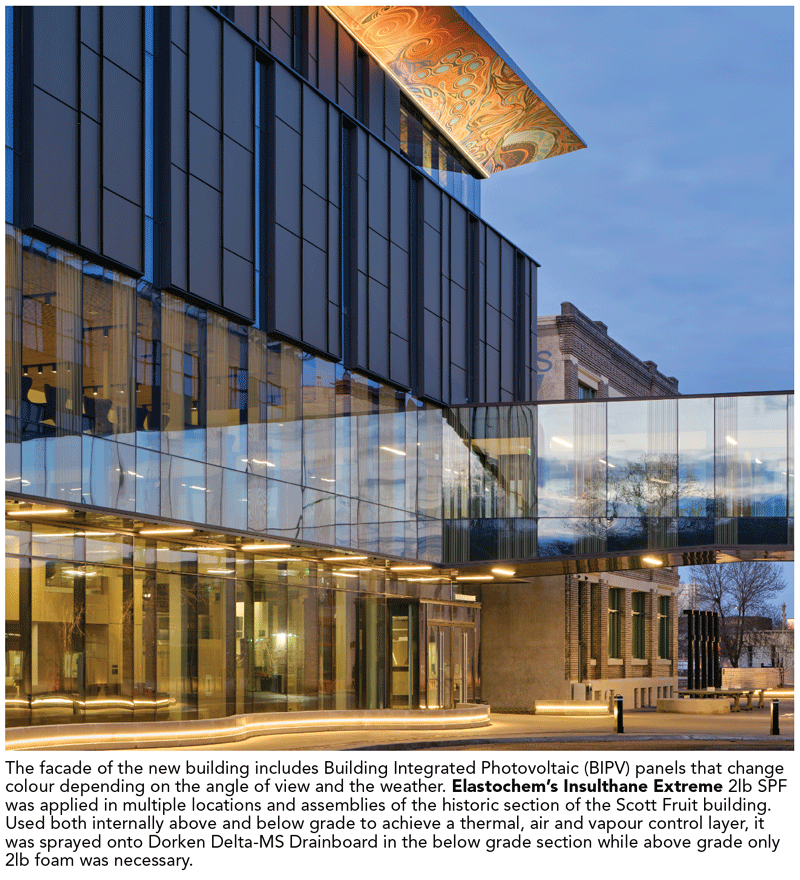
The facade of the new building is made of Building Integrated Photovoltaic (BIPV) panels that change colour depending on the angle of view and the weather.

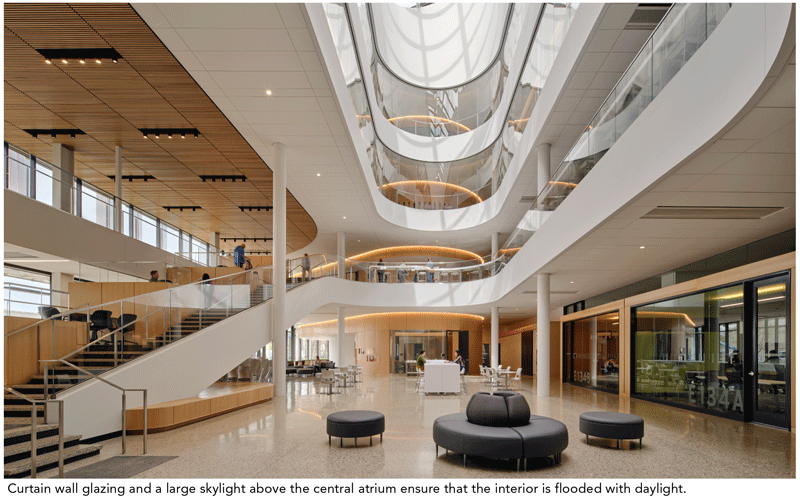
This innovative concept – a Canadian first – conceals solar cells behind nano-coated glass panels. Their shape-shifting appearance animates the building conveying a sense of wonder that is an outward expression of the path of learning and innovation.

The building exemplifies regeneration and renewal at multiple levels. It reinforces City policy for urban renewal in the city core, undertakes adaptive re-use of a heritage structure in accordance with City requirements for restoration and re-use, and involves the full remediation of a brownfield site.

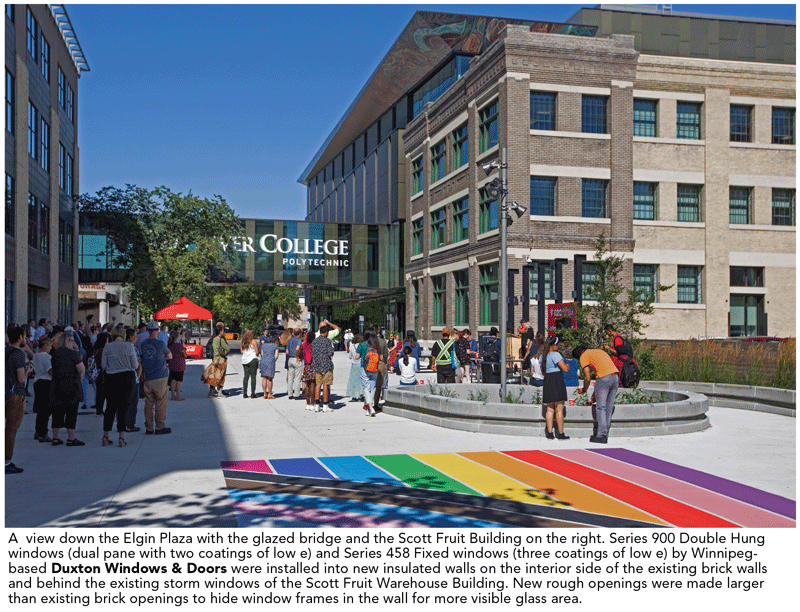
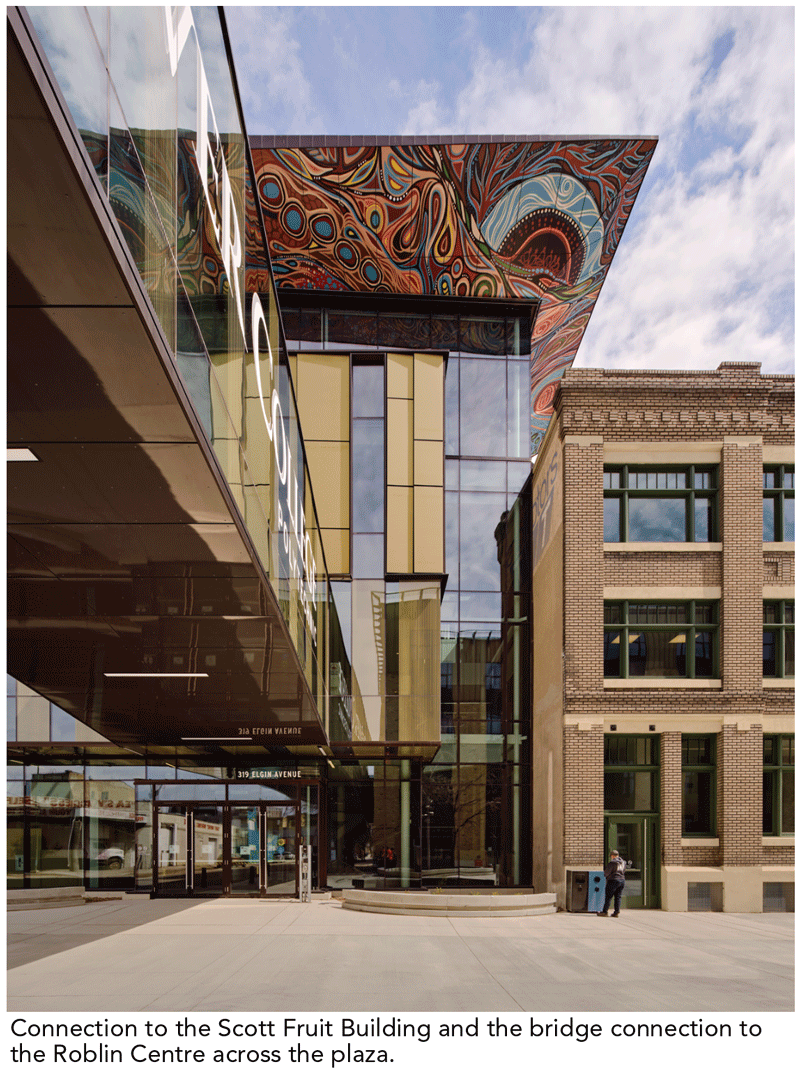
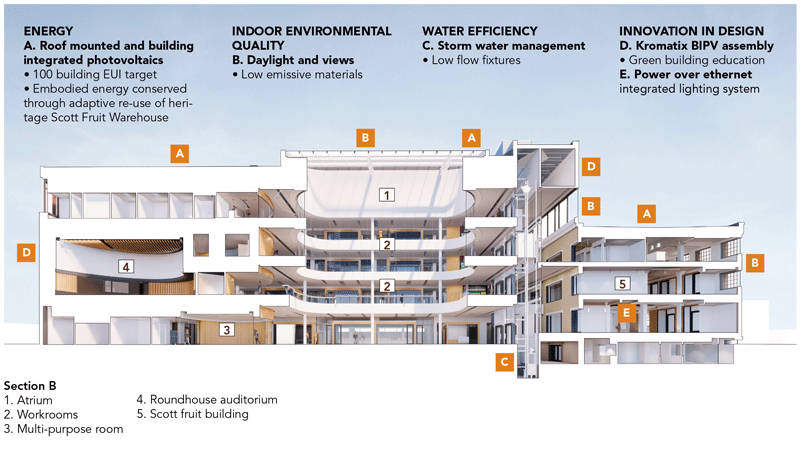
The historic Scott Fruit Warehouse has been rehabilitated for academic use and carefully integrated into the overall development. Key character-defining elements, including masonry walls and wood windows, have been restored to maintain their historic appearance and upgraded to enhance energy efficiency, ensuring sustainable performance well into the future.

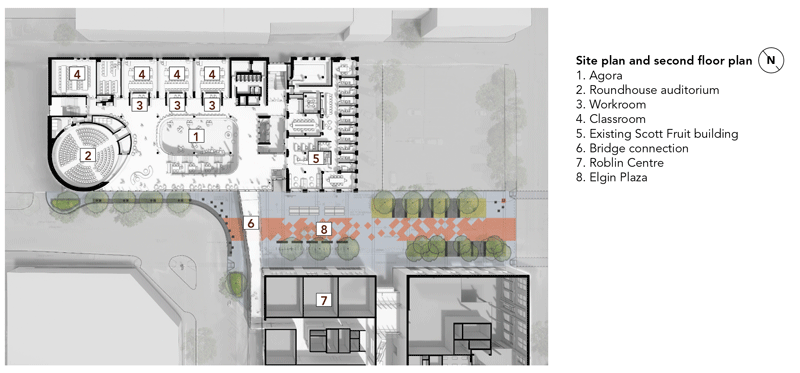
A  view down the Elgin Plaza with the glazed bridge and the Scott Fruit Building on the right. Series 900 Double Hung windows (dual pane with two coatings of low e) and Series 458 Fixed windows (three coatings of low e) by Winnipeg-based Duxton Windows & Doors were installed into new insulated walls on the interior side of the existing brick walls and behind the existing storm windows of the Scott Fruit Warehouse Building. New rough openings were made larger than existing brick openings to hide window frames in the wall for more visible glass area.

The facade of the new building includes Building Integrated Photovoltaic (BIPV) panels that change colour depending on the angle of view and the weather. Elastochem’s Insulthane Extreme. Used both internally above and below grade to achieve a thermal, air and vapour control layer, it was sprayed onto Dorken Delta-MS Drainboard in the below grade section while above grade only 2lb foam was necessary. 

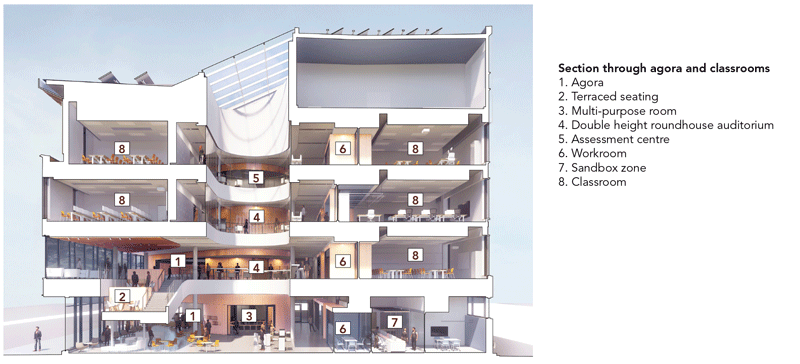
The agora borders the atrium. The building is equipped with a high-efficiency central ERV system, specifically an RG 2000, by Winnipeg-based Tempeff. Acting as the building’s lungs, the ERV not only recovers heat, but also factors in humidity making it the best choice for occupant comfort in a cold climate. The ERV makes use of Dual-Core technology, allowing for continuous fresh air supply and frost-free operation in this climate.

Project Credits

  • Architect  Diamond Schmitt
  • Joint Venture Architect  Number TEN Architectural Group
  • Owner/Developer  RRC Polytech
  • General Contractor  Akman Construction Ltd
  • Landscape Architect  HTFC
  • Electrical Engineer  SMS Engineering Ltd
  • Mechanical engineer  Epp Siepman Engineering
  • Structural Engineer  Crosier Kilgour & Partners
  • Building Science  RDH Building Science
  • Photos  Doublespace photography and Lindsay Reid

Project Performance

  • Energy Intensity  112 KWhr/m2/year
  • Reduction in Energy Intensity  45%
  • Water Consumption from municipal source  934 litres/occupant/year
  • Reduction in Water Consumption  41%
  • Construction materials diverted from landfill  82%

SUBSCRIBE TO THE DIGITAL OR PRINT ISSUE OF SABMAGAZINE FOR THE FULL VERSION OF THIS ARTICLE.