Dedicated to sustainable,
high performance building

Interview with:


Architect Vince Catalli on the Circular Built Environment (CBE) and the new standard to define it.

What is the CBE?

Circular is the key word in defining the CBE which is modelled after cycles in nature that continuously use and transform materials without waste. According to the World Green Building Council, a circular building optimizes the use of resources while minimizing waste throughout its whole life cycle. The building’s design, operation and deconstruction maximize value over time using:

1. Durable products and services made of secondary, non-toxic, sustainably sourced, or renewable, reusable or recyclable material;

2. Space efficiency over time through shared occupancy, flexibility and adaptability;

3. Longevity, resilience, durability, easy maintenance and reparability;

4. Disassembly, reuse or recycling of embedded material, components and systems; and

5. Life-cycle assessment (LCA), life-cycle costing (LCC) and readily available digital information (such as BIM that capture building material passports)

This sounds like Waste Management and reducing Embodied Carbon, what is the difference?

Waste Management and reducing Embodied Carbon are components of CBE. The CBE proposes systemic changes in business models which have historically been linear by using many integrated approaches (i.e. durability, waste reduction, refurbishment, remanufacturing, recovery, reuse, reduction of embodied carbon, etc.).

Pursuing the CBE is critical for North America to stay competitive with other nations (i.e. the EU, Japan, Australia, etc.) that are already working towards the CBE. Eliminating waste is very cost effective and good business.

Why are you involved within the CBE national discussions?

Since 1994 I have focused on new approaches within our industry that were precursors to CBE:

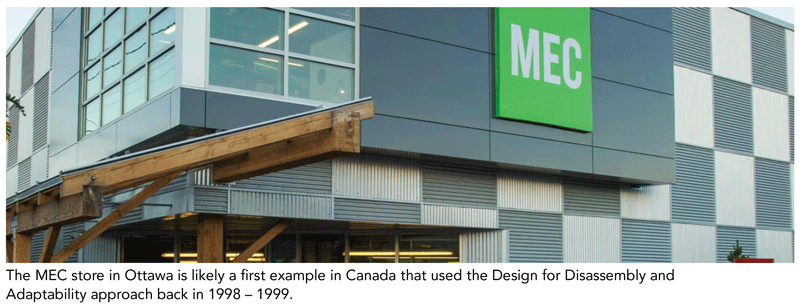
• I looked at Deconstruction via a pilot project for Canada Mortgage and Housing Corporation (CMHC) in 1996 which then led me to develop a Design for Disassembly and Adaptability guide in 1998.

• I was part of a committee that developed two new standards with Canadian Standards Association (CSA) (Z782-06 and Z783-12). These were global firsts that led to international developments in ISO Standards.

Why a Definition oriented CBE Standard?

In my recent work (2021) with CSA, I spoke with various private and public stakeholders from across Canada. I found that the CBE was unfamiliar to them, but they were unknowingly engaging with or operating in circular systems. They spoke of circularity in terms of waste management, Net Zero, embodied carbon, CO2 reduction, climate change, resilience, etc. Everyone was using different terms and approaches, lacking cohesion on a national level. A standard to define the CBE will give all actors in the building industry unified tools to focus our attention, coordinate and mobilise in ways that create lasting change.

Why is it important to move the CBE ahead now?

Our industry consumes about 50% of virgin resources extracted annually and produces close to 40% of global CO2 emissions. Finite resources will become scarce and climate change will impact how we build due to wasted embodied carbon. CBE will allow industry to redesign our approach to materials applied in construction, factoring in disassembly and adaptability so that we recover materials. We cannot continue as is, we need to recover value and “future proof” building assets. It just makes sense, right?

What can the building Industry do to move the CBE ahead?

All stakeholders need to learn about the CBE with the goal of achieving systemic change. This will lead us into action, education, new skills and application, required collaboration throughout the industry. Much like the early 2000s with green buildings, the CBE will lead us into the next chapter. A national discussion is needed to review how this will emerge. I don’t see an option but to get involved as we all have a role to play.
Visit the Directory online for Listings organized by Products Category and by LEED Category

THE ANNUAL GUIDE: 

  • LEED categories noted for the products listed in the following pages are intended to show how these products can potentially help a project earn LEED v4 points.
  • Companies listed in bold  have 1/8-page listings containing more information, and are linked to their websites from the online version of the Directory.
  • SUBSCRIBE TO THE DIGITAL OR PRINT ISSUE OF SABMAGAZINE FOR THE FULL VERSION OF THIS ARTICLE.

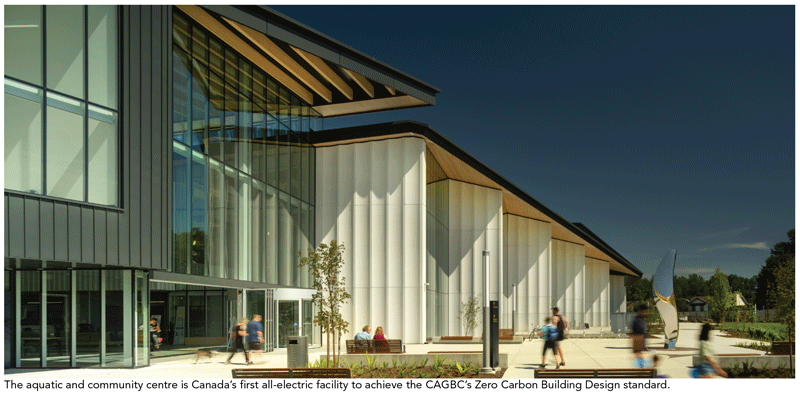
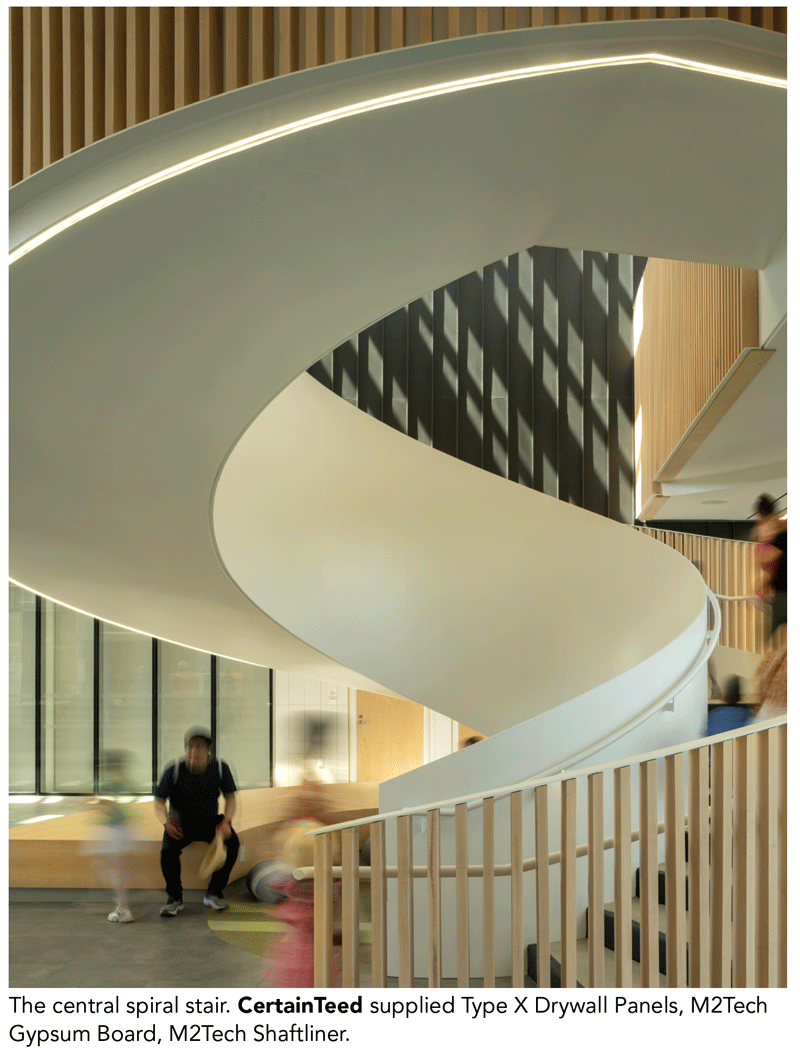
təməsew̓txʷ Aquatic and Community Centre

Challenging building type achieves double certification, 

and pursuing LEED Gold

By Paul Fast

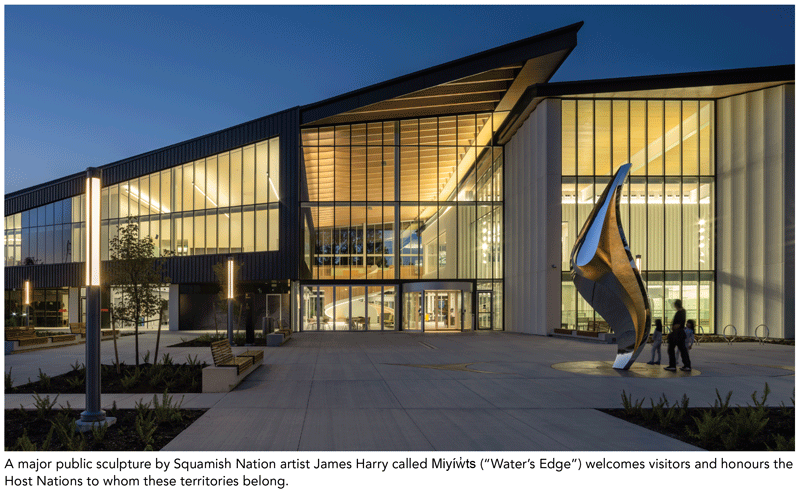
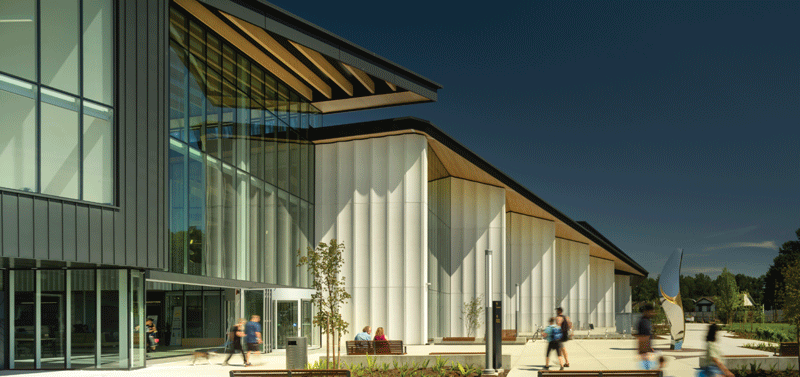
Completed in 2024, this 10,684 sq.m combined aquatic and community centre in New Westminster, BC is Canada’s first completed all-electric facility to achieve the Canada Green Building Council’s (CAGBC) Zero Carbon Building Design standard, a significant accomplishment for a building typology that has traditionally been one of the largest greenhouse gas emitters for many local governments.

The name təməsew̓txʷ is derived from hən̓q̓əmin̓əm̓ (the local Indigenous language) and means “Sea Otter House”. Reflecting this Indigenous identity reflecting this indigenous identity, the building is woven into the landscape with a dramatic unifying roof and aims to be the heart and soul of the community and a place for all to connect. The building makes a strong civic statement being sensitive to the natural environment and human-scale experience.

Sustainable design strategies and process

Pools are one of the most energy-intensive building types. To successfully minimize energy use, the design strategy for təməsew̓txʷ applies a passive approach first, considering not only how the architecture can respond to specific site conditions for efficiency and comfort, but how operational conditions, strategies, and expectations inform the design. Reducing demand first, followed by optimizing active systems, ensures a low impact result.

To meet the stringent leed v4 and Zero Carbon Building (zcb) requirements, a range of strategies were implemented to reduce energy consumption and greenhouse gas emissions.

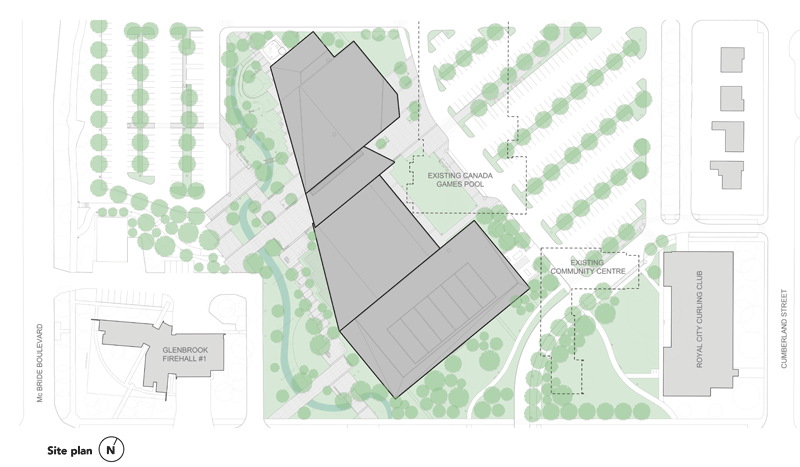
The building's compact massing and form factor were shaped by site conditions, with the existing facility required to remain operational during construction, and the need to avoid critical infrastructure running through the site.

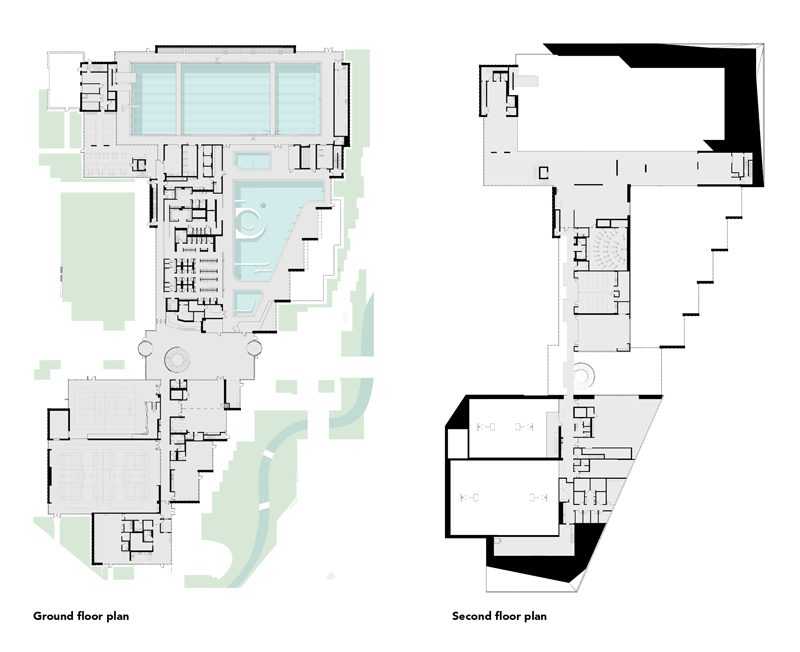
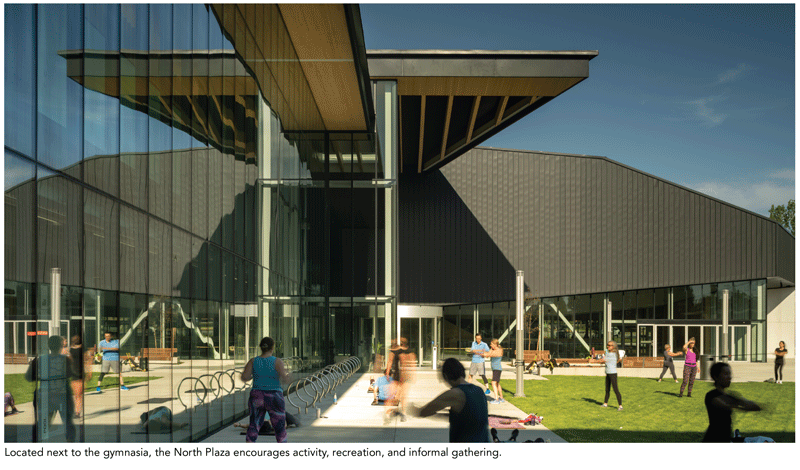
Although these constraints limited the optimization of the form, the design still significantly contributes to overall performance. The building features a wide southern section housing the main natatorium, which gradually narrows and steps toward the north, where the gymnasium and multipurpose spaces are located. This design also creates unique outdoor spaces.

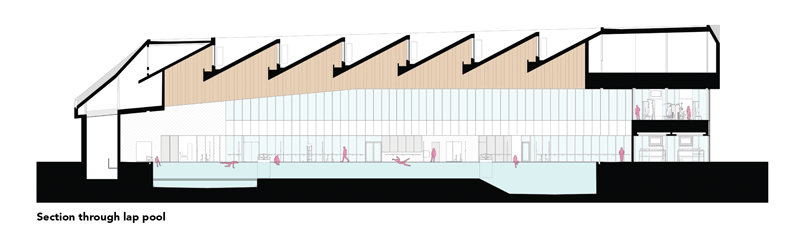
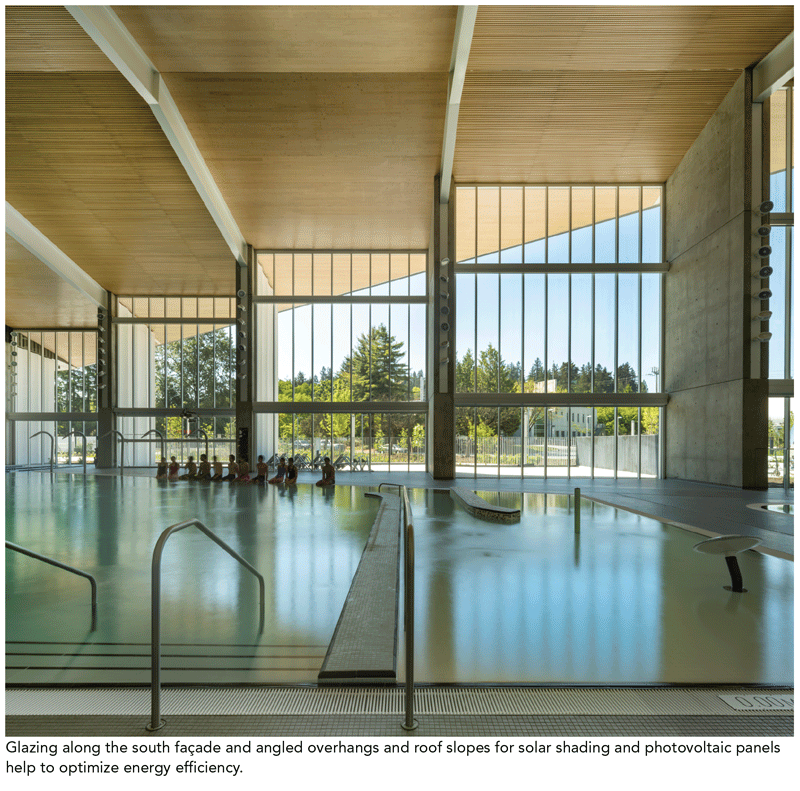
The building orientation and program overlay were optimized for energy efficiency, with primary glazing along the south façade and carefully angled overhangs and roof slopes for solar shading and photovoltaic (pv) panel efficiency. The envelope design addresses thermal bridging and emphasizes airtightness, while large overhangs provide shading on the south, east, and west facades. The stepping nature of the façade further enhances vertical shading along the south-west elevation.

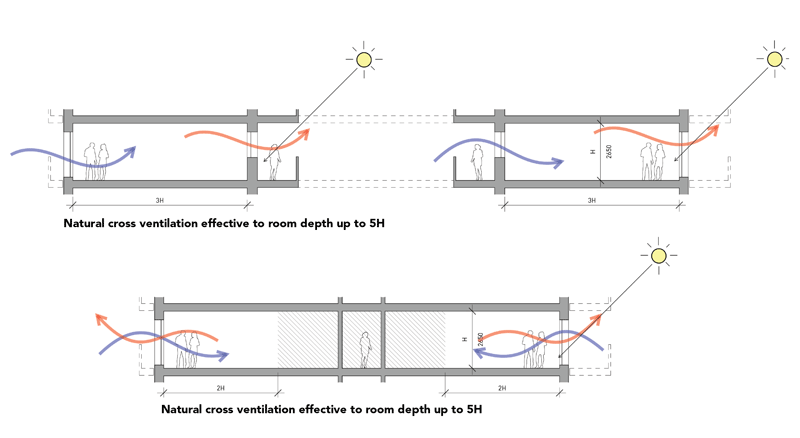
Natural ventilation is a key feature, with substantial portions of the envelope designed to open, allowing fresh air into the main gymnasium and creating indoor/outdoor play spaces. The facility also maximizes daylight through large openings and clerestories, reducing the need for artificial lighting. Triple-glazed clerestories above the lap pool ensure abundant natural light, enhancing the space's ambiance.

Operating energy

Heat recovery ventilators (hrvs) capture waste heat from energy-intensive pool systems. The electric-based mechanical system, supported by heat pumps and back-up electric boilers, significantly reduces carbon emissions. The heat-pump system is supported by back-up electric boilers to help reheat pool water when it's drained and refilled a few times a year (a very energy intensive process).

The leisure pool and the 50m lap pool are separated by  a glass wall to maintain different air and water temperatures, optimizing energy efficiency and user comfort. This design creates two distinct comfort zones: a warmer area for leisure activities and a cooler environment for high-performance swimming, addressing the discomfort of cold temperatures often noted in other aquatic facilities without this separation.

In compliance with zcb, 5% of the required annual operating energy for the building is generated on site via photovoltaics installed on the roof. Special emphasis was placed on reducing the energy demand of the building, carefully optimizing the system for maximum efficiency.

Water quality

In a first for North America, the təməsew̓txʷ gravity-fed InBlue pool filtration and disinfection system is expected to have a significant impact on patron experience, as well as minimizing pump energy consumption by almost 50% and improving air and water quality.

InBlue uses a drum filter system which has lower water consumption and lower energy requirements. Based on monthly usage since its opening, the filtration system alone is on track to reduce energy costs annually by over $100,000. The biggest benefit from this system is the reduced levels of required chlorine, leading to much better water and air quality for swimmers. Initial results show that the system produces air and water quality far exceeding the standards set out by the Health Act.

Paul fast architect aibc, mraic, principal in charge, hcma architecture + design.

CertainTeed  supplied Type X Drywall Panel, M2Tech Gypsum Board, M2Tech Shaftliner.

  • SUBSCRIBE TO THE DIGITAL OR PRINT ISSUE OF SABMAGAZINE FOR THE FULL VERSION OF THIS ARTICLE.

Albert Campbell Library Renovation/Modernization


Reno reimagines potential to connect with people

By Brock James

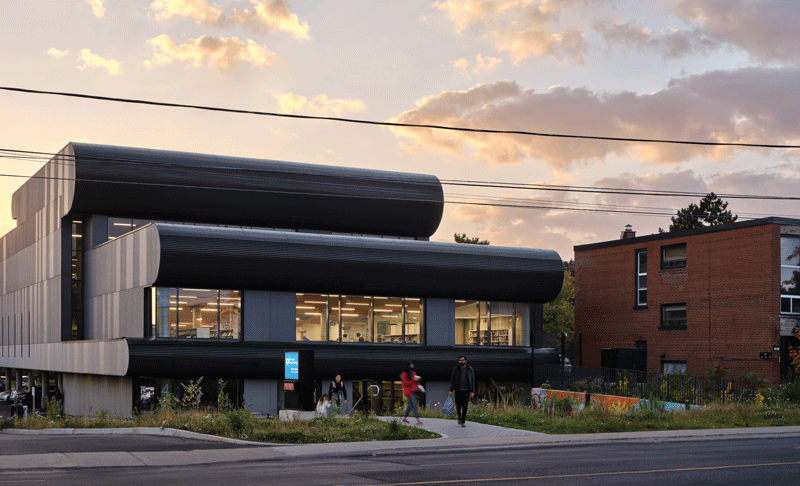
The Albert Campbell Branch Library opened its doors in 1971 to serve Scarborough’s diverse community. In this rapidly growing Toronto suburb, the brutalist building stood as a beacon to the community. But after five decades, the Toronto Public Library (TPL) recognized the need for upgrades to meet contemporary needs. Working with LGA Architectural Partners, TPL sought to reimagine Albert Campbell as a more welcoming hub that brings people together and is connected to the community.

Originally, TPL believed that an expansion or a replacement would be necessary. However, our careful analysis revealed that 25% of the back-of-house space could be repurposed for public use by unlocking and reconnecting the buried first floor. This approach has enabled TPL to satisfy many of its wider visionary objectives such as sustainability and placemaking.

We began by relocating the main entrance from the second to the first floor. Previously, visitors accessed the building via an upward ramp, which created a dark and underutilized ground level. By carefully reshaping the land downward to follow the natural topography of the site, we redirected the library’s main entrance to the first floor. With new windows, the entry is now intimately connected to the front landscape.

On the second level, we cut a new floor opening above the entry and removed walls, allowing visitors to experience horizontal and vertical views into the entire branch while new east and west-facing windows draw in both daylight and verdant community views. A new elevator, painted red as a nod to the previous colour scheme, visually orients visitors while providing barrier-free access to all areas of the building, particularly to the previously limited-access subterranean community room, and the rooftop terrace.

Beyond achieving TPL’s objective to improve accessibility, the renovation was an opportunity for us to rethink the library’s programming and create a series of more contemporary spaces that would increase the community’s engagement with their local branch. Some of these new spaces include a Digital Innovation Hub, a recording studio, a room that accommodates Indigenous smudging, an outdoor roof terrace, group study rooms, medium and large multi-purpose rooms, a learning centre, and nine all-gender washrooms.

As for the project’s sustainability goals, our decision to reuse and renovate the existing concrete structure was the single most important step in limiting the project’s potential carbon footprint. Through the renovation, though, a number of other strategies were also applied to improve the building’s performance and bring it up to today’s standards.

Re-cladding the building’s exterior, for example, was one of these strategies. The exterior envelope was previously comprised of two wythes of concrete block with minimal insulation and no air or vapour barriers. To remedy this issue, we covered the existing block with a liquid-applied air/vapour barrier, R-25 insulation and fibre concrete panel cladding.

Project Team

  • Architect  LGA Architectural Partners
  • Indigenous Consultant  Trina Moyan, Bell and Bernard LTD
  • Landscape Architect  Aboud & Associates
  • Structural Engineer  Blackwell Engineers
  • Civil Engineer EMC Group
  • Mechanical/Electrical Engineer  Enso Systems Inc
  • Contractor  Pre-Eng Contracting
  • Photos  LGA Architectural Partners

Brock James, OAA, FRAIC is Partner at LGA and Partner-in-Charge on the project.

  • SUBSCRIBE TO THE DIGITAL OR PRINT ISSUE OF SABMAGAZINE FOR THE FULL VERSION OF THIS ARTICLE.

Sustainability And Carbon


The Masonry Industry Perspective 

By Monica Guzman

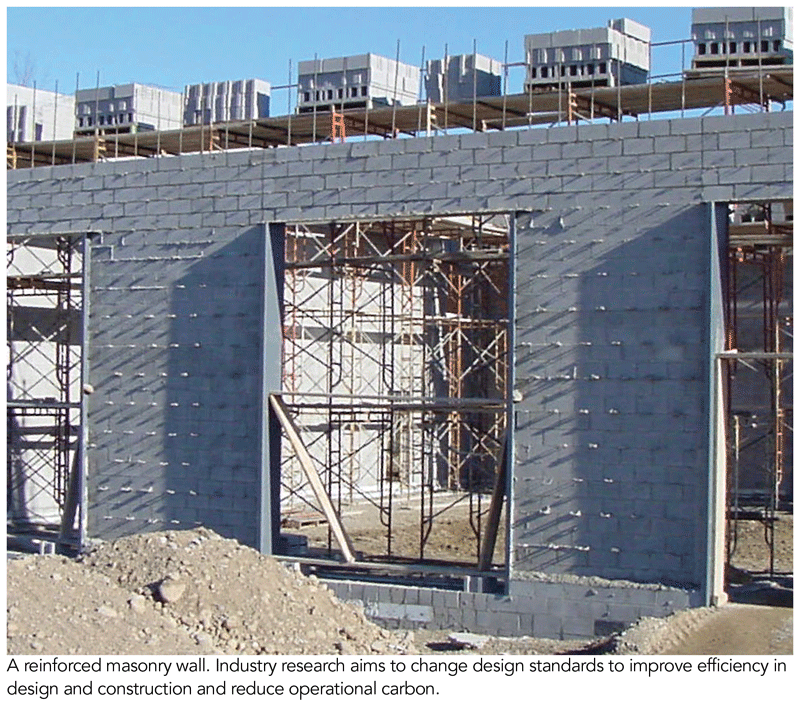
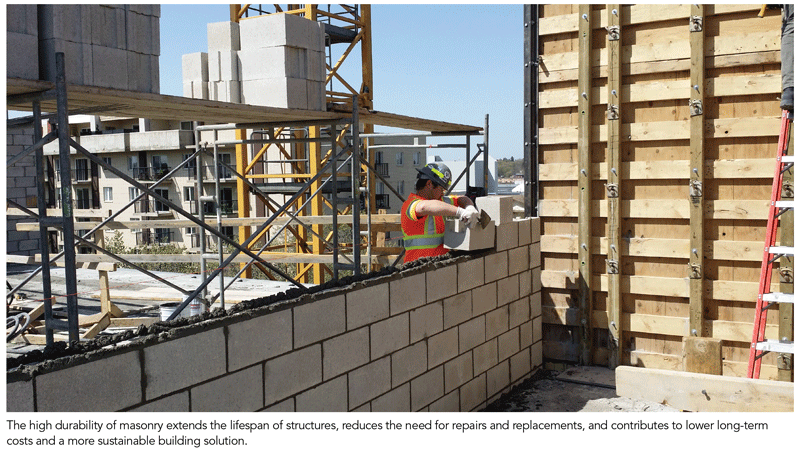
As the design and construction industry focuses more intently on reducing the embodied carbon of buildings, masonry manufacturers and manufacturer associations are actively working on developing Environmental Product Declarations (EPDs) to assess and improve the environmental impact of their products. Many of them have already introduced innovative and proprietary technologies aimed at reducing the embodied carbon of masonry construction.

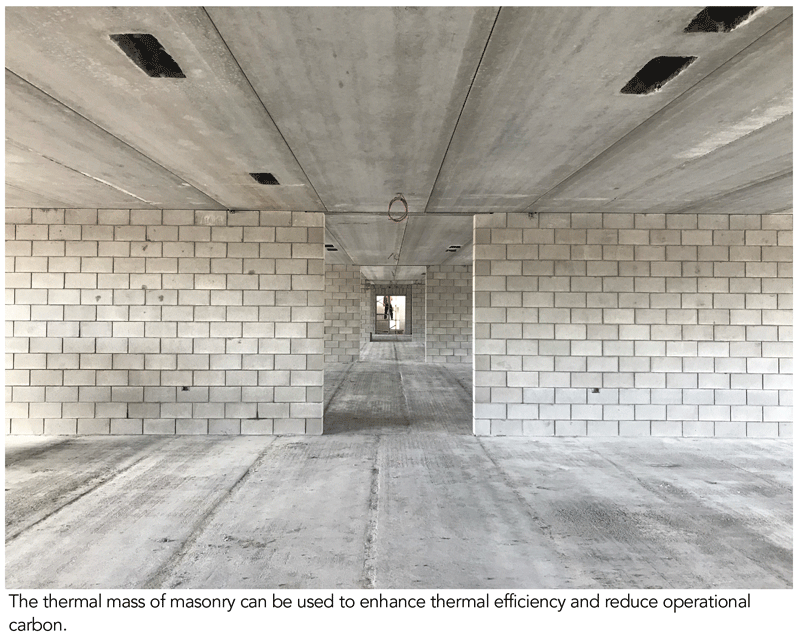
More broadly, the masonry industry is focusing on reducing the carbon footprint through efficient design and specifications, enhancing the energy performance of masonry assemblies, and raising awareness about the energy saving potential of their inherent thermal mass. At the same time, ongoing research is exploring the carbon sequestration capabilities of concrete masonry throughout its service life.

Embodied Carbon Reduction: Concrete Masonry Units

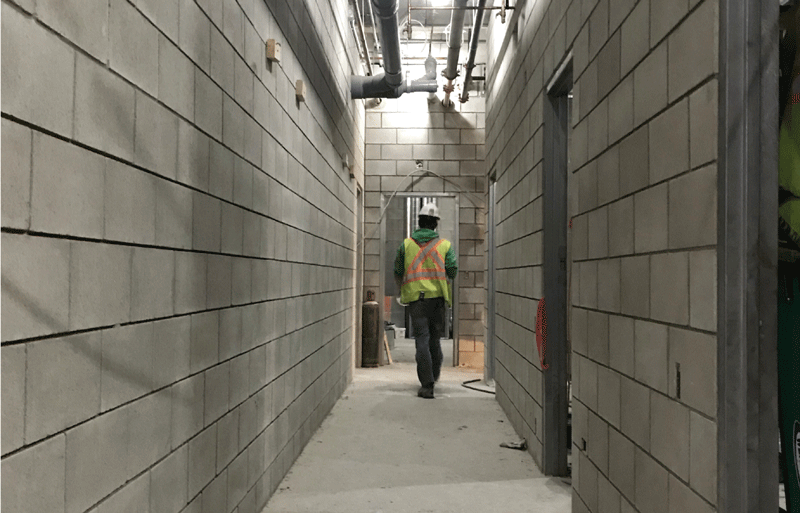
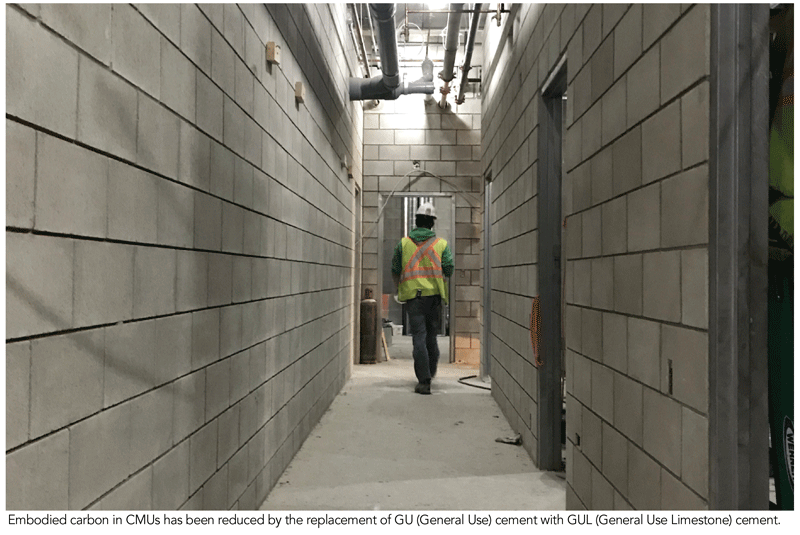
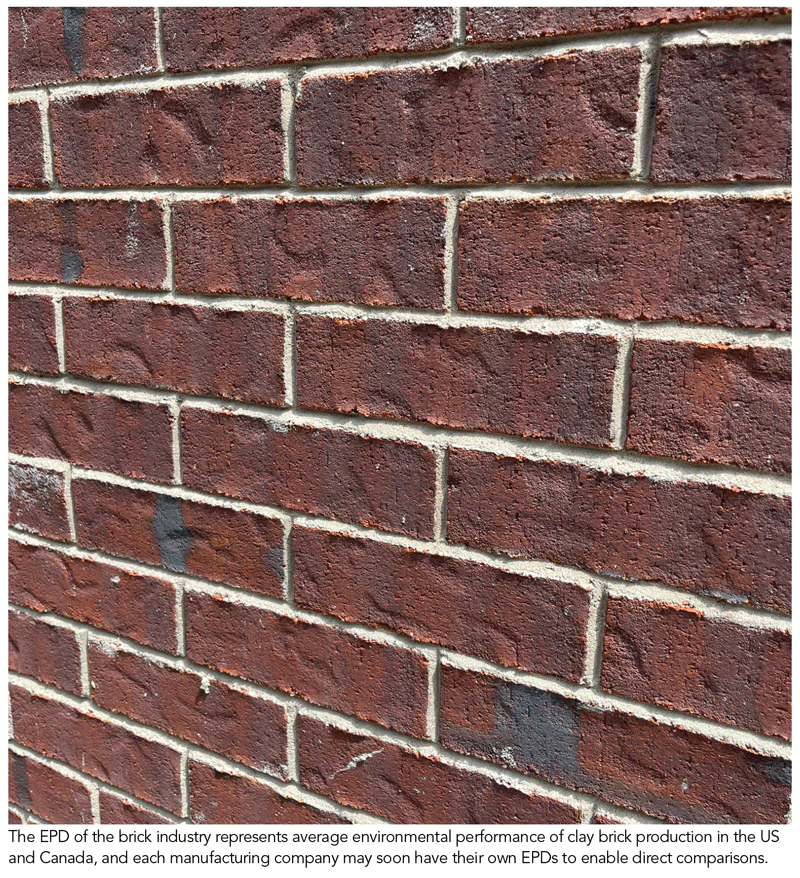
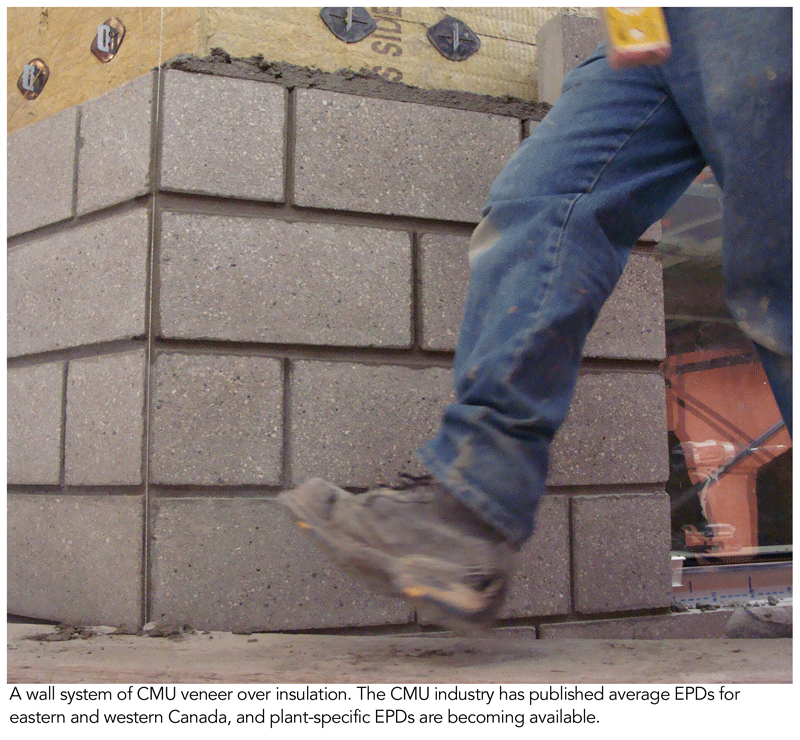
Manufacturers of concrete masonry units (CMUs) are currently developing EPDs for their products, some of them already published their plant specific EPDs, and more are on the way. At a national level, both the concrete block and clay brick associations published industry average EPDs.
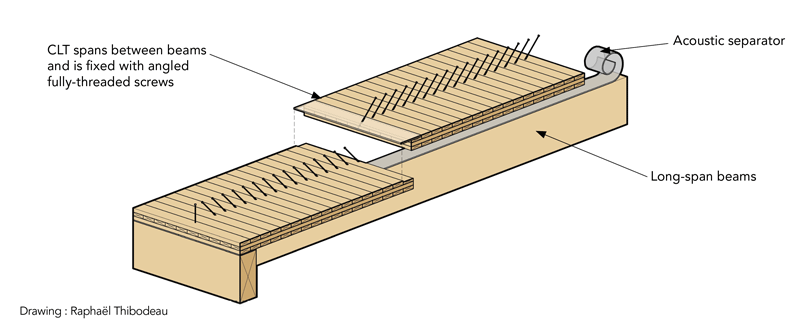
For example, the Canadian Concrete Masonry Producers Association – CCMPA published average EPDs for eastern and western Canada. These Type III environmental declarations present quantified, third party verified, environmental information on the life cycle of a product – or in this case, a product type. This, and plant specific EPDs, will enable specifiers to make comparisons between various products fulfilling the same function.

CCMPA has also published a Canadian Industry-Average Cradle-to-Gate Life Cycle Assessment (LCA) for both normal weight and lightweight CMUs. This LCA was completed to support the development of the Type III EPDs for concrete masonry units conforming to CSA A165.1-04 – Concrete Block Masonry Units, and as part of CCMPA's commitment to providing transparent information about the environmental footprint of concrete block masonry units produced in Canada.

Monica Guzman, M.Sc., P.Eng. is a Masonry Design Engineer with the Canada Masonry Design Centre in Calgary AB.

  • SUBSCRIBE TO THE DIGITAL OR PRINT ISSUE OF SABMAGAZINE FOR THE FULL VERSION OF THIS ARTICLE.

The Dividends of Dissassembly


Reclaiming the value held in buildings

By Brenda Martens

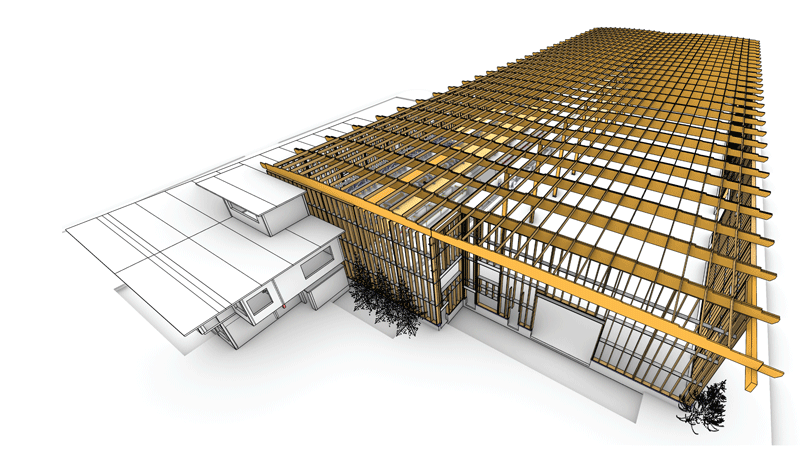
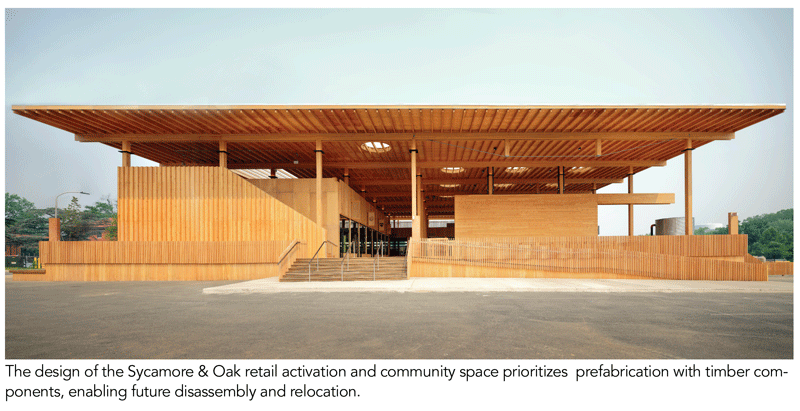
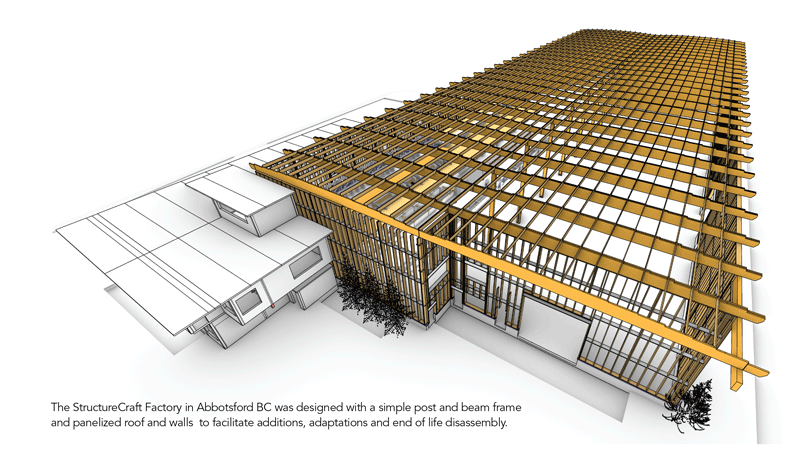
Design for Disassembly and Adaptability (DfD/A) is an approach that facilitates dismantling a product or building at its end-of-use, enabling the recovery of components and materials intact, to facilitate their use in subsequent applications, including complete reassembly. The goal of DfD/A is to keep materials in their highest use for as long as possible.
Historical Highlights

The concept of DfD/A in permanent buildings isn’t new. Indeed, there were industrious (and perhaps morally suspect) parishioners in the 1500’s in Appenzell, a canton in the Swiss Confederacy, constructing homes on their lots, taking advantage of the free lumber from the church-owned forests offered to the congregation for this purpose, then disassembling these houses to sell to others, to be relocated and reassembled on a new site. 

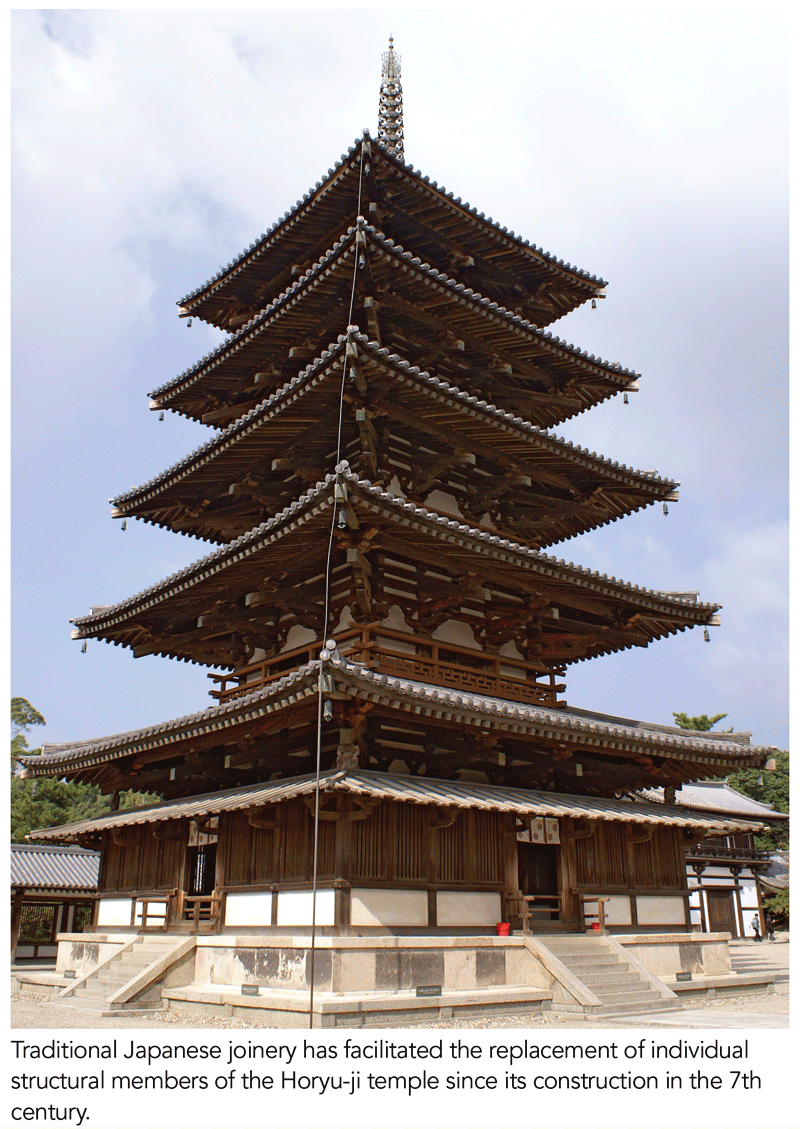
Even earlier, in Japan, techniques for carpentry (Miyadaiku)  allowed for the removal and replacement of the wooden elements of construction. The dismantling, repairing or replacing, and reassembling of the timber parts has resulted in some wooden temples standing for centuries, largely replaced in place.  The Hōryū-ji temple, over 1,300 years old, is the oldest standing wooden structure. After many restorations, only roughly a fifth of the original materials remain. 

Canadian Context

Closer to home and our own time, the C.K. Choi Building at UBC (’96) is a striking early and influential project that demonstrated circular design principles. Under the direction of architects Joanne Perdue and Eva Matsuzaki and structural engineers Diana Klein and Gilbert Raynard, the project aspired to, and succeeded in incorporating salvaged heavy timber from the Armoury Building next door that was slated for demolition.

The Armoury, built in 1941 and used for military training in World War II, was repurposed after the war by UBC for registration, sessional examinations, graduation ceremonies and other assemblies but no longer fit with campus master plans. It provided approximately two thirds of the CK Choi’s structure, but only after the structural engineers had regraded all of the salvaged timber appropriate to its future use, with the knowledge of where it would be used in the new building, overruling the lumber grader’s previous conservative grading.

Brenda Martens, OBC, B.Sc., LEED FellowBCIT faculty and developer of the Applied Circular Economy: Zero Waste Buildings microcredential. with courses on Design for Disassembly, Deconstruction Management and Construction Material Flows.  www.bcit.ca/ZeroWasteBuildings

  • SUBSCRIBE TO THE DIGITAL OR PRINT ISSUE OF SABMAGAZINE FOR THE FULL VERSION OF THIS ARTICLE.

Ecole du Zenith


New school a harmonious fusion of education and nature

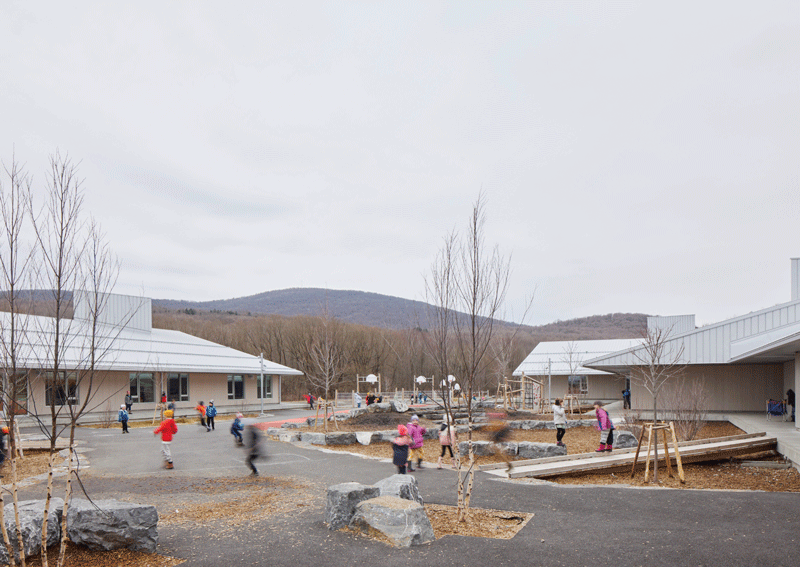
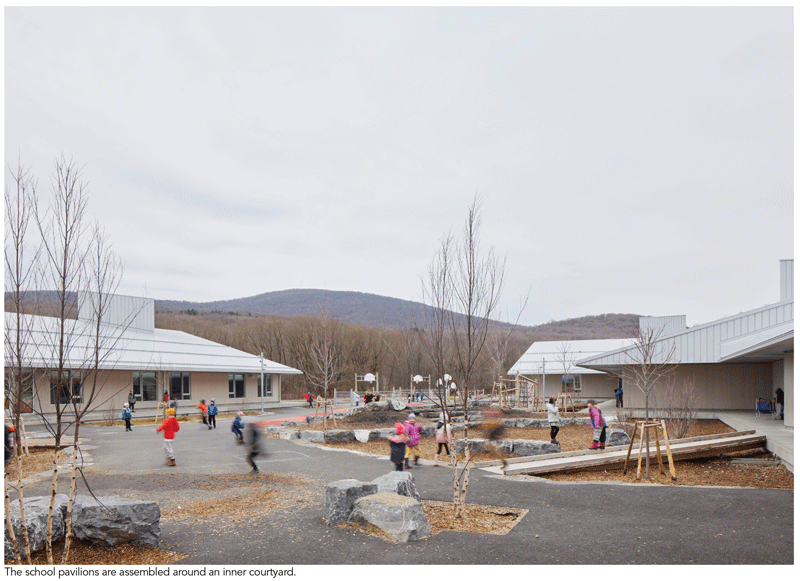
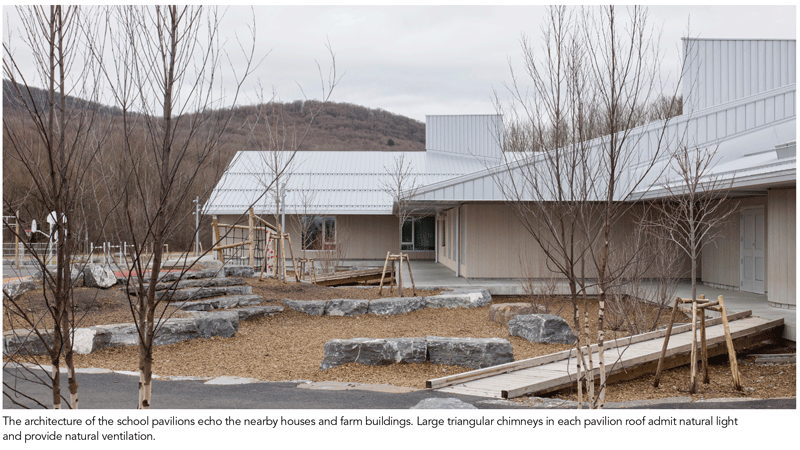
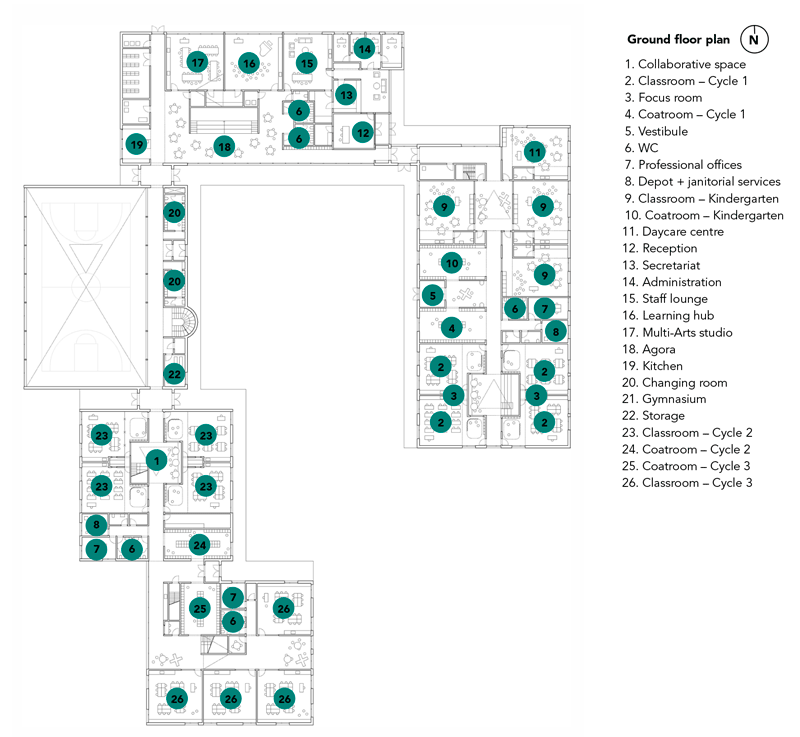
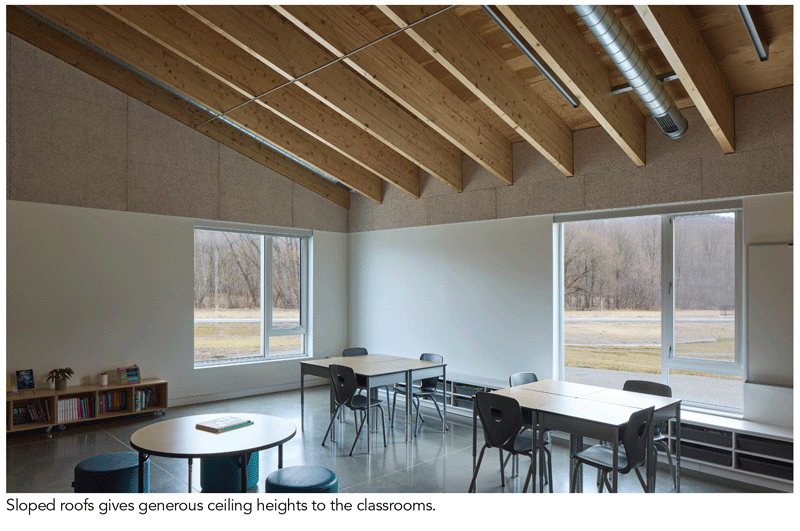
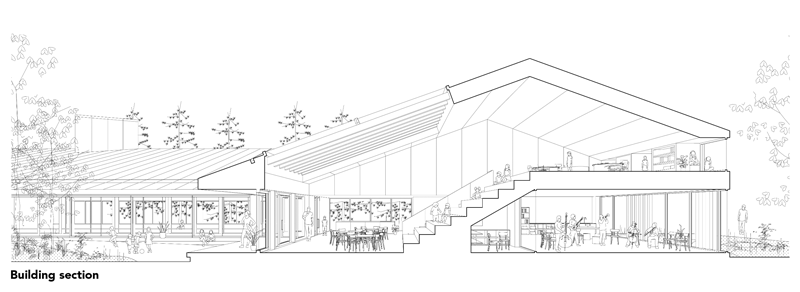
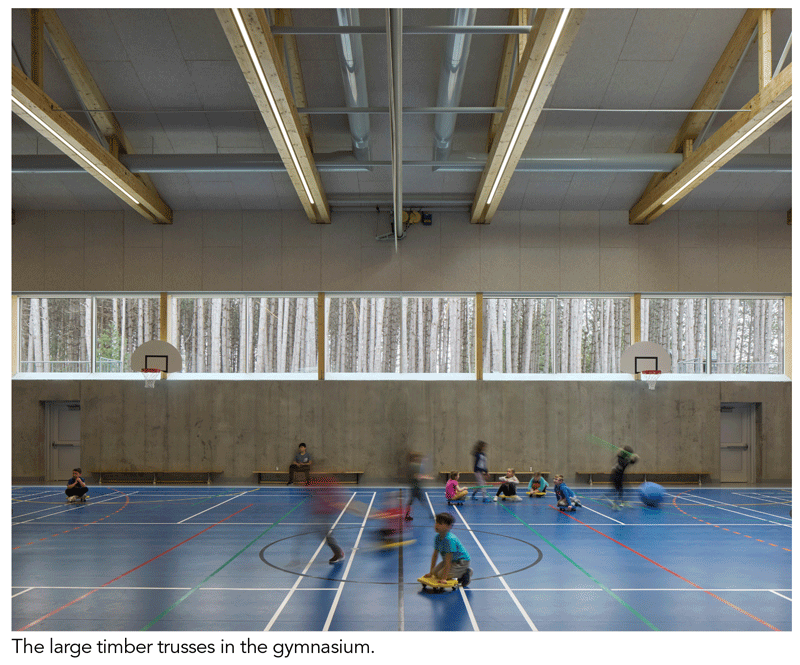
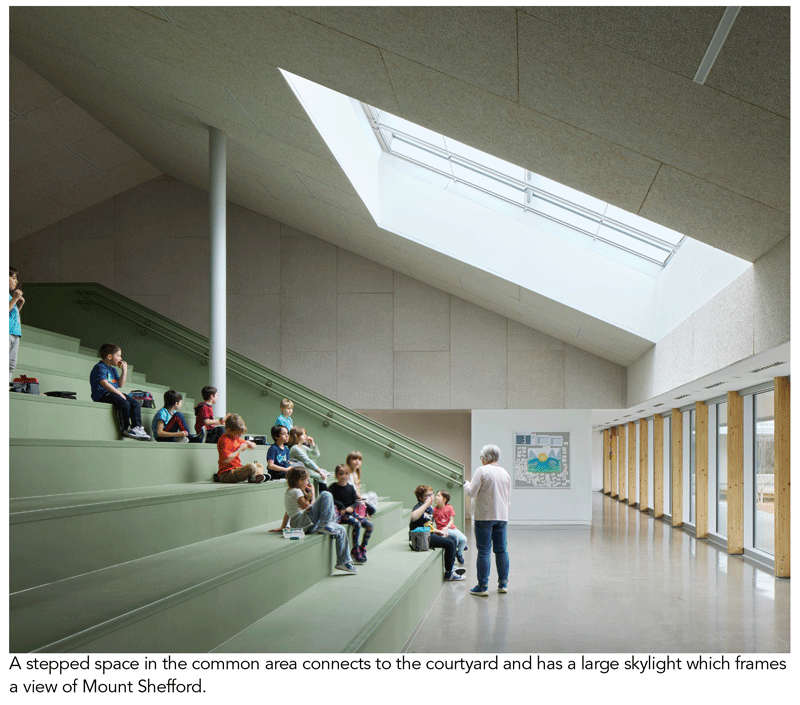
In partnership with Leclerc Architects, Montreal-based Pelletier de Fontenay has recently completed École du Zénith in Schefford, QC, a project resulting from a series of competitions launched by Lab-École in 2019. Being the first school architecture competition since the 1960s, this major project marks a turning point in Quebec’s educational landscape, renewing the program, organization, and way of building elementary schools in the province.

In partnership with Leclerc Architects, Montreal-based Pelletier de Fontenay has recently completed École du Zénith in Schefford, QC, a project resulting from a series of competitions launched by Lab-École in 2019. Being the first school architecture competition since the 1960s, this major project marks a turning point in Quebec’s educational landscape, renewing the program, organization, and way of building elementary schools in the province.

Project Credits

  • Client  Centre de Service Scolaire Val-des-Cerfs
  • Architects  Pelletier de Fontenay + Leclerc
  • Landscape Architect  Fauteux et associés in
  • collaboration with agence Relief Design
  • Structural Engineer  Lateral Conseil
  • Civil engineer  Gravitaire
  • Electrical and Mechanical Engineer  BPA
  • PhotoS  James Brittain

Edited by Jim Taggart from text  supplied by the project team.

  • SUBSCRIBE TO THE DIGITAL OR PRINT ISSUE OF SABMAGAZINE FOR THE FULL VERSION OF THIS ARTICLE.

Interview with Mike Manning and Catherine Marshall

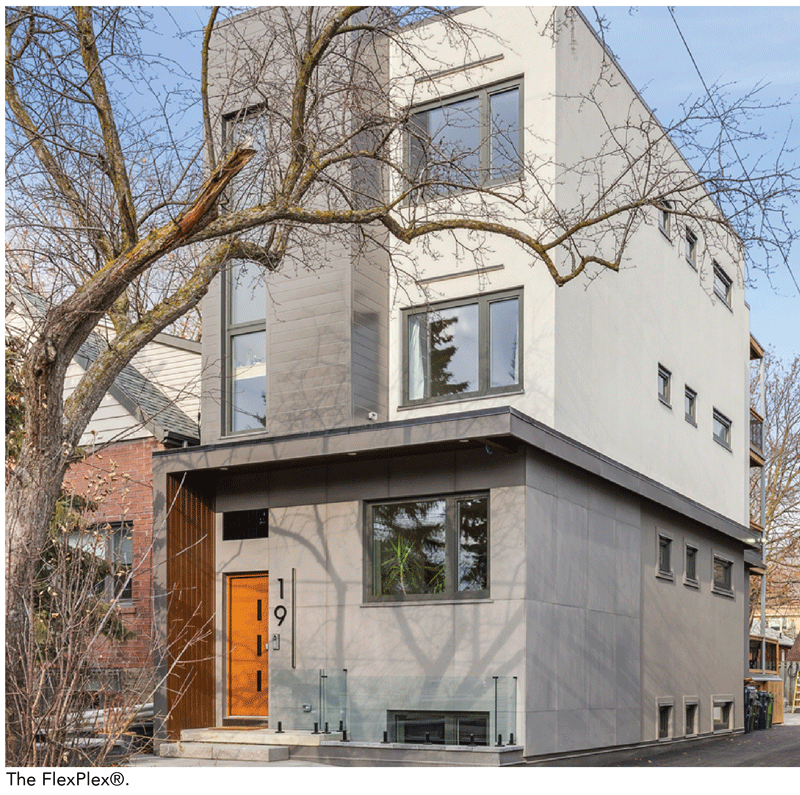
The husband-and-wife team at Greenbilt Homes (greenbilthomes.ca) have turned their attention to FlexPlex® – their multiplex building that easily flexes from duplex, triplex, fourplex to single-family. This is a new venture for this 15-year-old Passive House company. Traditionally, Greenbilt has been a custom home builder working with both modular and conventional technology.

1. How did you get the idea for FlexPlex

We started ruminating about multiplexes when our kids were teenagers as a way that they could generate the rental income to afford to own a place. But we wanted them to have the option to enlarge their personal area by removing space from the rental area. Eventually, we came up with a “FlexPlex” prototype. We decided to build a duplex version for ourselves as both our retirement home, and as a retirement income generator. Our FlexPlex could also turn into a single-family multigenerational home if the “kids” have kids and want to live with “Mom and Dad”.  We’re waiting!

2. How did you develop a flexible design and how does it work?

We designed a four 2-bedroom apartment building. Then we stress-tested the building infrastructure by seeing how it would work in a duplex, and a single-family home. We also focused on the aspects of each configuration that make it work and adjusted the design accordingly. There are so many ways the building can flex from one configuration to another, so we’ll give you one example.

If we wanted to turn the upper duplex into two 2-bedroom apartments:

Floor 1: use hidden infrastructure to add an extra bathroom, and in-suite laundry; frame two interior walls and open up a hidden doorway in an existing wall; and move one door.

Floor 2: use hidden infrastructure to add a kitchen; move one door.

3. How can owners benefit from FlexPlex features?

Many buildings become functionally obsolete because they were designed with a single purpose. For example, office buildings with large floorplates likely can’t be adapted to another use. Because of the floorplate and the infrastructure, renovation to change the FlexPlex are quick and easy.

As the FlexPlex can have up to eight bed/bath combinations and four kitchen/food prep areas, there’s a lot of optionality in the design. This building could have multiple configurations as a residence. In addition, it could be a small institutional or hospitality building. 

4. It seems unusual to copyright a construction process.

Why did you do that?

We wanted to protect our IP. But regardless of the legalities, now that we have given SABMag the drawings of the four-unit design, our secrets are out. Perhaps a better question is “why are you sharing this proprietary information?” We are getting toward the end of our careers, and we decided to try to inspire others in sustainable design to keep pushing forward with new ideas. We feel that it’s socially imperative for more innovation to occur to densify sustainably and affordably. We won’t maintain social cohesion if new housing sells at $1,600 per square foot. 

CAGBC launches Zero Carbon Building Micro-Credential

New micro-credential helps build proficiency in low-carbon concepts and applying the Zero Carbon Building Standards.

The Canada Green Building Council (CAGBC) recently launched its Zero Carbon Building Essentials Micro-Credential, a new leaning path designed to help green building professionals develop the knowledge neede d to advance carbon reductions.

“The growing demand for low-carbon building solutions requires building professionals to acquire and integrate new skills and knowledge now,” says Thomas Mueller, CAGBC President and CEO. “Drawing on 20 years’ experience delivering high-quality green building training and the expertise we gained from our Zero Carbon Building program, CAGBC’s new micro-credential will provide the key concepts and insights that Canada’s building professionals need to advance decarbonization today.”

The ZCB Micro-Credential was developed to support Canada’s building sector and meet growing demand for low-carbon buildings and retrofits. With only five years left to meet 2030 carbon reduction targets and another 25 years to achieve decarbonization, Canada’s building sector needs to act now to be prepared for the low-carbon future.

The ZCB-Essentials Micro-Credential builds on insights gained from creating and implementing the Zero Carbon Building Standards, Canada’s first and only building standards focused solely on carbon reductions. Now with over a hundred certified buildings and hundreds more registered, CAGBC has created a micro-credential for building industry professionals seeking to better understand zero-carbon concepts.

“Zero-carbon buildings and retrofits require specific skills and knowledge,” said Mark Hutchinson, CAGBC’s vice president of Green Building Programs and Innovation. “Project teams need to be more integrated and collaborative, using common terminology and approaches that everyone involved can understand, from design through to construction and building operations.”

ZCB-Essentials will focus on low carbon fundamentals and help establish an industry-wide lexicon. The micro-credential starts with the live and interactive “Introduction to the Zero Carbon Building Standards” webinar. Five on-demand courses explore key topics including making the business case for zero carbon, Thermal Energy Demand Intensity, the Zero Carbon Balance, Embodied Carbon and transition planning. To complete the micro-credential, a new interactive workshop will provide a practical look at the latest ZCB Standards. 

Participants that complete the micro-credential will receive a ZCB-Essentials badge through Credly, a global Open Badge management platform. With Credly, participants can secure and share their ZCB-Essentials badge, demonstrating their knowledge of zero-carbon principles to clients and employers.

“Launching a micro-credential for the Zero Carbon Building program is one of the many ways CAGBC continues to advance decarbonization in the Canadian real estate market,” said Mueller. “Along with projects to support transition planning, our Learning program is helping prepare the building sector workforce for Canada’s low-carbon future.”

To learn more about the micro-credential, visit cagbc.org/learn.

Mechanical systems for low energy buildings

By Stuart Hood, Principal, Introba 

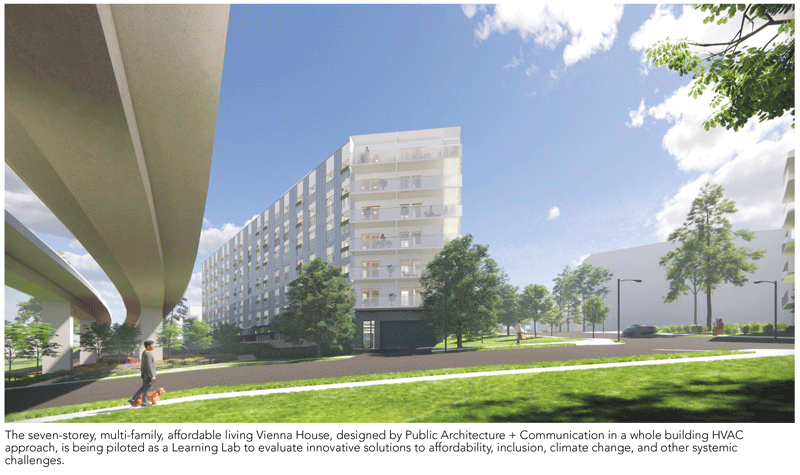
When it comes to energy use in buildings, it may seem counterintuitive to say that big savings can cost less than small savings – but this is true if you consider the entire building as a single integrated system. Amory Lovins, co-founder of the green energy non-profit Rocky Mountain Institute, has written extensively on the diminishing returns that are realized when an incremental approach is taken to improving the energy efficiency of traditional building systems; and how the whole building approach to energy conservation can ‘tunnel through the cost barrier’. 

A Whole Building Approach

Whether the demand is for heating or cooling, a whole building approach shifts the emphasis from a reliance on high-capacity active systems to the predictable (and much reduced) energy demand inherent in the stable thermal mass of a building with a high-performance envelope. This translates into an enclosure with a greater thickness of thermal insulation, increased airtightness, structural thermal breaks at balconies and other structural penetrations together with careful detailing of cladding systems, doors and windows, and the minimum number of penetrations of ducts and pipes through the building enclosure. 

In addition, adequate solar shading is required on south, west, and east elevations to control heat gain. The shading should be externally mounted with adequate depth if fixed or using manually operable blinds with easily accessible controls through opening tilt and turn windows.

Improving Energy Performance

This whole building approach is the fundamental premise of Passive House design which, rather than using design models to calculate the percentage improvement in energy performance of a building relative to MNECB or ASHRAE standards, sets absolute energy performance targets that must be verified by detailed calculation and air tightness testing during construction, and on completion.

The required maximum thermal energy demand intensity (TEDI) of 15kWh/m2/year for heating and cooling in Passive House buildings is not an arbitrary figure, but rather the threshold at which traditional mechanical systems with perimeter radiators or fan coils are no longer required. With this level of energy demand,  heating and cooling can be delivered through the ventilation system dramatically reducing the size and cost of the mechanical equipment required. At these levels of passive building performance, relatively small electrically powered heat pumps can deliver the much reduced heating and cooling energy required, eliminating the need for high capacity fossil fuel systems.

This has been the approach used in some of the first generation of Passive House buildings completed in Canada over the past 10 years.  The additional upfront cost for the high performance building enclosure described above is more than compensated for by the much lower capital cost of mechanical equipment, and the reduced operating and maintenance costs experienced over the service life of the building.

Building Resilience

However, the prolonged higher temperatures we are experiencing in the summer months (even in traditionally mild climates such as southwest British Columbia) has now made active cooling using heat pumps an imperative in new construction. These heat pumps can be used in tandem with heat recovery (or energy recovery) ventilation systems, to pre-condition incoming ventilation air.  These requirements can be addressed in the design of buildings of different types and scales, but may be implemented in different ways according to building use, occupant density, the nature of ownership  and the building management protocols.

Equipment

Much of the thermal energy required to heat a Passive House or other low energy building comes from the sun but also body heat, lights and appliances, like TV’s and refrigerators. Indoor air quality, including temperature and humidity control and the removal of contaminants is achieved using heat recovery or energy recovery ventilators (HRVs and ERVs).

• An HRV is a ventilation device that helps make buildings healthier, cleaner, and more comfortable by continuously replacing stale indoor air with fresh, filtered  outdoor air. Passive House requires HRVs to be at least 75% efficient, but models with significantly greater efficiency are commonly available. An 85% efficient HRV, exhausting air at 20oC, will provide incoming air at 16oC, when it is -10oC outside.

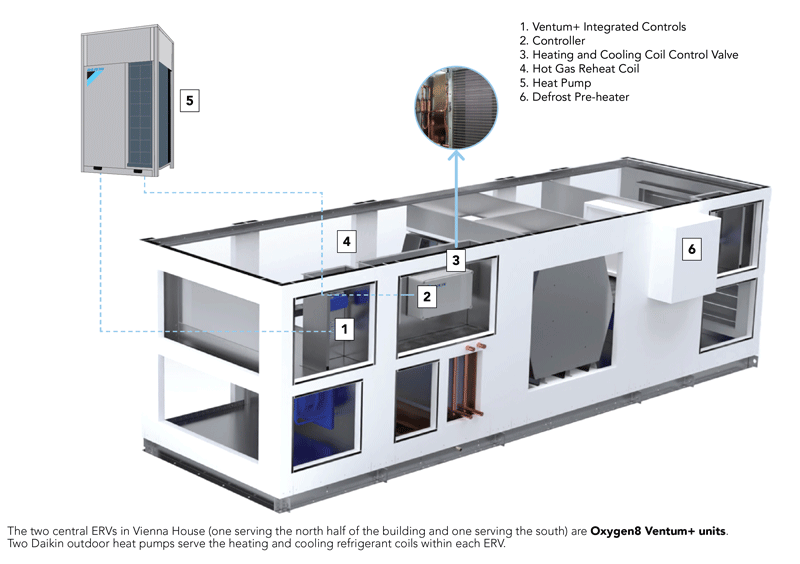
• An ERV is similar to an HRV but can exchange both heat and moisture. An ERV can provide control over moisture levels in a building during both cold and warm, humid weather. It exchanges moisture between the outgoing and incoming air providing humidification in winter and dehumidification in summer, both of which are beneficial to human comfort, health and energy consumption.

• A heat pump uses electricity to provide both heating and cooling to a building. These appliances are efficient at transferring heat from one place to another, depending on where it's needed.

In the winter, a heat pump provides heating by extracting heat from outside a building using either the air or the ground as a heat source and moving it inside. In summer, it operates in reverse, to cool the air entering the building.

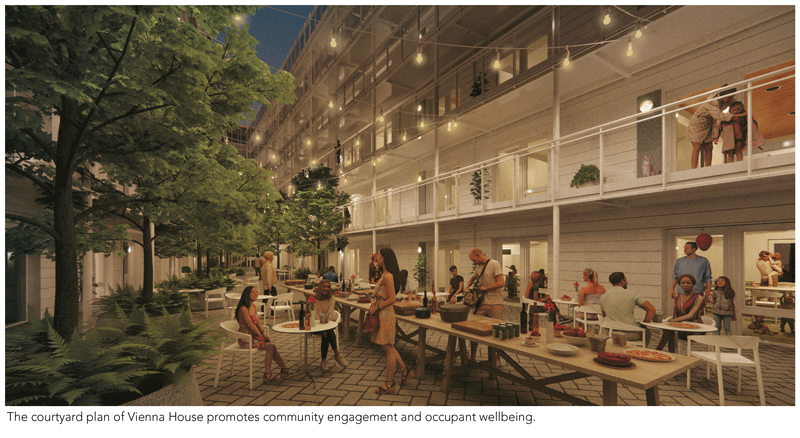
Stuart Hood is Principal at Introba. Vienna House text written in consultation with Public Architecture + Communication.

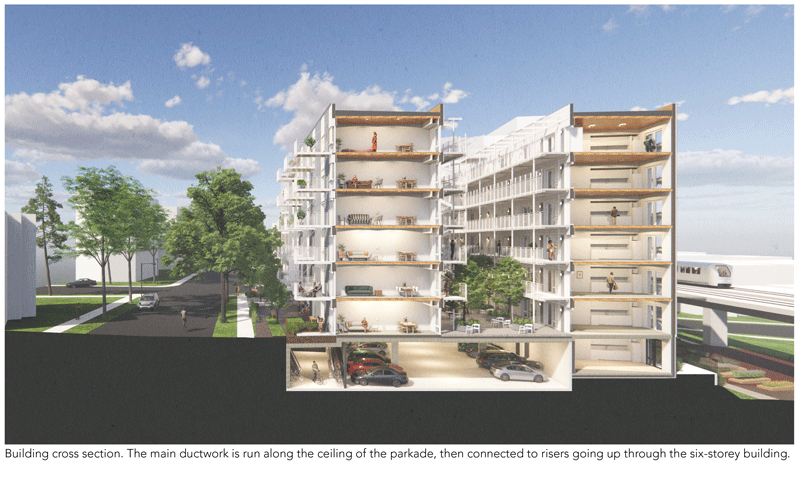
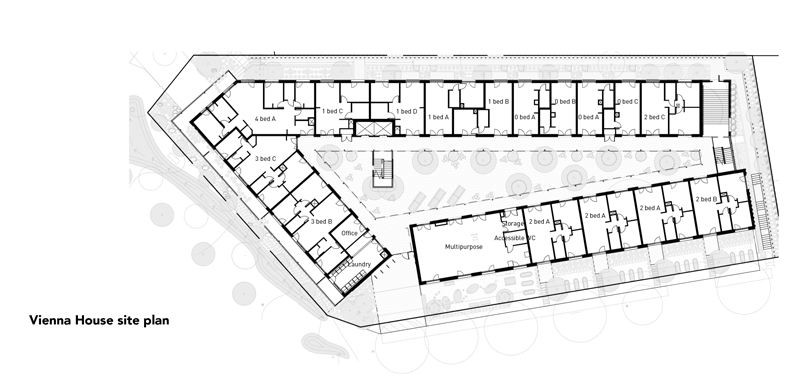
Centralized HVAC systems, such as that supplied by Oxygen 8, provides ventilation from a single large ERV, making routine maintenance, including the replacement of filters, much more straight forward. It also reduces the penetrations through the building enclosure, and the length of cold ductwork inside the building envelope that must be highly insulated to mitigate heat loss.

  • SUBSCRIBE TO THE DIGITAL OR PRINT ISSUE OF SABMAGAZINE FOR THE FULL VERSION OF THIS ARTICLE.