Designing the world’s largest Passive House dormitory
By Jonathan Kinsley
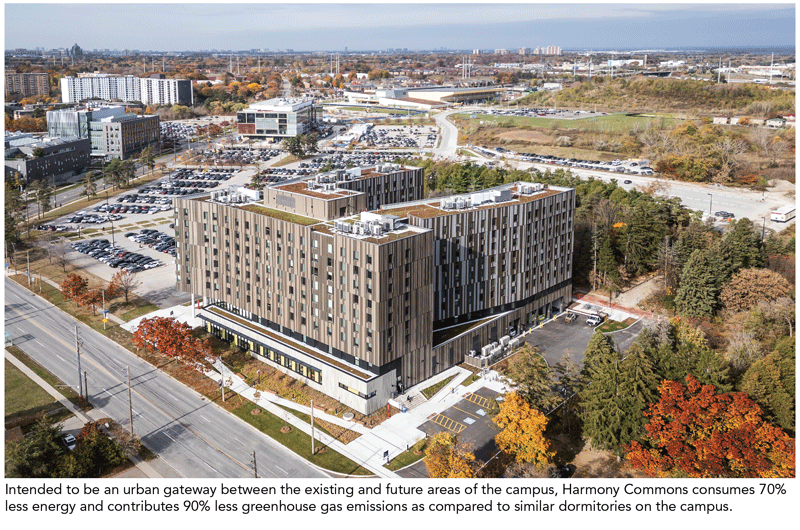
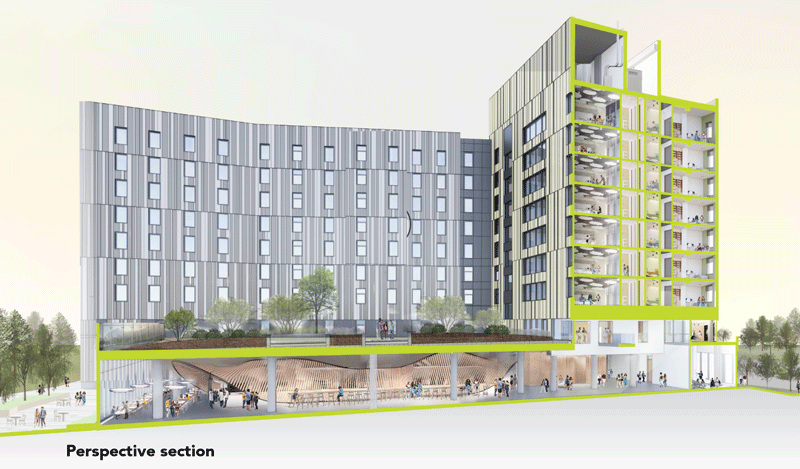
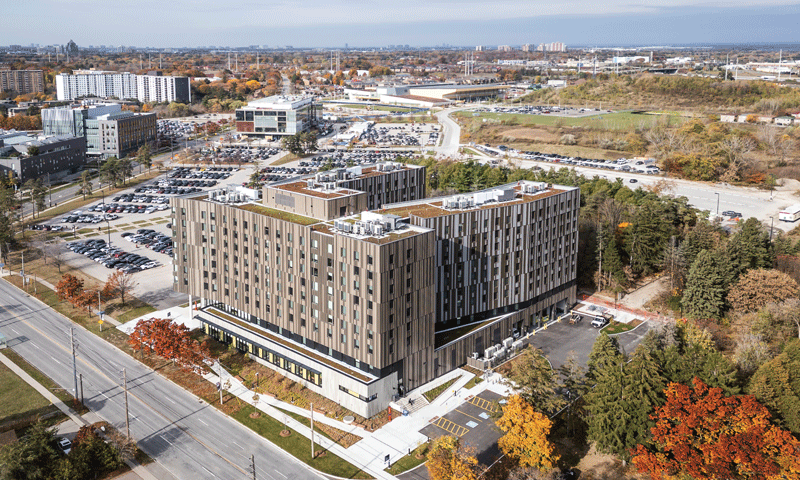
The University of Toronto Scarborough’s all-electric student residence, Harmony Commons, represents an important leap forward in the efforts to decarbonize the building sector in Canada and beyond. Designed to house 746 students and supportive resident advisors, the 26,000m2 building also serves the wider campus community with an all-electric commercial kitchen, dining hall, and central offices for student life and campus security.
In addition to meeting the University’s programmatic goals, the team behind Harmony Commons sought to leverage campus development as a catalyst to demonstrate the viability and value of high-performance building practices, specifically Passive House design.
It is now the largest certified Passive House (PHI) dormitory in the world, and when completed in 2023, was the largest certified Passive House project in Canada. At nine storeys, it is the tallest structure on the 300-acre Scarborough campus.
Situated on a former parking lot directly south of a preserved, historic grove of trees, Harmony Commons is one of the first buildings in a future campus extension. It is intended to be an urban gateway between the existing and future areas of the campus. As the largest residence and dining facility at UTSC, the building acts as a new center of gravity for student life.
Design Response
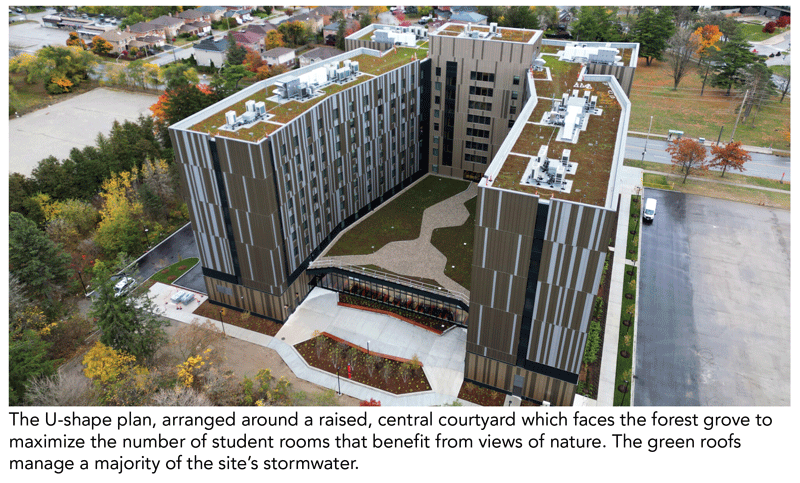
Harmony Commons is composed of three volumes organized in a U-shape, arranged around a raised, central courtyard. The open end of the courtyard faces the forest grove, maximizing the number of student rooms that benefit from views of nature. These benefits are also present in the large ground level dining hall which opens toward the grove, creating a relaxing and restorative atmosphere.
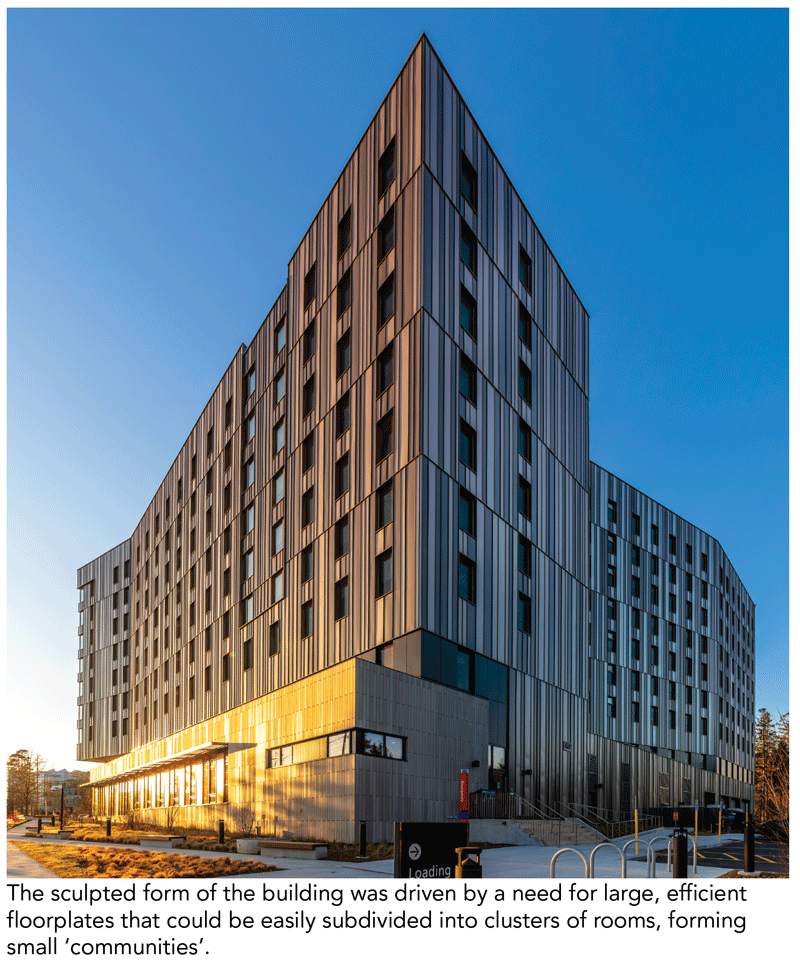
The sculpted form of the building was driven by a need for large, efficient floorplates that could be easily subdivided into clusters of rooms, forming small ‘communities’ that support social connection among first-year students.
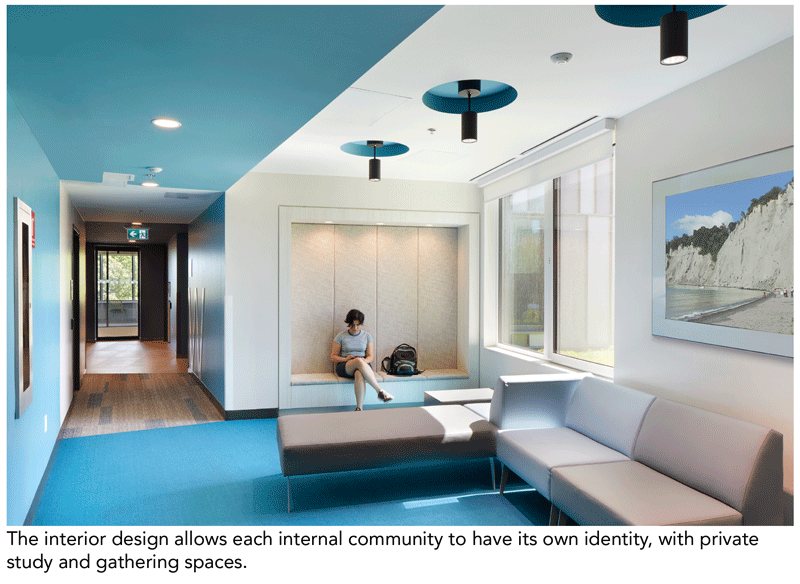
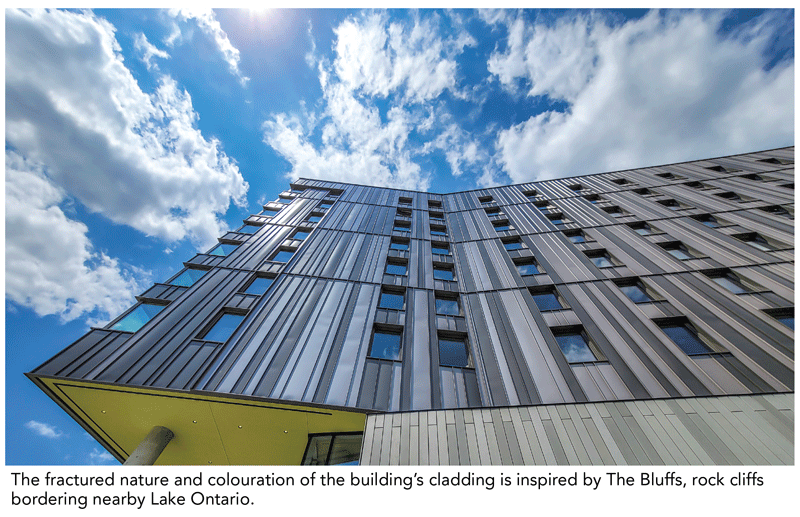
The interior design and planning approach allows each community to have its own identity, with private study spaces, gathering spaces and a common kitchen for planned or impromptu interactions. Externally, the fractured nature and colouration of the building’s cladding is inspired by The Bluffs, rock cliffs bordering nearby Lake Ontario.
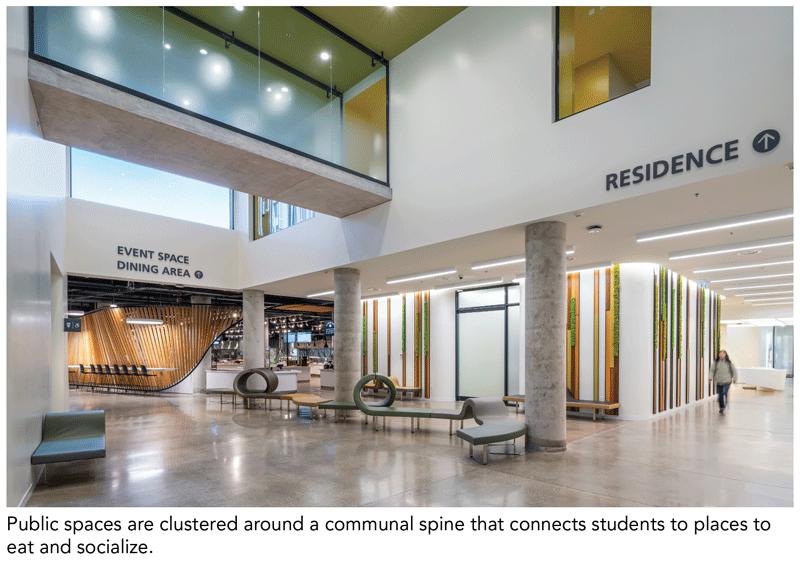
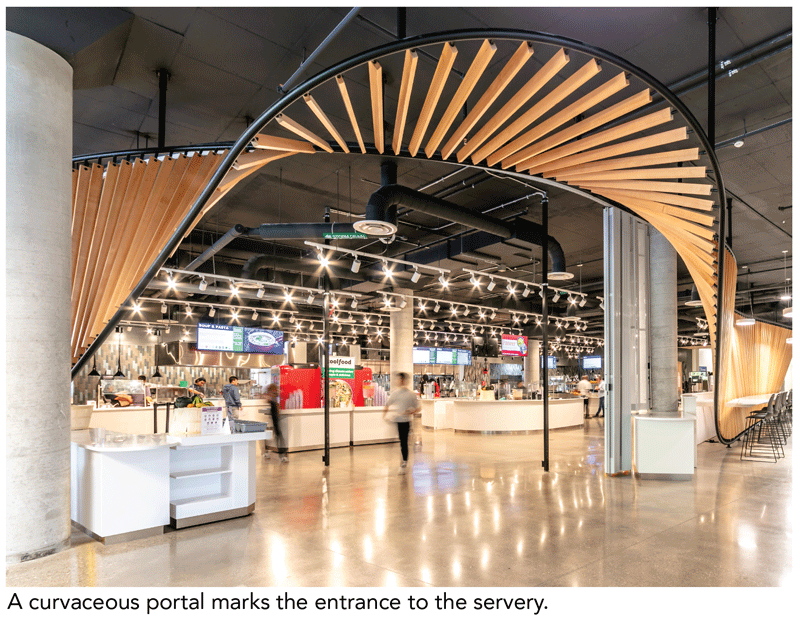
Beyond the residential areas, the building design and program support community-building at different scales. At the ground level, public spaces benefiting the entire student body, including the dining hall, servery, peer resources, and flexible event spaces, are all clustered around an activated circulation corridor.
Project Credits
- Owner/Developer University of Toronto Scarborough, Fengate Asset Management
- Design Architect Handel Architects
- Executive Architect CORE Architects Inc.
- Architect of Record Arcadis IBI Group
- Interior Design (student rooms/common areas) Handel Architects
- interior Design (office areas) Core Architects
- Interior Design (dining and event spaces) PARTISANS
- Structural Engineer Jablonsky, Ast and Partners
- Mechanical & Electrical Engineer Arcadis NV
- MEP & ENERGY MODELLING Integral Group
- Passive House Design Steven Winter Associates
- Building Enclosure & Energy Consultant RDH Building Science
- LANDSCAPE DESIGN The Planning Partnership
- General Contractor Pomerleau
- Photos 1, 6 and 7: Ryan Fung; Photo 2: Fengate Asset Management; Photo 3: Keith Gabriel; Photo 4: Tom Arban; Photo 5: Handel Architects
Jonathan Kinsley is with HANDEL ARCHiTECTS.
SUBSCRIBE TO THE DIGITAL OR PRINT ISSUE OF SABMAGAZINE FOR THE FULL VERSION OF THIS ARTICLE.