Dedicated to sustainable,
high performance building

Harmony Commons Student Residences


Designing the world’s largest Passive House dormitory

By Jonathan Kinsley

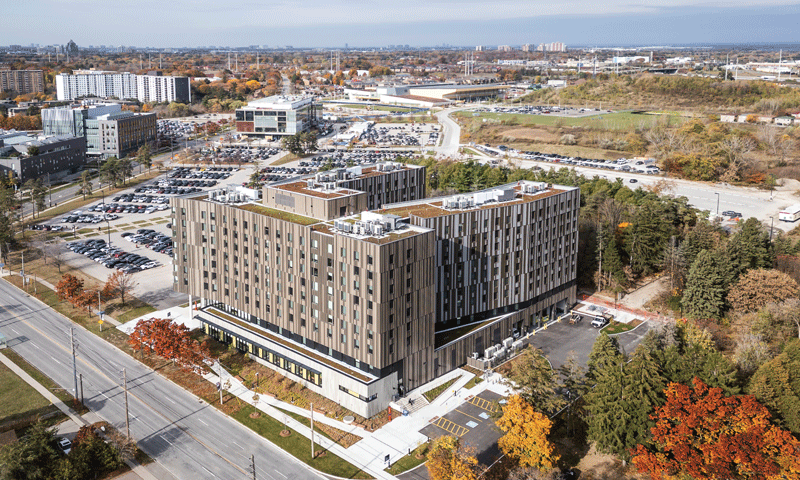
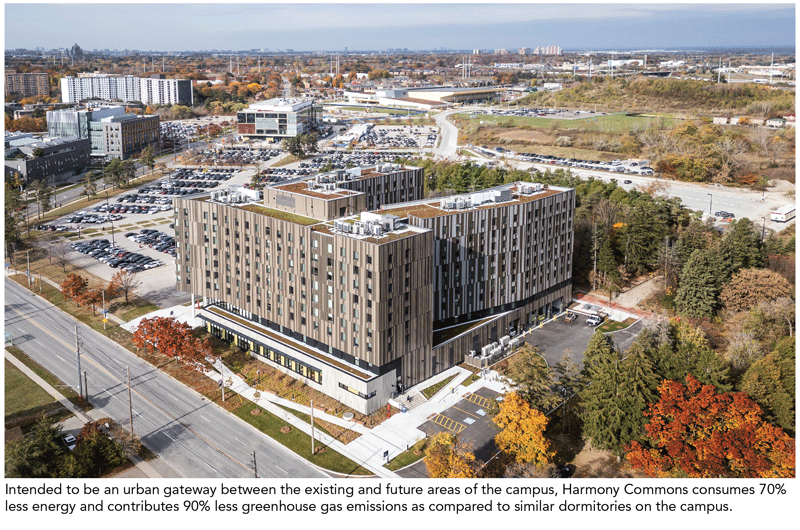
The University of Toronto Scarborough’s all-electric student residence, Harmony Commons, represents an important leap forward in the efforts to decarbonize the building sector in Canada and beyond. Designed to house 746 students and supportive resident advisors, the 26,000m2 building also serves the wider campus community with an all-electric commercial kitchen, dining hall, and central offices for student life and campus security.

In addition to meeting the University’s programmatic goals, the team behind Harmony Commons sought to leverage campus development as a catalyst to demonstrate the viability and value of high-performance building practices, specifically Passive House design.    

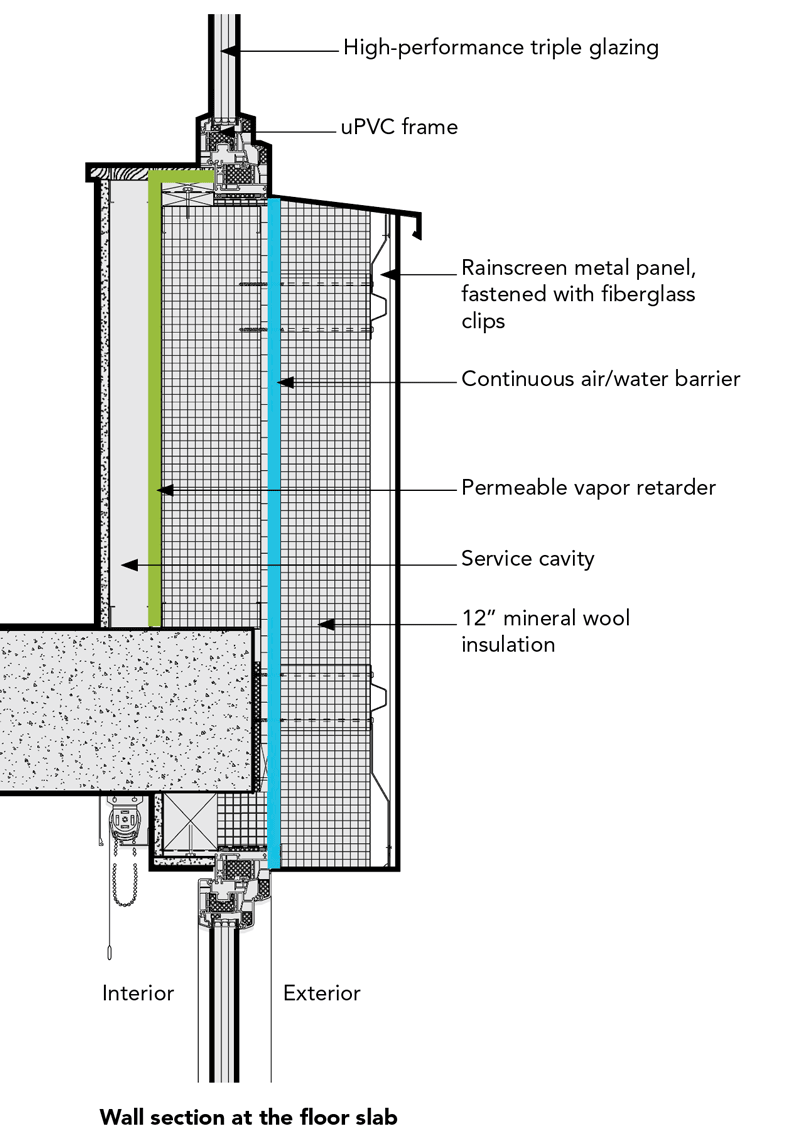
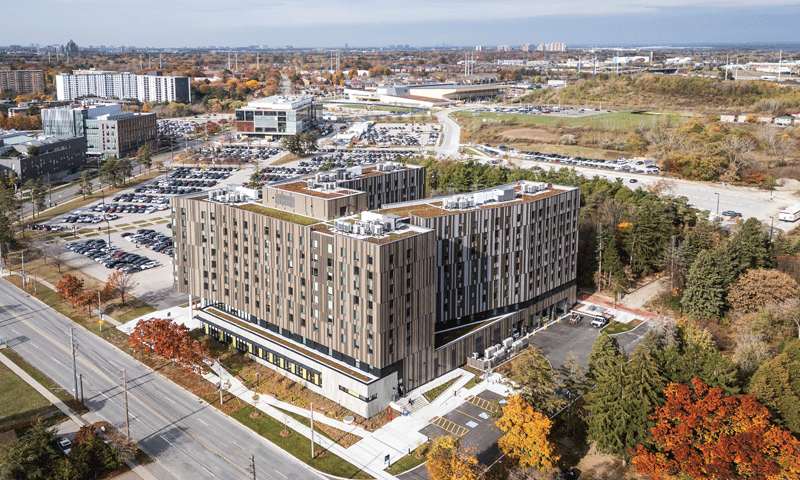
It is now the largest certified Passive House (PHI) dormitory in the world, and when completed in 2023, was the largest certified Passive House project in Canada. At nine storeys, it is the tallest structure on the  300-acre Scarborough campus.

Situated on a former parking lot directly south of a preserved, historic grove of trees, Harmony Commons is one of the first buildings in a future campus extension.  It is intended to be an urban gateway between the existing and future areas of the campus.  As the largest residence and dining facility at UTSC, the building acts as a new center of gravity for student life.

Design Response

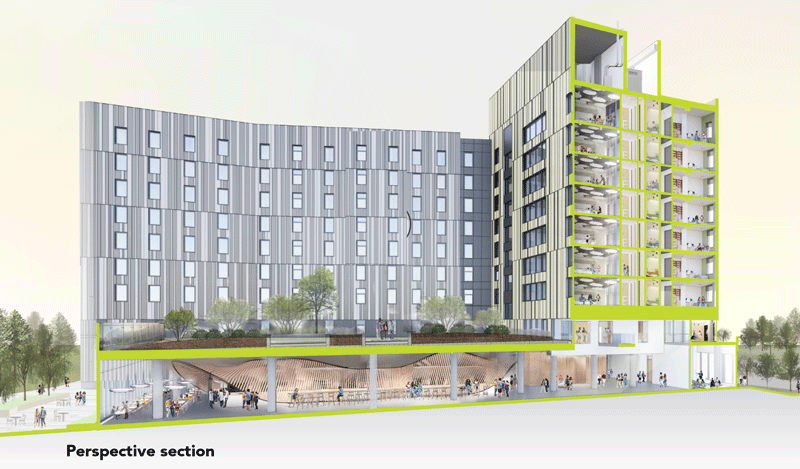
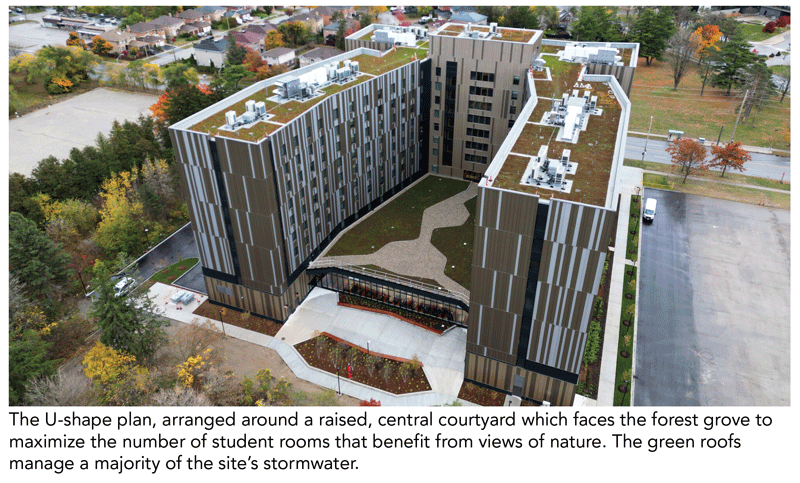
Harmony Commons is composed of three volumes organized in a U-shape, arranged around a raised, central courtyard. The open end of the courtyard faces the forest grove, maximizing the number of student rooms that benefit from views of nature.  These benefits are also present in the large ground level dining hall which opens toward the grove, creating a relaxing and restorative atmosphere.

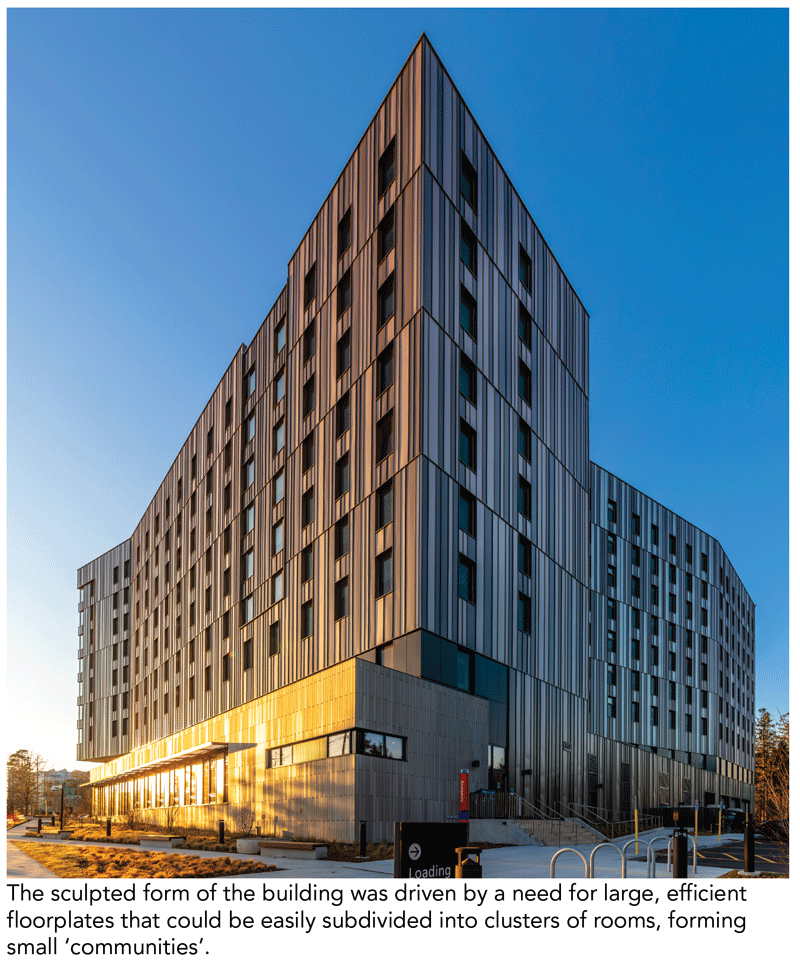
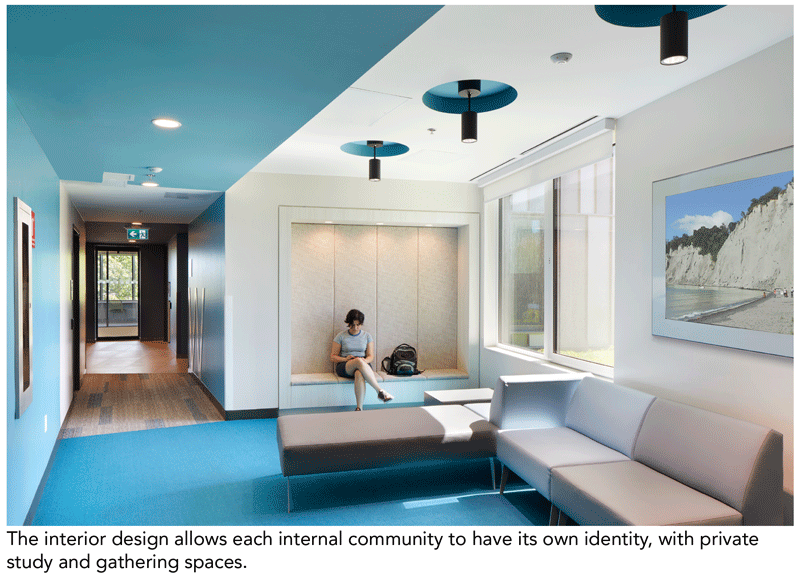
The sculpted form of the building was driven by a need for large, efficient floorplates that could be easily subdivided into clusters of rooms, forming small ‘communities’ that support social connection among first-year students.

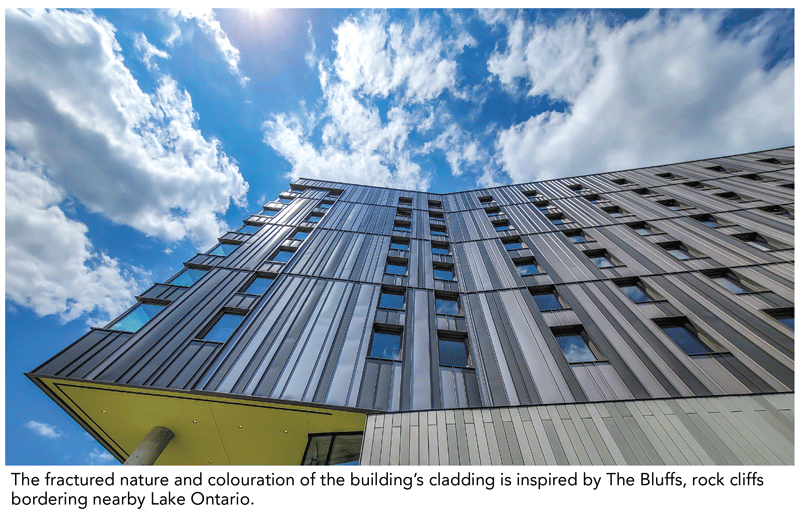
The interior design and planning approach allows each community to have its own identity, with private study spaces, gathering spaces and a common kitchen for planned or impromptu interactions. Externally, the fractured nature and colouration of the building’s cladding is inspired by The Bluffs, rock cliffs bordering nearby Lake Ontario.

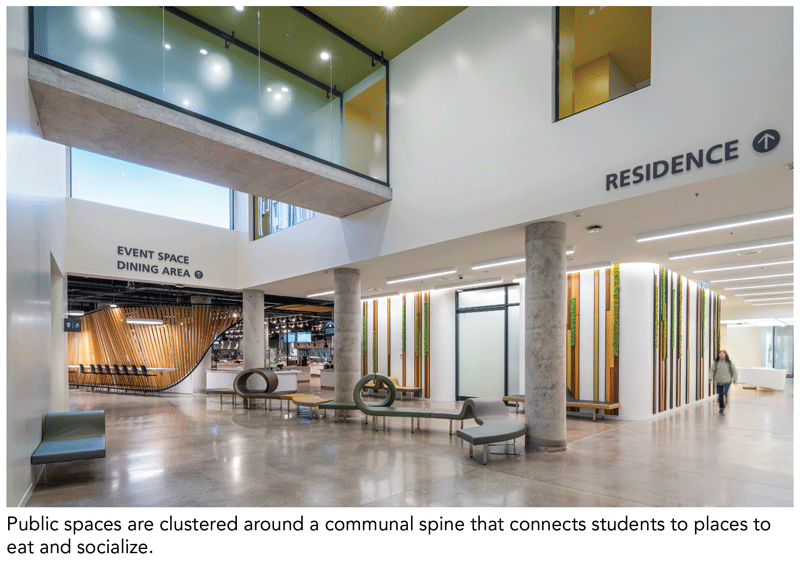
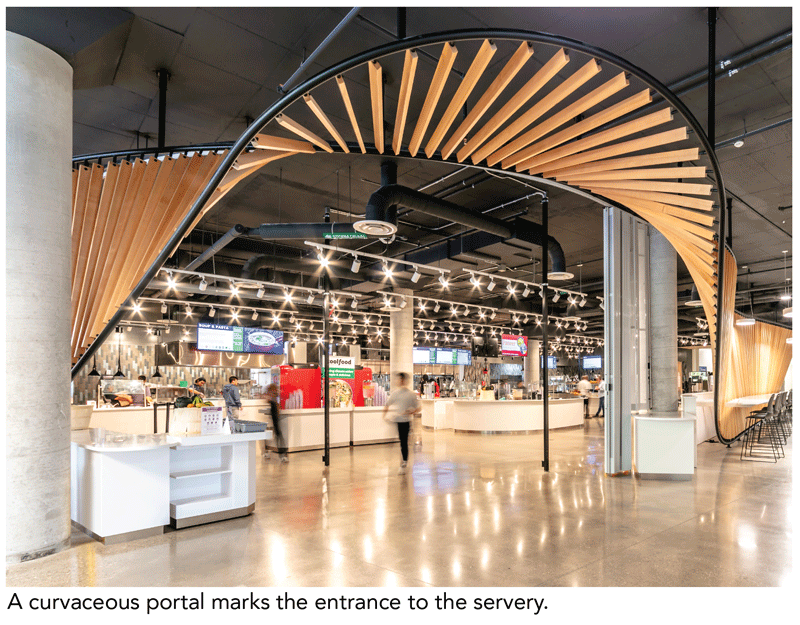
Beyond the residential areas, the building design and program support community-building at different scales. At the ground level, public spaces benefiting the entire student body, including the dining hall, servery, peer resources, and flexible event spaces, are all clustered around an activated circulation corridor.

Project Credits

  • Owner/Developer University of Toronto Scarborough, Fengate Asset Management
  • Design Architect  Handel Architects
  • Executive Architect  CORE Architects Inc.
  • Architect of Record  Arcadis IBI Group
  • Interior Design (student rooms/common areas)  Handel Architects
  • interior Design (office areas)  Core Architects
  • Interior Design (dining and event spaces) PARTISANS
  • Structural Engineer  Jablonsky, Ast and Partners
  • Mechanical & Electrical Engineer  Arcadis NV
  • MEP & ENERGY MODELLING  Integral Group
  • Passive House Design  Steven Winter Associates
  • Building Enclosure & Energy Consultant  RDH Building Science
  • LANDSCAPE DESIGN  The Planning Partnership
  • General Contractor  Pomerleau
  • Photos  1, 6 and 7: Ryan Fung; Photo 2: Fengate Asset Management; Photo 3: Keith Gabriel; Photo 4: Tom Arban; Photo 5: Handel Architects

Jonathan Kinsley is with HANDEL  ARCHiTECTS.

SUBSCRIBE TO THE DIGITAL OR PRINT ISSUE OF SABMAGAZINE FOR THE FULL VERSION OF THIS ARTICLE.

Timbre and Harmony Non-market Housing

A reimagining of Vancouver’s apartment heritage aims for resilient future

By Adam James

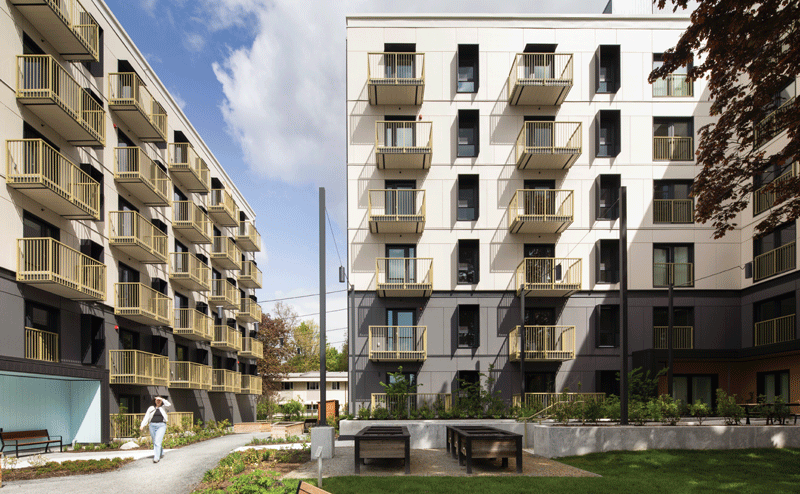
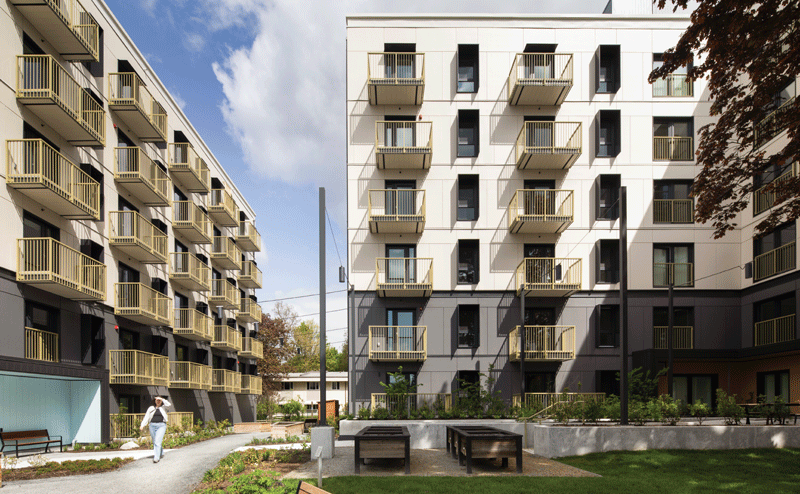
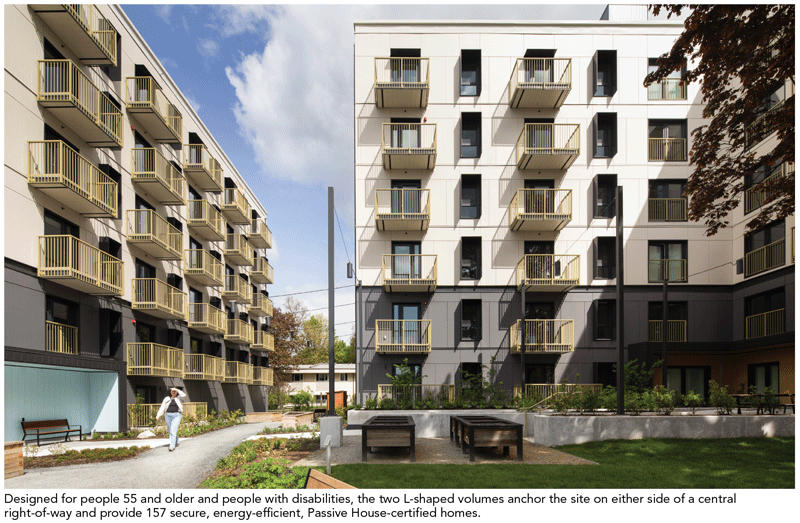
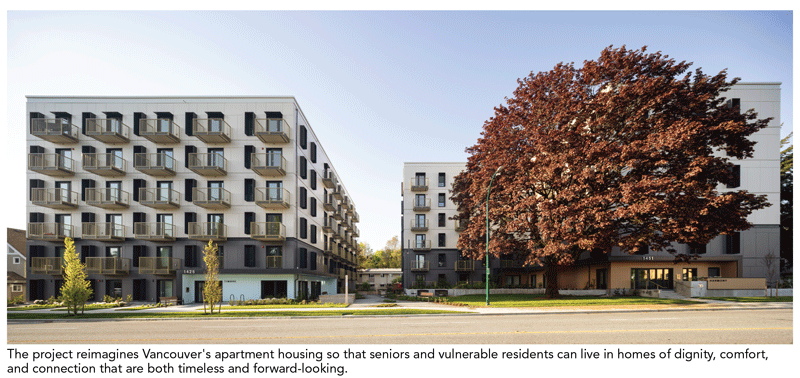
Completed in 2025, Timbre and Harmony is a landmark non-market housing development in the Grandview Woodlands neighbourhood on Vancouver’s east side. Designed for people 55 and older and people with disabilities, the project delivers 157 secure, energy-efficient, Passive House-certified homes.

The project received funding through the Federal government’s National Housing Coinvestment Fund and through the Green Municipal Fund’s Sustainable Affordable Housing initiative delivered by the Federation of Canadian Municipalities.

A streamlined design project management approach helped secure rezoning, development, and building permit approvals in just over two years. An energy study submitted during rezoning also eliminated the need for a sixth-floor setback, improving energy performance while allowing for additional residential units.

The architectural language draws inspiration from the city’s mid-century optimism, reinterpreting it as a climate-resilient, socially purposeful building. The project is both an homage and an evolution, with the buildings rooted in Vancouver’s apartment tradition but projecting a new vision of affordability, beauty, and sustainability.
The design features carefully proportioned façades, abundant natural light, and a shared commons at the heart of community life. The project nearly triples the site’s capacity while honouring Vancouver’s modernist legacy of modest, community-oriented walk-up apartments. Twenty percent of the units are fully accessible, while the remainder are readily adaptable, enabling residents to age in place.

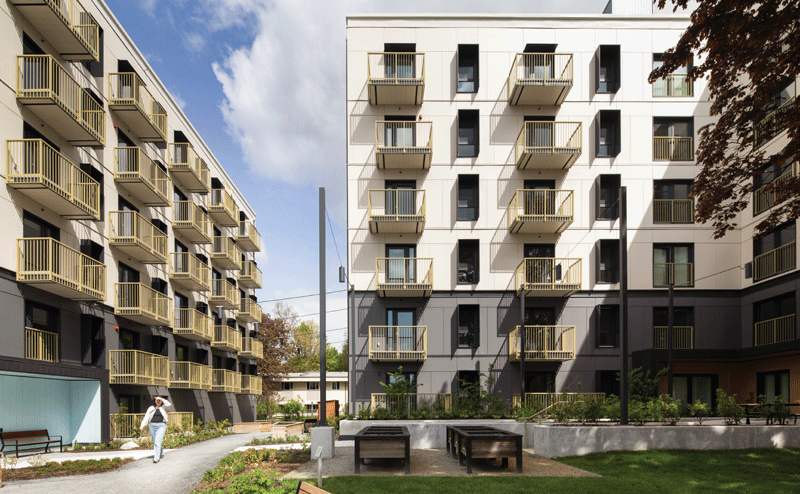
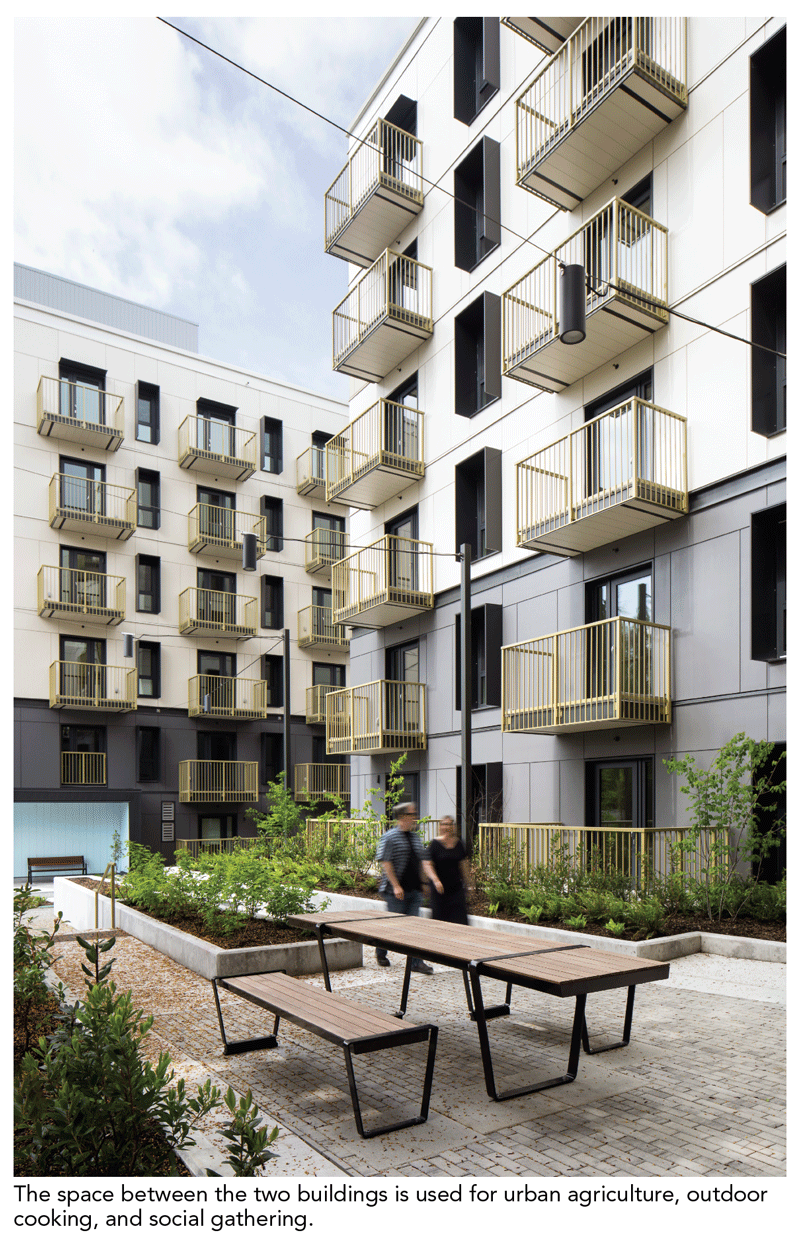
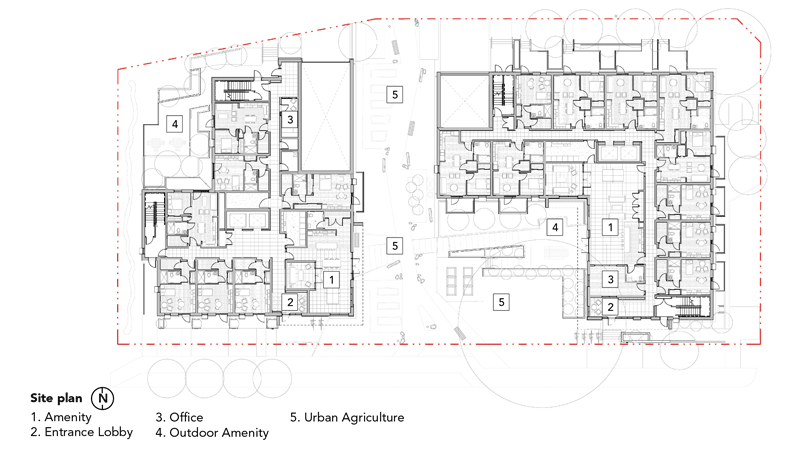
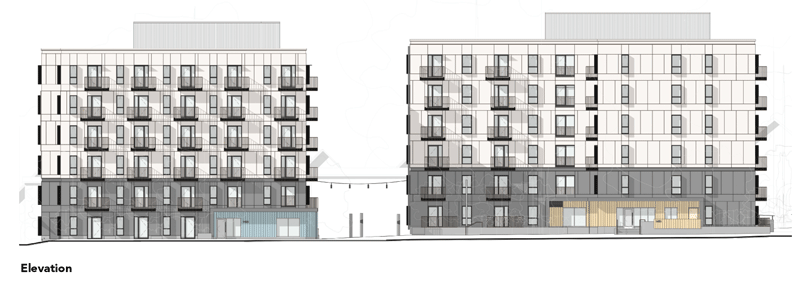
Two cleanly proportioned, six-storey, L-shaped volumes anchor the site on either side of a central right-of-way.  Between the two buildings, a landscaped commons evokes the breezy lobbies and garden courts of Vancouver’s postwar apartments, reinterpreted for today with spaces for urban agriculture, outdoor cooking, and social gathering beneath preserved mature trees. Residents gather, garden, and connect in a safe and welcoming community they call home.

Subtly layered façades are animated by colourful balconies that echo the mosaic tiles, painted trims, and expressive details of earlier apartment buildings. At the same time, the overall form is rigorously optimized for energy performance, daylight, and community life.

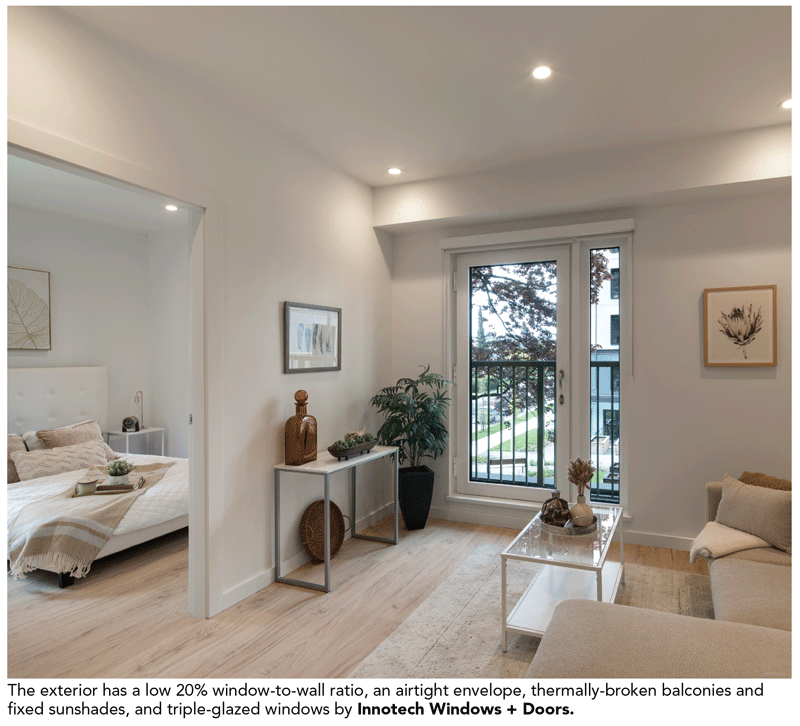
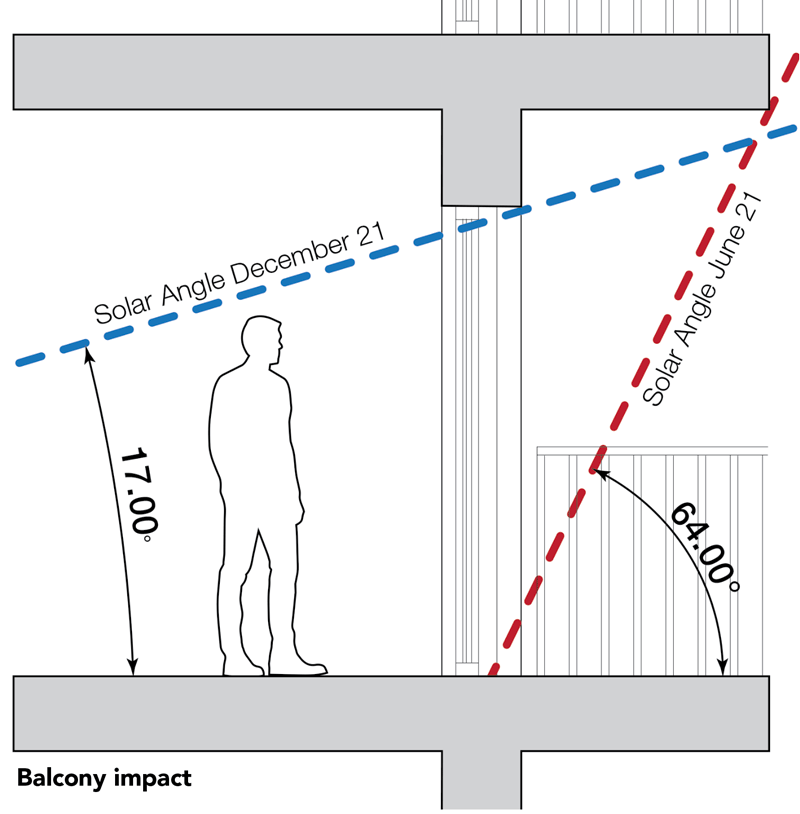
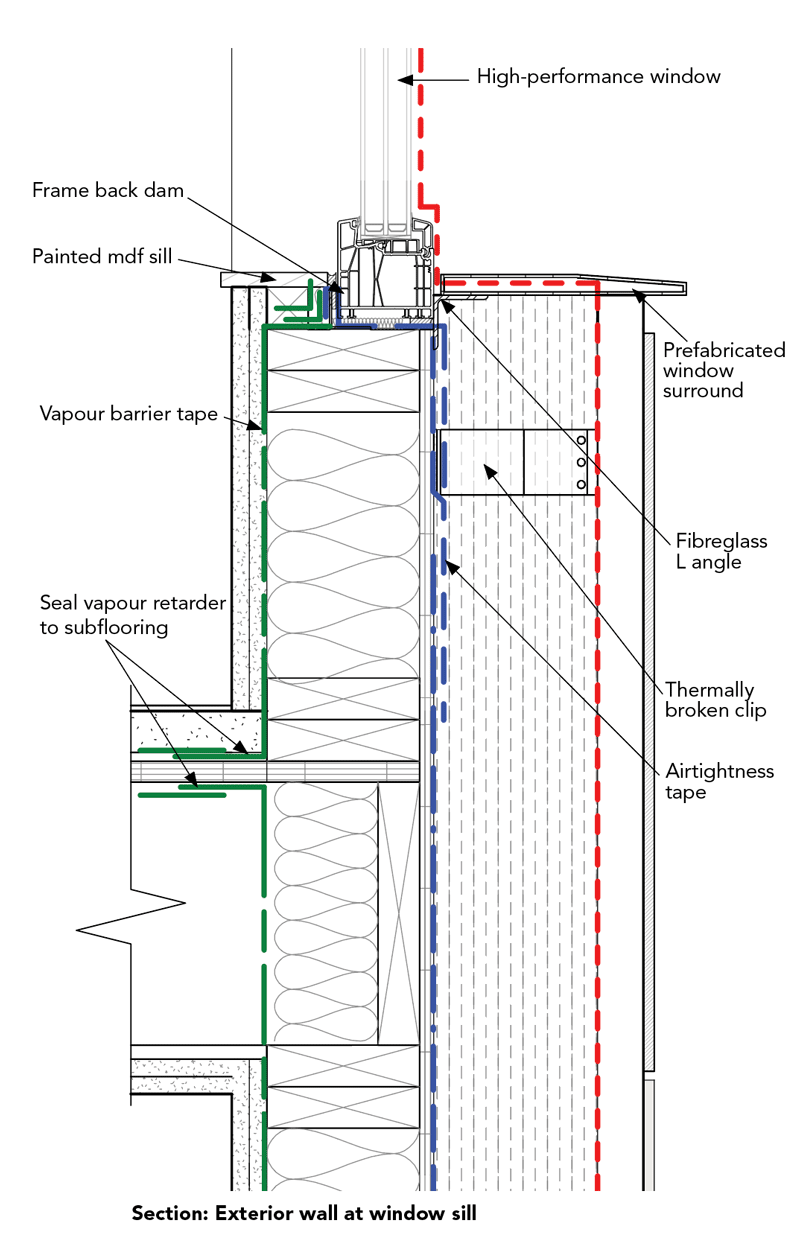
Features include a low 20% window-to-wall ratio tuned for daylight and thermal balance, an airtight envelope with thermally-broken balconies and fixed sunshades that act as passive cooling devices, triple-glazed windows by Innotech Windows + Doors, ductless heat recovery ventilation, and rooftop domestic heat-pump hot water. Together, these all-electric strategies demonstrate how to deliver affordable, climate-resilient housing at market-standard cost and on a compressed schedule.

Project Credits

  • Owner  Brightside Community Homes Foundation
  • Architect  Ryder Architecture
  • Contractor  ETRO Construction
  • Building Envelope Consultant RJC Engineers
  • Mechanical Consultant  Smith + Anderson
  • Mechanical Contractor  True Mechanical
  • Electrical  Integral Group (now Introba)
  • Structural  Entuitive
  • Landscape  PWL Partnership Landscape
  • Acoustics  BAP Acoustics
  • Civil Creus Engineering
  • Transportation  Bunt
  • Elevators ESI Elevators
  • Code Jensen Hughes
  • Passive House Consultant  Ryder Architecture
  • Development Manager  Colliers International
  • Photos  Adrien Williams Photography

Adam James is a principal at Ryder Architecture.

SUBSCRIBE TO THE DIGITAL OR PRINT ISSUE OF SABMAGAZINE FOR THE FULL VERSION OF THIS ARTICLE.

La Pêche Town Hall


Integrated design approach makes a beacon of sustainability

By Dominique Laroche

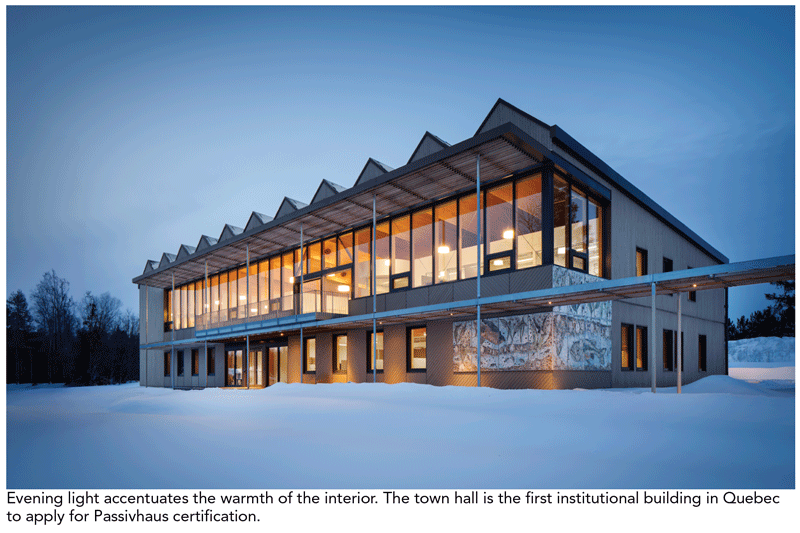
La Pêche new town hall is a two-storey, highly energy-efficient building with a very low embodied and operational carbon footprint. It is also the first institutional building in Quebec to apply for Passivhaus certification. Located at the gateway to this municipality of 8,600 inhabitants, it fronts onto provincial highway 366, just across from chemin du Lac Philippe, one of the main access points to Gatineau Park north of Ottawa.

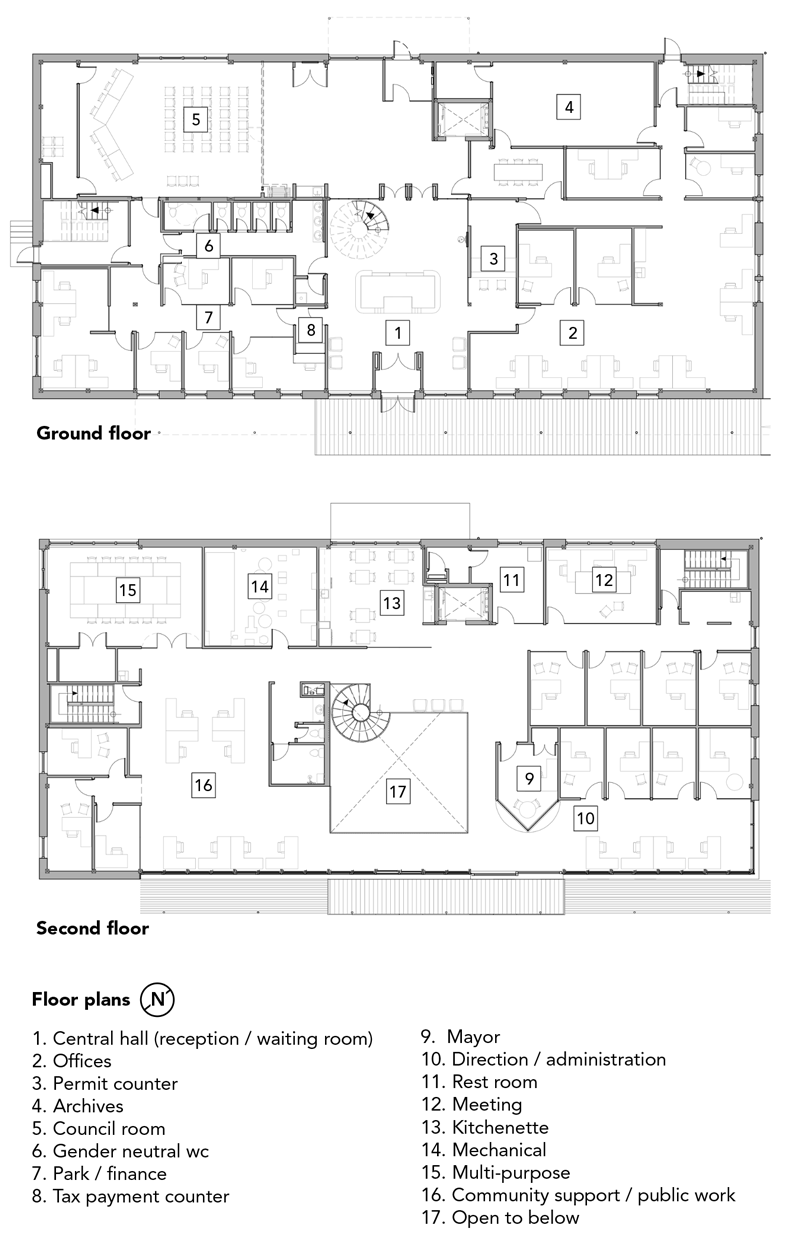
The project accommodates a traditional town hall program; including a lobby and reception area, tax payment counter, permit consultation counter, council chamber, multi-purpose room, meeting rooms, kitchenette and lunch area, rest area, as well as a combination of closed and open-plan offices. The building has a floor area of 1,417m2.

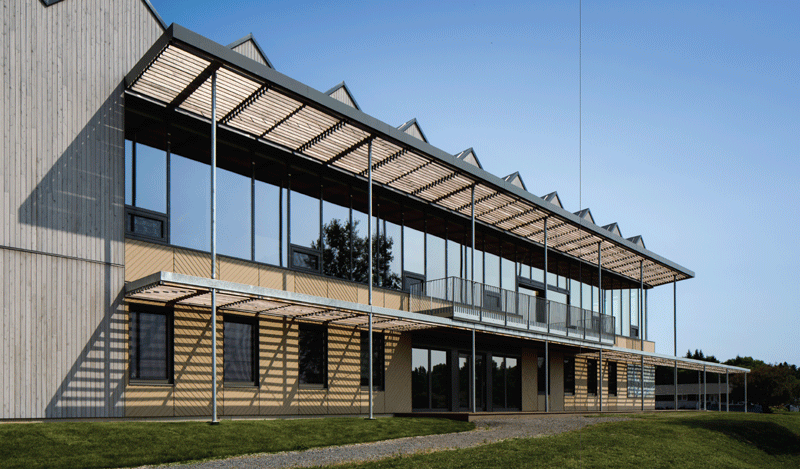
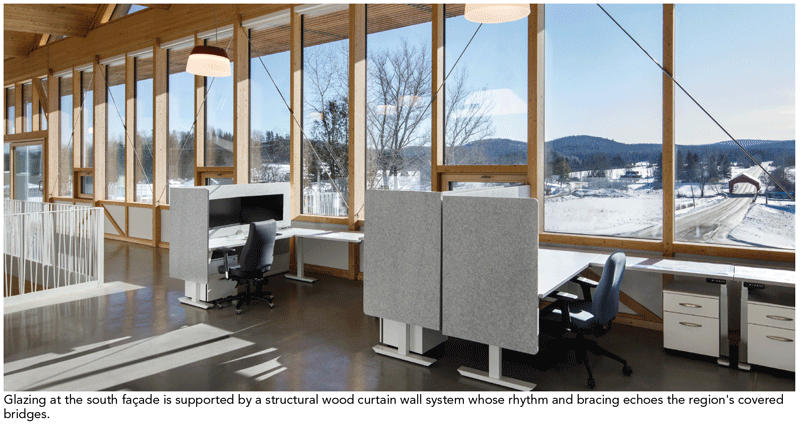
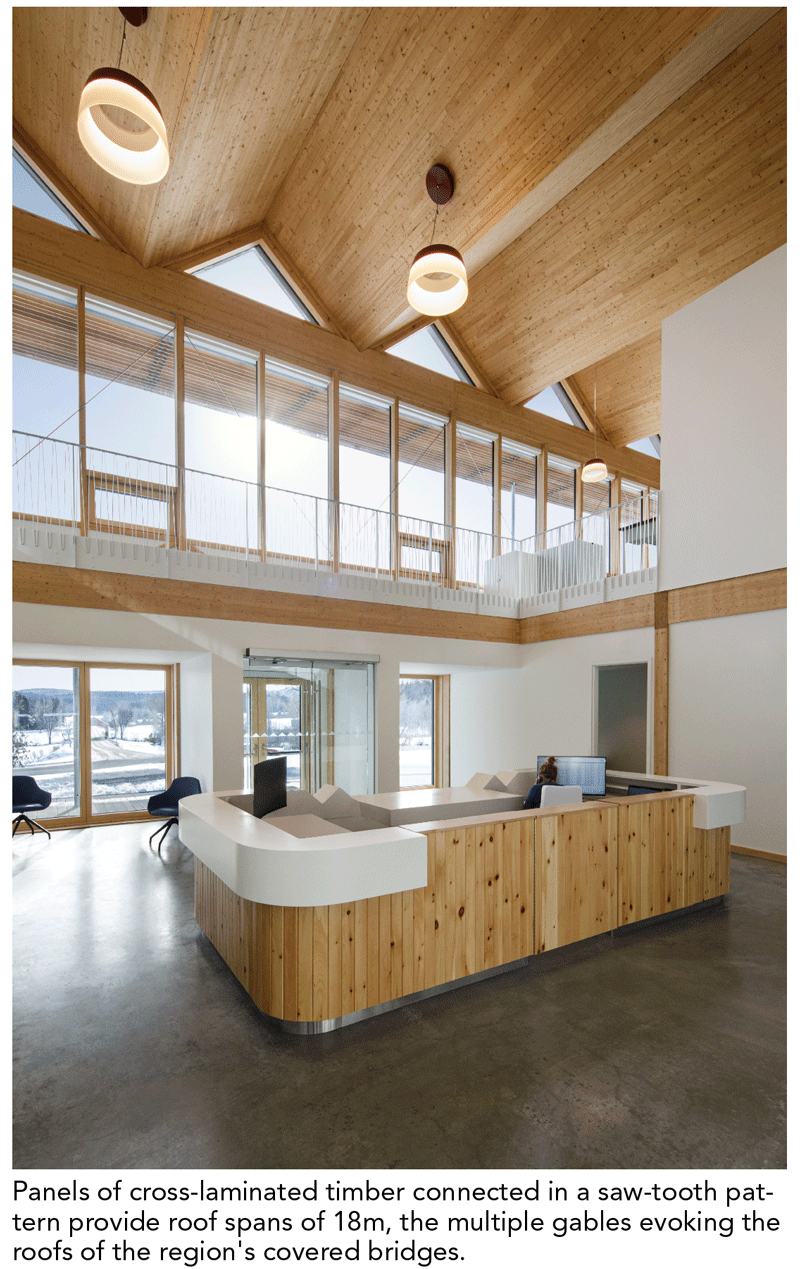
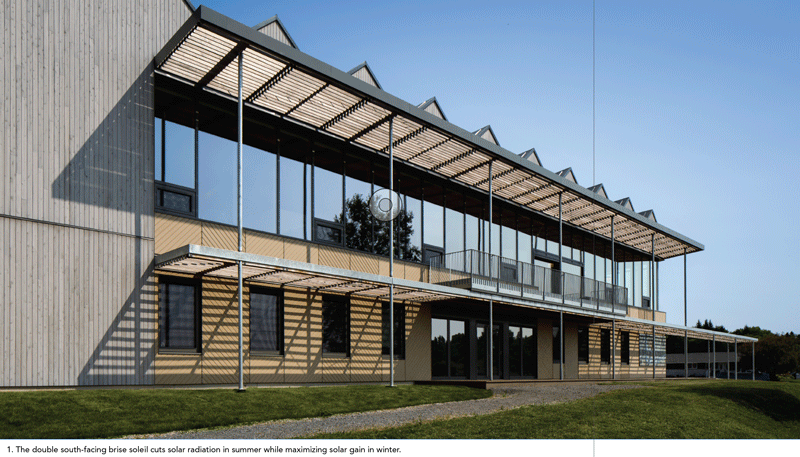
The large south-facing facade, designed according to passive solar principles, offers a panoramic view of the Gatineau Park hills. The large areas of glazing are supported by a structural wood curtain wall system whose rhythm and bracing elements echo the traditional structures of the region’s covered bridges. In the evening, the warmth of the CLT roof and the details of the all-wood curtain wall are enhanced by a combination of direct and indirect lighting. 

The design approach for the town hall was based on three key strategies:

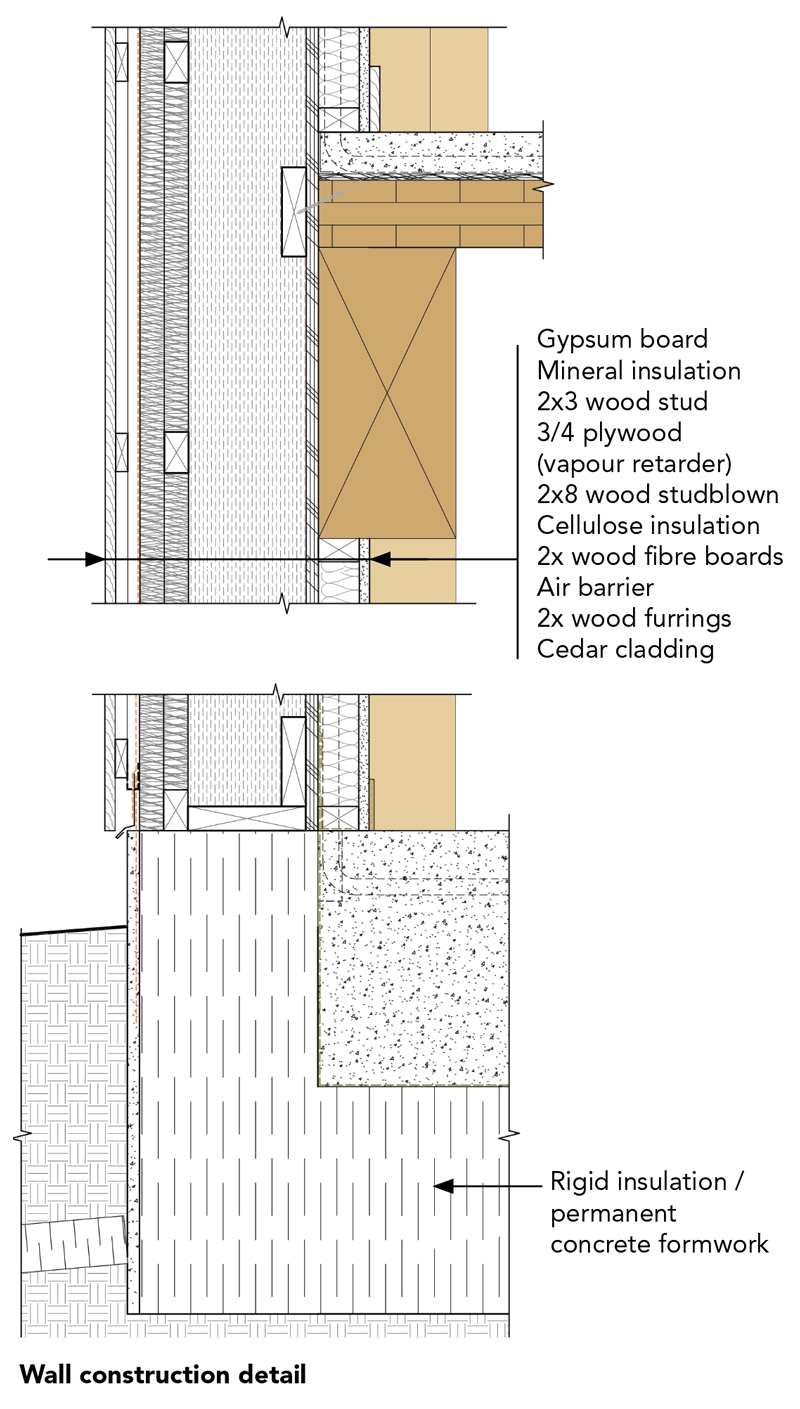
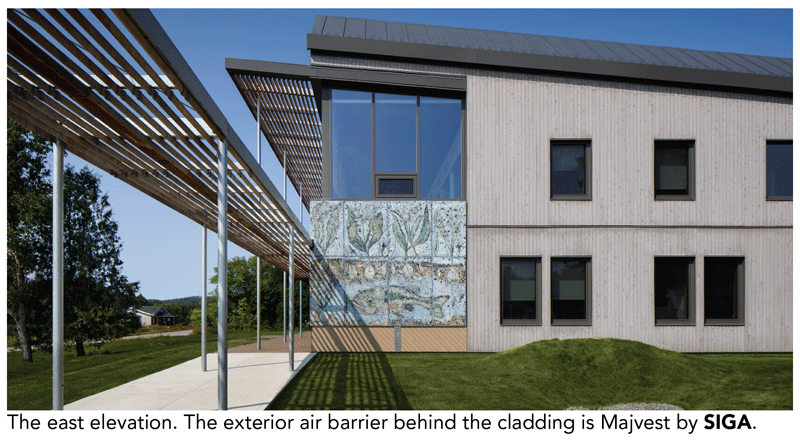
1. It is made almost entirely of wood, a local resource that has historically strengthened the region’s economy. The structure features glulam beams and columns, and cross-laminated timber (CLT) floors and roofs. All interior partitions and exterior wall assemblies are of light timber frame construction. Wall insulation is a combination of blown-in cellulose and wood-fibre panels.

Exterior siding is eastern cedar installed on wood furring. Windows and doors are wood with aluminum cladding. Add in all the interior wood finishes and the building is thus a major carbon sink.

2. It is designed to the international Passivhaus energy-efficiency standard, which saves around 65% of heating and cooling energy compared to NECB 2020. It is the first institutional building in Quebec to apply for Passivhaus certification.  Achieving the standard depends on a number of factors, the main ones being the building’s simple form and advantageous envelope to floor area ratio, superior wall and roof insulation, precise positioning of windows according to orientation, exceptional air tightness – validated by mandatory blower door tests – and key architectural components certified by the German Passivhaus Institute.

In Quebec’s climate, the Passivhaus approach calls for careful regulation of solar radiation inside the building. At the La Pêche town hall, a double south-facing brise soleil was precisely designed to cut solar radiation in summer and to reduce air-conditioning needs drastically while maximizing solar gain in winter. In fact, the building’s main source of heating during the coldest months is direct solar radiation.

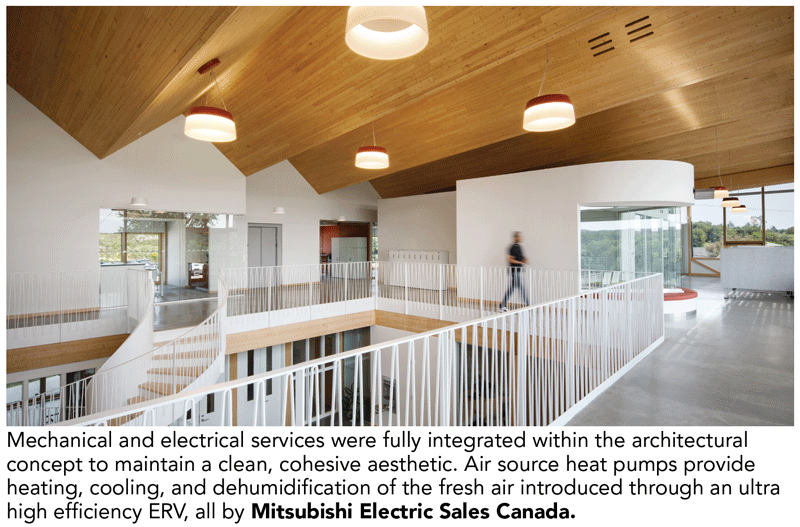
The exterior air barrier behind the cladding is Majvest by SIGA. Air‑source heat pumps provide heating, cooling, and dehumidification of the fresh air introduced through an ultra‑high‑efficiency ERV, all by Mitsubishi Electric Sales Canada

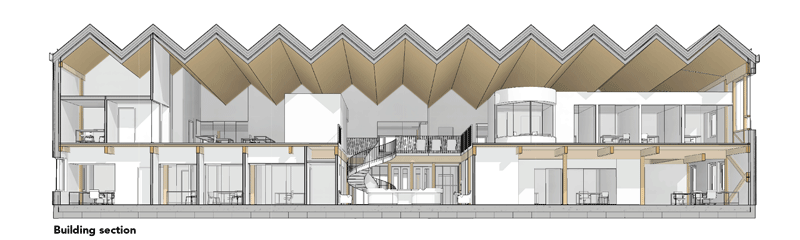
3. The structural design of the roof spans 18m without beams, joists or intermediate supports. Panels of 175mm-thick 5-ply cross-laminated timber (CLT) are connected to each other in a saw-tooth pattern. They create multiple gables that evoke the roofs of the region’s covered bridges, notably the one located directly opposite City Hall on Chemin du Lac-Philippe, one of the main entrances to Gatineau Park. From a technical point of view, the CLT slabs – inclined towards each other at a 40-degree angle – work bidirectionally, taking advantage of CLT’s structural capacity in both directions, analogous to a deep caisson.

Project credits

  • Architect  BGLA architecture + design urbain
  • Structural engineer  Latéral
  • Mechanical / electrical engineer Pageau Morel 
  • Construction Ed Brunet
  • Photos  Stéphane Brügger

Dominique Laroche is senior principal associate at BGLA architecture + design urbain.

SUBSCRIBE TO THE DIGITAL OR PRINT ISSUE OF SABMAGAZINE FOR THE FULL VERSION OF THIS ARTICLE.


Product Profile: NexEco™: Bringing Circular Innovation to EPS for Construction

See the full profile

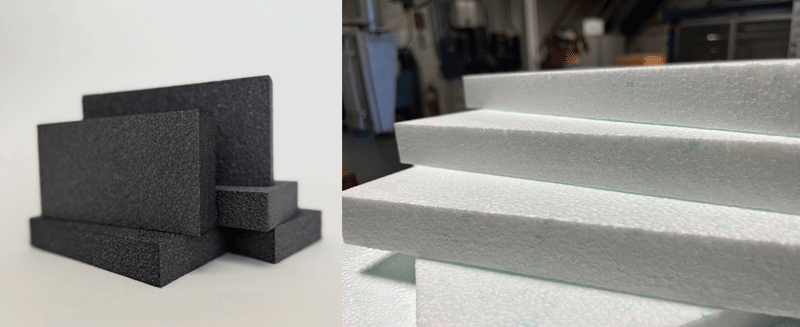
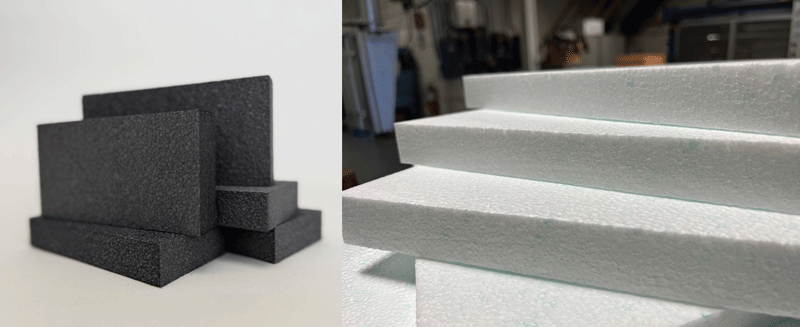
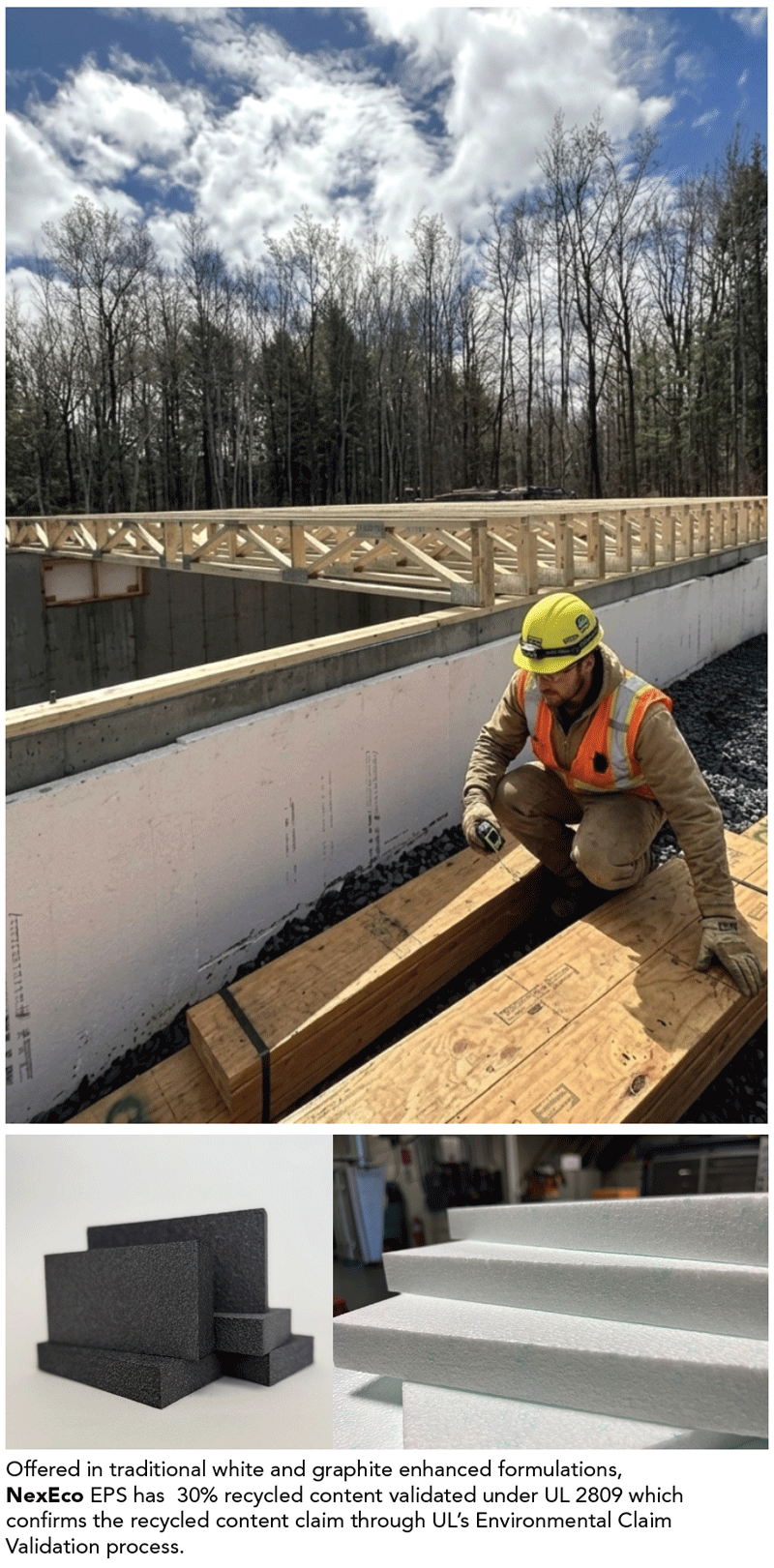
As sustainability becomes a bigger part of building design, architects and specifiers are looking for materials that balance performance with credible environmental benefits. At NexKemia, that shift helped drive the development of NexEco™, our recycled content EPS solution.

NexKemia is a North American manufacturer of expandable polystyrene resin serving the construction and packaging industries. Based in Québec, the company is known for its technical expertise, product consistency, and commitment to innovation. Through NexEco, NexKemia is helping move EPS in construction toward a more circular model.

A key milestone for NexEco is that it became the first EPS resin certified by UL for building applications. For architects, designers, and specifiers, this marks an important step forward. It demonstrates that EPS with recycled content can meet the expectations of the building market while offering project teams a new option to consider.

NexEco’s 30% recycled content is also validated under UL 2809, which confirms the recycled content claim through UL’s Environmental Claim Validation process. That added transparency is important as design professionals are asked to look more closely at the environmental value and credibility of the materials they specify.

SUBSCRIBE TO THE DIGITAL OR PRINT ISSUE OF SABMAGAZINE FOR THE FULL VERSION OF THIS ARTICLE.

interview with

Stephan Moyon, President, VELUX North America on resilient design and circularity

Q1: How do VELUX products contribute to resilient construction and improved indoor environmental quality (IEQ)?

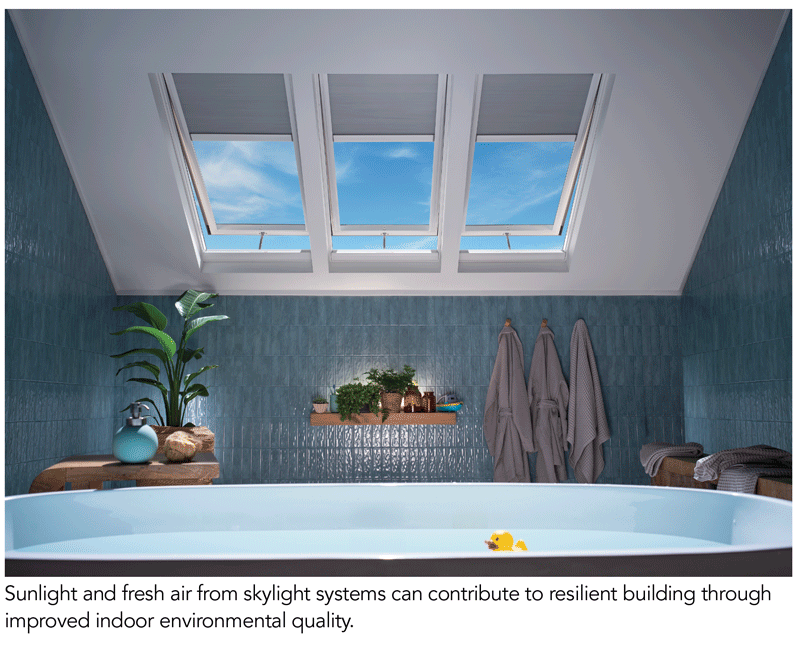
VELUX offers innovative skylight systems that promote healthy ventilation and leverage the natural beauty of daylight to transform interior spaces. We are passionate about making products that perform better and help people to perform better.  Sunlight and fresh air have dramatic effects on IEQ and occupant health, from improved mood to increased productivity.  At the same time, people spend about 90% of their time indoors in the northern hemisphere. These insights inspire our team to deliver solutions that bring the health benefits of fresh air and daylight into our clients’ homes, schools, and offices.

Q2: Where do you think the greatest opportunities lie in advancing resilient design and construction as a norm for the building industry?

We see a big opportunity to take advantage of what we already have. Roughly 80% of North American buildings that will be standing in 2050 have already been built. The opportunities, therefore, lie in how we can transform these spaces, adapt them to our current needs, and upgrade their performance to meet our modern energy goals. Virgin materials are diminishing in supply due to overuse, and the built environment accounts for about a third of the world’s waste. Therefore, there is a great need for our industry to take advantage of the materials which already exist, through practices like urban mining and retrofitting. By focusing strategically on circularity, we can put less strain on our diminishing natural resources. 

Q3: How can circular design make cities more resilient, affordable, and livable while also lowering carbon emissions?

Circular design allows us to transform spaces and buildings to keep up with our modern needs and uses, without imposing the high environmental and economic costs of new builds. Updating these spaces to our modern standards is not just desirable, but necessary. Data, such as the statistics pulled from the VELUX Group’s Healthy Building Barometer, shows that the values of resiliency, affordability, and livability are intertwined. For example, by improving the resilience of the built environment, less energy is required to maintain and operate these spaces. There are also clear benefits to sourcing recycled materials for lower carbon emissions as well as resource independence. We inherently become more flexible during periods of international instability by drawing from the resources and materials that are available to us now.

Q4: How does VELUX incorporate circularity into its business model?

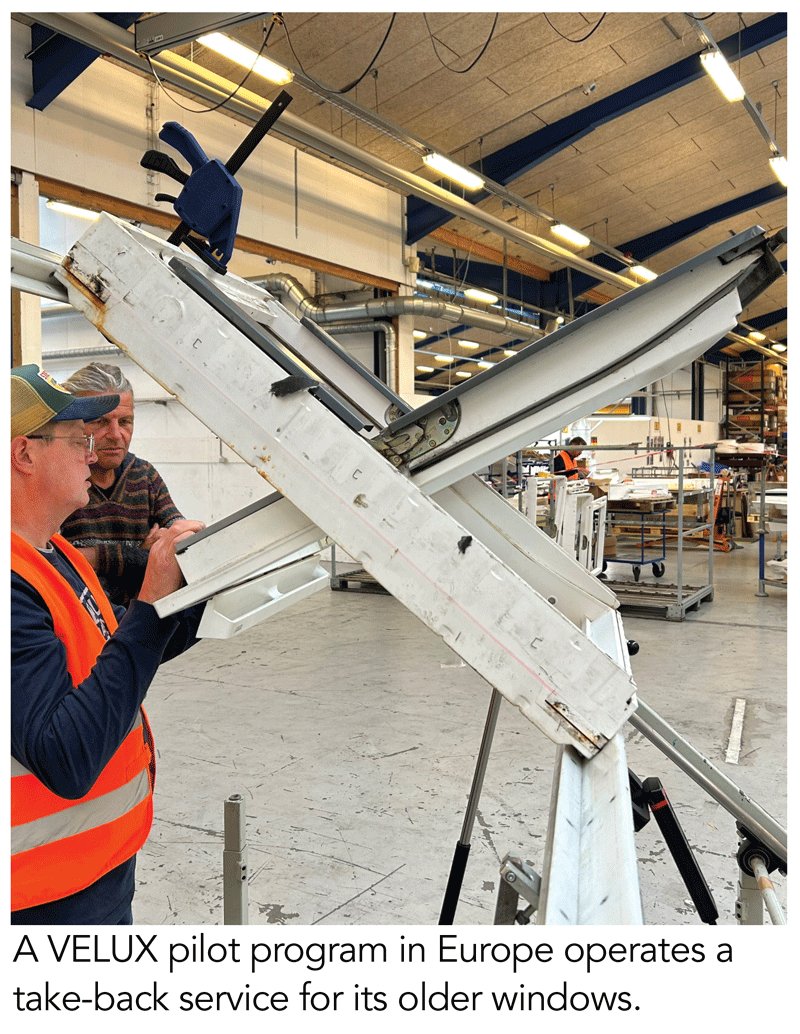
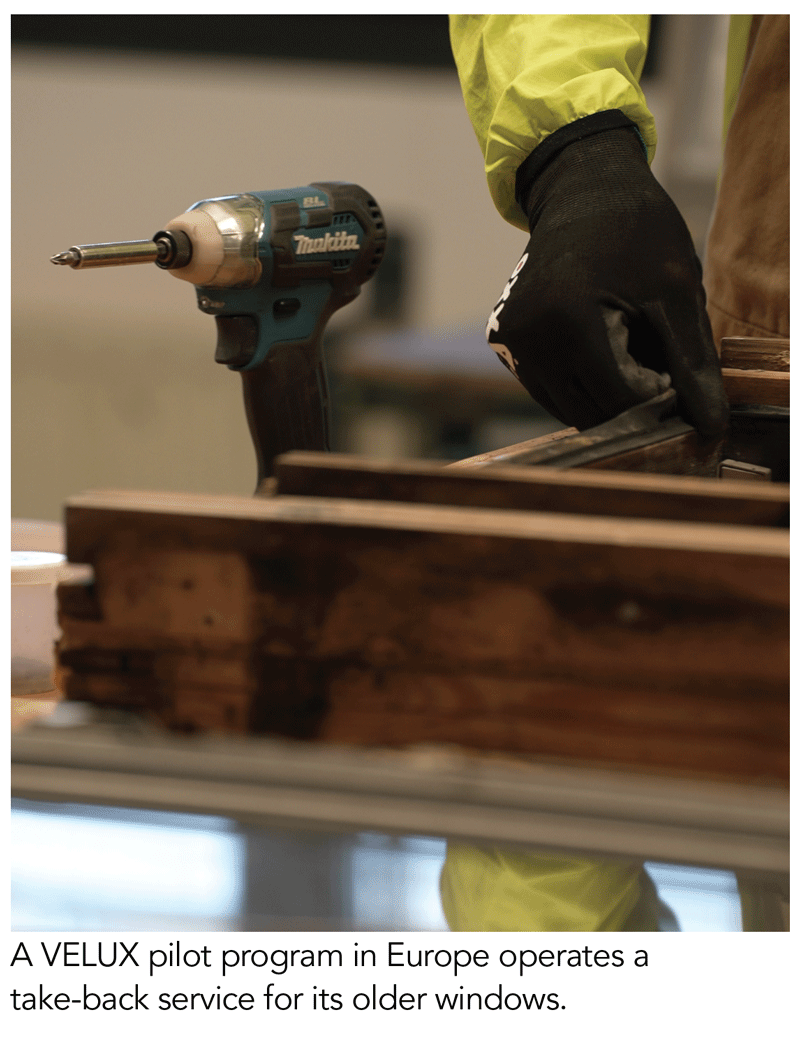
We aim to integrate circularity throughout our value chain. We start by working to source materials with higher recycled content and embedding circularity principles into the product design process. At the same time, we are reducing waste in our own operations and beginning to transition our packaging in North America to recyclable, paper-based solutions. We’re expanding these efforts with some great pilot programs in Europe, such as a take-back service for older windows. We also conduct demonstration projects that highlight our circularity approach. For example, we recently renovated one of the buildings at our production facility in Denmark to convert it into what we call the LKR Innovation House. Our team was able to reuse more than 50% of the original materials associated with the building. For our team, circularity isn’t just a mantra, it’s the foundation of all our business and product decisions.

Q5: What do you think the building industry needs to do to advance its circularity goals?

I think the building industry is a sector with many challenges and even more opportunities. There are barriers to our progress, though, in our culture and mindset. The tendency has been to ask, “what’s the next project?” or “where can we develop next?” But have we stopped to assess what we already have and how we can repurpose it to serve our evolving needs? Or when we build new—how can we do so with decreased impact. Considering not just the immediate future, but also longer-term, including changes in weather, usage of space, and other factors? Industry leaders have the opportunity to benefit from the value of what we already have by recycling materials and retrofitting spaces to align with the new reality and selecting products where circularity is taken into account. We have the technologies and the knowledge at our disposal—now it’s time to put them into action.

(S) EFFICIENT HOUSE

Compact design a rethink on housing and retirement

By Maegan Murrins and Rayleen Hill

Sitting on a small lot of a tight urban street on the outskirts of downtown Halifax, the (s)efficient house overlooks a south-facing garden while keeping the east views of the industrial lands to a minimum.

The retired homeowners wanted to downsize in retirement. With 960 sq. ft. of living space on one level, the house has minimal upkeep and future accessibility potential. An additional 300 sq ft of garage space allows for the storage of cars and other items. The living space has the opposite “gull wing” roof shape allowing the main living spaces to have high, vaulted ceilings which make the compact interior feel voluminous.

The house is efficient, but the (S) in the name of the house stands for sufficient. It is not a large house, and the clients wanted a house that was just enough, no extras. It is about having not only less to heat and cool, but less to maintain. We think it is a great precedent because our culture always sells the idea of the “dream home” which tends to have lots of extras and be very expensive. It was a delight to have a client looking for elevated living that was not about excess.

The foyer area between the separate garage and living space creates the entry point to the house. The small footprint was purposely designed with a “divider” closet/dining servery creating a threshold between the front entry hall and the mudroom before meandering and opening into the main public areas of the house.

An important factor for wellness is occupant comfort related to natural daylighting and a comfortable room temperature. The large, south-facing feature window ensures adequate solar gain and natural light in winter. The home’s heat pump is set at 18c and stays at 19c to 23c depending on where it’s measured and the time of day. With windows in every room, oftentimes with dual aspects, the house requires little lighting, except at night.

Water strategies needed only simple measures involving water-conserving fixtures, thus saving the budget for more pressing issues of envelope design and the photovoltaic array. The water use in the first nine months of operating has been 14 CM for three months, or roughly 140l/day.

MAEGAN MURRINS AND RAYLEEN HILL ARE WITH RHAD ARCHITECTS.

PROJECT CREDITS

  • ARCHITECT  RHAD Architects
  • STRUCTURAL ENGINEER  SANI Engineering
  • MECHANICAL ENGINEER  Tate Engineering
  • CONSTRUCTION  Kildare Construction
  • PHOTOS  Julian Parkinson, jp@formatfilms.ca

SUBSCRIBE TO THE DIGITAL OR PRINT ISSUE OF SABMAGAZINE FOR THE FULL VERSION OF THIS ARTICLE.

FANSHAWE COLLEGE INNOVATION VILLAGE – London ON

Institutional (Large) Award

Jury Comment

Creating a central focus for the campus with a project that combines retention and new building was a strategic decision to support both environmental and social sustainability. The daylight and energy challenges posed by intensification were elegantly met with a day-lit atrium, clerestory windows and an innovative BIPV cladding system using active and passive solar panels.
Innovation village includes the substantial renovation of existing facilities, minimizing new construction, demolition, and the carbon impact of the project as a whole. Additional floors of shell space increase  density and the use of shared resources at the campus core. This contrasts with previous campus development, which spread horizontally across undeveloped land.

Student and Indigenous engagement informed the building’s design, visually and spatially, establishing a dynamic learning environment that supports diverse programming.

Glulam canopies at the main east entrance and south courtyard are warm and welcoming. Their seven columns reference the seven Indigenous teachings and the seven job skills of the future outlined by the College.

A new Library Learning Commons reflects Fanshawe’s commitment to inclusivity, and support for its more than 400 Indigenous students. It is home to the Kalihwíy̲o̲ Circle (Oneida for ‘good message’) – the Indigenous Spirit Assembly. Its circular form creates a feeling of safety and trust, encouraging the sharing of culture.

The 11,800m2 Innovation Village project brings together previously disconnected interior spaces and courtyards to create a new heart for Fanshawe College. The design reflects Fanshawe’s focus on experiential learning.

Catering to the various ways people learn and collaborate, Innovation Village offers a variety of adaptable spaces that range from silent study zones to open work/study areas, homework labs to multi-use event and presentation spaces. It is a place where all students have access to innovative technology, including maker spaces, an augmented reality and virtual reality lab, multimedia labs, and Leap Junction – a centre for all things entrepreneurship – teaching both students and alumni  the soft skills required to succeed in the changing workforce.

Built by D. Grant Construction Limited, the Innovation Village project brings together previously disconnected interior spaces and courtyards with the entrance designated by glulam canopies. Tempeff dual core high efficiency enthalpy recovery units contribute to the energy efficiency of the building.

PROJECT CREDITS

  • Owner/Developer Fanshawe College
  • Architect  Diamond Schmitt in joint venture with Philip Agar Architect Inc.
  • General Contractor  D. Grant Construction Limited
  • Landscape Architect  Ron Koudys Landscape Architects
  • Civil Engineer  Development Engineering (London) Limited
  • Electrical/Mechanical engineer  Smith + Andersen
  • Structural Engineer  VanBoxmeer & Stranges
  • Commissioning Agent  WSP Canada Inc.
  • Photos  Tom Arban Photography

SUBSCRIBE TO THE DIGITAL OR PRINT ISSUE OF SABMAGAZINE FOR THE FULL VERSION OF THIS ARTICLE.

FOREST EXPLORERS OUTDOOR EARLY LEARNING CENTRE – Ottawa ON

Institutional (Small) Award

Jury Comment

A beautifully detailed example of a sustainable building that is treating its site carefully and lightly, providing an opportunity for future generations to learn through direct experience of nature. The milling of wood harvested from the site to create exterior siding offers children a visual and tactile message about sustainability.
This project redefines early childhood education by immersing 73 children, from infants to preschoolers, in a nature-filled environment. Located within Ottawa’s Greenbelt, this full-time daycare centre offers a year-round outdoor learning experience where children spend at least half their time exploring nature, rain or shine. The design embraces the principle of “learning through play,” fostering sensory awareness, resilience, and life skills through hands-on activities in a forested setting.
The Centre doubles as a research hub for Outdoor Play Canada, advocating for equitable access to unstructured outdoor learning. The facility, inspired by a “cabin in the wood”, integrates seamlessly with its environment.

Sustainability was a key consideration in the design, with a super-insulated, airtight envelope, high-performance triple-glazed windows, and bird-friendly glass. Regionally sourced, non-toxic materials were also used throughout.

This environmentally conscious approach makes the Centre a model of low-impact design while creating a lasting educational facility that instills a lifelong love for nature in young learners.

Careful site planning maintains the existing topography and vegetation. The existing trees that were cleared for construction were locally kiln-dried and milled for use as building siding and custom furniture, while some logs were retained on-site to serve as seating and wildlife habitat.

Mitsubishi Electric Sales Canada supplied the AC units.

PROJECT CREDITS

  • Architect  CSV Architects
  • Owner/Developer  Andrew Fleck Children’s Services
  • General Contractor  Thomas Fuller Construction Co. Limited
  • Landscape Architect  Lashley + Associates Corporation
  • Civil Engineering  Novatech
  • Electrical/mechanical Engineer  Goodkey Weedmark + Associates
  • Structural engineer  WSP Canada
  • Photos  Kevin Belanger

SUBSCRIBE TO THE DIGITAL OR PRINT ISSUE OF SABMAGAZINE FOR THE FULL VERSION OF THIS ARTICLE.