Dedicated to sustainable,
high performance building

The Ken Soble Tower

EnerPHit transformation lights the way to new retrofit model

By Graeme Stewart

The project is not only the first such retrofit in North America but, at 18 storeys and more than 7500 m2, it is one of the largest EnerPHit1 certified projects in the world. In the Canadian context, it is also arguably the most successful to date in meeting the goals of the Federal government’s National Housing Strategy Repair and Renewal Fund.

The modernization of the building has reinstated 146 units of affordable seniors’ housing, while reinvigorating community spaces and outdoor gathering areas, enabling aging-in-place throughout, and barrier-free living in 20% of suites.

Background

The Ken Soble tower was originally constructed in 1967 and by the start of this project had fallen into a state of disrepair and was uninhabitable. One of the considerations at the outset of this project was whether to demolish the existing structure and build new, or to complete a retrofit and restore the building to a serviceable condition, consistent with today’s standards of durability and performance.

Ultimately, the team decided to retrofit which extended the life of the existing building’s cast-in-place concrete frame and part of the existing masonry envelope. The environmental impact and embodied carbon of the original construction were not wasted, nor unnecessarily duplicated in a new building.  Through the Passive House level retrofit, the ongoing operational carbon emissions were drastically reduced and will support an extended service life.

Retrofit Strategies

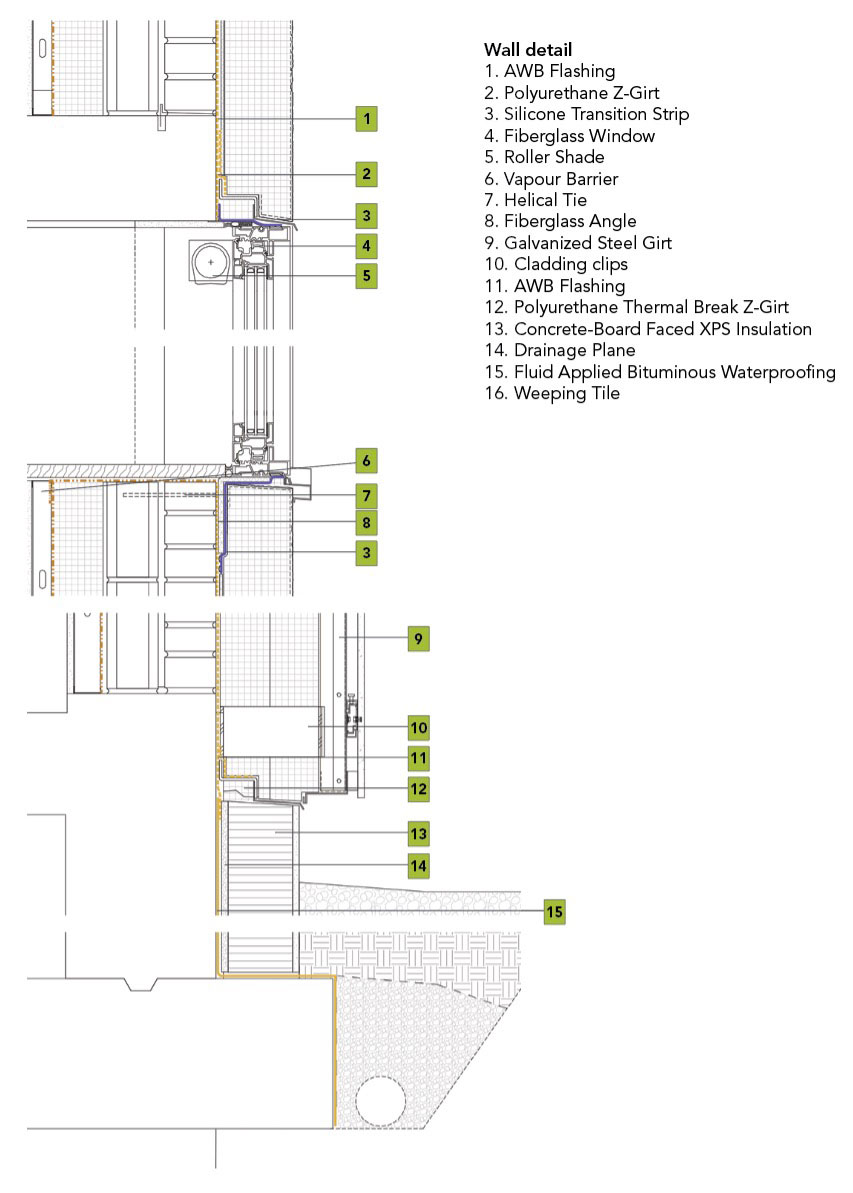
Operational carbon reductions are achieved using a high-performance envelope, with nearly twice the insulation value required by Code, drastically reducing heating and cooling demand. The envelope upgrades include R-38 effective over cladding, passive-house certified windows and air sealing details to achieve 0.6ACH @50Pa airtightness.

Project Credits

  • Owner/developer  City Housing Hamilton
  • Architect  ERA Architects
  • General Contractor  PCL Constructors
  • Landscape Architect  ERA Architects
  • Electrical Engineer  Nemetz & Associates
  • Mechanical engineer  Reinbold Engineering
  • Structural Engineer  Entuitive Corp
  • Commissioning Agent  CFMS West Consulting Inc
  • Passive House Consultant  JMV Consulting
  • Passive House Certifier  Herz & Lang Gmt
  • Building Envelope Consultant  Entuitive Corp
  • Photos  Doublespace Photography

The renovated tower offers a built example to improve dramatically the performance of the thousands of similar apartments across North America. The AlphaGuard™ liquid-applied roofing system by Tremco Roofing helps to maintain the integrity of the building envelope.

The finished façade with new Juliette balconies. EJOT® CROSSFIX® stainless steel thermal clip brackets in the facade system help to maintain thermal performance.

Graeme Stewart is a principal at ERA Architects.

SUBSCRIBE TO THE DIGITAL OR PRINT ISSUE OF SABMAGAZINE FOR THE FULL VERSION OF THIS ARTICLE.

Sponsored content: Building the future of nuclear through responsible waste disposal

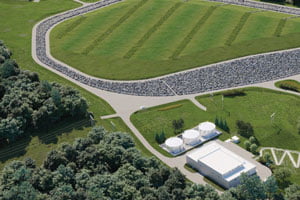
Plans have been laid for the construction of a highly engineered radioactive waste disposal facility in Chalk River, Ontario, Canada. The facility is being proposed as a permanent and modern technological solution to an environmental issue that goes back almost a century.

Today, Canadian Nuclear Laboratories (CNL) is seeking the support of the industry and its supply chain to move this project forward and advance the future of waste disposal in Canada.

Canada’s storied Chalk River Laboratories (pictured right) was established in 1944 on the Ottawa River, about 180 km (114 miles) from the City of Ottawa. An adjacent community, the Town of Deep River, was developed to support the site and remains home to generations of employees. The site is located on the traditional and unceded territory of the Algonquin Nation.

CNL is once again using leading-edge technology to put forward a long-term environmental solution. Taking guidance from domestic and international experience, CNL has proposed an engineered containment mound – the Near Surface Disposal Facility, or NSDF – as the solution for low-level radioactive waste at Chalk River Labs.

Read the case study.

Interview with Andrew Peel of Peel Passive House Consulting

Founder & Managing Principal of Peel Passive House Consulting, a Passive House Certifier, and a Certified Passive House Consultant & Trainer, Andrew Peel is one of the foremost experts on Passive House design and construction in Canada.

1. How has Passive House grown in Canada in the past five years

The growth has been exponential, especially in large affordable housing projects. The scale of projects (e.g. 40+ storey towers) was unimaginable five years ago and has eclipsed the scale of projects in Europe. Commercial Developers, including Private Equity firms, are committing to Passive House in response to changing market needs and drivers. It is thanks to the pioneers willing to take risks when others were not and the advocacy organizations that the Passive House Standard has experienced this growth. 

2. What are the main obstacles to further growth?

In my experience, these challenges are:

  • Eliminating the perceived risk (i.e. high additional cost) of building and certifying to the Passive House Standard.
  • Developing more locally made Passive House Heat/Energy Recovery Ventilation systems and cold climate-rated fenestration products.
  • Convincing appraisers to recognize the additional asset value that Passive House certification provides.

3. What are the essential first steps to getting a Passive House project off the ground?

The first step is to build the right team. This includes the Passive House Certifier, whose input at the early stages can help set the project on the right (i.e. cost effective) path.  The client must commit to Passive House Certification and all key project team members must be committed to this goal. Passive House experience is not crucial.  We’ve taken novice teams from start to finish to deliver Passive House buildings within budget. With the right attitude and proper training, anyone can succeed.

The second step is to optimize the high-level design consistent with Passive House principles. This seems like an obvious thing, yet it is overlooked on many projects. This often stems from not involving the Passive House Consultant from the beginning.

4. Is it realistic to apply Passive House construction to renovations?

Not only is it realistic, it is happening today. Two leading edge projects, the Raymond Desmarais Manor in Windsor, ON and the Ken Sobel Tower in Hamilton, ON are demonstrating that it can be done cost effectively on large towers. Both projects are committed to EnerPHit certification, the retrofit version of the Passive House Building standard.

5. Once a project has achieved Passive House certification is there anything the building owner must do to maintain the certification?

There is nothing required to maintain certification.  However, to ensure the predicted performance is achieved perpetually, the occupants should be educated on how best to interact with the building and systems and regular maintenance per manufacturers’ instructions should be completed.  Projects that fail to provide adequate occupant education have seen poorer building performance. 

SUBSCRIBE TO THE DIGITAL OR PRINT ISSUE OF SABMAGAZINE FOR THE FULL VERSION OF THIS ARTICLE.

BNP PARIBAS OFFICE INTERIOR – Montreal, QC

Interior Design Award

Provencher_Roy

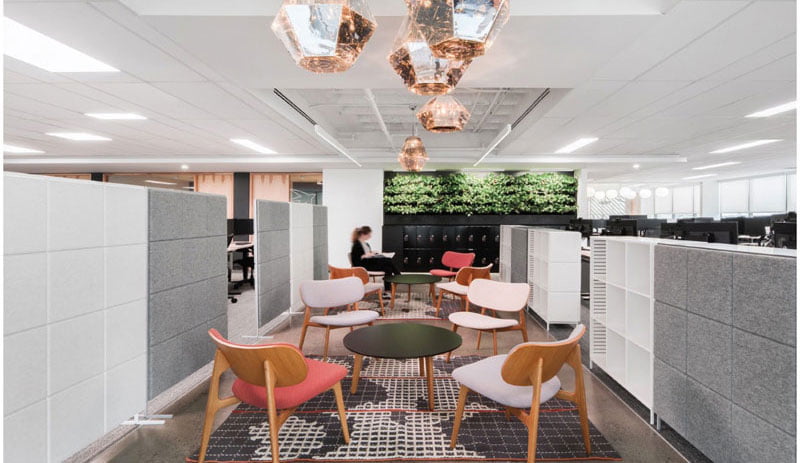
Jury Comment: At a time when the nature of work is in flux, the transformation of six floors of rigorously repetitious 1970s office space into a dynamic, flexible and inspiring workplace provides cause for optimism. The open, collaborative spaces and non-specific perimeter workstations flow through all levels, encouraging mobility and personal choice of working and relaxing environments throughout the day. Sit/stand desks, lighting programmed to support natural circadian rhythms, and 20 living walls contribute further to psychological and physiological wellbeing.

The first project in Canada to be certified under Version 2 of the WELL Building Standard, the new headquarters for BNP Paribas , the French international banking group, exemplifies current best practice in employee-centred office design. To alleviate overcrowding and bring its 140 staff under one roof, the company chose to relocate and refit 140,000 sq.ft. of space spread over six floors of an existing 1970s office building.

From the outset, the aim was to achieve WELL Building certification and to create a dynamic work environment that would promote social interaction and collaboration as well as the health and comfort of occupants. The challenge was to meet the client’s desire for a fluid, flexible, non-Cartesian layout of space within the physical constraints of the existing structure, which included working with the two feet by four feet ceiling grid.

This led to the development of a workplace where the main open spaces are divided into several zones alternating those intended for work, collaboration and rest. Work areas are not assigned; employees can settle wherever they want in the building, or even telecommute. The workstations are arranged at the perimeter, so employees benefit from maximum natural light.  Common spaces are located at the core of the building and include glazed meeting rooms, changing rooms, and sanitary facilities.

To energize the occupied spaces, the strategy was to create what the design team refers to as “organized chaos” through the choice and arrangement of lighting and office furniture. Artificial lighting integrates a variety of high-performance luminaires, adapted to the functions of the different areas with dynamism in mind. As required by WELL, the lighting is designed not to disrupt the occupants‘ circadian rhythms.

The office furniture system includes a spine that integrates all the wiring required. Workstations can be moved along this spine in either direction to modify the space and employees can alternate between sitting and standing positions. Low VOC materials minimize airborne pollutants and 20 living walls help purify the air while enhancing the human biophilic response.

PROJECT CREDITS

  • Architect  Provencher_Roy
  • Owner/Developer  GWL (Great West Life)
  • General Contractor  Avicor Construction
  • Electrical Engineer  Planifitech
  • Other  Make Space Work, Ameublement intérieur
  • Senoir Design  Haworth
  • Photos  David Boyer

SUBSCRIBE TO THE DIGITAL OR PRINT ISSUE OF SABMAGAZINE FOR THE FULL VERSION OF THIS ARTICLE.

Prefabrication and Modular Construction

The thermal performance of off-site prefabricated buildings and building enclosure systems

By Val Sylaj and Brian J Hall

As designers and owners are becoming more aware of the environmental impacts of the construction industry, including the types of materials used, more stringent requirements are being imposed by specifiers, and national codes and standards.   

This article provides some insights on the important measures of prefabrication and panelized systems on the thermal performance of buildings, the energy consumption, and the financial impacts to the investors.

A recent report from Dodge Data and Analytics published in 2020 shows a significant interest by the construction industry in prefabrication and modular construction mainly because of the improved productivity, reduced timeline, and cost, better sustainability performance, etc. 

https://www.construction.com/toolkit/reports/prefabrication-modular-construction-2020

An earlier report from Dodge Data and Analytics published in 2011 had also highlighted the following as the underlying drivers and benefits of prefabrication and modular construction: (1) Improved productivity and quality are key benefits in its usage, (2) Positive impacts on budget and schedule performance are widely experienced, and (3) Construction sites are ‘greener’ due to less waste being generated, and safer due to working with structure assemblies and modules produced offsite. 

Although major advances have been made in both prefabrication and modular construction since the 2011 report, many of the above mentioned factors are still consistent with the findings of the latest report from 2020. 

What is Prefabrication and Modular Construction?

With rapid population growth, the construction industry is always challenged to adapt its technologies based on the market demand such as the need for taller buildings, reduced onsite construction times, enhanced building performance, etc. Prefabrication and modular construction are certainly a solution to most, if not all, of these demands. 

Prefabrication is a construction method that involves fabricating and assembling building components offsite. It can refer to both flat elements (often known as prefabricated panelized systems), or to modular volumetric units that typically include complete spaces of a building such as an apartment unit, hotel room, jail cell, etc. In either case, prefabrication construction also provides innovative solutions in buildings where the entire building envelope can be fabricated offsite using prefabricated building components.

In addition to the need for accelerated building construction technology and consistency in quality, prefabrication and modular construction are also being considered to address concerns with site-specific skilled labour shortages. With prefabrication that is completely performed at an offsite facility, plant workers can be trained to perform specific skilled trades such as electrical and plumbing that form part of the finished element or room. 

Standard building construction practices require individual building components or materials to be delivered to a job site, stored and then placed or installed by labourers from multiple trades. This requires significant on-site space as well as time for setup and construction. Another very time-consuming on-site operation process is the exterior finish of the final building façade.                                                               

Conversely, off-site prefabricated components are delivered ‘just-in-time’ and installed by a smaller crew of skilled installers/erectors, directly from the truck onto the building, with the façade and architectural finishes already complete.    

It is clear that prefabrication is an ideal construction technology with minimal site disturbance and less labour required compared to traditional construction. Another important factor is improved safety, mainly because the work is done at ground level at a prefabrication facility, instead of working at elevated heights which is common with traditional construction. Further, the safety measures such as physical distancing during a pandemic can be easily implemented with very minimal or no effect on production.

SUBSCRIBE TO THE DIGITAL OR PRINT ISSUE OF SABMAGAZINE FOR THE FULL VERSION OF THIS ARTICLE.

Design practice: Rethinking Multi-Unit Residential Design

Optimizing flexibility, affordability and construction efficiency

By Michelle Xuereb, Dev Mehta, Adryanne Quenneville and Tiffany Wong of BDP Quadrangle

The world is in a period of increased urbanization. In 2018 the United Nations estimated that by 2050 68% of the global population will be living in an urban area. Urban population growth has driven up land value and the costs associated with residential building construction. For most, living in an urban area means residing in a multi-unit residential building (MURB).

As the costs related to urban residential development have increased, the average unit size has decreased. For example, a typical two-bedroom-plus-den unit in one of Toronto’s older stock of residential buildings is usually around 1,000 square feet. Current residential developments fit the same program into roughly 750 square feet.

This squeezing of the floor plans, however, has reached its breaking point. Residential units can only be tightened so much without sacrificing the quality and functionality of the space. When every room is competing for floor area, designers need to get creative.

In March, BDP Quadrangle held a studio-wide ‘Shrinking Spaces Charrette’ to come up with innovative solutions for small units. We took a typical residential unit apart – examining every inch of space from the master bedroom to the pantry shelf – to find creative new ways of maximizing square footage within a limited space.

The future MURB unit does away with fixed rooms with set programs. Isolating in response to the pandemic has prompted all of us to find more flexibility in our living spaces, and also to question how MURB design can go further to support a sense of community and foster interaction with others while still maintaining privacy and a safe distance if required.

This pandemic experience has equipped us with a direct and immediate understanding of the specific desires for an improved at-home wellness experience – such as a need for both togetherness and separation from other family members; having a place to stow away a computer at the end of the day; the possibility to grow vegetables on a balcony; and the benefit of socializing with neighbours. We identified a need for more resilient, sustainable, flexible, and healthy spaces – all within a small footprint in order to maintain an affordable unit.

We began rethinking MURB units by asking: what would happen if we reduced or eliminated set programs? In order to optimize flexibility, we propose blurring the lines between rooms, rather than delineating them with demising walls.

To accommodate this, the building is designed with a structural column grid instead of shear walls, as is typical of Toronto construction. This structural system also uses less concrete – thereby reducing the building’s carbon footprint. For other elements that are typically fixed in place, such as the plumbing stacks and mechanical shafts, we arranged them in a manner that allows for an open plan: the kitchen, bathrooms, and laundry closets are consolidated on the perimeter of the unit. These shifts allow for a more flexible floor plan.
SUBSCRIBE TO THE DIGITAL OR PRINT ISSUE OF SABMAGAZINE FOR THE FULL VERSION OF THIS ARTICLE.

Sponsored content: Ontario Association of Architects Headquarters retrofit

Inline Fiberglass elevates envelope performance

Dubbed “Wings Over Don Mills” when it opened in 1992 for its Toronto neighbourhood location and for its uplifted winged roof framing, the three-storey, 21,400-square-foot Ontario Association of Architects (OAA) Headquarters was deemed in need of a retrofit.

The goal was to refresh the interior and improve energy performance – in fact, to meet the 2030 Challenge which is intended to reduce greenhouse gas emissions in new buildings, developments and major renovations. As a result of the retrofit, the OAA Headquarters has moved to electrical power and is targetting a remarkable 85% energy use reduction to an impressive 55 kwh/m2/year.

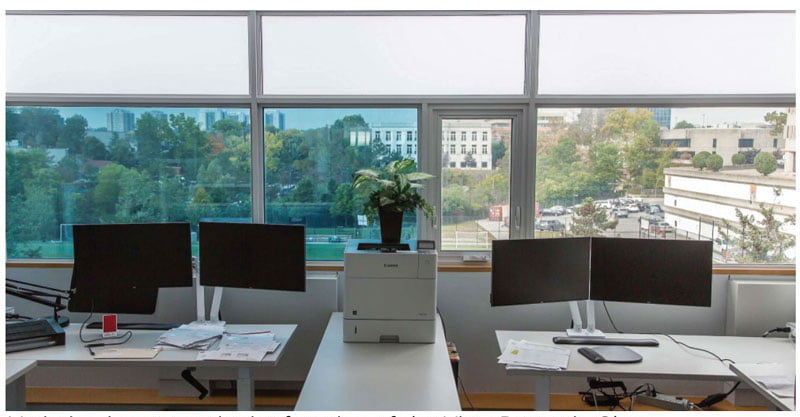
The envelope upgrade included additional insulation, curtainwall retrofits, and new fiberglass frame, triple-glazed windows by Inline Fiberglass. Fiberglass frames combine strength with very low levels of conductivity, and have the lowest embodied energy when compared to other common window frame materials. They also resist corrosion for long life expectancy. Our Series 3000 windows are Passive House International certified.

Inline’s products can be treated with specialized resins that have been tested and are in compliance with CAN/ULC S134 test protocol allowing them to be used in non-combustible applications when approved by building inspectors, as in the case of the OAA project.

According to David Fujiwara, the architect of the retrofit, “Fiberglass frames were considered for the OAA office windows because of their thermal effectiveness, ability to carry a triple-glazed unit, slim profile and strength. They met all the requirements of the building code and of the project.

The replacement windows needed to fit within the existing frame opening available, so removal of old thermally unbroken aluminum frame windows, site measuring and installation of the new frames for an airtight fit was an essential part of the work. Coordination was also needed with the electrochromic glazing supplier View Smart Glass. The final touch was the addition of 3M light redirecting film to the upper transom strip of window.”

SUBSCRIBE TO THE DIGITAL OR PRINT ISSUE OF SABMAGAZINE FOR THE FULL VERSION OF THIS ARTICLE.

Aurora Coast Cannabis Innovation Centre

Well being, energy and water conservation top the list at research station


By Heidi Nesbitt

Aurora Coast is a new cannabis research centre located in the Comox Valley on Vancouver Island. This unique facility provides a supportive and nurturing workplace for Aurora’s scientists to expand their genetics and breeding research, with the goal of realizing the full human benefit of the cannabis plant. 

Context 

The project aims to transform public perception of a previously illegal, underground industry, by housing it in a facility that fosters creativity and innovation. The first phase of the project consists of a mass timber building containing offices, labs, meeting rooms and support spaces for the adjacent greenhouse. A transparent network of collaborative workplace hubs was designed to encourage informal interaction and enhance the creative potential of the research team. 

As a project centred around plant health and vitality, every aspect of the building and site is designed to connect occupants to nature and to support health and well-being: an exposed, mass-timber structure was chosen for its low environmental footprint, and to provide a biophilic backdrop to what might otherwise have been a sterile laboratory environment; clerestorey windows bring natural daylight deep within the high-security, restricted-access areas; and views are provided to the restored pollinator habitat and orchard that surrounds the building. 

Cannabis facilities face unique challenges, including security, odour control and public stigma. To help gain the support of the local community, a large, environmentally degraded, industrial site at a prominent intersection was rejuvenated by providing extensive, on-site stormwater management, and by restoring the ecological integrity of several hectares of land. The larger environmental challenge was to provide cannabis plants with the steady warmth, light and water they need to thrive without creating additional strain on local resources. 

Heidi Nesbitt, Architect AIBC CP MRAIC LEED AP  ENV SP, is an associate with Local Practice architecture + Design in Vancouver.

PROJECT CREDITS

  • Owner/Developer  Aurora Cannabis
  • Architect  Local Practice Architecture + Design
  • Interiors  Albright Design
  • General Contractor  Heatherbrae Builders
  • Landscape Architect  Lanarc
  • Civil Engineer  McElhanney Consulting Services Ltd.
  • Electrical/Mechanical/Structural Engineers  Associated Engineering (B.C.) Ltd.
  • Envelope Consultant RDH
  • Passive House Consultant  Tandem Architecture Écologique
  • Greenhouse Consultant  ALPS

PROJECT PERFORMANCE

  • Energy intensity (building) = 162 KWhr/m²/year
  • Water consumption from municipal sources = 8135 litres/occupant/year
  • Reduction in water consumption relative to reference building = 5 %
  •  
  • SUBSCRIBE TO THE DIGITAL OR PRINT ISSUE OF SABMAGAZINE FOR THE FULL VERSION OF THIS ARTICLE.

  •  

REFLECTIONS ON THE MISSING MIDDLE

The term ‘Missing Middle’ is now in common use in major cities across the country in discussions around densification, housing choice and affordability. It was first coined by American architect Daniel Parolek to describe “a range of multi-unit or clustered housing types, compatible in scale with single-family homes that help meet the growing demand for walkable urban living.

By Shirley Shen

Evergreen’s Toronto Housing Action Lab Research and Report

According to Michelle German, Manager of Evergreen’s Toronto Housing Action Lab, the ‘missing middle’ is already negatively impacting the city in a variety of ways:

“From a social perspective, a market that no longer provides housing opportunities for everyday households risks robbing the city of its vitality, creativity and opportunity. Future generations will seek to live elsewhere and newcomers will face discouraging prospects.”

In 2017-2018, Evergreen convened a working group to identify the issues arising from the ‘missing middle’ in Toronto and to report on potential solutions. The Working Group identified three reasons why attention should be paid to the missing middle now:

1. Many families renting in Toronto are living in housing that does not have enough bedrooms for their size and makeup.

2. Middle income wages have not kept pace with the cost of housing – both rental and ownership options.

3. Many middle age households can’t access the ownership market – so are staying longer in the rental market creating stagnation and record low vacancy rates.

Evergreen’s report was published in August of 2018 and is  available here.

The following year, Vancouver architects began a similar investigation, in this case the aim being not only to propose new guidelines to promote Missing Middle forms of development, but also to offer design solutions.

The Urbanarium Design Competition,  Vancouver

In 2018, led by architect Bruce Haden, the Urbanarium held an open design competition to develop and present options for addressing Metro Vancouver’s affordability and social health challenges. There were four study areas in Vancouver, Port Coquitlam, Burnaby and Surrey, with each entrant being assigned one area at random. 

Each study area was around four blocks in size and competitors selected one-or two single-family lots to design, providing some contextual assessment based on the study area and municipal plans and by-laws.   

Competitors were required to address affordability, sociability and design excellence. Central to their work was the creation of pro forma including revenue, land costs and construction value. 

There was a strong consensus amongst the competitors around the required changes in municipal policy that would support the creation of a much greater range of housing options in current single family neighbourhoods. The four winners presented their prposals to staff around Metro Vancouver, including Vancouver, Coquitlam, Port Coquitlam, Port Moody and New Westminster as of September 2018.

Heaccity Studio Winning Entry

Increasing affordable housing in Metro Vancouver requires the provision of additional units that break  from existing models of  development and financing,  while shifting the constrictive culture  around tenure and  ownership.

We proposed a zoning amendment for the ‘buffer zones’ – the first three blocks flanking arterial roads  – between mixed use / commercial zones and single-family neighbourhoods. Signaling the residential renewal that will help house future generations in an affordable manner, our proposed zone “R-5R” would specifically address the land value speculation that has arisen along with densification. In order to ease the transition of R5 zones, guidelines would cultivate a new typology that can both co-exist with detached homes, and support the formation of  a cohesive community.

OUR MAIN PLANNING STRATEGIES INCLUDE:

1 Allow Innovative Zoning Policy

Long lots mean that building mass can be split up  and pushed to the lot lines, reclaiming underused green spaces for community connection. This results in a productive rethink of yards, setbacks, and laneways.  Following on the familiar house plus laneway house model, R5-R regulations would facilitate the next stage toward urbanization, while preserving the open and green character of the existing neighbourhood. This approach allows for increased households per lot while preserving outdoor space.

2 Incentivize Shared Ownership Models

R5-R prioritizes small-scale, owner-occupied developments by allowing relaxations and density bonuses to non-profit co-operatives. These Micro-Ops (non-program, non-subsidized co-ops) would free households from individual mortgages, pool equity, and share amenities.

3 Village Structures

Each property can also join a co-operative “Co-Block” structure, transforming each block into a self-sufficient village. This village-ing model allows Co-Blocks to pool development fees locally for immediate upgrades block by block. 

Co-Blocks can form circles or ‘parties’ to implement new amenities, share responsibilities, and work towards common goals. For example, the ‘green party’ tracks energy efficiency, waste reduction, and water consumption, while the ‘garden party’ tends and harvests block-wide planter boxes for distribution amongst the Co-Block.

See the HaecCity Studio submission and link to it somewhere on our web site.

You can find the submission as a pdf file here.

Shirley Shen is Principal of Haeccity Studio Architecture in Vancouver.

  • SUBSCRIBE TO THE DIGITAL OR PRINT ISSUE OF SABMAGAZINE FOR THE FULL VERSION OF THIS ARTICLE.