Dedicated to sustainable,
high performance building

UBC OKANAGAN, SKEENA RESIDENCE – University of British Columbia Okanagan, Kelowna BC

Residential (Large) Award (Sponsored by Inline Fiberglass)

Public Architecture + Communication

Jury Comments: Not only does Passive House certification take this building beyond Code in terms of energy performance; it achieves this while still addressing issues of context and community. The relationship to its surroundings is carefully considered, as is the design an organization of its common spaces. Making successive cohorts of students aware of the superior quality of a Passive House environment – and so raising their expectations, may be the most significant contribution of this project.

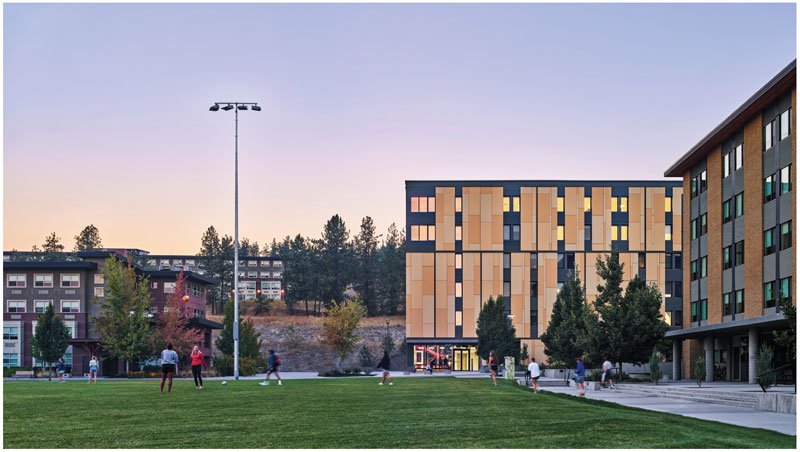
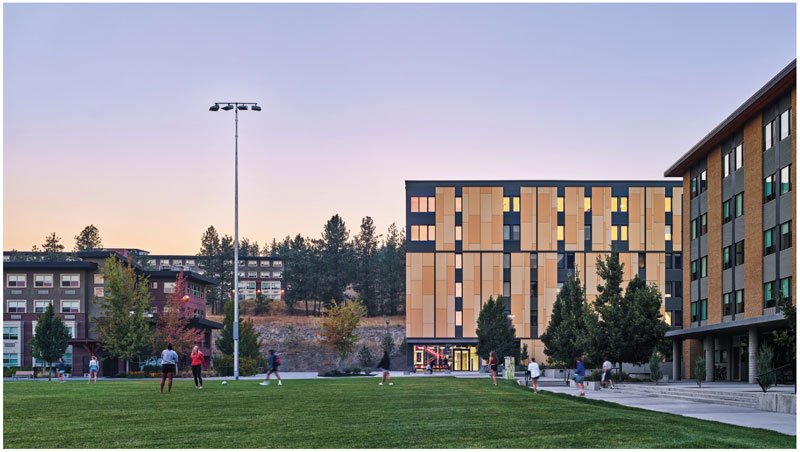
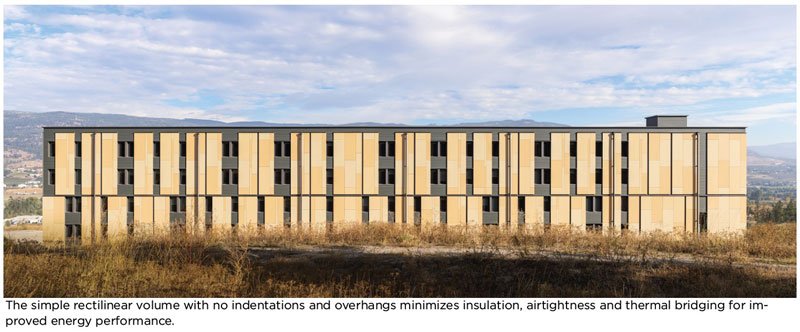
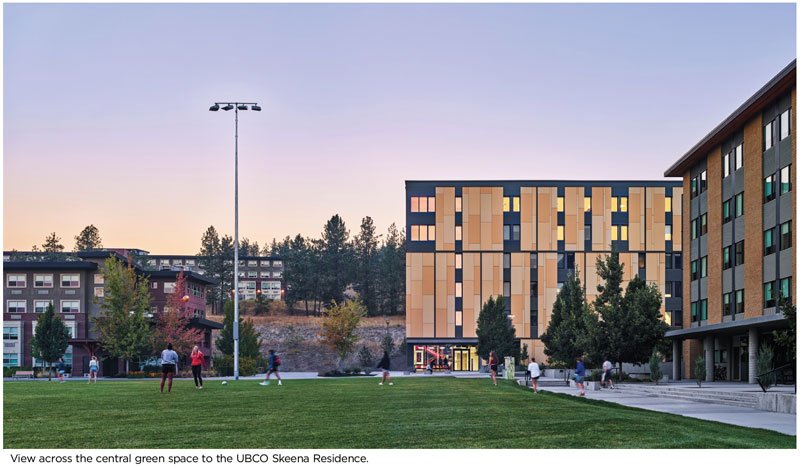
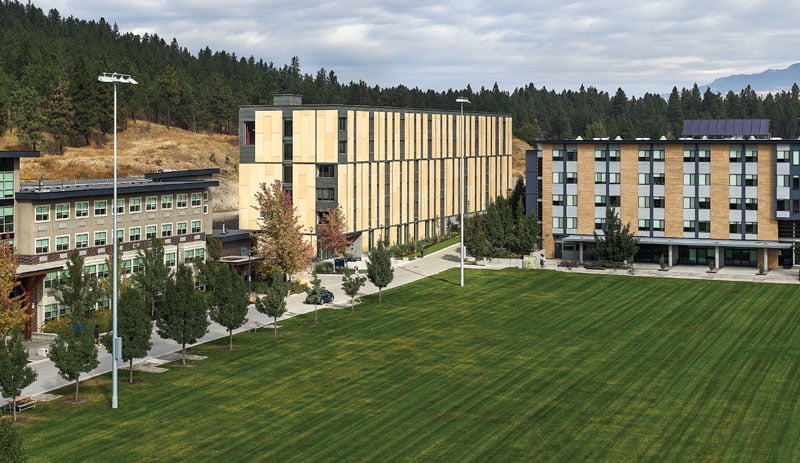
This new Passive House certified residence accommodates 220 students within five floors of light wood frame construction, above a concrete ground floor that contains common areas, amenity and service spaces. The building completes an ensemble of residence buildings encircling the central green space on campus – known as Commons Field.

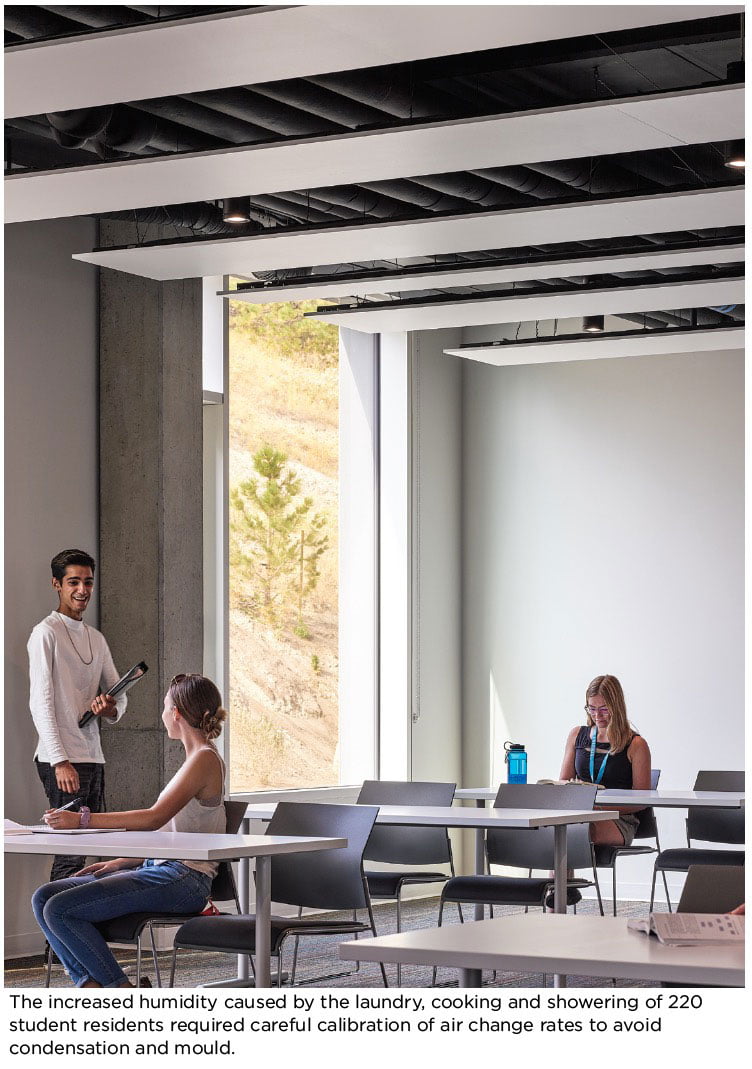
The five identical residential floors include shared bathrooms flanked by two bedrooms. This layout allows space for quiet study when required. Additionally, each floor contains both a study lounge and a house lounge with views of the surrounding mountains, the latter equipped with a kitchenette, dining table and couches. Locating these spaces at opposite ends of the floor ensures that quiet study is not interrupted by noise from the social home lounge.

The first level includes a large laundry room adjacent to the student lounge. Separated by a glass wall, the relationship between the two spaces encourages chance meetings and spontaneous gatherings. Moreover, the transparency offers passive surveillance, or visibility that promotes a sense of security.

The Passive House goal of minimal energy use for heating and cooling informed many design choices. Given that irregular forms with multiple indentations and corners, or projections such as steps, overhangs, or canopies create challenges for insulation, airtightness and the elimination of thermal bridging, a simple and efficient rectilinear volume performs best.

SUBSCRIBE TO THE DIGITAL OR PRINT ISSUE OF SABMAGAZINE FOR THE FULL VERSION OF THIS ARTICLE.
A BLANKET OF WARMTH – Star Blanket Cree Nation, SK

Technical Award

MacPherson Engineering Inc.

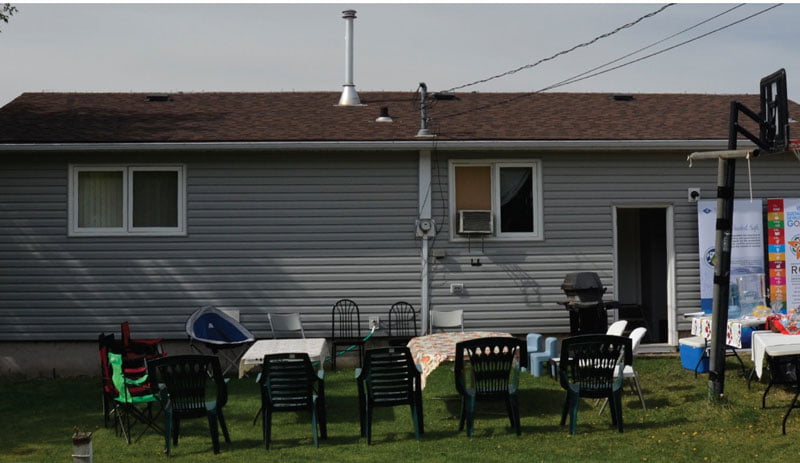
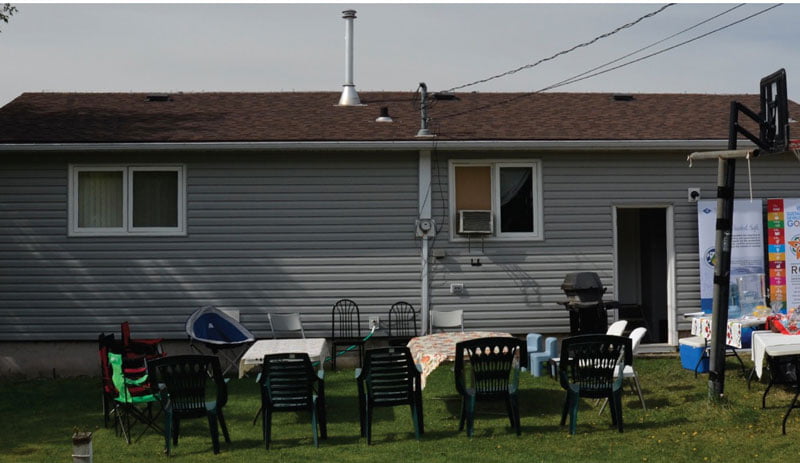
Jury Comment: “This simple, affordable and highly transferable design solution to the substandard indoor environmental quality in much of the First Nations housing stock across the country, is notable for its collaborative approach and the inspiration it takes from traditional Aboriginal structures. The transition from forced air to radiant heat brings multiple benefits, with a payback period of less than 10 years.”

To address the mould issue, MacPherson Engineering partnered with universities, industry leaders, psychologists, Knowledge Keepers, engineers, and businesses. The project needed to be affordable, ecofriendly, incorporate Indigenous knowledge, and create positive social values of inclusion, cooperation, and respect.

The project broadened responsible consumption and production with the installation of the hybrid heating system on 75% of the concrete perimeter basement walls.

Aligning with the United Nations goals, the retrofitting of conventional HVAC with a system that was simple to install and operate improved efficiency and sustainability.

After installation, a comparative study was done, proving that radiant heating is a feasible solution to address air quality, thermal comfort, and energy use and humidity problems, performing much better than traditional HVAC systems. 

PROJECT CREDITS

  • Owner / Developer  Star Blanket Cree Nation
  • Mechanical Engineer  MacPherson Engineering Inc.
  • Plumbing and Heating  Anaquod Plumbing and Heating
  • Construction  J McNaughton Construction
  • University of Regina  Dr Arm Henni & Capstone students
  • Photos  Aura Lee MacPherson

SUBSCRIBE TO THE DIGITAL OR PRINT ISSUE OF SABMAGAZINE FOR THE FULL VERSION OF THIS ARTICLE.
Eco Flats 1.0

Upgrade preserves existing building while supporting low carbon living

By Carla Crawford

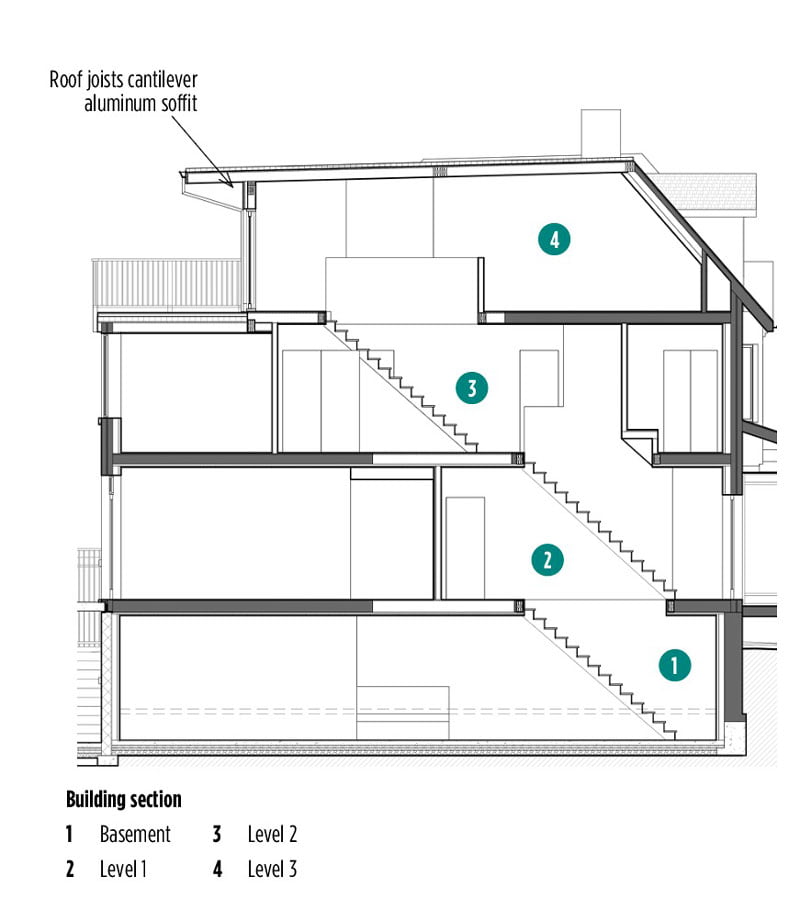
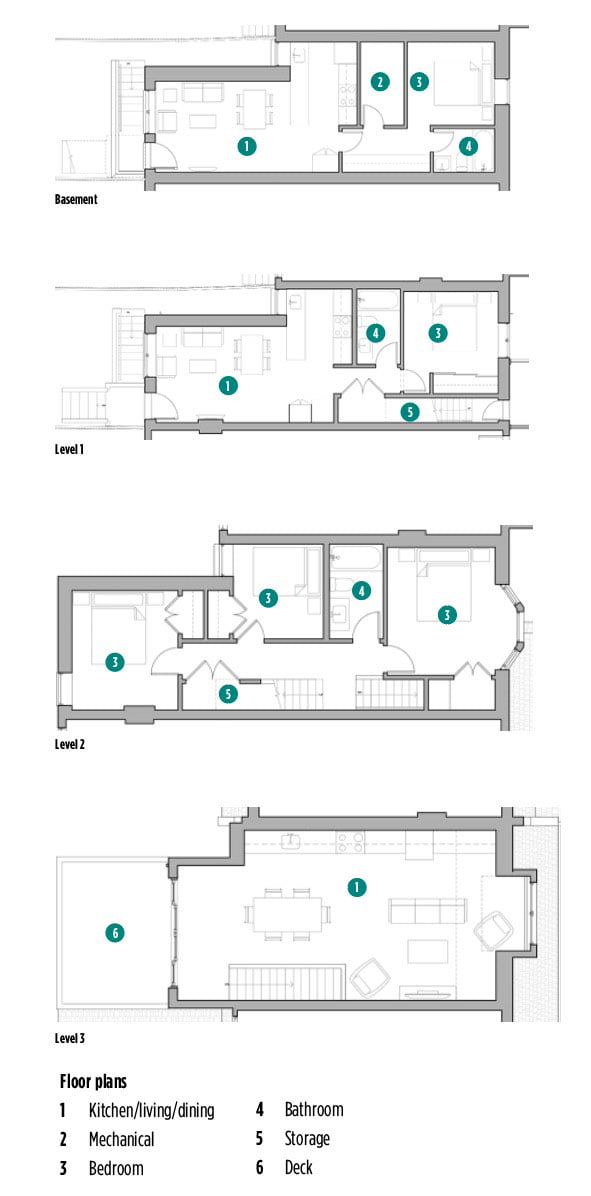
Eco Flats 1.0 is a conversion of an aged Toronto rowhouse into an energy-efficient, all-electric triplex. The ambitions for this project were: to increase urban density; provide quality housing during a housing crisis; create homes for multiple tenants that support a carbon-free lifestyle; and make it a super energy-efficient, all-electric building.

With the Ontario power grid being 94% renewable, it was not only possible to do this, but also to disconnect the original gas supply to the building. With greatly improved airtightness and super insulation, the overall energy intensity of the renovated building is 108 kWh/m2/year, an 89% reduction compared to the original.

With a walk score of 93, transit score of 99, and bike score of 100, this property was the perfect choice. The nearest intersection has two streetcar lines and one bus line, two of which connect to the subway in just a few minutes. The intersection is also a hub for the West Toronto Railpath, which connects pedestrians and cyclists to The Junction neighbourhood, and is slated for expansion that will eventually connect to downtown. In addition, the local area is well serviced with grocery stores, schools, daycares, walk-in clinics, a hospital, a YMCA, and more. Everything is accessible without reliance on a car.

The design optimizes daylighting, as well as passive heat gain and cooling. This does not always mean more glazing: large third floor windows required shading to reduce overheating. Each of the three apartments are equipped with their own independent Energy Recovery Ventilator (ERV), which reduces energy consumption by transferring heat and moisture from outgoing air to fresh incoming air.

The apartment layouts are designed to accommodate a variety of tenant types: individuals, families and roommates. Each apartment has its own unique entrance directly from the outside, with the upper unit entering from the front sidewalk, and the main and lower apartments entering via a communal patio space in the rear.

PROJECT PERFORMANCE

  • Energy intensity (building and process energy) = 108KWhr/m2/year
  • Energy intensity reduction relative to reference building under MNECB 1997 = 89%
  • Water consumption from municipal sources = 16,060 litres/occupant/year
  • Reduction in water consumption relative to reference building under LEED = 45%
  • PROJECT CREDITS
  • Owner/Developer/General Contractor Lolley Knezic Projects Inc.
  • Architect  Solares Architecture Inc.
  • Mechanical Engineer  ReNü Engineering Inc.
  • Structural Engineer  Kattakar Engineering Associates Inc.
  • Commissioning Agent/Envelope Testing  Blue Green Consulting Group
  • Grey Water Systems  Greyter Water Systems
  • Photos  Solares Architecture Inc.
  •  
  • SUBSCRIBE TO THE DIGITAL OR PRINT ISSUE OF SABMAGAZINE FOR THE FULL VERSION OF THIS ARTICLE.

Lumenpulse Headquarters

New workplace mirrors client’s attention to design, and cuts energy use

By Jim Taggart

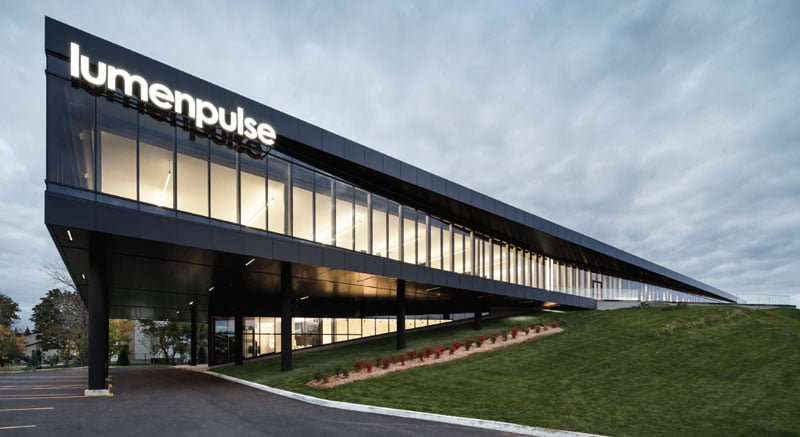
Located on the south shore of the St. Lawrence River across from Montreal, Longueuil has long been a preferred location for leading high-tech industries including aerospace and renewable energy.

These have now been joined by Lumenpulse, an international lighting solutions company that designs, develops, manufactures and sells a wide range of high-performance, sustainable LED lighting solutions for commercial, institutional and urban environments. Together with its affiliate companies, it has successfully completed major installations in North America and Europe, including offices for Microsoft in Seattle and H&M in Florence, Italy.

The company wanted to create a head office that would embody its values of innovation, collaboration, communication and transparency, as well as serving the needs of its employees and its business operations. The site, one of many considered, was chosen for its location close to residential areas, arterial roads and transit routes for employees; and to the Montreal St. Hubert airport and Highway 10 leading to the US, to serve the needs of the company’s export business.

On the outskirts of a long-established business park, the site had been abandoned for many years.  The land was remediated in preparation for the new building, now encircled by native landscaping overlooked by patios and terraces. Existing concrete slabs were crushed for use in landscaping and existing service infrastructure was reused wherever possible.

Through its design and program organization, the new building captures and communicates the history and culture of Lumenpulse, providing the company an architectural identity that reinforces its corporate brand. Montreal-based Lemay provided transdisciplinary services in architecture, interior design, graphic design and urban planning.

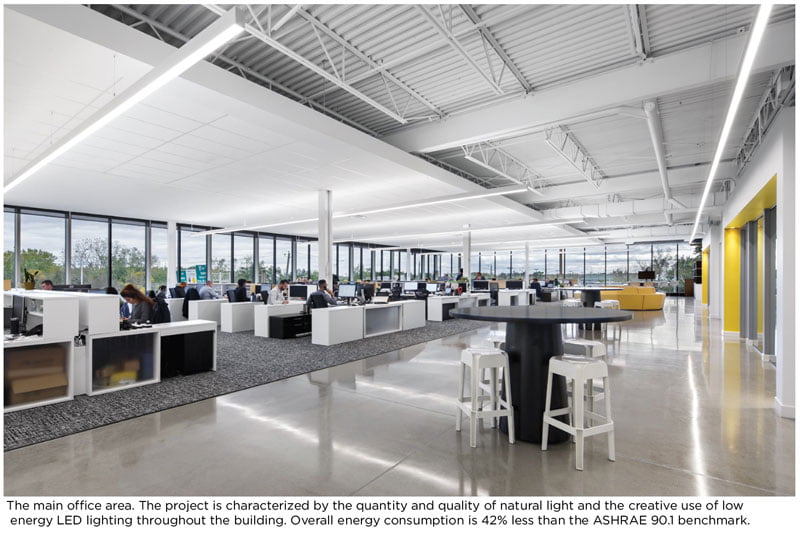
The complex houses a production space, laboratory, design and engineering, offices and an experiential space, supported by robust security and electrical systems. As a whole, it is characterized by the quantity and quality of natural light and the creative use of low energy LED lighting throughout the building.

Together with a high-performance building envelope, a low-albedo white roof to reduce the heat island effect, high-efficiency mechanical systems and heat recovery ventilation, overall energy consumption is 42% less than the ASHRAE 90.1 benchmark.  Two-thirds of primary energy is renewable with fossil fuel energy used only when the systems are in heating mode.

PROJECT PERFORMANCE

  • Energy intensity (building and process energy) = 177KWhr/m²/year
  • Energy intensity reduction relative to reference building under MNECB 1997 = 42.4%
  • Water consumption from municipal sources = 3,154 litres/occupant/year
  • Reduction in water consumption relative to reference building under LEED = 46.5%
  • Recycled material content by value = 12.7%
  • Regional materials (800km radius) by value = 37.5%
  • Construction waste diverted from landfill = 78.2%

PROJECT CREDITS

  • Owner/Developer  9341-0983 Quebec Inc. 
  • Architecture/Structure/Interior Design  Lemay
  • General Contractor  Groupe Montoni (1995) Division Construction Inc.
  • Landscape Architect  Beaupre et Ass.
  • Civil Engineer Les consultants MESC
  • Electrical Engineer  Dupres Ledoux
  • Mechanical Engineer  Dupres Ledoux
  • Photos  Stephen Bruger

SUBSCRIBE TO THE DIGITAL OR PRINT ISSUE OF SABMAGAZINE FOR THE FULL VERSION OF THIS ARTICLE.
Prefabrication and Modular Construction

The thermal performance of off-site prefabricated buildings and building enclosure systems

By Val Sylaj and Brian J Hall

As designers and owners are becoming more aware of the environmental impacts of the construction industry, including the types of materials used, more stringent requirements are being imposed by specifiers, and national codes and standards.   

This article provides some insights on the important measures of prefabrication and panelized systems on the thermal performance of buildings, the energy consumption, and the financial impacts to the investors.

A recent report from Dodge Data and Analytics published in 2020 shows a significant interest by the construction industry in prefabrication and modular construction mainly because of the improved productivity, reduced timeline, and cost, better sustainability performance, etc. 

https://www.construction.com/toolkit/reports/prefabrication-modular-construction-2020

An earlier report from Dodge Data and Analytics published in 2011 had also highlighted the following as the underlying drivers and benefits of prefabrication and modular construction: (1) Improved productivity and quality are key benefits in its usage, (2) Positive impacts on budget and schedule performance are widely experienced, and (3) Construction sites are ‘greener’ due to less waste being generated, and safer due to working with structure assemblies and modules produced offsite. 

Although major advances have been made in both prefabrication and modular construction since the 2011 report, many of the above mentioned factors are still consistent with the findings of the latest report from 2020. 

What is Prefabrication and Modular Construction?

With rapid population growth, the construction industry is always challenged to adapt its technologies based on the market demand such as the need for taller buildings, reduced onsite construction times, enhanced building performance, etc. Prefabrication and modular construction are certainly a solution to most, if not all, of these demands. 

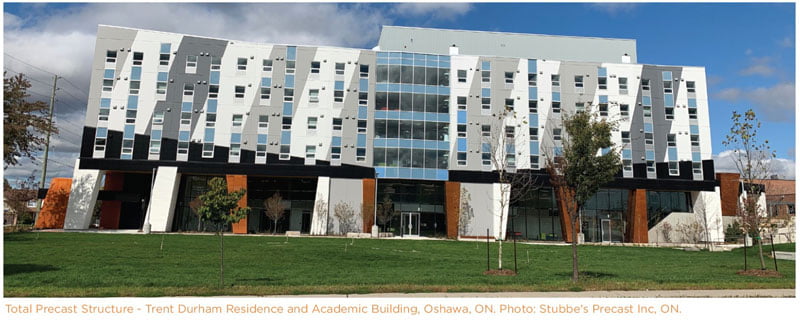
Prefabrication is a construction method that involves fabricating and assembling building components offsite. It can refer to both flat elements (often known as prefabricated panelized systems), or to modular volumetric units that typically include complete spaces of a building such as an apartment unit, hotel room, jail cell, etc. In either case, prefabrication construction also provides innovative solutions in buildings where the entire building envelope can be fabricated offsite using prefabricated building components.

In addition to the need for accelerated building construction technology and consistency in quality, prefabrication and modular construction are also being considered to address concerns with site-specific skilled labour shortages. With prefabrication that is completely performed at an offsite facility, plant workers can be trained to perform specific skilled trades such as electrical and plumbing that form part of the finished element or room. 

Standard building construction practices require individual building components or materials to be delivered to a job site, stored and then placed or installed by labourers from multiple trades. This requires significant on-site space as well as time for setup and construction. Another very time-consuming on-site operation process is the exterior finish of the final building façade.                                                               

Conversely, off-site prefabricated components are delivered ‘just-in-time’ and installed by a smaller crew of skilled installers/erectors, directly from the truck onto the building, with the façade and architectural finishes already complete.    

It is clear that prefabrication is an ideal construction technology with minimal site disturbance and less labour required compared to traditional construction. Another important factor is improved safety, mainly because the work is done at ground level at a prefabrication facility, instead of working at elevated heights which is common with traditional construction. Further, the safety measures such as physical distancing during a pandemic can be easily implemented with very minimal or no effect on production.

SUBSCRIBE TO THE DIGITAL OR PRINT ISSUE OF SABMAGAZINE FOR THE FULL VERSION OF THIS ARTICLE.

Design practice: Rethinking Multi-Unit Residential Design

Optimizing flexibility, affordability and construction efficiency

By Michelle Xuereb, Dev Mehta, Adryanne Quenneville and Tiffany Wong of BDP Quadrangle

The world is in a period of increased urbanization. In 2018 the United Nations estimated that by 2050 68% of the global population will be living in an urban area. Urban population growth has driven up land value and the costs associated with residential building construction. For most, living in an urban area means residing in a multi-unit residential building (MURB).

As the costs related to urban residential development have increased, the average unit size has decreased. For example, a typical two-bedroom-plus-den unit in one of Toronto’s older stock of residential buildings is usually around 1,000 square feet. Current residential developments fit the same program into roughly 750 square feet.

This squeezing of the floor plans, however, has reached its breaking point. Residential units can only be tightened so much without sacrificing the quality and functionality of the space. When every room is competing for floor area, designers need to get creative.

In March, BDP Quadrangle held a studio-wide ‘Shrinking Spaces Charrette’ to come up with innovative solutions for small units. We took a typical residential unit apart – examining every inch of space from the master bedroom to the pantry shelf – to find creative new ways of maximizing square footage within a limited space.

The future MURB unit does away with fixed rooms with set programs. Isolating in response to the pandemic has prompted all of us to find more flexibility in our living spaces, and also to question how MURB design can go further to support a sense of community and foster interaction with others while still maintaining privacy and a safe distance if required.

This pandemic experience has equipped us with a direct and immediate understanding of the specific desires for an improved at-home wellness experience – such as a need for both togetherness and separation from other family members; having a place to stow away a computer at the end of the day; the possibility to grow vegetables on a balcony; and the benefit of socializing with neighbours. We identified a need for more resilient, sustainable, flexible, and healthy spaces – all within a small footprint in order to maintain an affordable unit.

We began rethinking MURB units by asking: what would happen if we reduced or eliminated set programs? In order to optimize flexibility, we propose blurring the lines between rooms, rather than delineating them with demising walls.

To accommodate this, the building is designed with a structural column grid instead of shear walls, as is typical of Toronto construction. This structural system also uses less concrete – thereby reducing the building’s carbon footprint. For other elements that are typically fixed in place, such as the plumbing stacks and mechanical shafts, we arranged them in a manner that allows for an open plan: the kitchen, bathrooms, and laundry closets are consolidated on the perimeter of the unit. These shifts allow for a more flexible floor plan.

SUBSCRIBE TO THE DIGITAL OR PRINT ISSUE OF SABMAGAZINE FOR THE FULL VERSION OF THIS ARTICLE.

Édifice Wilder Espace Danse

Double-envelope façade wraps restored heritage building

By Patrick Bernier, Maude Pintal and Gabriel Tourangeau

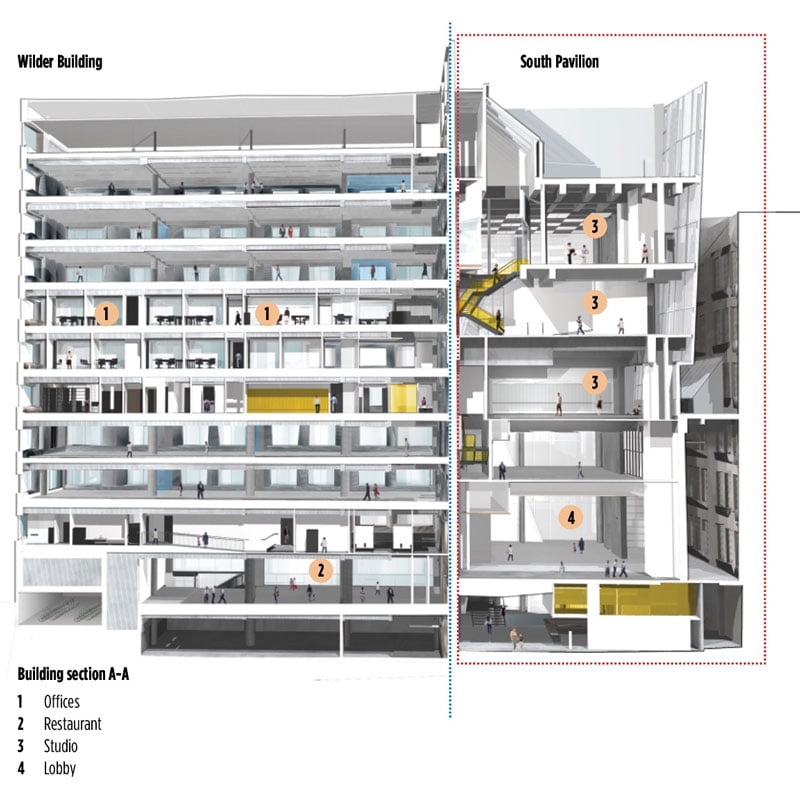
Located in the Quartier des Spectacles, Montreal’s entertainment district, the Édifice Wilder – Espace Danse brings together production and performance spaces for Les Grands Ballets Canadiens, the École de Danse Contemporaine de Montréal, Tangente, and the Agora de la Danse. The project also incorporates offices for the Ministry of Culture and Communications, and the Quebec Council of Arts and Letters.

With a total area of almost 222,000m2 (235,000sf) the project includes the renovation and expansion of the 10-storey Wilder Building, a heritage designated former furniture factory and warehouse, dating from 1918. 

The program is arranged over all 10 floors: one basement level and nine floors above grade. The basement contains a Creation Studio, a Laboratory Studio and bicycle parking; the ground floor includes the main entrance hall, ticket office and a café and other retail spaces; while the upper floors contain rehearsal, workshop, studio, production, broadcasting and other specialized and support spaces as required by each of the organizations occupying the building.

As architects, we believe that sustainable design must embrace the ecological, economic, and social circumstances of a project and not be solely focused on energy performance to the exclusion of these other considerations. For that reason, the choice was made to preserve a vintage building, not for its economic value, but rather as a commitment to the preservation of architectural and cultural heritage and the conservation of resources. An integrated design approach was used to ensure a balance between quantitative environmental objectives, and the equally important, but more qualitative aspects of theatrical performance, luminosity and comfort that were central to the project.

On a tight urban site, one consequence of that decision was the limitations it placed on the implementation of passive design strategies, partly because of the existing solar orientation and partly because of the effect of surrounding buildings. However, the articulation of the façades and openings maximizes access to natural light and passive solar energy in the context of this project.

Rehabilitation of the existing site, previously paved with concrete, was limited to the remediation of contaminated soils and improvements to stormwater management. A portion of the rainwater is collected on a vegetated roof and the remainder is stored in a temporary retention tank before being discharged into the municipal stormwater system. Elsewhere, low-albedo roofing is used to help mitigate the urban heat island effect.

Given its location at the heart of the Quartier des Spectacles, the project was designed to encourage community interaction and enhance the public realm.

This was made possible by the creation of a transparent and inviting double-envelope façade wrapped around the existing building. With its areas of translucent insulation, the façade greatly improves the energy performance of the building. This perimeter zone serves as a billboard – being used for activities, shows, and the projection or display of visual art installations.

SUBSCRIBE TO THE DIGITAL OR PRINT ISSUE OF SABMAGAZINE FOR THE FULL VERSION OF THIS ARTICLE.

Interview with Tom Todoruk of Tempeff Inc.


1. When did Tempeff start up and what exactly does it do?

The company was started in March of 2008 however the basic technology goes back even farther, approximately 35 years. Our DualCore® energy recovery system can reach up to 90% sensible heat recovery without the requirement of an energy robbing defrost strategy even when the outside air temperature reaches -40°F. The equipment is customizable, allowing engineers and owners the opportunity to utilize its efficiency and flexibility to bring down over all energy consumption.

2. Why do you say that your energy recovery equipment has the highest efficiency available?

Most heat recovery ventilators use a single core system which can freeze when outside temperatures drop below freezing. The system is then required to implement a defrost strategy which will bring down efficiency and increase energy consumption. Having to incorporate a defrost strategy means that the heating system has to be designed to handle the full heating load which adds additional system cost and reduces overall efficiency. Using a proven DualCore® system that will not require a defrost strategy allows the system designer to size any additional heat from supply air temperature off the Tempeff unit, reducing energy consumption as well as system cost.

3. How does the DualCore® system work?

Our DualCore® design uses two heat exchangers, compared to the single exchanger in conventional units. Outside air goes through one exchanger for one minute at a time before switching to the other exchanger, so it doesn’t have time to build up frost. In winter, condensation will form on the exhausting heat exchanger. When the cycle changes, the outdoor air is passed over the heat exchanger, warms up, and that moisture is added back to the airstream. This reduces the need for added humidity in the conditioned space. The result is that one heat exchanger is always delivering conditioned air to the space.

4. What is the performance record?

Our system has been tested in a climactic chamber at the National Research Council which replicated indoor and outdoor temperatures and relative humidities designed for Artic conditions. The unit functioned well with sustained outside temperatures of -35°C and 50% RH.  There was no restriction of airflow or blockage of the air stream so that the ERV continuously provided conditioned outdoor air. With few moving parts, maintenance of the system is very low. Due to the cycling nature of the heat exchangers, dust rarely builds up on them, eliminating the need for frequent cleaning. Numerous LEED-certified and high-performance buildings, such as the Fort St. John Passive House published in the Summer 2020 issue of SABMag, use Tempeff DualCore® ERVs.

5. What’s on the horizon for Tempeff? 

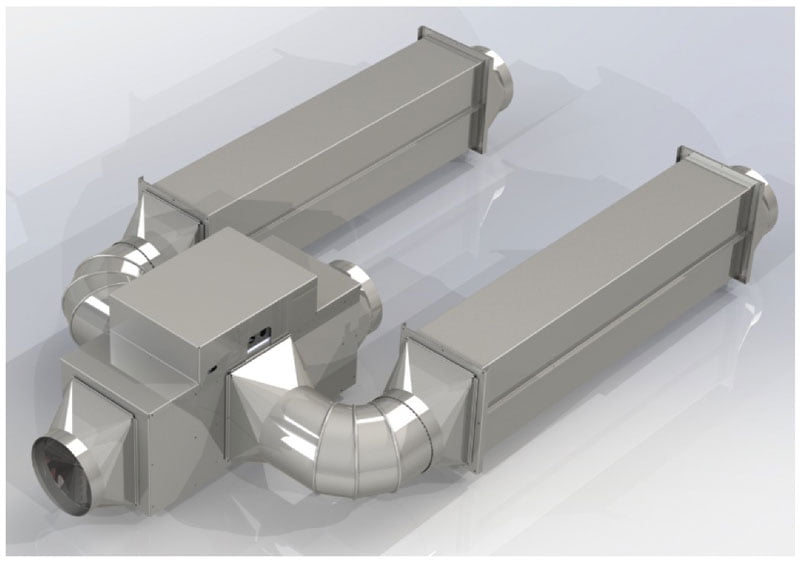
Covid-19 has placed focus on the requirement for increased ventilation. In some cases having a centralized system may not be the best answer in multi-functional spaces or in retro-fit applications where space is at a premium. To address this concern, Tempeff has launched the RGSP-K, a new configurable ERV utilizing DualCore® energy recovery for smaller airflows at a friendly price point. This equipment is capable of up to 90% sensible heat recovery without a defrost strategy. This new format can be ceiling mounted and configured in many different ways to suit tight and challenging project conditions.

SUBSCRIBE TO THE DIGITAL OR PRINT ISSUE OF SABMAGAZINE FOR THE FULL VERSION OF THIS ARTICLE.
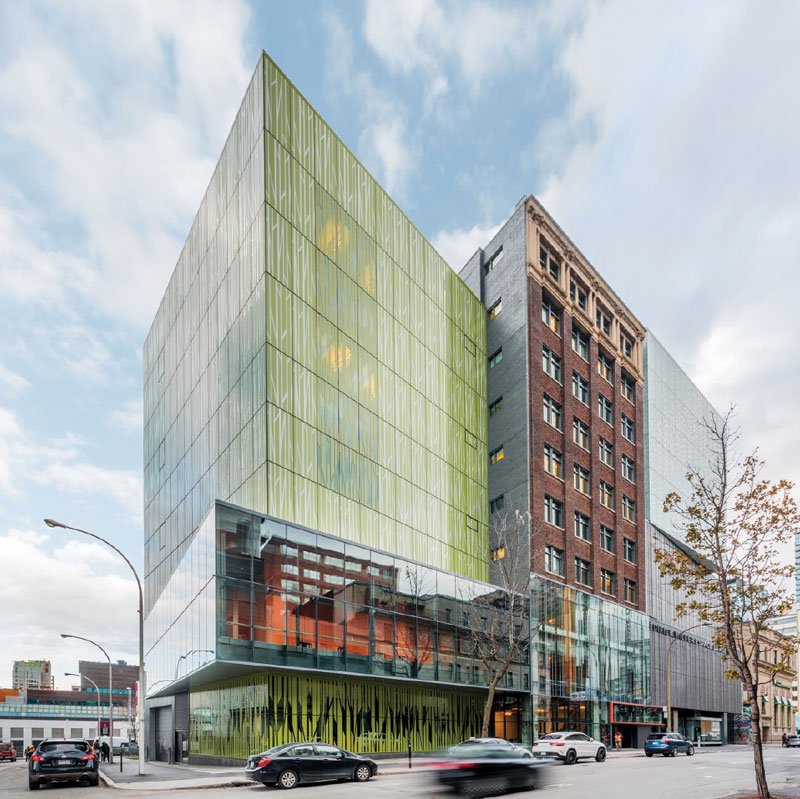
UBC Okanagan, Skeena Residence

Multi-unit residential building design takes care in detailing

By Brian Wakelin

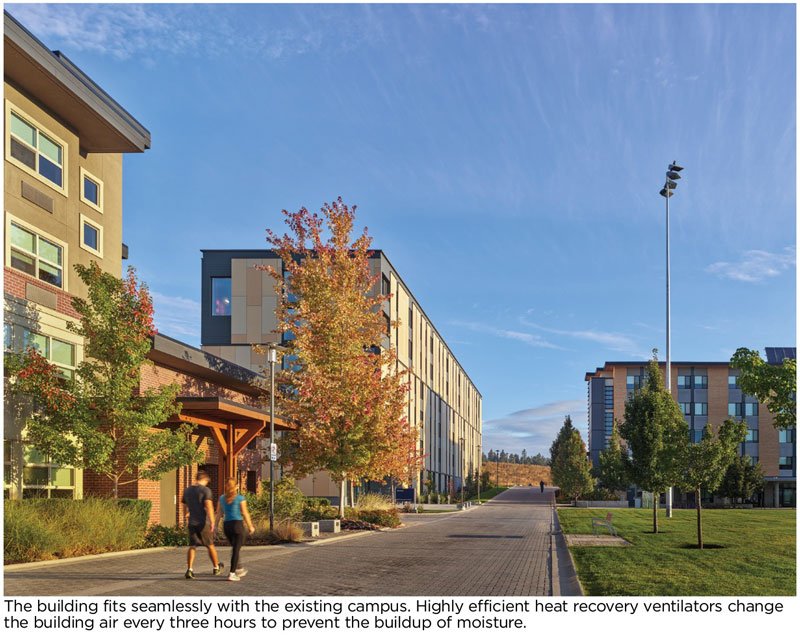
The new UBCO Skeena Residence at the Okanagan Campus of the University of British Columbia comprises approximately 72,600 gross square feet over six storeys and has been designed to Passive House standards. The ground floor includes common housing amenities and building service spaces while the upper five storeys include accommodation for 220 students together with associated social spaces. Skeena completes an ensemble of residence buildings encircling the central green space on campus – known as Commons Field. The project focuses on student life and support services while meshing seamlessly with the existing campus. 

The five identical residential floors include shared bathrooms flanked by two bedrooms. This layout allows space for quiet study when required. Additionally, each floor contains both a study lounge and a house lounge with views of the surrounding mountains, the lounge being equipped with a kitchenette, dining table and couches. Locating these spaces at opposite ends of the floor ensures that quiet study is not interrupted by noise from the social home lounge.

On the first level, the Skeena Residence has a large laundry room located adjacent to the student lounge. Separated by a glass wall, the relationship between the two spaces encourages chance meetings and spontaneous gatherings. Moreover, the transparency offers passive surveillance, or visibility that promotes a sense of security. In short, the design of the building supports community life. 

The design of the Skeena residence was driven largely by the requirements of the building program and by the successful layout of the neighbouring student residence. The two bedrooms with shared bathroom module uses an optimal length and width, which also optimizes the number of floors required to accommodate the building requirements – the objective being to minimize the amount of energy required to heat and cool the building. 

This Passive House goal of minimal energy use for heating and cooling also informed other design choices. Given that irregular building forms with multiple indentations and corners, or projections such as steps, overhangs, or canopies create challenges for insulation, airtightness and the elimination of thermal bridging, a simple and efficient planar volume performs most optimally. Mechanical systems also work best within a narrow, contiguous box. This limits aesthetic parameters to material, colour, pattern, and texture. Thus, the simpler the building, the more important material choices and detailing become.

The exterior is clad in a combination of brightly coloured fibre cement panels and darker metal panels. A feeling of depth is created by bringing the fibre cement panels forward of the metal, emphasizing the depth of the window reveals.  This gives articulation to the simple form, without introducing complexity that would compromise energy performance.

Design decisions are also swayed by other practicalities such as standard and locally-available materials and techniques. The building is a wood frame with some concrete on the ground floor. A wood structure was chosen for its inherent insulative properties as well as its ready availability and ease of construction. 

Eco Habitat S1600


Low life cycle carbon footprint guides compact design

By Emmanuel Cosgrove

This prefabricated kit home (the first out of the factory) of 180 m² was originally assembled for a 2019 home show at the Montreal Olympic stadium, before being disassembled and moved to its permanent location outside the town of Wakefield. Now functioning as a family home, the operating energy consumption will be monitored and recalculated after 12 months of use.

The design objective was to create a housing option with a low ‘cradle to grave’ life cycle carbon footprint, through compact design, careful material choices, and other strategies that would further contribute to low operating energy and GHG emissions.

While new construction in both residential and commercial sectors is showing incremental reduction in operating energy and related emissions in response to higher energy efficiency standards, the ‘elephant in the room’ is ‘grey energy’ – that associated with the extraction, transportation, fabrication and installation of construction materials. Given the current average life cycle and energy performance of buildings, only about half of the energy expended over the life of a building is from the operations phase, the other half is from the construction phase.

To demonstrate the importance of calculating embodied energy, Ecohome’s Quebec-based affiliate Ecohabitation did a carbon calculation of the Eco-Habitat S1600 prefab kit house using the Athena Impact Estimator for buildings software, which assesses the environmental impact of each building component. Doing this analysis early in the design phase identifies where a building is scoring high, and enables designers to find alternative materials and products to lower the carbon impact of the project.

A low carbon building strategy begins with sourcing natural building materials produced as close to the site as possible, using the minimum amount of energy and with few if any chemical additives.

This not only reduces emissions and pollution, but equally importantly, leads to healthier and safer indoor environments for occupants.

The single greatest consideration when reducing the carbon footprint of a building is to reduce the use of concrete as much as possible; then to reduce the impact of the concrete that must be used for structural integrity or thermal mass. Look first for locally-available sources of concrete that include recycled content, or choose a formula that has a lower carbon footprint than regular concrete. Design choices can also contribute to a reduction in concrete use; for example, a slab on grade rather than a full  basement. The Wakefield S1600 house uses a slab on grade solar air-heated radiant floor.

SUBSCRIBE TO THE DIGITAL OR PRINT ISSUE OF SABMAGAZINE FOR THE FULL VERSION OF THIS ARTICLE.