Using nature-based rainwater solutions to shape our cities
By Scott Murdoch
Healthy urban streams cannot be restored through work in the channel alone. They depend on how the entire watershed is planned, drained and designed. By reconnecting rainwater with soil, plants and time, nature-based solutions can turn a waste stream into a resource for healthier cities. About 30 years ago, I returned to a stream in Ontario where I had spent time as a child. Although it had not rained for months, the water was the colour of chocolate milk. Walking upstream, I found a vacuum truck removing sediment-laden water from a construction site and discharging it into the nearest catch basin. The catch basin was connected directly to the creek. One phone call stopped the activity, but by then the sediment was already in the stream.
That moment changed how I understood urban drainage. The creek did not exist apart from the surrounding neighbourhood. It depended on the water coming from roads, roofs, construction sites and landscaped areas—and on the systems used to move that water. As a fisheries biologist, I understood the damage, but I did not yet have the tools to change the design of the city around it. That realization eventually led me to landscape architecture and to integrating water management with urban landscape design. This lesson remains central to our work at MDI: healthy streams require healthy watersheds. If we want urban waterways to support fish, biodiversity and people, we need to look beyond the stream channel and reconsider how land, water and development work together.
A watershed is an urban system
A watershed is all the land that drains to a common outlet—a creek, river, lake or ocean. Every surface within it influences how much water reaches that outlet, how quickly it arrives and what it carries along the way. A forest floor, a roof, a road and a parking lot each produce a different response to rainfall. Decisions made upstream inevitably create consequences downstream.
Before urban development, watersheds were naturally covered landscapes (forests, meadows, grasslands, etc.) with wetlands, depressions and broad riparian corridors. Vegetation and tree canopies intercepted rainfall. Organic soils absorbed and stored it. Plants returned water to the atmosphere. Water collected in surface depressions or moved slowly through soil before reaching a stream. A rainfall event could take weeks or months to work its way through this slow delivery system, providing cool, clean water during dry periods and moderating higher winter flows. Urbanization has impacted many of these processes. Forests were cleared, wetlands drained, absorbent soils removed and uneven ground flattened and smoothed. Roads, roofs and parking areas replaced permeable surfaces. At the same time, gutters, catch basins, roof leaders and pipes created a dense drainage network designed to remove water as quickly as possible to downstream lakes, rivers, and oceans.
The result is not simply more runoff. It is a much faster water-delivery system. Rainfall that once moved slowly through soil can now reach a stream within hours. Peak flows become higher and more frequent, increasing erosion, destabilizing channels and raising downstream flood risk. Less water is stored in the landscape, so summer baseflows decline. Pollutants that accumulate on roads and hard surfaces are also carried downstream, often with little or no treatment. This helps explain why stream restoration undertaken only within the channel so often disappoints. Spawning gravel, logs and riparian planting can improve physical habitat, but they cannot compensate for poor water quality, repeated high winter flows or a lack of summer water. The stream reflects the condition of its watershed.
From stormwater disposal to water management
For much of the past two centuries, urban rainwater has been treated as a waste product. The standard objective was to collect it, place it in a pipe and discharge it somewhere else. This approach made development possible, but it also separated water from the soils, plants and landforms that once stored, filtered and slowly released it.
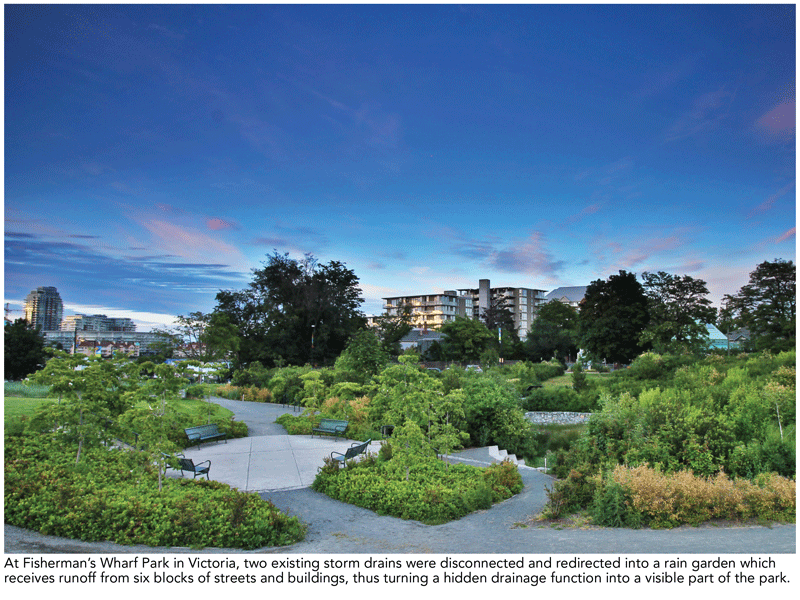
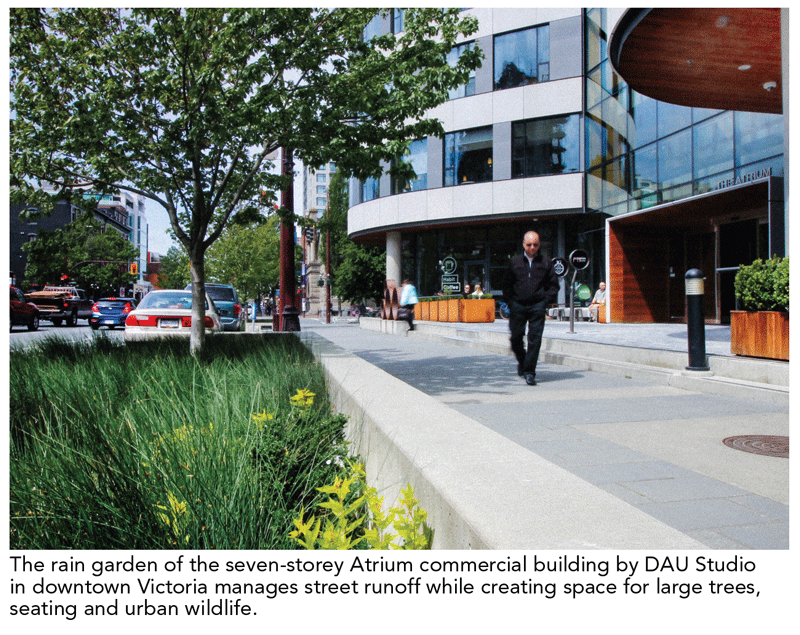
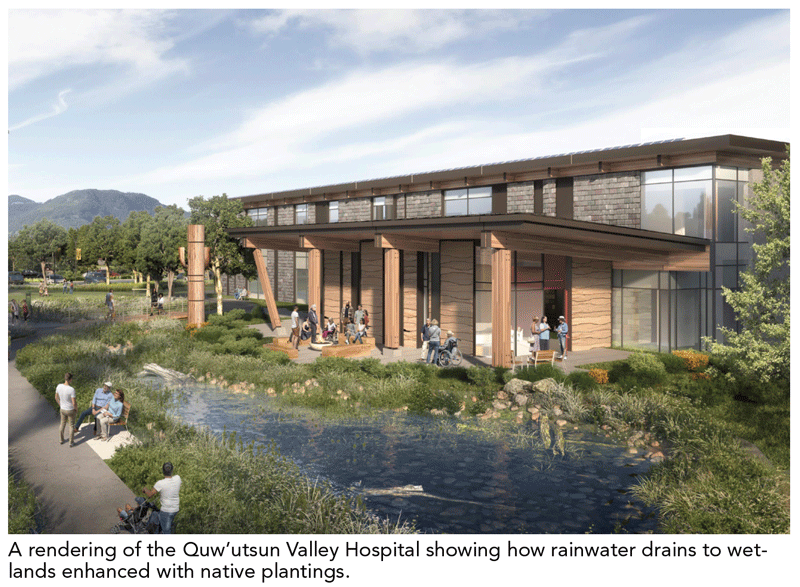
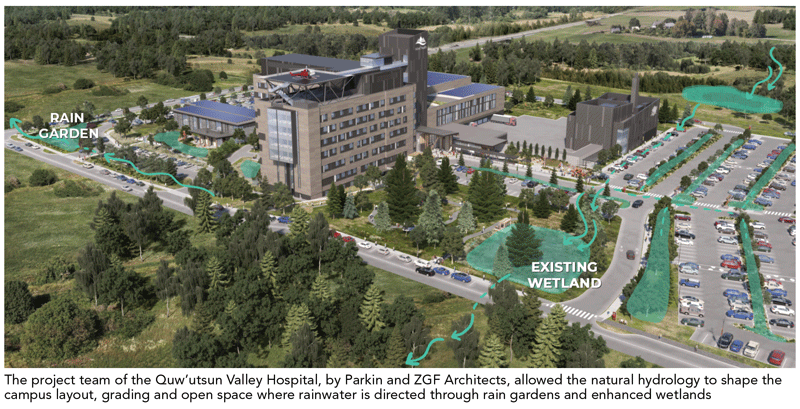
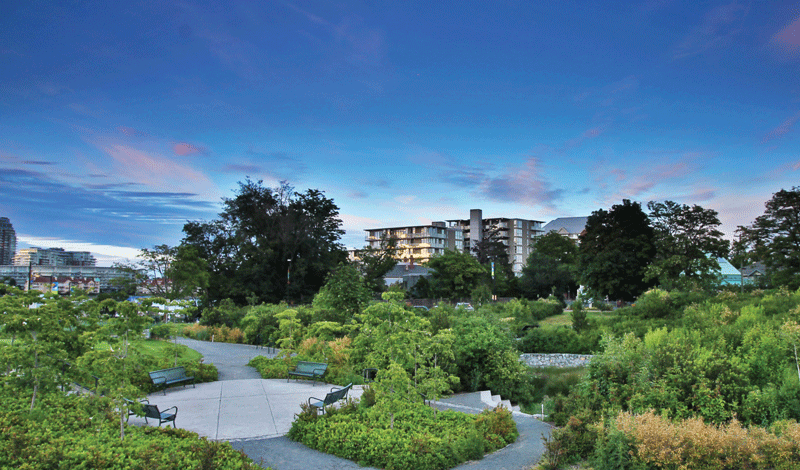
Nature-based solutions begin with a different premise: rainwater is a resource that can support life in cities. These solutions use designed landscapes to restore selected natural processes—including interception, storage, infiltration, evapotranspiration and filtration—within an urban setting. They do not attempt to recreate an untouched landscape. They adapt the way natural systems function to the realities of streets, buildings, utilities and public space. A rain garden is a simple example. In nature, a wetland or shallow depression collects winter rainfall, holds it and gradually dries through the summer while supporting plants and wildlife adapted to changing conditions. A rain garden applies the same basic pattern in a more intensive urban form. It may include biologically active growing media, carefully selected plants, overflow structures and a perforated underdrain, allowing it to manage runoff reliably while remaining part of the visible landscape.
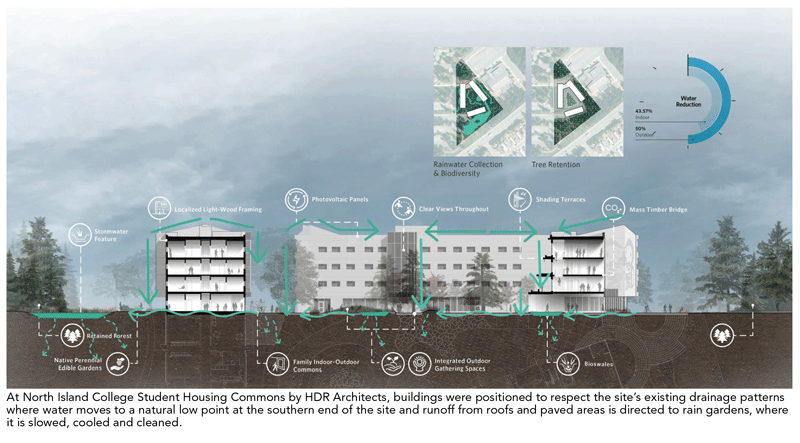
The underlying strategy is straightforward: disconnect hard surfaces from pipes and reconnect water to soil, plants and time. Slow it down. Spread it out. Allow it to soak in where site conditions permit. Filter it before it reaches a stream, lake or coastal habitat. This distinction is captured by the idea of effective impervious area.
Scott Murdoch is a founding principal of MDI Landscape Architects in Victoria, BC.
SUBSCRIBE TO THE DIGITAL OR PRINT ISSUE OF SABMAGAZINE FOR THE FULL VERSION OF THIS ARTICLE.