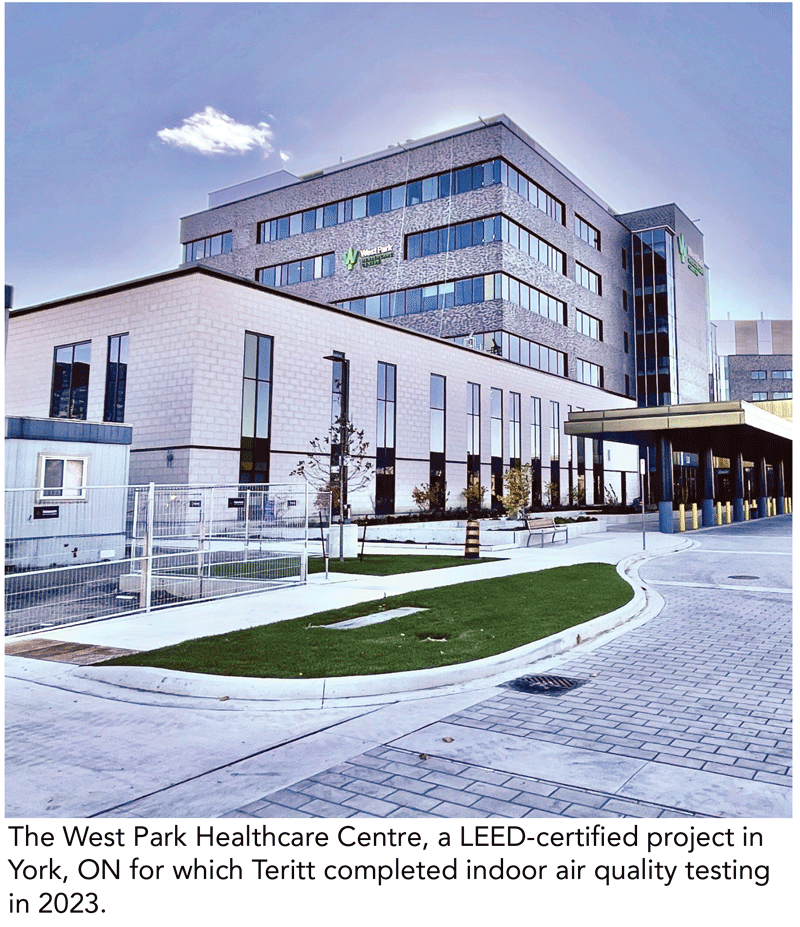
DO GREEN BUILDING PRACTICES RESULT IN BUILDINGS WITH BETTER INDOOR AIR THAN TRADITIONAL BUILDINGS?
Yes. Overall, the selection of better performing building materials and products has a positive impact on the air quality of the finished building. Based on indoor air quality investigations we’ve been involved in over the years, we consistently find better indoor air quality in green buildings.
WHAT ARE SOME OF THE FACTORS IN THE DESIGN AND CONSTRUCTION PROCESS THAT PRODUCE A BUILDING WITH GOOD INDOOR AIR QUALITY?
Ventilation design, building materials selection, proper protection and storage of building materials prior to installation, and proper sequencing of materials installation. Also, a tight building envelope and moisture-resistant construction helps to prevent mold growth and uncontrolled pollutant entry. These things are all generally well planned for on green building projects.
WHEN IT COMES TO GREEN BUILDING CERTIFICATION SYSTEMS, WHAT’S THE MOST IMPORTANT FACTOR TO HELP ENSURE THAT THE IAQ TESTING ACHIEVES A PASS?
This is hard to distill down when reflecting on the 450+ green building projects we’ve tested over the years, as dozens of factors can influence IAQ testing success. I would have to say the number one factor that causes green building projects to fail the IAQ testing is too much activity on site leading up to and on the testing date.
Generally, the allowable levels for airborne contaminants from the rating systems for LEED, Green Globes, WELL, etc. are in the parts per million or parts per billion range. These are very low levels to achieve and as a result, there are dozens of seemingly benign site activities that can have an impact on the testing results. In an ideal scenario, there is nobody on site on the testing date other than the IAQ testing agent, but this is often not achievable and requires the use of other mitigating strategies.
IN RATING SYSTEMS WHERE BOTH OPTIONS ARE AVAILABLE, IS AIR QUALITY TESTING OR BUILDING FLUSH OUT A BETTER ROUTE?
The ideal scenario is some amount of building flushout followed by an IAQ test to verify airborne contaminant levels. Verification in most processes is an important step, and it is no different with IAQ. If you have time in the schedule, flush the building and then perform some level of testing to verify that the IAQ is good. If you don’t have time for a building flush, test the air and plan for some level of post occupancy flushout to keep off-gassing contaminant concentrations to a minimum.
WHAT HAS BEEN THE MOST REWARDING PART OF WORKING AS AN IAQ CONSULTANT IN THE GREEN BUILDING SECTOR?
The people. 100% the people. Over the last 16 years we have worked with team members from a wide range of backgrounds and professions. The vast array of personality types in the green building sector has made the work fun, challenging, and entertaining all at the same time. Never a dull moment. Also, architecture and design have always been an area of great interest to me on a personal level, so getting a close-up look at hundreds of amazing new buildings over the years has been a nice bonus.