Winnipeg home designed for the next 100 Years
By Fletcher Noonan
Winnipeg will always be defined by climatic extremes. Annual temperature swings approaching 70°C are not anomalous but expected. In such a continental context, durability and performance are not aspirational qualities—they are prerequisites. Designing for longevity in this environment demands clarity of form, restraint of means, and technical precision.
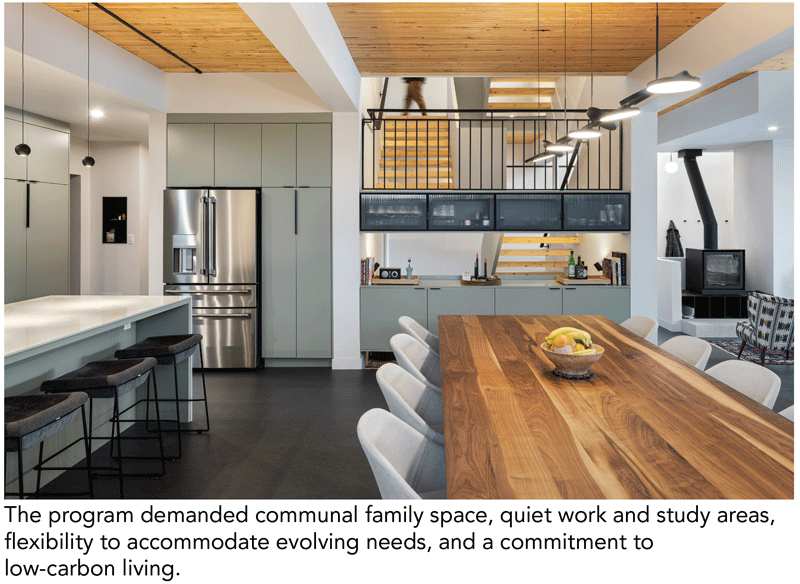
7 Cedar Place was commissioned by a young family seeking a sunlight-filled home in a mature neighbourhood near the Red River. Their program was pragmatic and forward-looking: generous communal space for family life, quiet areas for work and study, and flexibility to accommodate evolving needs over decades. Equally important was a commitment to low-carbon living. The house needed to maintain comfort through Winnipeg’s severe winters and increasingly hot summers without dependence on oversized mechanical systems.
The project was therefore conceived to meet Passive House certification requirements. In a climate classified by the International Passive House Institute as “cold,” this standard demands rigorous control of heat loss, air leakage, and thermal bridging. Target heating demand and primary energy thresholds required an envelope-first approach, with airtightness verified through blower door testing achieving performance well beyond conventional construction benchmarks.
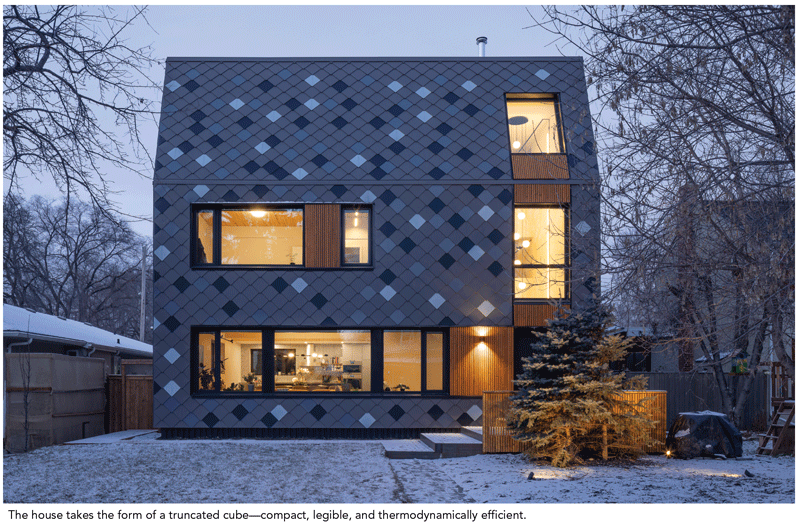
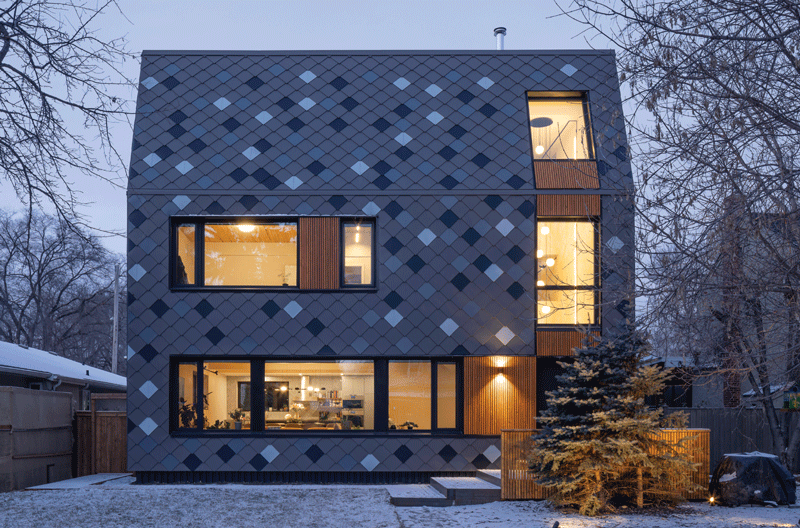
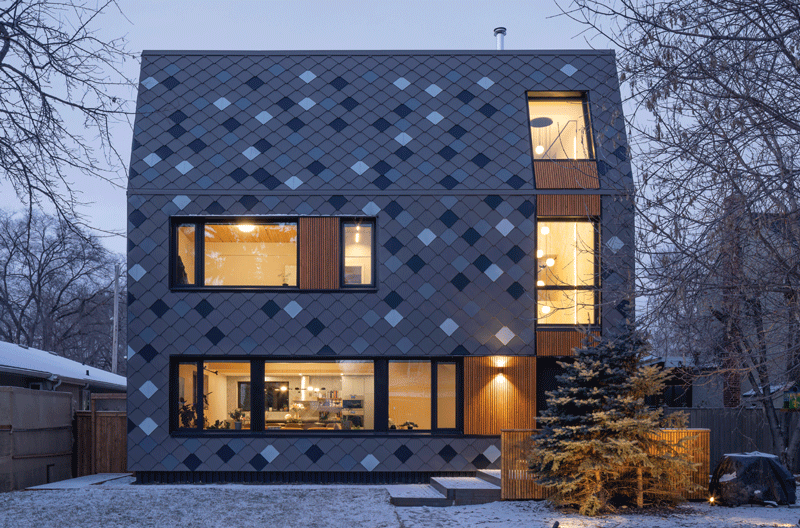
The architectural response is grounded in disciplined simplicity. The house takes the form of a truncated cube—compact, legible, and thermodynamically efficient. Minimizing exterior surface area relative to floor area reduces heat loss and simplifies air barrier continuity. The truncated roof form references the mansard geometry common in Winnipeg’s historic French-influenced neighbourhoods, moderates perceived mass at street level, and establishes an appropriate plane for future photovoltaic installation.
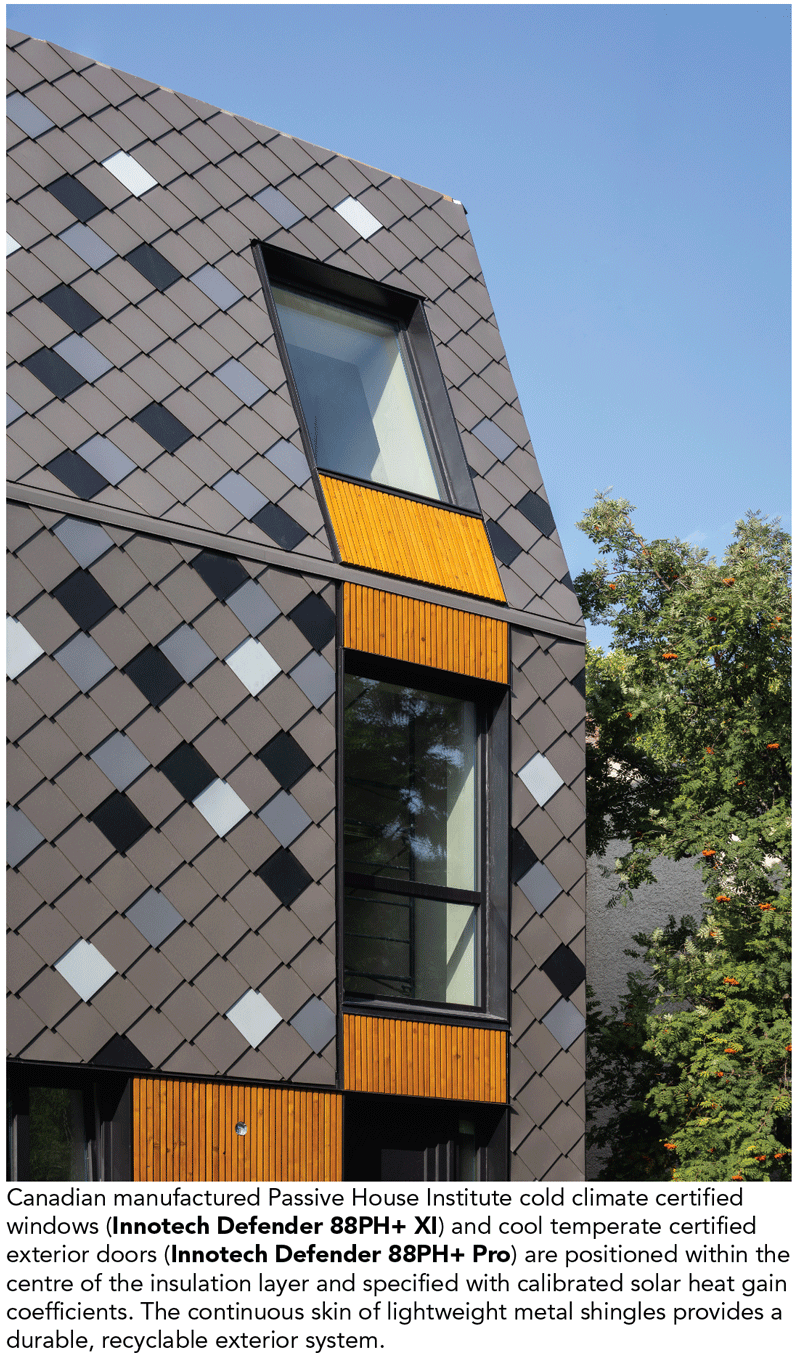
A continuous skin of lightweight metal shingles reinforces the monolithic reading while providing a durable, recyclable exterior system suited to harsh freeze-thaw cycles.
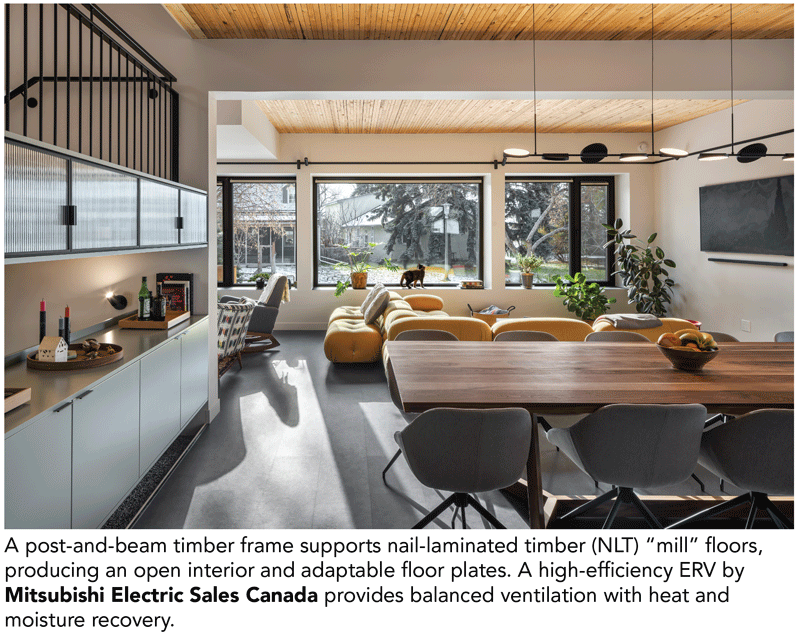
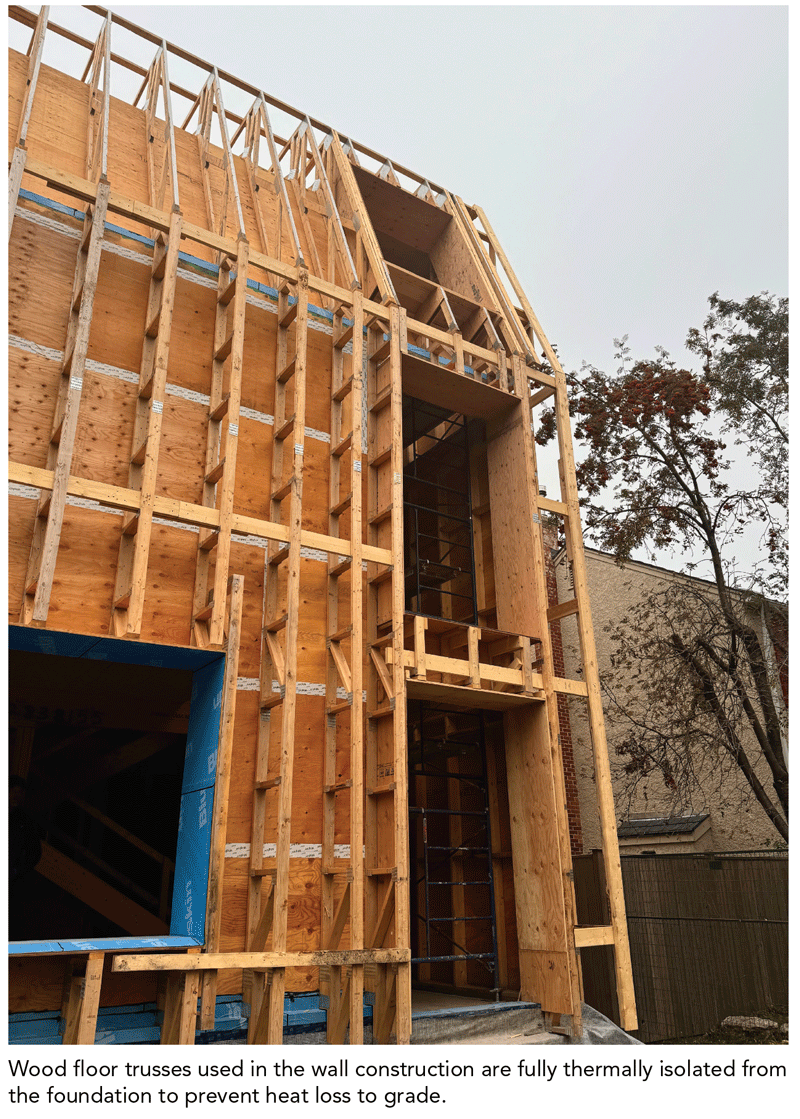
Structurally, the house draws from early 20th-century warehouse precedents common in Winnipeg’s historic Exchange Dist. A post-and-beam timber frame supports nail-laminated timber (NLT) “mill” floors, producing open and adaptable floor plates. Interior spaces are organized loosely around a nine-square grid, allowing structural clarity to guide planning.
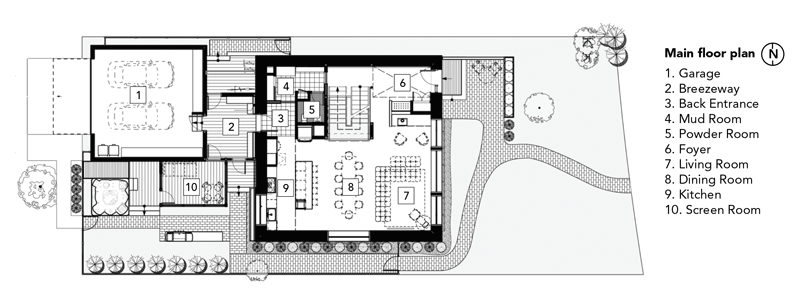
The main floor accommodates a generous kitchen and dining space connected to a south-facing living area. The second level contains bedrooms arranged for privacy and connection, while the third floor—overlooking the river corridor and urban canopy—hosts a family room. A continuous track lighting system traces through the common areas across three levels, reinforcing spatial continuity and flexibility. The structural logic supports long-term adaptability, essential in a house intended to endure.
Material selection aligns durability with environmental responsibility. Natural linoleum flooring and window sills—manufactured from renewable materials including linseed oil, wood flour, and jute—provide resilience, repairability, and low embodied carbon. Ultra-compact Dekton countertops were selected for longevity and carbon-conscious life cycle initiatives.
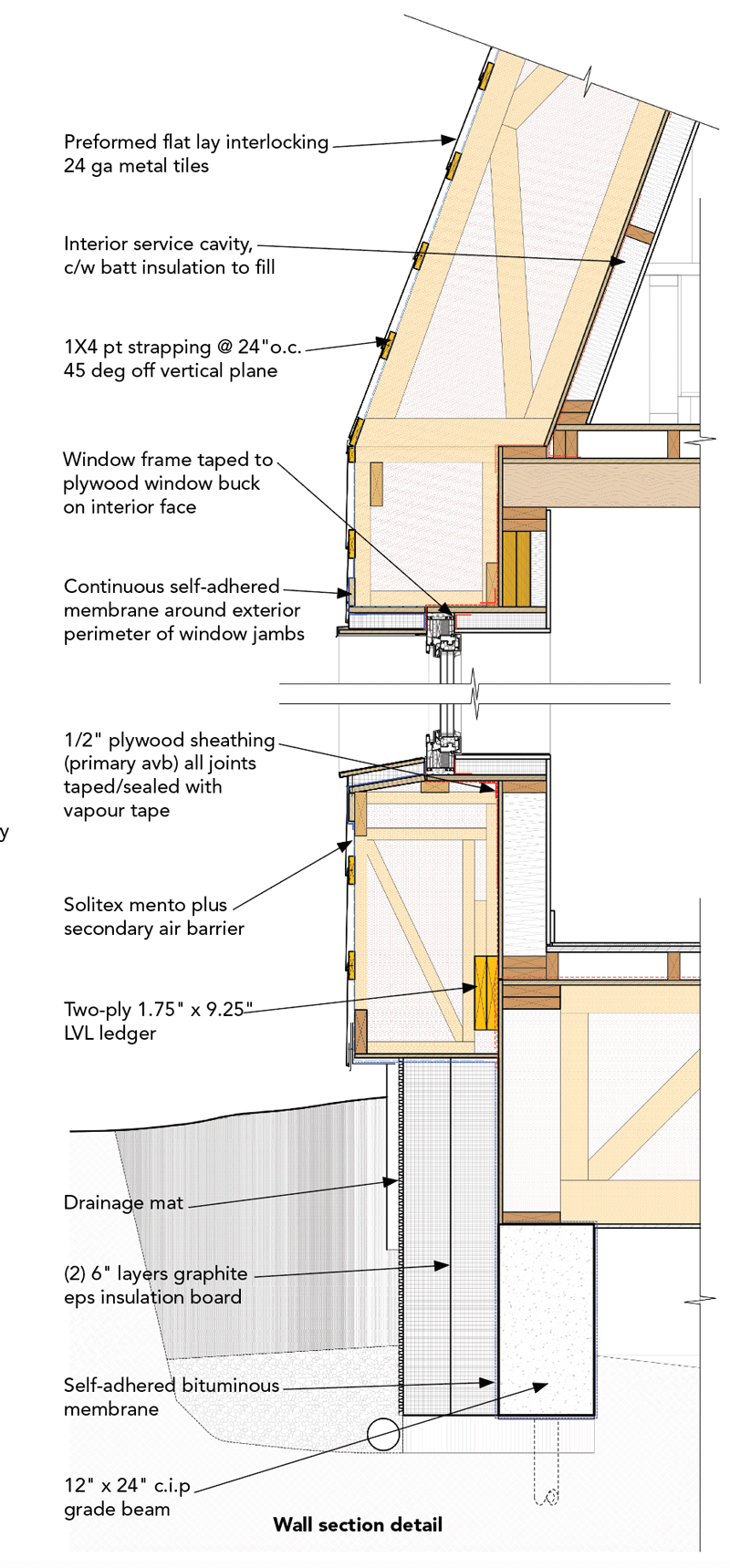
A high-efficiency ERV by Mitsubishi Electric Sales Canada provides balanced ventilation with heat and moisture recovery. Passive House Institute cold climate certified windows (Innotech Defender 88PH+ XI) and cool temperate certified exterior doors (Innotech Defender 88PH+ Pro) by Innotech Windows + Doors are positioned within the centre of the insulation layer and specified with calibrated solar heat gain coefficients.
Project team
- Architect Monteyne Architecture Works
- General Contractor Bobsled Construction
- Mechanical Engineer AirTight Engineering
- Structural Engineer Wolfrom Engineering
- Photos Lindsay Reid
Fletcher Noonan is an associate with Monteyne Architecture.
SUBSCRIBE TO THE DIGITAL OR PRINT ISSUE OF SABMAGAZINE FOR THE FULL VERSION OF THIS ARTICLE.